Bitter sprays may discourage some rabbits for a short time, but they are not the main fix for chewing. Protect the target first, then offer a safer texture nearby, because many rabbits will ignore a bad taste if the cord, rug edge, or baseboard still feels perfect to chew.
Chewing is normal rabbit work. A good plan does not rely on making the room taste terrible; it makes risky targets unavailable and gives your rabbit allowed chewing jobs that fit what they were trying to do.
Use spray as a backup
A bitter spray can be a small extra step on some furniture or barriers, but test it carefully and do not assume it will stop a determined rabbit. The real protection comes from moving, covering, or blocking the item before chewing becomes a habit.
Block the target first
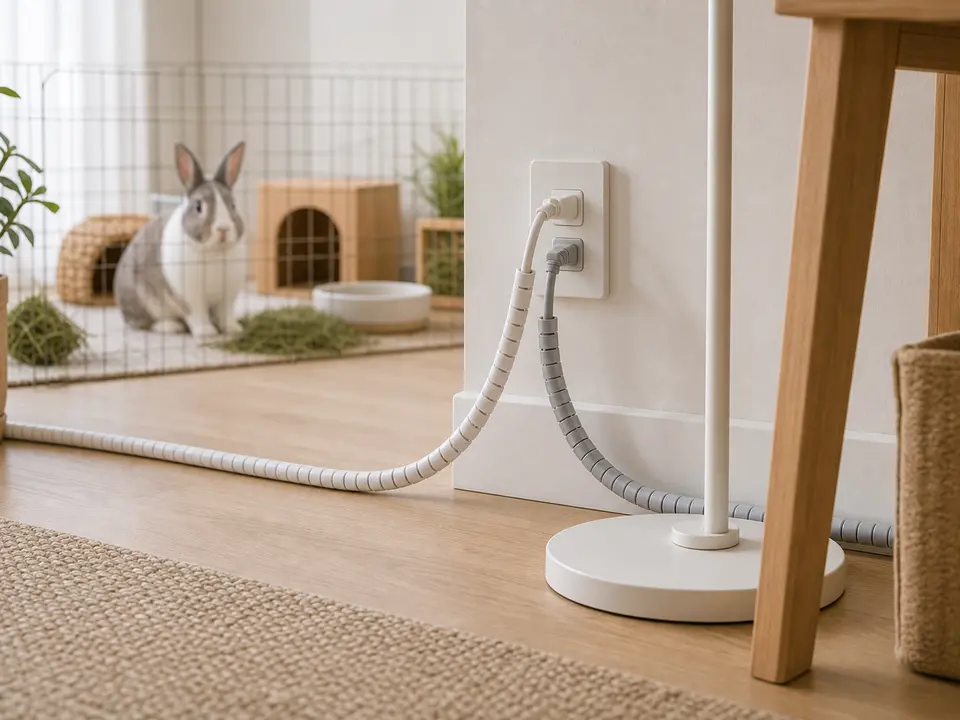
Cords, rug edges, baseboards, and furniture legs need physical protection. Use cord covers, pen panels, furniture guards, washable mats, or a clean barrier that fits the room. If your rabbit can still reach the same edge, taste alone probably will not solve it.
Offer the texture your rabbit wanted
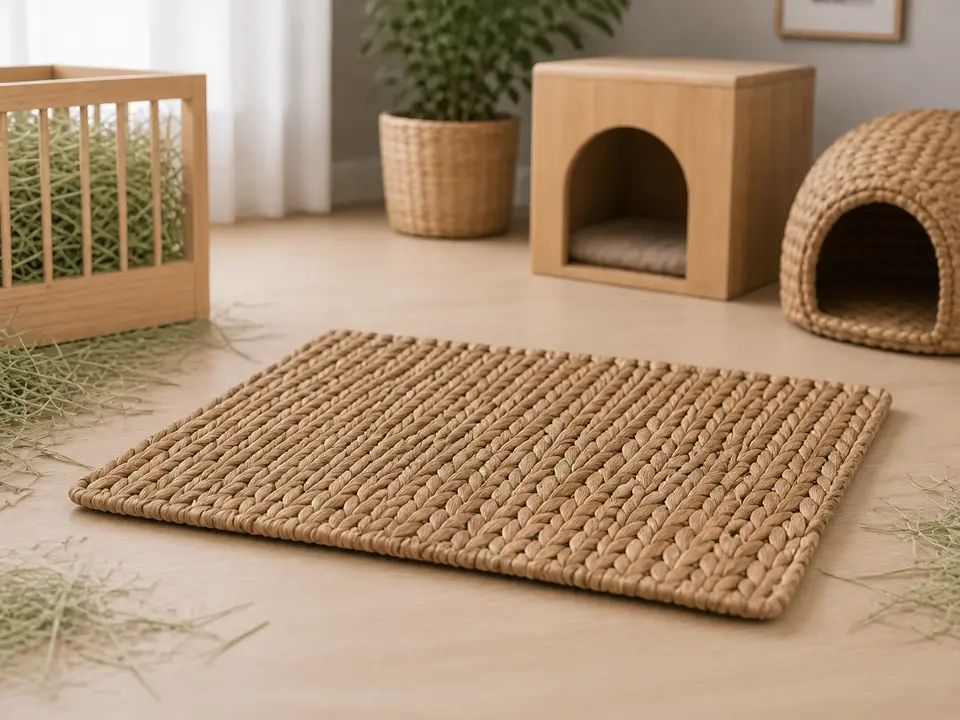
Watch what your rabbit chose. Rug edges, cardboard, willow, seagrass, wood, and paper all feel different. Put a safer chew with a similar texture near the problem spot so your rabbit has a useful job instead of just a forbidden one. If the rabbit keeps returning to one corner, move the safe texture closer before the next free-roam session.
Fix the timing too
Chewing often spikes before breakfast, after too much pen time, or during an evening energy burst. Add hay, a dig box, floor time, or a chew rotation before that predictable window. A rabbit with a good routine is easier to redirect.
Keep risky chewing serious but calm
Spray should never be your only plan for electrical cords, toxic plants, sharp plastic, or swallowed fabric. Move those hazards out of reach. If you think your rabbit swallowed something unsafe or stops eating or pooping, call a rabbit-savvy vet.
Make the fix livable
The best rabbit-proofing is clean enough that you leave it in place. Choose barriers and chew stations that fit the room, are easy to reset, and do not turn every free-roam session into a chase. A tidy cord sleeve, a low panel, or a washable rug-edge cover usually works better than a messy temporary fix everyone removes after two days.
Before you decide
Is the risky item physically blocked or moved?
Did you match the chew texture your rabbit already likes?
Does the chewing happen at a predictable time of day?
Would the room still be safe if bitter spray did nothing?
Are cords, plants, plastic, and fabric hazards out of reach?
Next best moves
Use bitter spray only as a backup, not the core chewing plan.
Block cords, rugs, baseboards, and furniture before redirecting.
Offer safe chew textures close to the old target.
Call a rabbit-savvy vet after suspected unsafe swallowing or appetite/poop changes.
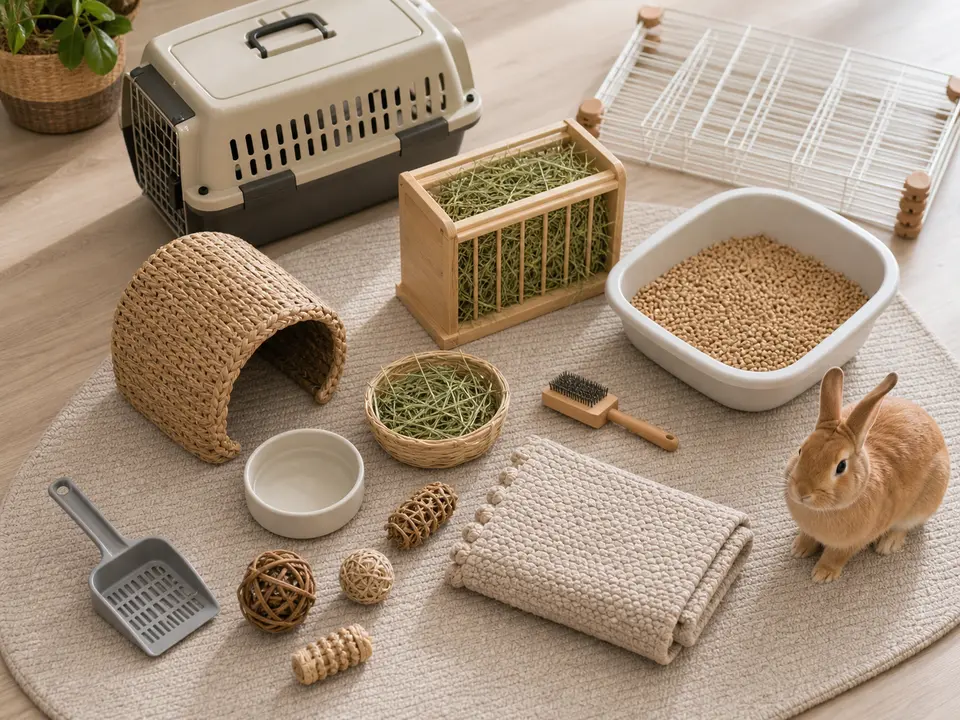
Chew-safe setup helpers
These are practical pieces for the routine, not clutter to buy all at once.
Affiliate links: Furball Cove may earn from qualifying purchases at no extra cost to you.