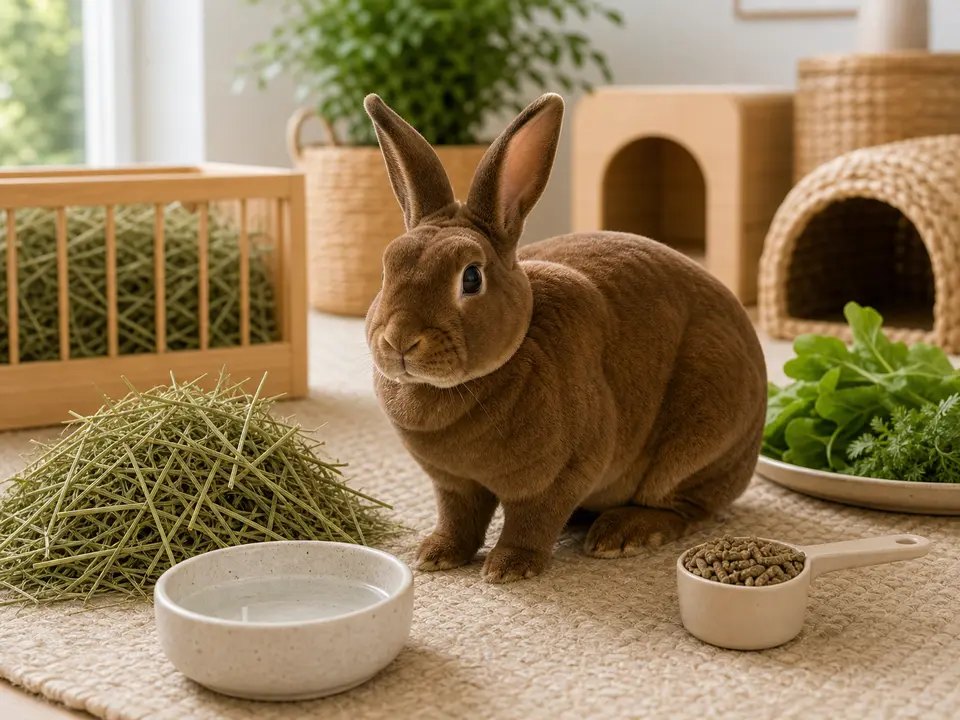
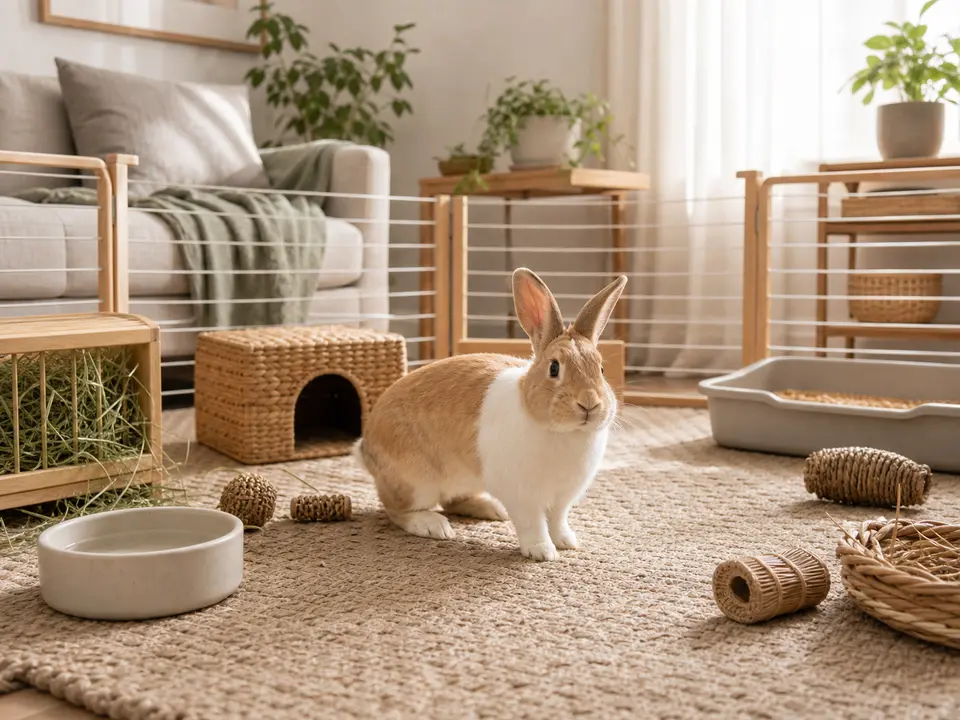
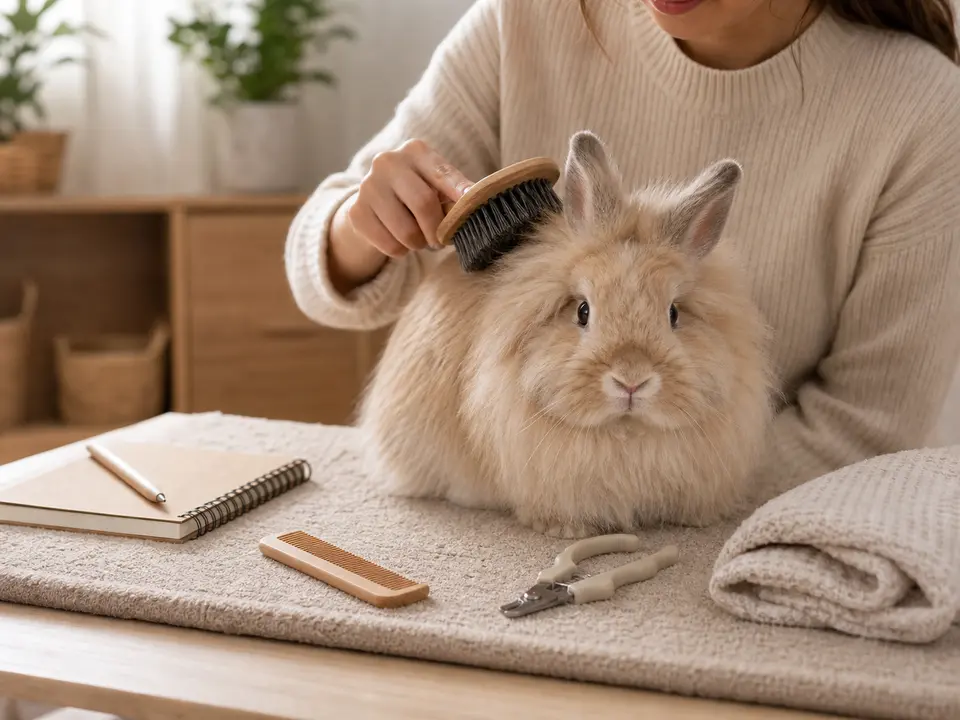
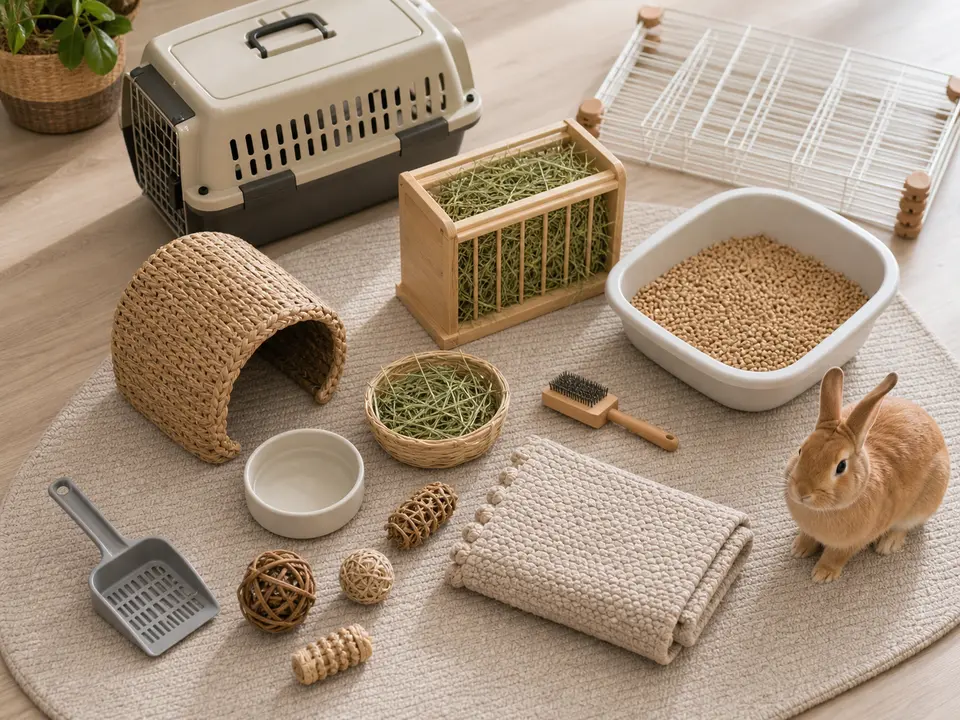
The best way to bond with a rabbit is to become calm, predictable, and safe at floor level. Sit nearby, let the rabbit approach, reward small brave choices, keep handling short, and build trust through the daily routine instead of trying to force affection.
Rabbit bonding often looks boring from the outside: sitting on the floor, refilling hay, offering a tiny treat, and stopping before the rabbit feels trapped. That ordinary patience is what makes many rabbits start choosing you.
Start on the floor
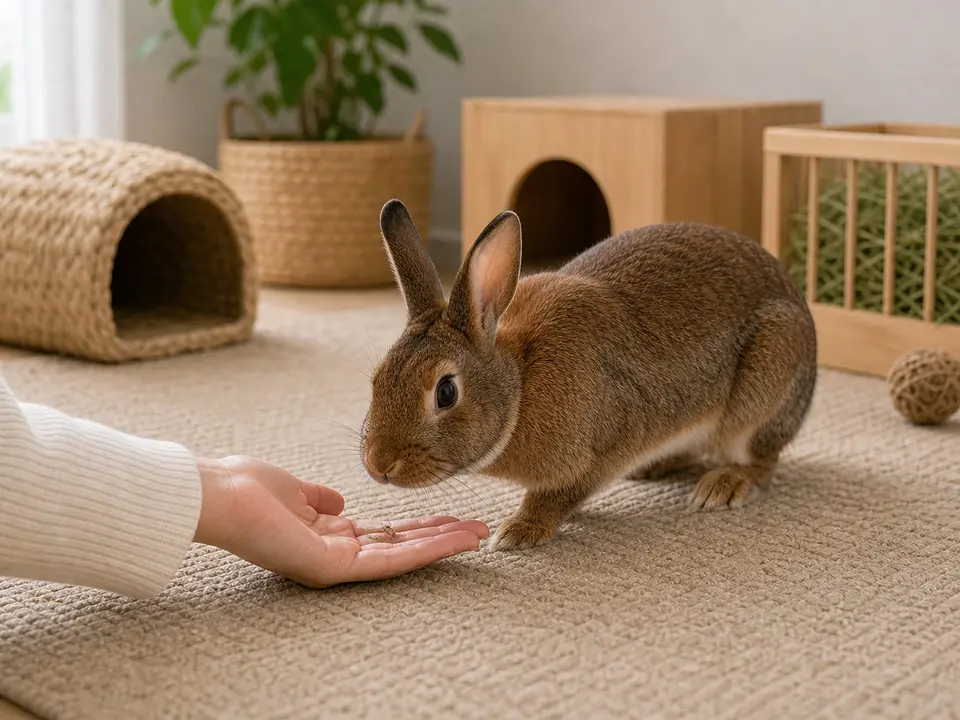
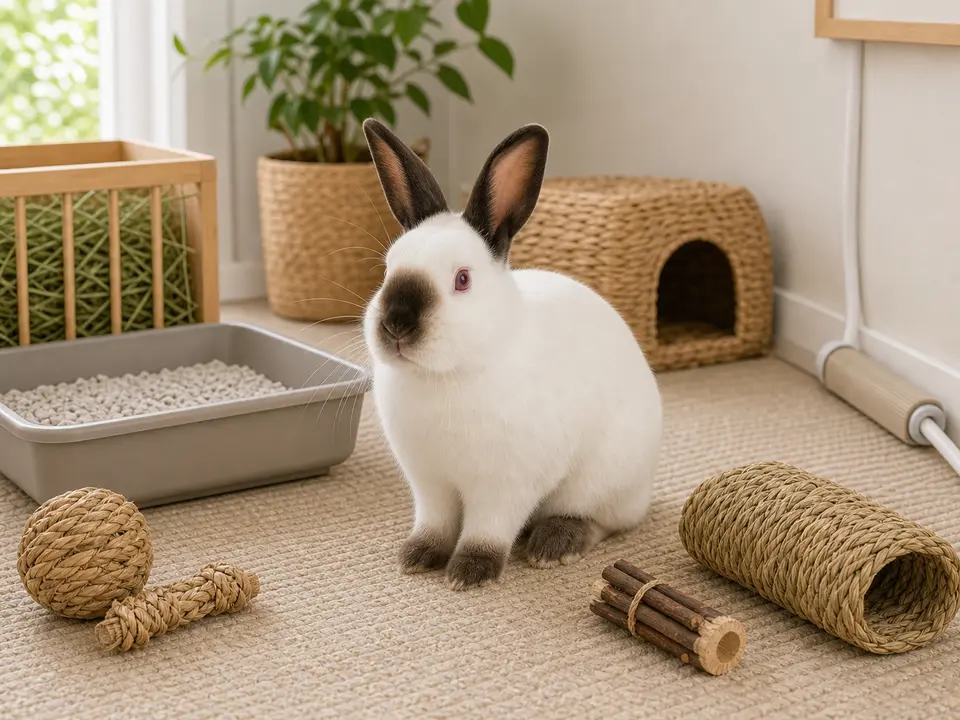
Sit near your rabbit with your body turned slightly sideways, hands calm, and the exit open. Let the rabbit sniff, circle, leave, and come back without being scooped up. Floor time teaches your rabbit that being near you does not automatically mean losing control of their body. That is the foundation of the bond: your rabbit learns that closeness can still include choice.
Use food without bribing every moment
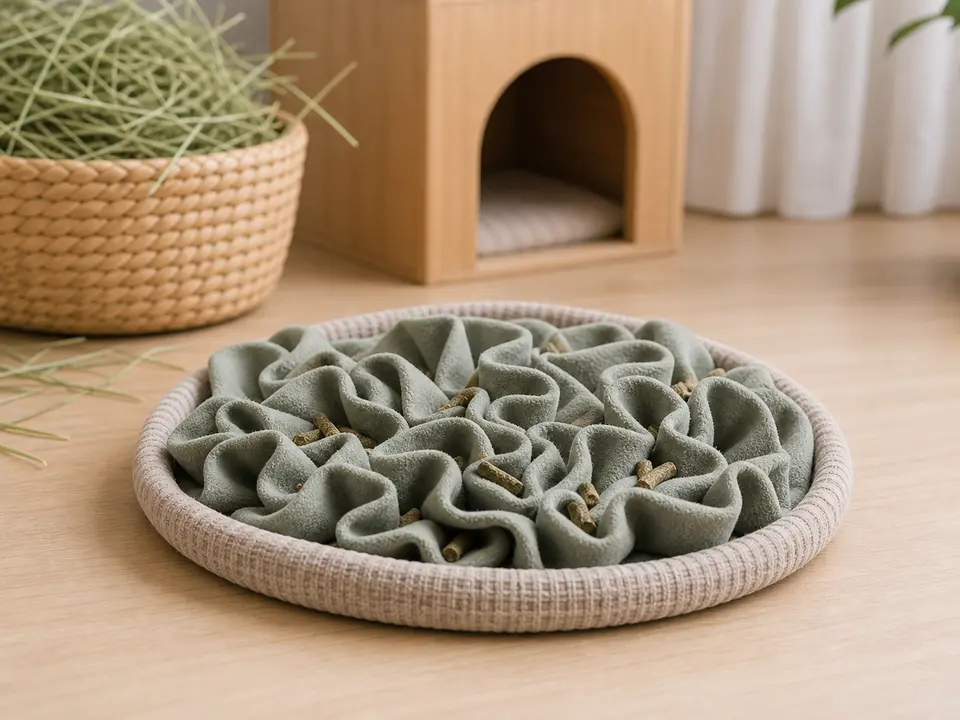
A small piece of safe greens or a tiny treat can help your rabbit connect your presence with good things. Keep it gentle: offer, wait, and let the rabbit decide. Do not chase with food or turn every interaction into a negotiation. The goal is trust, not a rabbit who only approaches for payment. Food should support the bond, not become the whole relationship.
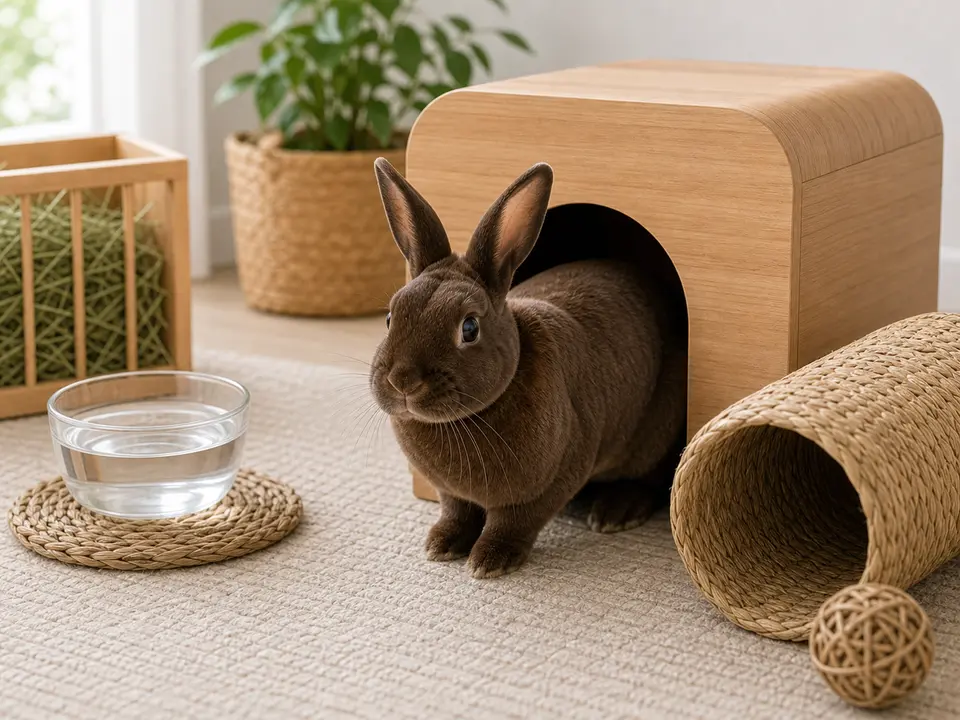
Let the hideout stay safe
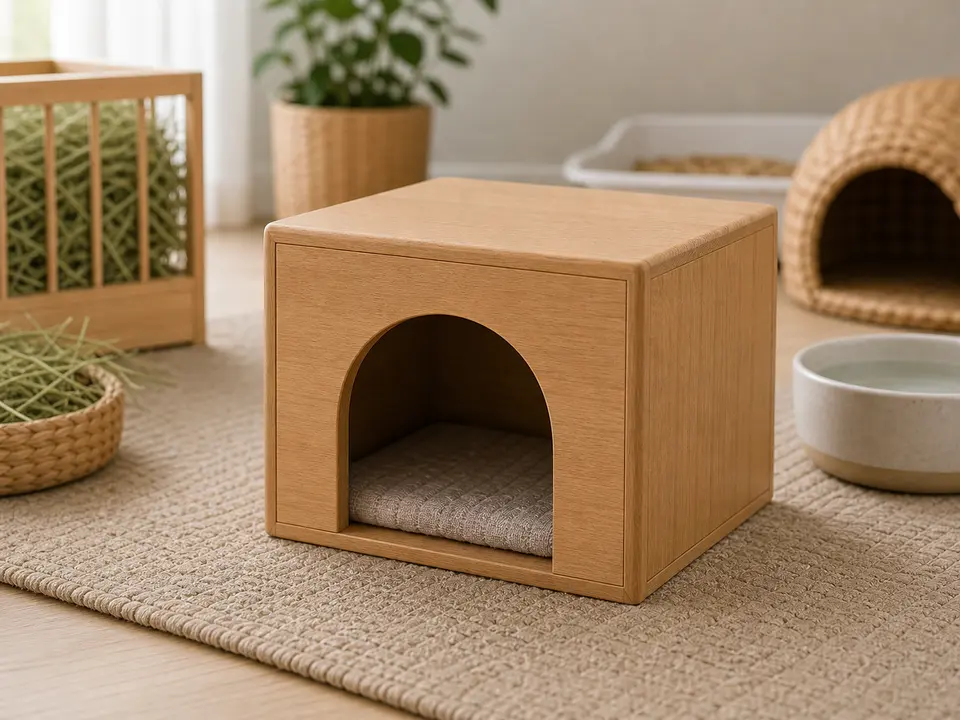
Do not reach into the hideout to prove you are friendly. A rabbit who can retreat without being followed is more likely to come back out. Keep the hideout in the bonding space, sit nearby, and let your rabbit learn that you respect the quiet places.
Practice touch in tiny pieces
When your rabbit chooses to stay near you, try one or two gentle strokes on the forehead or cheeks, then stop while the moment still feels easy. If the rabbit lowers their head, relaxes, or stays close, you can slowly build. If they turn away or tense up, pause.
Let the chores become predictable
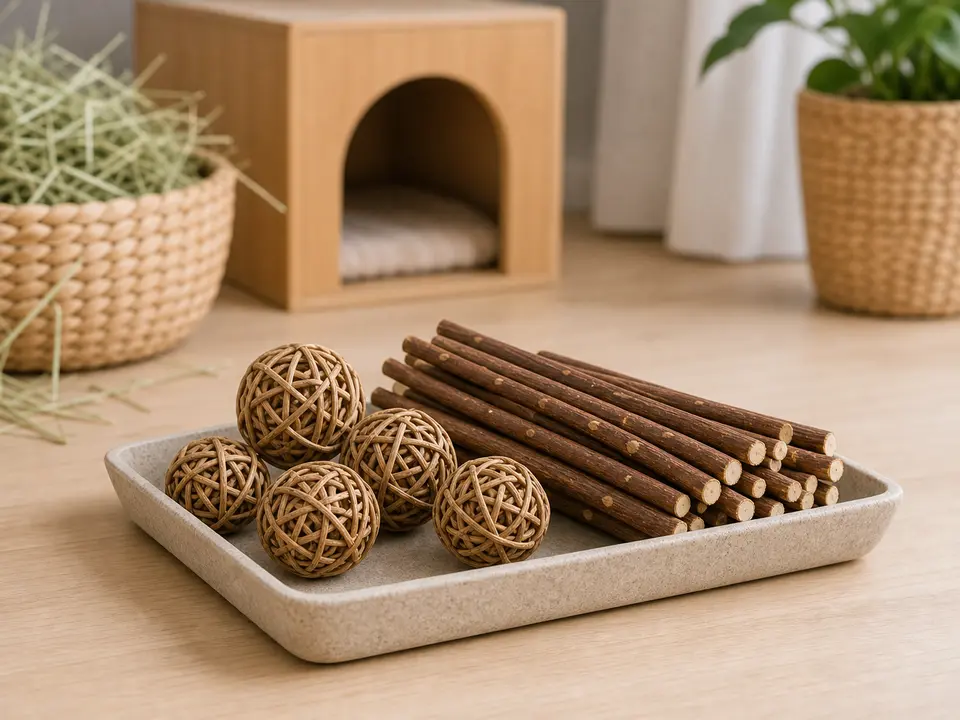
Refilling hay, freshening water, cleaning the litter box, and setting down safe chew work can all support bonding when you move calmly. Your rabbit starts to learn your pattern: you enter, good things happen, and the room stays predictable. That matters more than dramatic training sessions. If your rabbit follows you during chores or settles nearby afterward, count that as real progress.
Notice when progress is too much
If your rabbit starts hiding more, lunging, nipping, thumping, or avoiding food when you enter, slow down. Shorter sessions, more space, and less reaching often help. A bond should make daily care calmer over time. For severe fear, repeated biting, or panic around handling, ask a rabbit-savvy rescue, trainer, or vet for hands-on guidance.
Before you decide
Can your rabbit approach and leave without being grabbed?
Are bonding sessions short enough that they end calmly?
Does the hideout stay off-limits to hands?
Are you using daily care to build trust instead of forcing affection?
Next best moves
Bond at floor level and let your rabbit choose contact.
Use tiny food rewards gently, not as pressure.
Keep handling short and stop before the rabbit feels trapped.
Get experienced help if fear, lunging, or biting keeps escalating.
Quiet tools for trust-building
The best tools add choice, retreat space, and calm repetition instead of forcing contact.
Affiliate links: Furball Cove may earn from qualifying purchases at no extra cost to you.