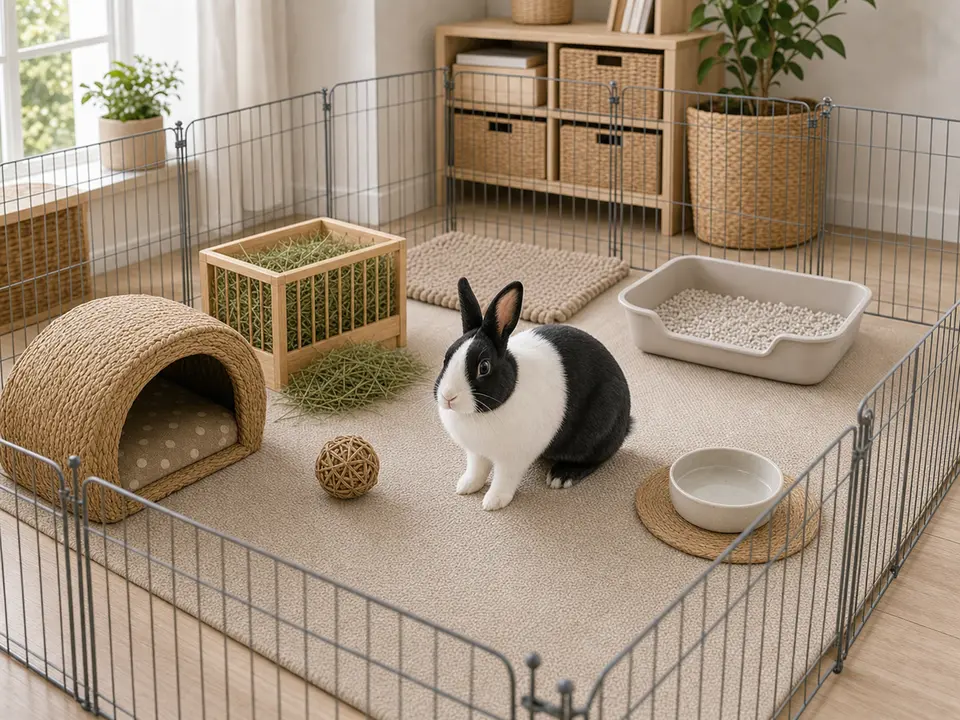
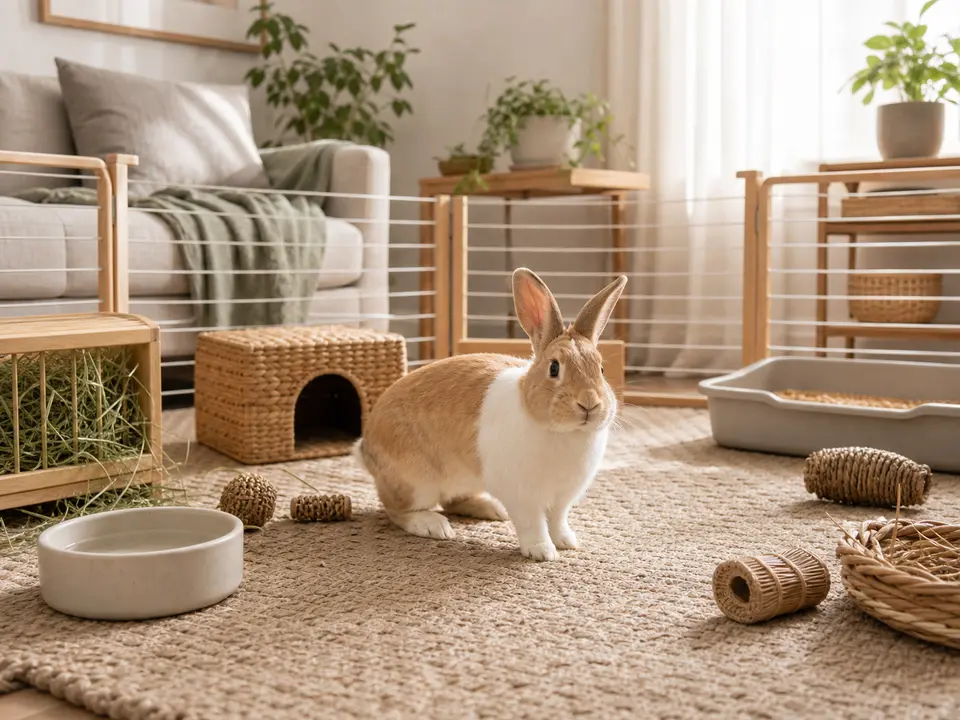
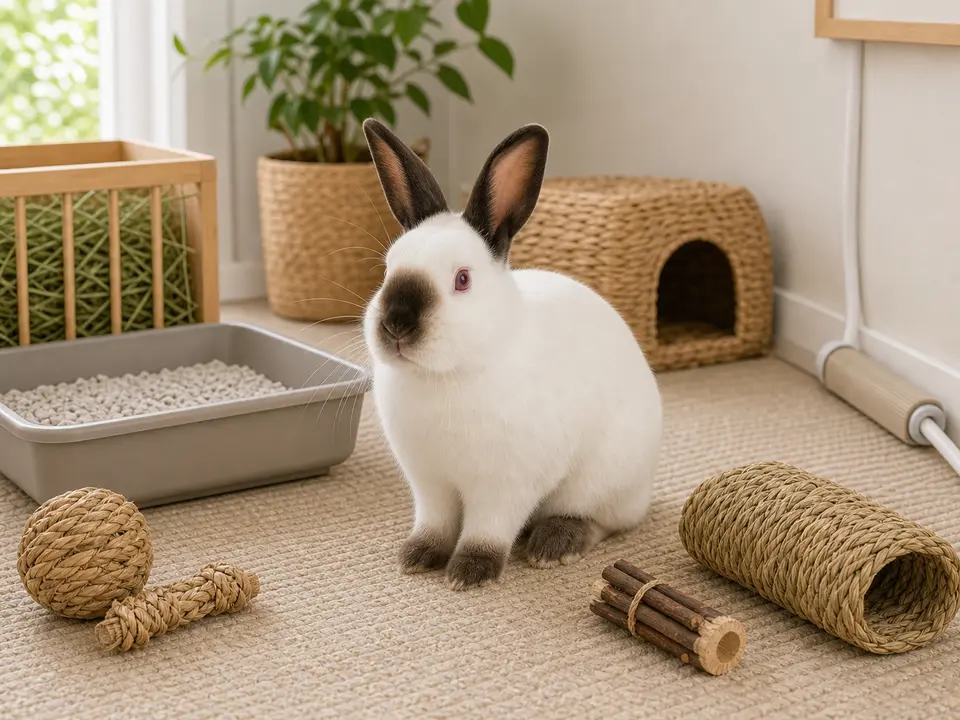
Bunny-proofing means removing or blocking the things a rabbit is likely to chew, squeeze behind, dig at, or slip on before free-roam time begins. Start with cords, flooring, plants, baseboards, furniture gaps, and safe chew options, then expand freedom as the room proves itself.
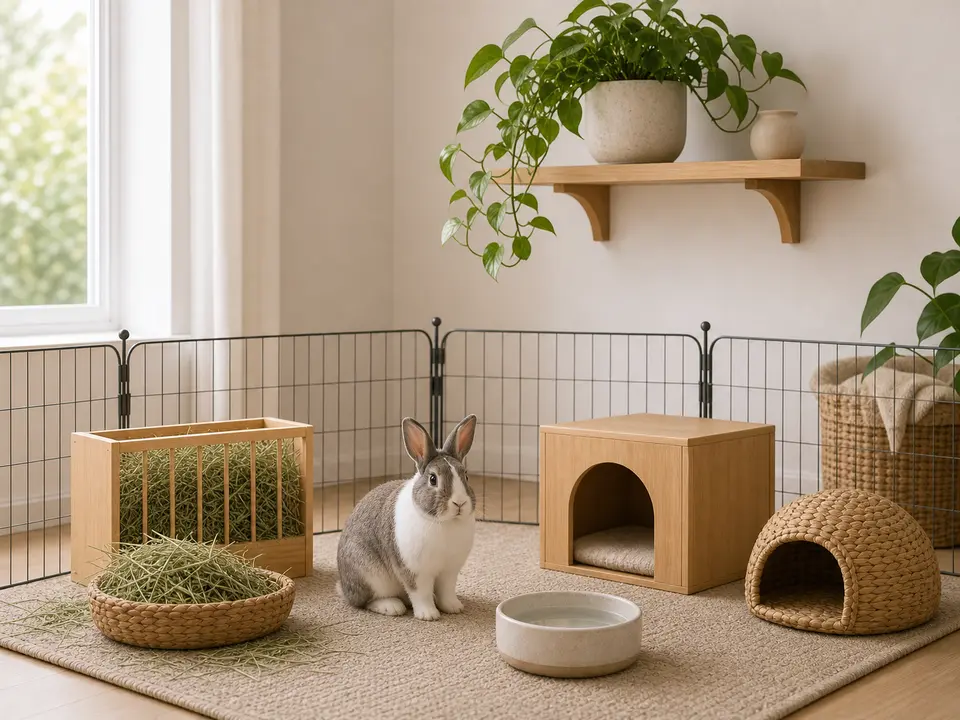
A good bunny-proofed room does not look like panic. It looks calm, simple, and intentional: cords hidden, rugs steady, plants out of reach, hay and litter easy to find, and safe textures available before your rabbit chooses the furniture.
Protect every cord first
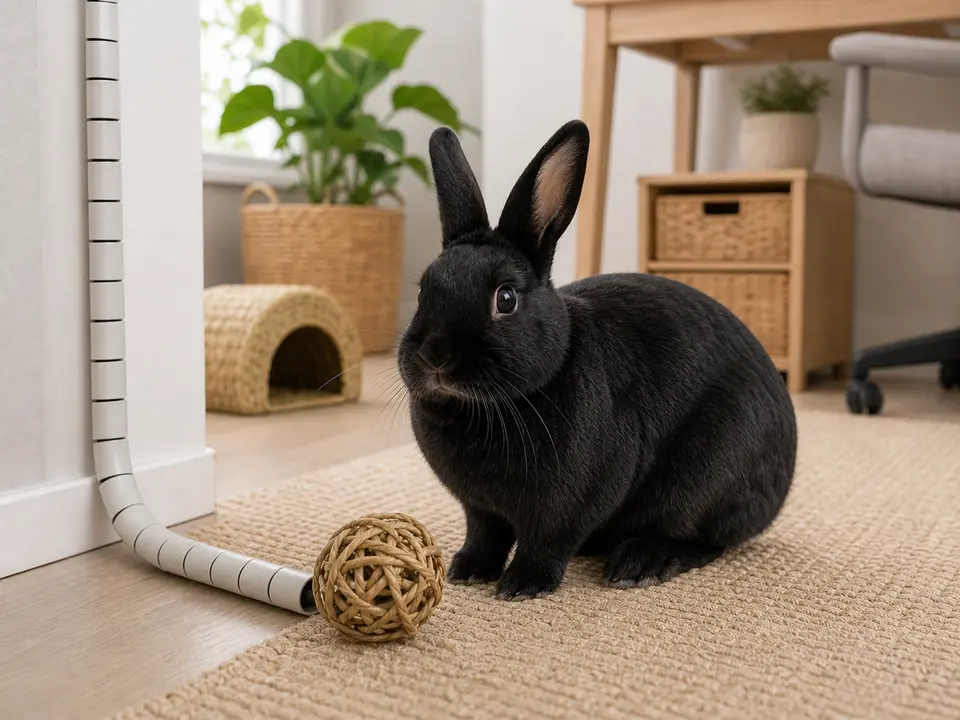
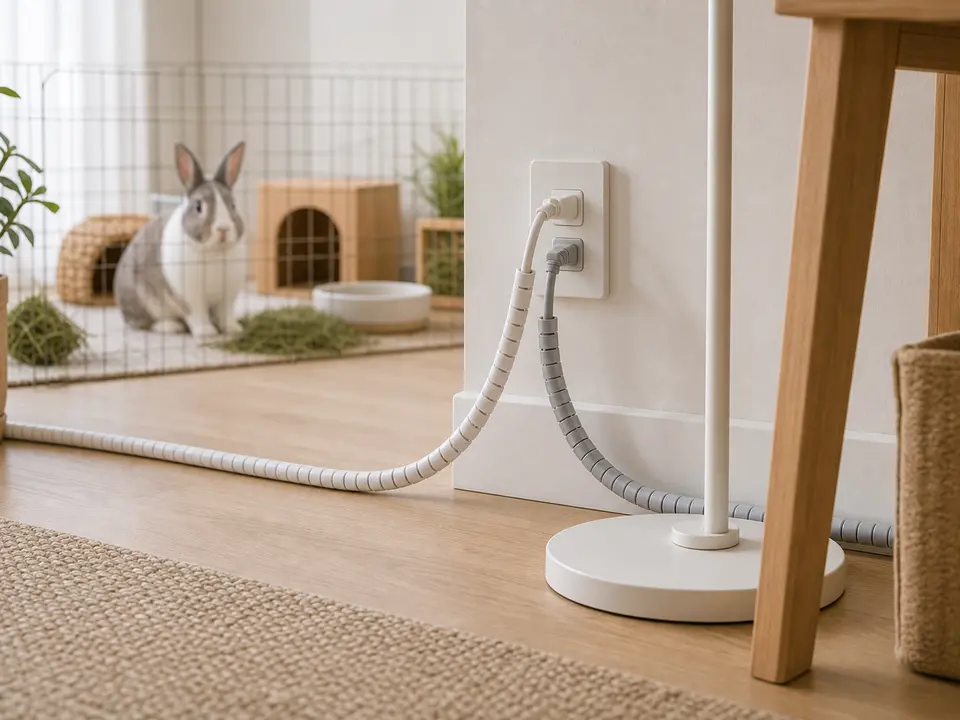
Cords are the first priority because one quick chew can injure your rabbit and ruin expensive equipment. Check behind desks, nightstands, lamps, chargers, routers, and media cabinets. Use cord covers, blocked gaps, raised cables, and furniture placement so your rabbit cannot reach the wire even when you are not staring at them.
Make the floor safe to move on
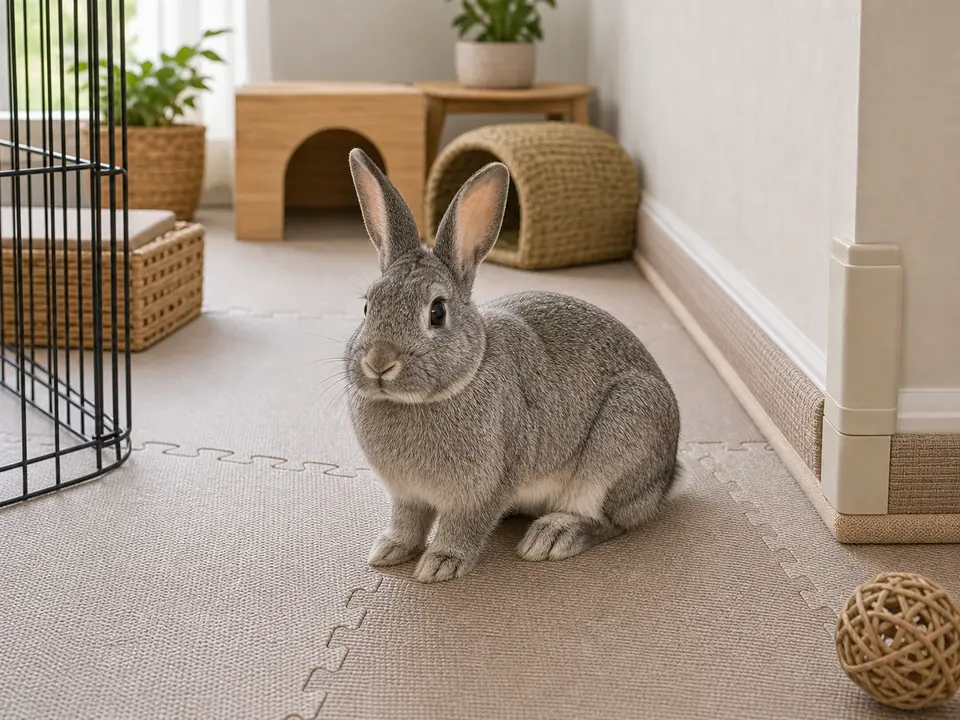
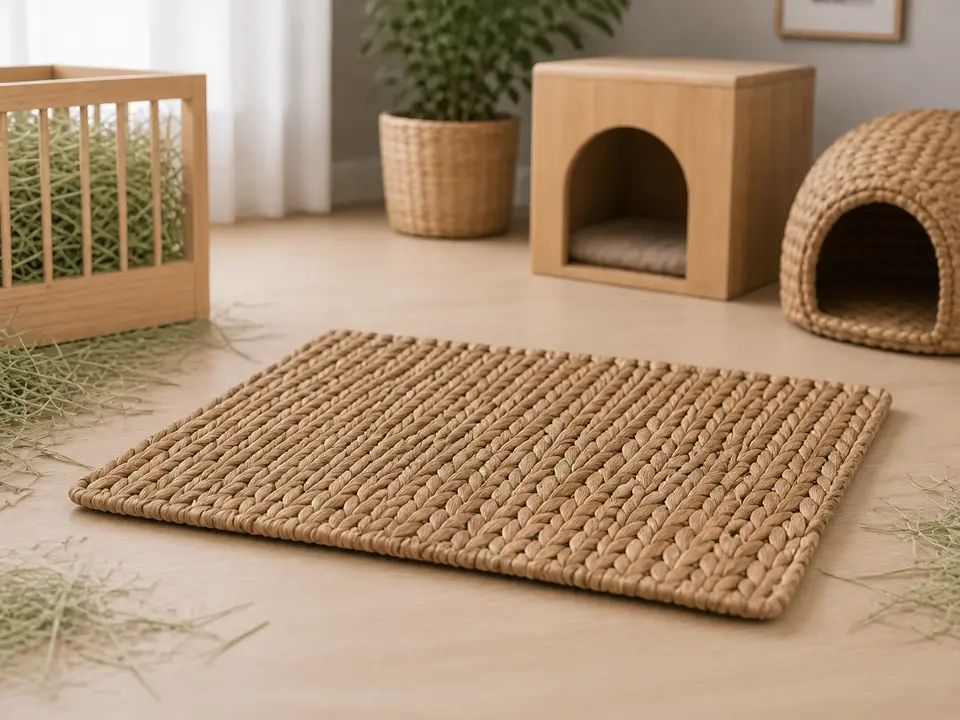
Slick floors can make a rabbit hesitate, slide, or avoid exercise. Add washable rugs or mats along the paths between hay, water, litter, hideouts, and favorite resting spots. If your rabbit digs or chews rug edges, choose flatter textures, block the edge, or redirect with cardboard and safe chew work.
Move plants completely out of reach
Do not rely on a rabbit politely ignoring a houseplant. Move plants to closed rooms, high shelves the rabbit cannot access, or hanging spots that do not drop leaves into the play area. Check fallen leaves too. A plant is only safe in a rabbit room if the rabbit cannot nibble it.
Give chewing a better job
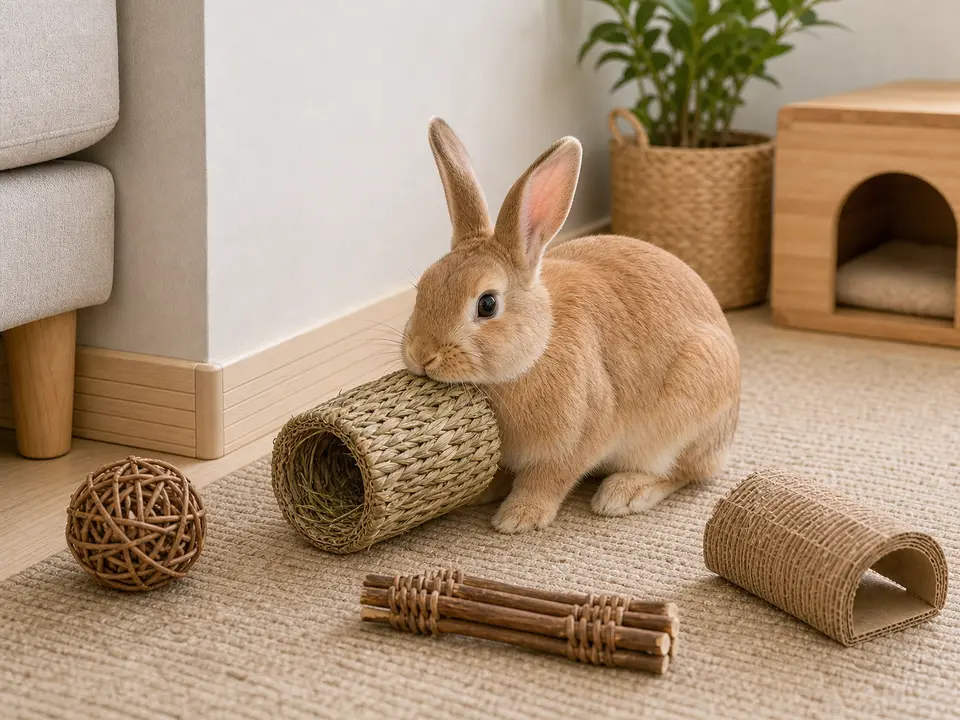
Bunny-proofing works better when you offer allowed chewing before trouble starts. Place hay, cardboard, willow, seagrass, or other rabbit-safe textures near the spots your rabbit likes to investigate. The goal is not to stop chewing altogether. It is to make the safe choice easier than the baseboard.
Block gaps and tempting edges
Look at the room from ankle height. Block gaps behind appliances, couches, beds, bookshelves, and cabinets where a rabbit could hide, chew, or get stuck. Protect baseboards and furniture legs in the zones your rabbit visits most. Clean design matters, but access control matters more.
Test the room in short sessions
Start with supervised floor time and watch what your rabbit notices first. A rabbit will show you the weak spots: a cord cover they push, a rug corner they dig, a plant leaf you missed, or a gap they keep returning to. Fix the room between sessions instead of treating the first setup as finished.
Before you decide
Are all cords covered, lifted, blocked, or outside the rabbit area?
Does the floor give traction where the rabbit actually moves?
Are plants and fallen leaves completely out of reach?
Are baseboards, rug edges, and furniture legs protected where chewing starts?
Can you supervise short sessions and fix weak spots as they appear?
Next best moves
Bunny-proof one room well before expanding free-roam space.
Protect cords before training; assume a curious rabbit may chew before you see it happen.
Use traction and safe chew options so the room works with rabbit instincts.
Re-check the room after moving furniture, adding plants, or changing the setup.
Chew-safe setup helpers
These are practical pieces for the routine, not clutter to buy all at once.
Affiliate links: Furball Cove may earn from qualifying purchases at no extra cost to you.
Start with cords, then flooring, plants, baseboards, furniture gaps, and safe chew alternatives. Cords come first because they are the highest immediate risk.
Can I train a rabbit not to chew cords?
You can redirect chewing, but cord access should be blocked regardless. Bunny-proofing is the protection; training is extra support.
How do I know a room is safe for free-roam time?
Test it in short supervised sessions. If your rabbit keeps targeting a spot, the room is giving you a setup clue that needs fixing.