Updated
Cat food safety
Can Cats Eat Cheese? Usually Skip It
Usually skip
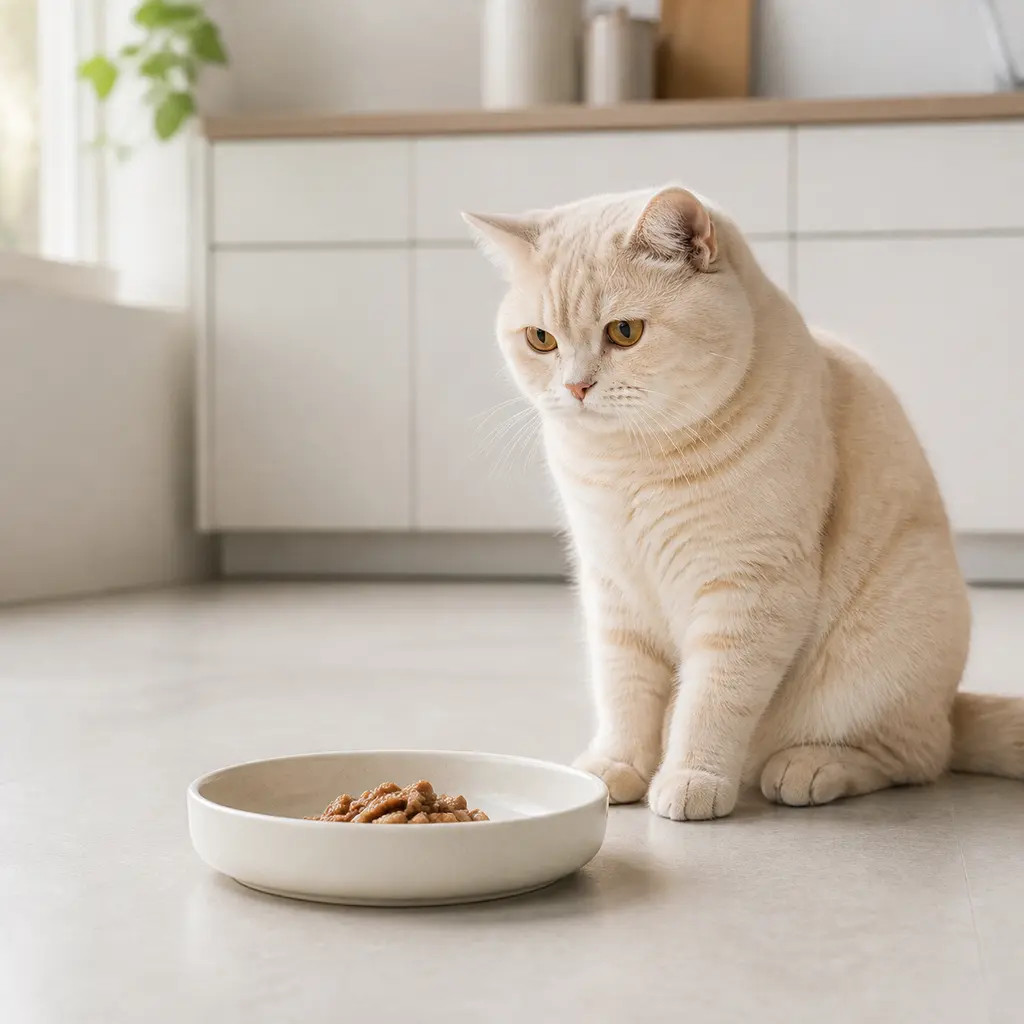
Cheese is usually best skipped. A tiny plain crumb may not hurt every cat, but it is not a good routine treat.
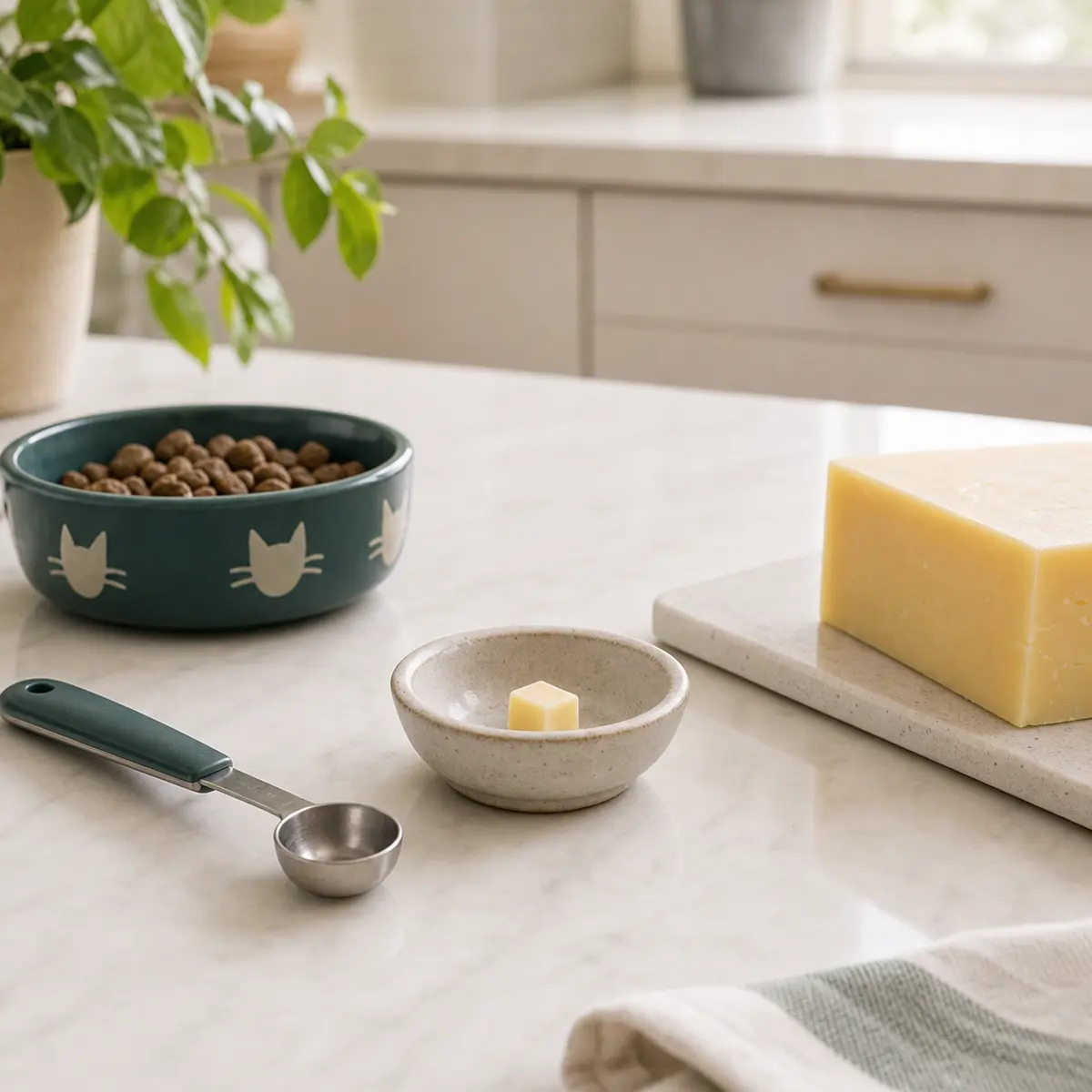 Cheese
Call if symptoms appear
Call your veterinarian if the cheese contained garlic, onion, mold, alcohol, or if repeated vomiting, pain, or lethargy follows.
Dairy is not a reward upgrade
Cheese adds lactose, salt, and fat without solving a cat nutrition need.
Flavorings matter
Garlic, onion, herbs, mold, and spicy add-ins can change the risk quickly.
If your cat gets a piece
- If your cat already ate a tiny plain crumb, remove the rest and watch for stomach upset.
- Choose plain cooked chicken or another cat-safe treat instead of dairy.
Skip cheese when
- Large pieces, salty cheese, blue cheese, garlic cheese, onion cheese, spicy cheese, cheese spreads, cream cheese dips, and moldy cheese.
- Cheese for cats with pancreatitis risk, obesity, dairy sensitivity, kidney disease, heart disease, or prescription diets unless your veterinarian approves.
Watch
- Vomiting, diarrhea, gas, belly discomfort, thirst, appetite changes, or itchiness.
Portion
No planned portion is needed.
Helpful food-safety supplies
Optional tools for measuring, storing, serving, and cleaning up tiny portions safely.
Affiliate links: Furball Cove may earn from qualifying purchases at no extra cost to you.