Updated
Cat food safety
Can Cats Eat Clover? Usually Skip It
Use caution
Usually skip clover. A clean identified nibble may not be an emergency, but yard clover can carry herbicides, fertilizer, or the wrong plant.
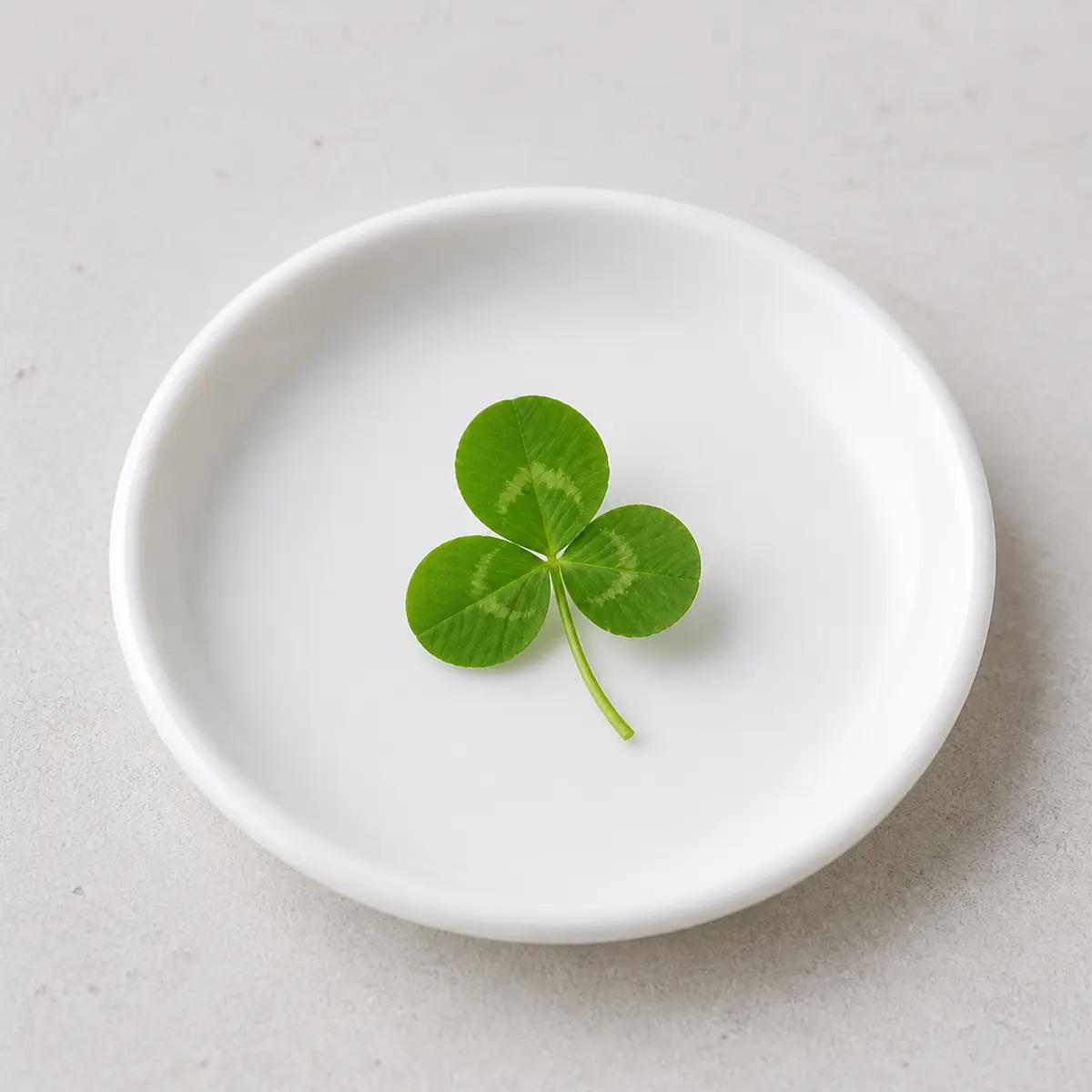 Clover
Call for treated plants or symptoms
Call your veterinarian if the clover may have been treated, the plant was not clearly identified, your cat ate a lot, or symptoms start.
Yard plants are messy evidence
The risk often comes from sprays, fertilizer, mold, or misidentification rather than a clean single leaf.
Repeated grazing is a health clue
If your cat keeps eating plants or vomiting afterward, treat that as a reason to call your veterinarian instead of adding more greens.
Check the source first
- Do not collect clover from lawns, parks, roadsides, or treated soil.
- Remove access if your cat keeps grazing or vomiting after plant chewing.
- Use cat grass instead if your veterinarian says plant chewing is okay for your cat.
Skip treated or unknown plants
- Treated lawn clover, unknown weeds, herbicide or fertilizer exposure, moldy plant material, bouquets, and large amounts of plant chewing.
- Assuming a yard plant is safe because it looks like clover.
- Using clover for appetite, digestion, or hairballs.
Watch
- Drooling, vomiting, diarrhea, pawing at the mouth, refusing food, lethargy, wobbliness, or repeated plant chewing.
Portion
No routine serving. A nibble is different from repeated grazing or treated lawn exposure.
Helpful food-safety supplies
Optional tools for measuring, storing, serving, and cleaning up tiny portions safely.
Affiliate links: Furball Cove may earn from qualifying purchases at no extra cost to you.