Updated
Cat food safety
Can Cats Eat Crickets? Only Feeder-Grade And Tiny
Use caution
Only consider crickets if they are feeder-grade, plain, and tiny. Do not let cats eat wild insects.
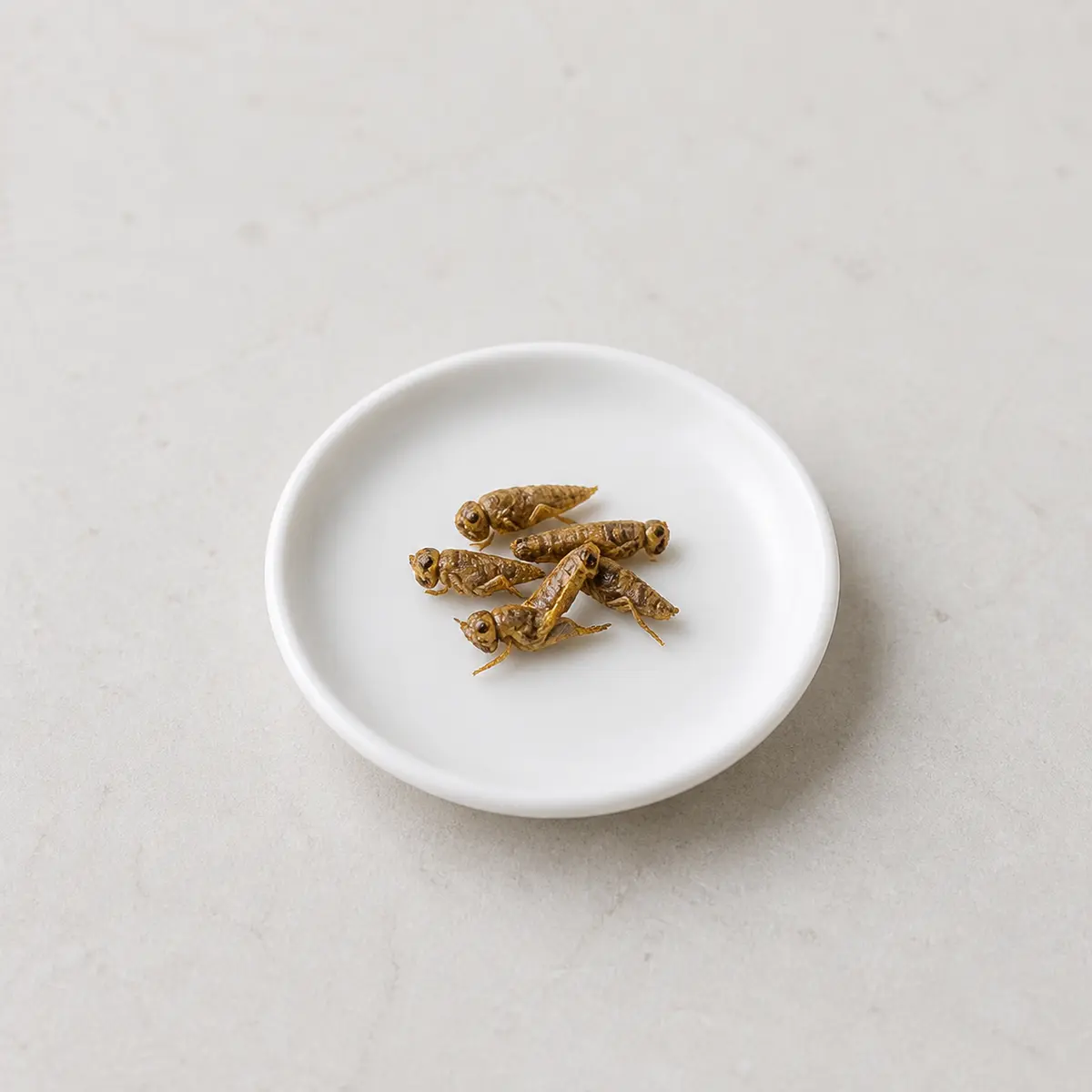 Crickets
Call for pesticide risk or symptoms
Call your veterinarian if your cat ate wild insects, pesticide-exposed insects, a large amount, or has vomiting, swelling, coughing, or weakness.
Wild insects are unknown exposure
A cricket from the yard is not the same as a plain feeder-grade insect from a controlled source.
Crunchy treats can choke
Choose tiny pieces and stop if your cat coughs, gags, vomits, or seems uncomfortable.
Use only controlled-source insects
- Use only plain feeder-grade crickets from a reputable source, if any.
- Keep the amount tiny and choose pieces your cat can chew easily.
- Stop if vomiting, diarrhea, coughing, itching, or appetite changes appear.
Skip wild or seasoned insects
- Wild crickets, live insects, yard insects, pesticide exposure, seasoned cricket snacks, salted insects, reptile-feed insects of unknown quality, and large crunchy pieces.
- Crickets for cats with insect allergy signs, digestive disease, prescription diets, or poor appetite unless your veterinarian approves it.
- Letting insect treats replace complete cat food.
Watch
- Vomiting, diarrhea, coughing, choking, drooling, itching, facial swelling, refusing food, or behavior that feels wrong.
Portion
One tiny piece is enough. Crickets should stay occasional if used at all.
Helpful food-safety supplies
Optional tools for measuring, storing, serving, and cleaning up tiny portions safely.
Affiliate links: Furball Cove may earn from qualifying purchases at no extra cost to you.