Updated
Cat food safety
Can Cats Eat Ham? Usually Skip It
Usually skip
Usually skip ham. It is salty, processed, and often too fatty for cats.
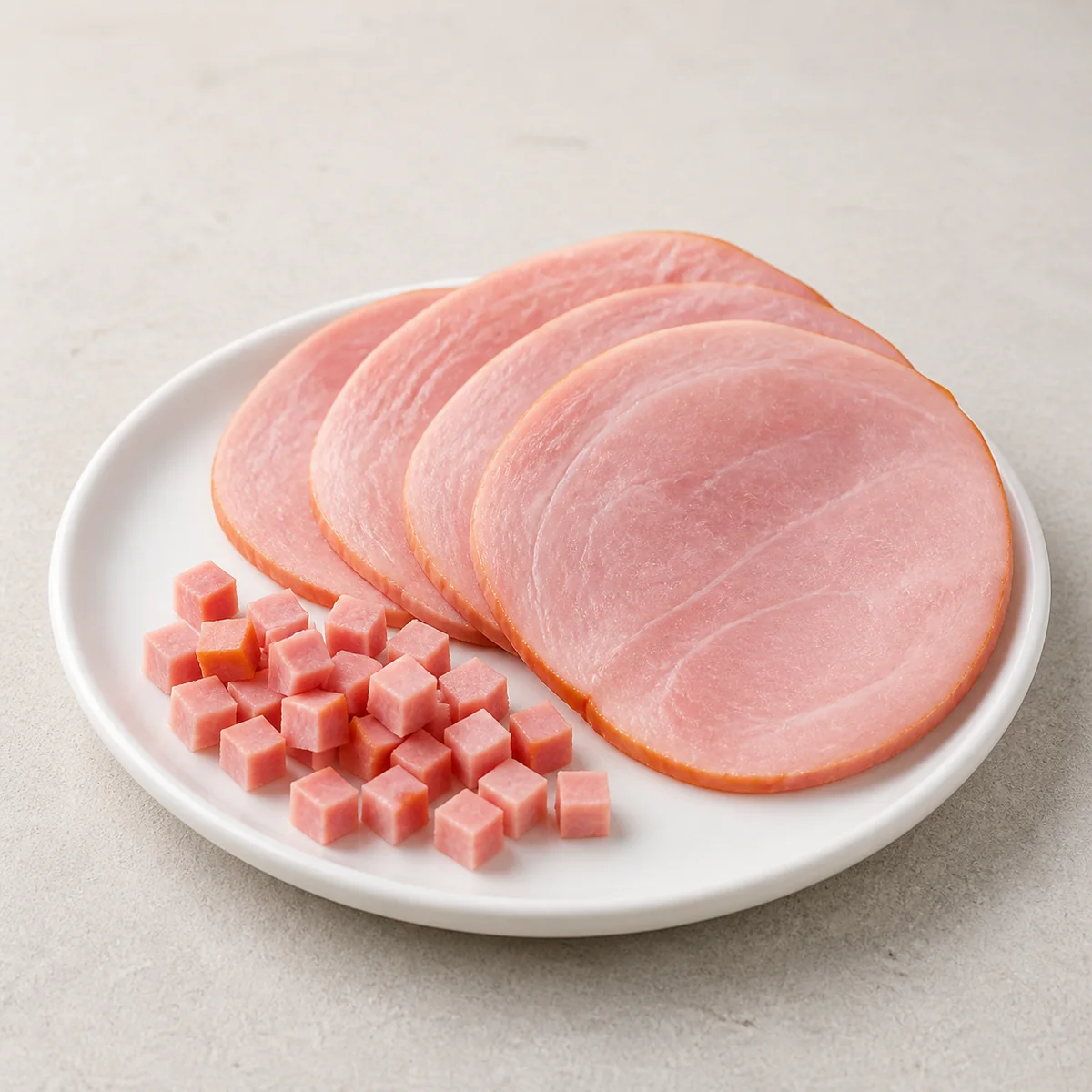 Ham
HamCall for bones, alliums, or symptoms
Call your veterinarian if ham included bones, garlic, onion, heavy seasoning, glaze, your cat ate a lot, or symptoms start.
Salt is the problem
Even plain-looking ham can be much saltier than a cat treat should be.
Glaze changes the answer
Honey, sugar, spices, garlic, onion, and bones are common around ham.
Do not make it a treat
- Do not make ham a routine treat.
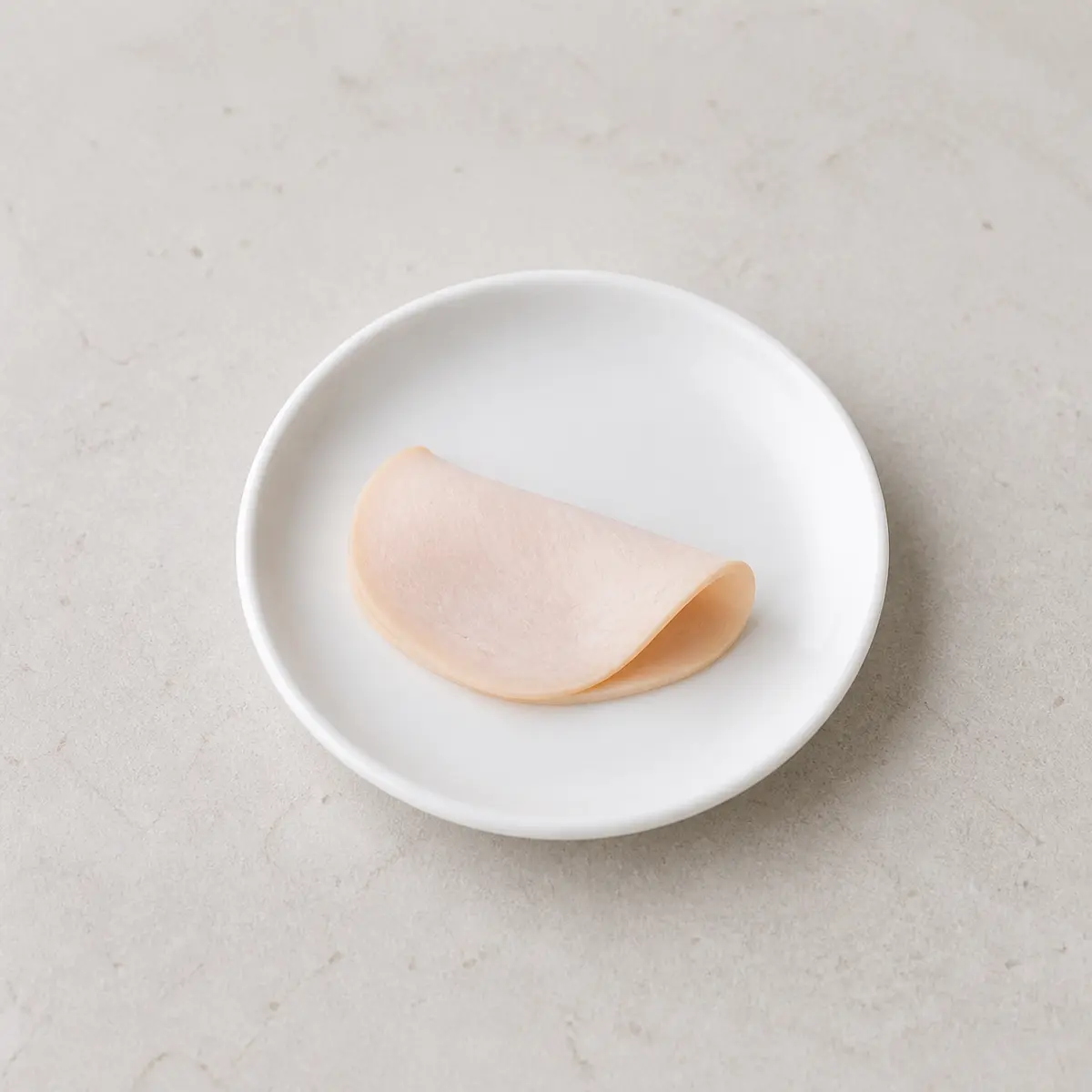
- If your cat stole a tiny plain bite, remove the rest and monitor.
- For larger amounts, check salt, glaze, seasoning, fat, and any garlic or onion.
Skip salt, glaze, fat, and bones
- Glazed ham, honey ham, smoked ham, deli ham, cured ham, salty pieces, fatty edges, bones, garlic, onion, spice rubs, and sauces.
- Ham for cats with kidney disease, heart disease, pancreatitis risk, obesity, urinary diets, prescription diets, or digestive disease unless your veterinarian approves it.
- Using ham to encourage a poor appetite.
Watch
- Vomiting, diarrhea, thirst, belly pain, refusing food, lethargy, or behavior that feels wrong.
Portion
No routine serving. A tiny plain accidental bite is usually a monitor situation; a meal-sized amount deserves advice.
Helpful food-safety supplies
Optional tools for measuring, storing, serving, and cleaning up tiny portions safely.
Affiliate links: Furball Cove may earn from qualifying purchases at no extra cost to you.