Updated
Cat food safety
Can Cats Eat Passion Fruit? Usually Skip It
Usually skip
Usually skip passion fruit. Cats do not need sweet, seedy, acidic fruit.
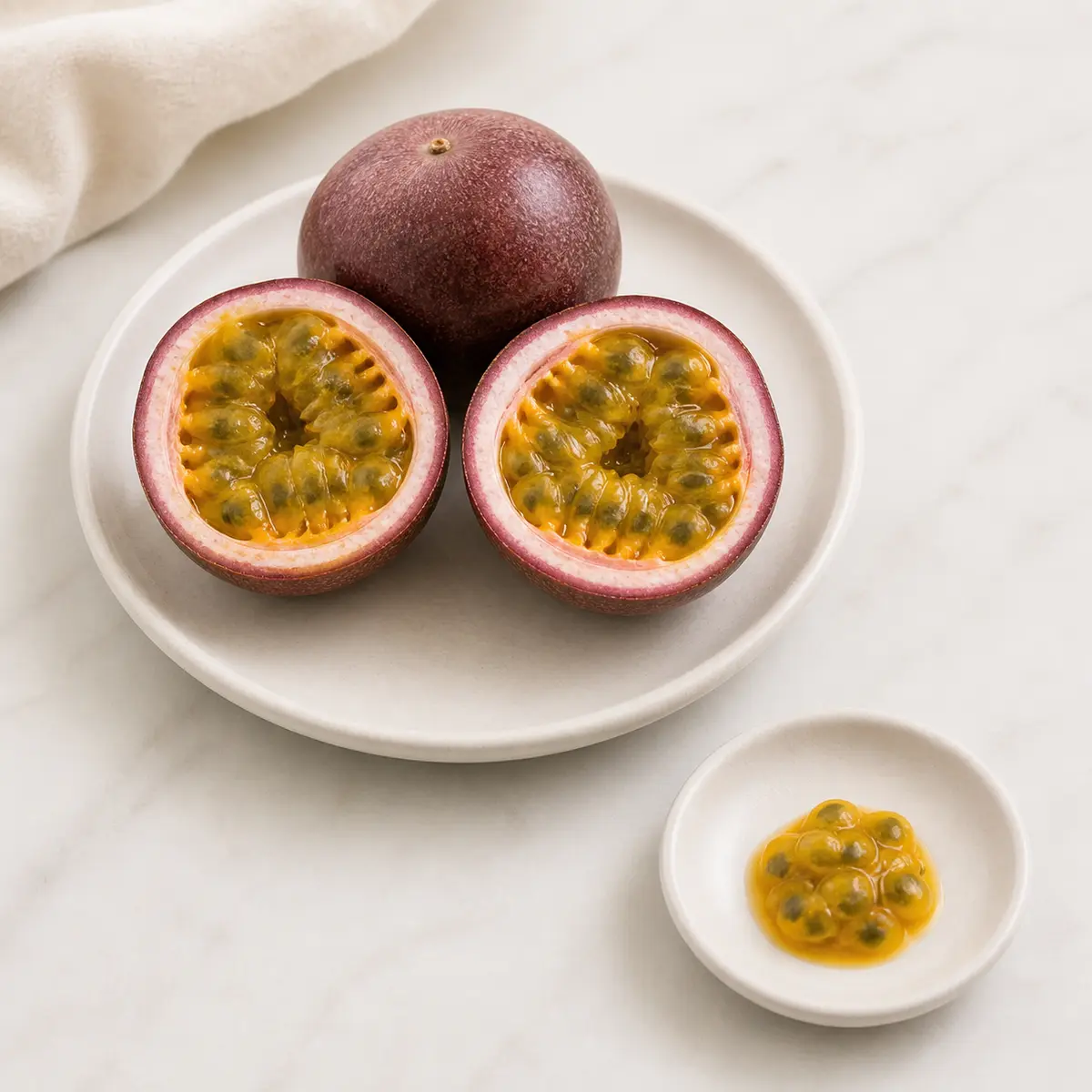 Passion Fruit
Ask your vet
Call your veterinarian if your cat ate rind, plant material, a large amount, sweetened passion fruit, or repeated symptoms start.
Seeds make it awkward
The edible pulp is naturally seedy, so it is harder to make a clean tiny cat-safe portion.
Skip sweet fruit by default
Cats do not need fruit sugar or acidic tropical fruit in their routine.
How to handle it
- Do not offer rind, leaves, stems, or large spoonfuls of seeded pulp.
- If a tiny lick happened, check for added sugar, syrup, alcohol, dairy, or dessert ingredients.
Avoid
- Rind, leaves, stems, large amounts of seeds, juice, syrup, smoothies, cocktails, desserts, sweetened pulp, and spoiled fruit.
- Passion fruit for diabetic cats, cats with digestive sensitivity, prescription diets, or poor appetite unless your veterinarian approves it.
Watch
- Vomiting, diarrhea, drooling, gagging, belly discomfort, refusing food, or behavior that feels wrong.
Portion
No routine serving. If a healthy cat licked a tiny amount of plain ripe pulp, remove the rest and watch.
Helpful food-safety supplies
Optional tools for measuring, storing, serving, and cleaning up tiny portions safely.
Affiliate links: Furball Cove may earn from qualifying purchases at no extra cost to you.