Updated
Cat food safety
Can Cats Eat Pine Nuts? Usually Skip Them
Usually skip
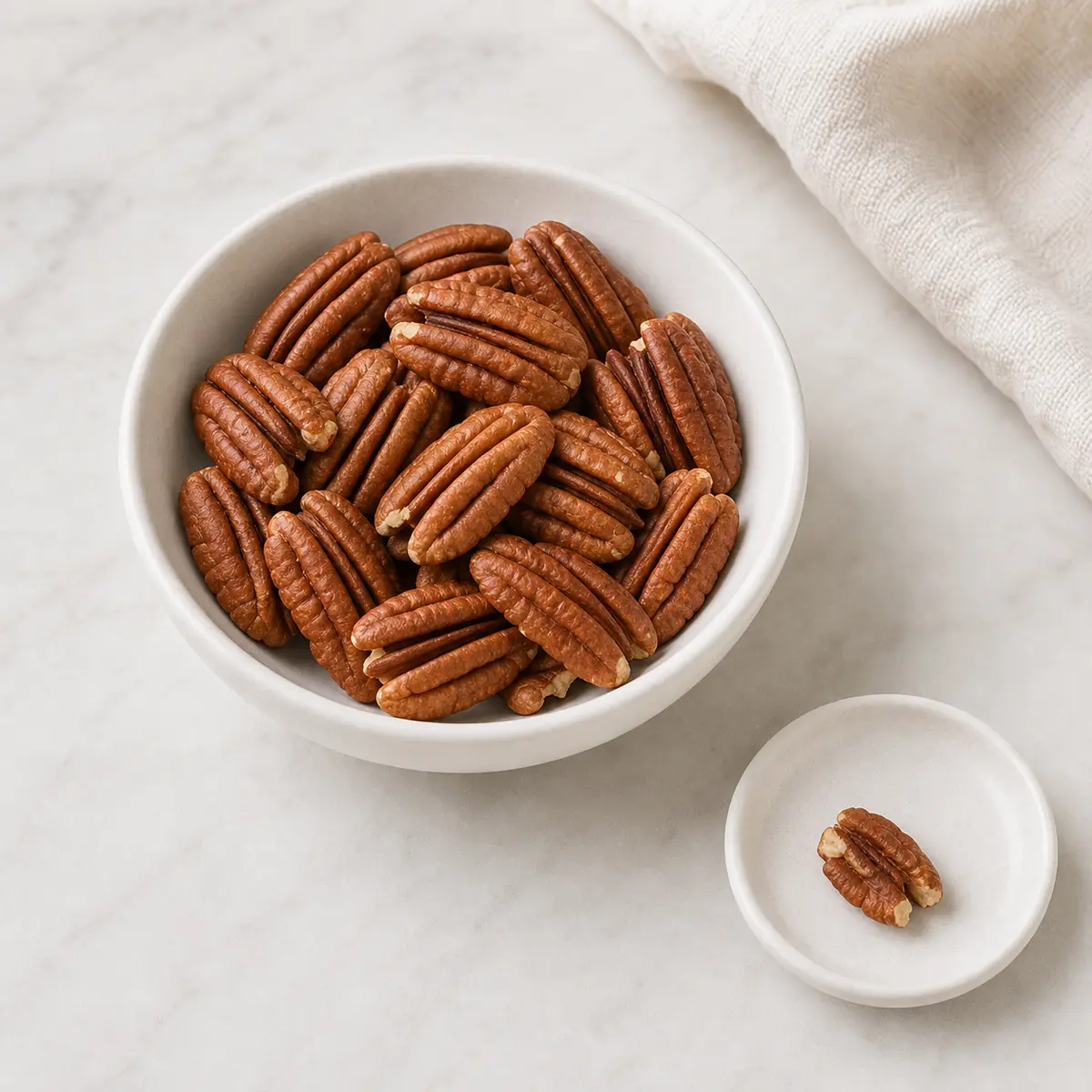
Usually skip pine nuts. They are fatty seeds, not useful cat treats.
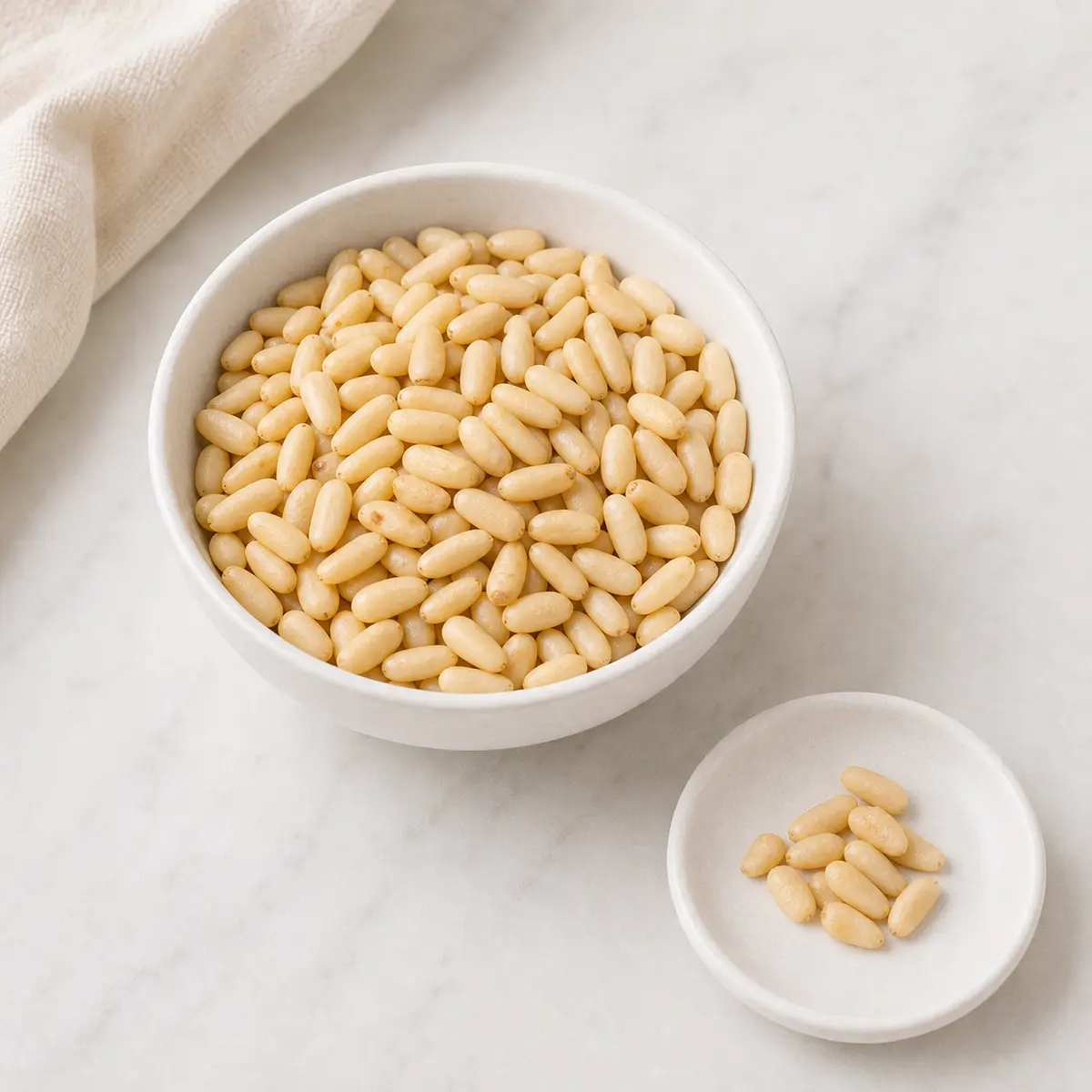 Pine Nuts
Ask your vet
Call your veterinarian if pine nuts came with garlic, onion, pesto, mold, a large amount, or repeated vomiting or weakness starts.
Pesto changes the answer
Pine nuts often appear with garlic, cheese, salt, and oil; that is not a plain nut question.
Tiny because fat adds up
A small amount of high-fat food can bother cats with sensitive stomachs or pancreatitis risk.
How to handle it
- Do not offer pine nuts as a snack. If a tiny piece was eaten, confirm it was plain, fresh, and unsalted.
- Check whether pesto, garlic, onion, salt, cheese, oil, or seasoned food was involved.
Avoid
- Pesto, salted pine nuts, roasted seasoned nuts, rancid nuts, moldy nuts, mixed nuts, garlic, onion, cheese, oil-heavy dishes, and large portions.
- Pine nuts for cats with pancreatitis risk, obesity, digestive disease, food allergy signs, prescription diets, or poor appetite unless your veterinarian approves them.
Watch
- Vomiting, diarrhea, belly pain, coughing, gagging, itching, swelling, lethargy, or refusing food.
Portion
No routine serving. If a cat got a tiny plain piece, check for pesto, salt, garlic, oil, and mold.
Helpful food-safety supplies
Optional tools for measuring, storing, serving, and cleaning up tiny portions safely.
Affiliate links: Furball Cove may earn from qualifying purchases at no extra cost to you.