Updated
Rabbit food check
Can Rabbits Eat Alfalfa Hay? It Depends on Age
Yes for babies; usually not adult hay
Yes—but age and health decide whether it fills the feeder. Alfalfa hay suits babies and nursing mothers, and a veterinarian may use it in some adult care plans. Most healthy adults need unlimited timothy, orchard, oat, meadow, or another grass hay instead.
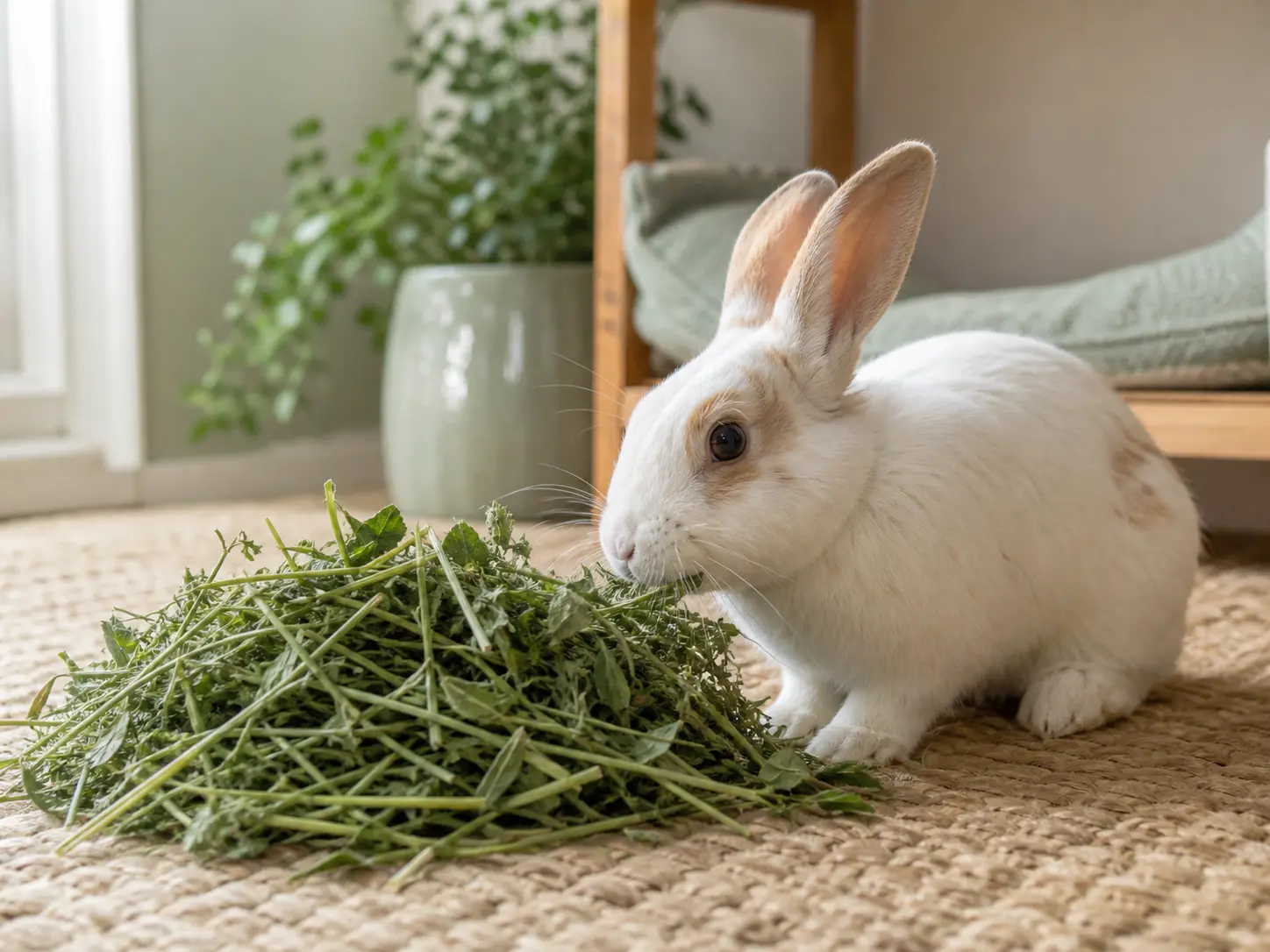 Alfalfa Hay
Start with the rabbit, not the bale
House Rabbit Society recommends alfalfa hay for babies and nursing mothers. Adult use should match a specific health need. Before changing an adult feeder, ask a rabbit-savvy veterinarian whether pregnancy, nursing, low weight, injury, age, or recovery justifies the richer hay. A growing rabbit and a healthy settled adult do not need the same pile.
Why healthy adults usually switch
Compared with common grass hays, alfalfa is more calorie-dense, higher in calcium, and lower in fiber. That richer profile can be useful at the right life stage but is a poor default for most healthy adult pets. Keep timothy, orchard, oat, meadow, or another appropriate grass hay available all day.
A few strands are not an emergency
If a healthy adult steals a mouthful from a younger rabbit's pile, remove access and refill the adult rack with grass hay. There is no reason to panic over a few clean strands. Call the veterinarian when eating or droppings slow down, the hay was spoiled, or the exposure is part of a larger diet or health concern.
Poor appetite needs a diagnosis
Do not answer weight loss or a sudden refusal of grass hay by pouring fragrant alfalfa into the rack. Dental pain, gut trouble, and other illness can change what a rabbit is willing to chew. Arrange a rabbit-savvy veterinary exam and use alfalfa only if it belongs in the resulting care plan.
Read the hay name twice
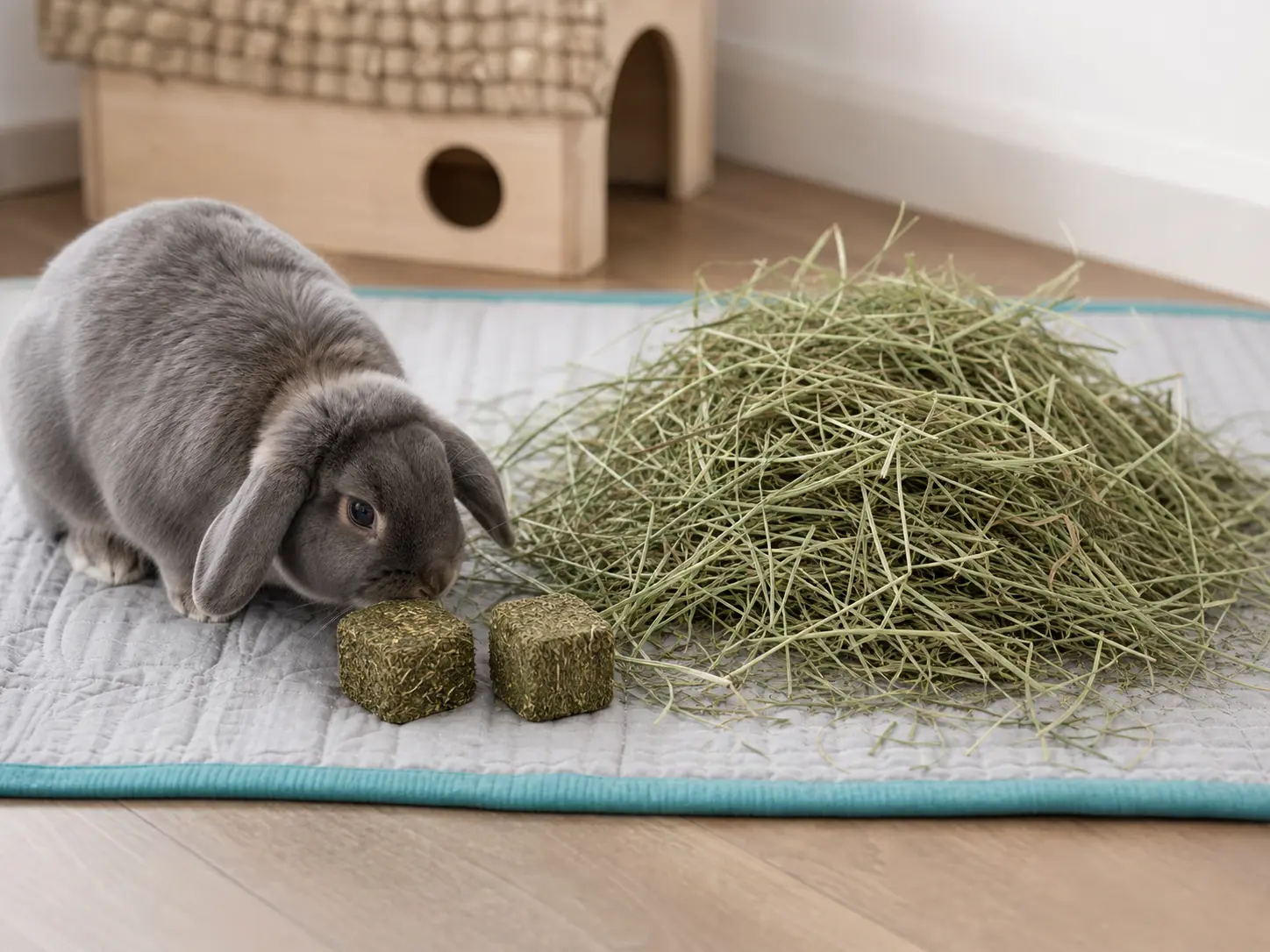
Set the bag beside the feeder and find the exact product name. Alfalfa hay should look like leafy stems; cubes are compressed blocks, and pellets are ground feed. Keep each in its own labeled container so a hurried refill does not turn three different foods into one vague green product.
Keep grass hay in the adult rack
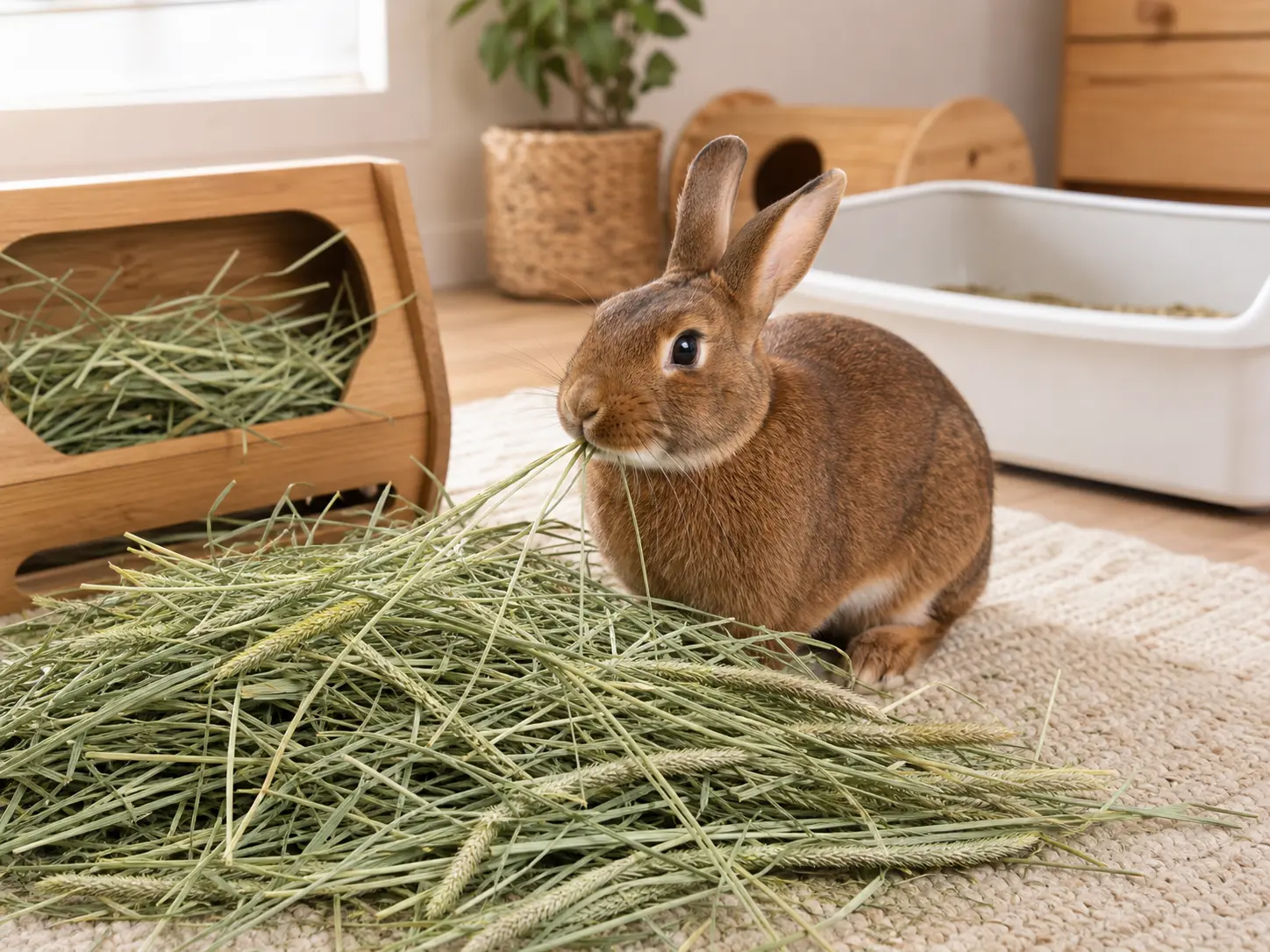
For a healthy adult, pack the main feeder above or beside the litter box with timothy, orchard, oat, meadow, or another suitable grass hay. The goal is a generous searchable pile that the rabbit revisits, not a small decorative bundle measured out once a day.
Use two bins during a planned change
Label one bin with the current hay and one with the new hay. Mix them according to the transition plan, refresh both ends of the feeder, and look for long stems disappearing each day. Remove stale leftovers rather than hiding fresh hay beneath a dusty layer.
Write down why an adult gets alfalfa
When a veterinarian recommends alfalfa for pregnancy, nursing, low weight, injury, age, or recovery, record the reason, start date, body weight, and review date. A written plan keeps a temporary nutrition tool from quietly becoming the permanent adult hay.
How to offer it
- Read the bag and confirm that it says alfalfa hay, not grass hay, alfalfa cubes, pellets, or a mixed forage product.
- Open the bag in good light. Reject hay that is damp, moldy, strongly musty, full of webbing, or so dusty that it clouds when moved.
- Store the hay dry and off the floor, then write the opening date and intended rabbit or life stage on the container.
- When a veterinarian recommends a change, mix old and new hay during the transition and keep both easy to reach until the rabbit is eating the planned hay well.
Avoid
- Filling a healthy adult rabbit's daily rack with alfalfa simply because they prefer its leafy smell.
- Using richer hay to cover up sudden weight loss, poor appetite, or a rabbit who has stopped chewing grass hay.
- Treating alfalfa hay, compressed alfalfa cubes, and alfalfa-based pellets as interchangeable products.
- Damp, moldy, sour, heavily dusty, insect-damaged, or contaminated hay at any life stage.
Watch
- A young or medically managed rabbit returning to the planned hay throughout the day
- A healthy adult pulling long grass-hay stems from the rack after any transition
- The usual number and size of round droppings in the litter box
- Eating less, fewer droppings, a wet chin, food falling from the mouth, weight loss, a hunched pose, tooth grinding, weakness, or unusual quietness; call a rabbit-savvy veterinarian promptly
Portion
There is no measured daily handful that fits every rabbit. Babies and nursing mothers may have free access to alfalfa hay within an age-appropriate diet; most healthy adults should have unlimited grass hay and no routine alfalfa pile. A healthy adult stealing a few strands is not an emergency—put the right hay back in the feeder.
Keep the right hay easy to recognize
These hay-station basics help keep alfalfa and grass hay dry, clearly labeled, easy to reach, and tied to a specific life stage or veterinary plan.
Affiliate links: Furball Cove may earn from qualifying purchases at no extra cost to you.
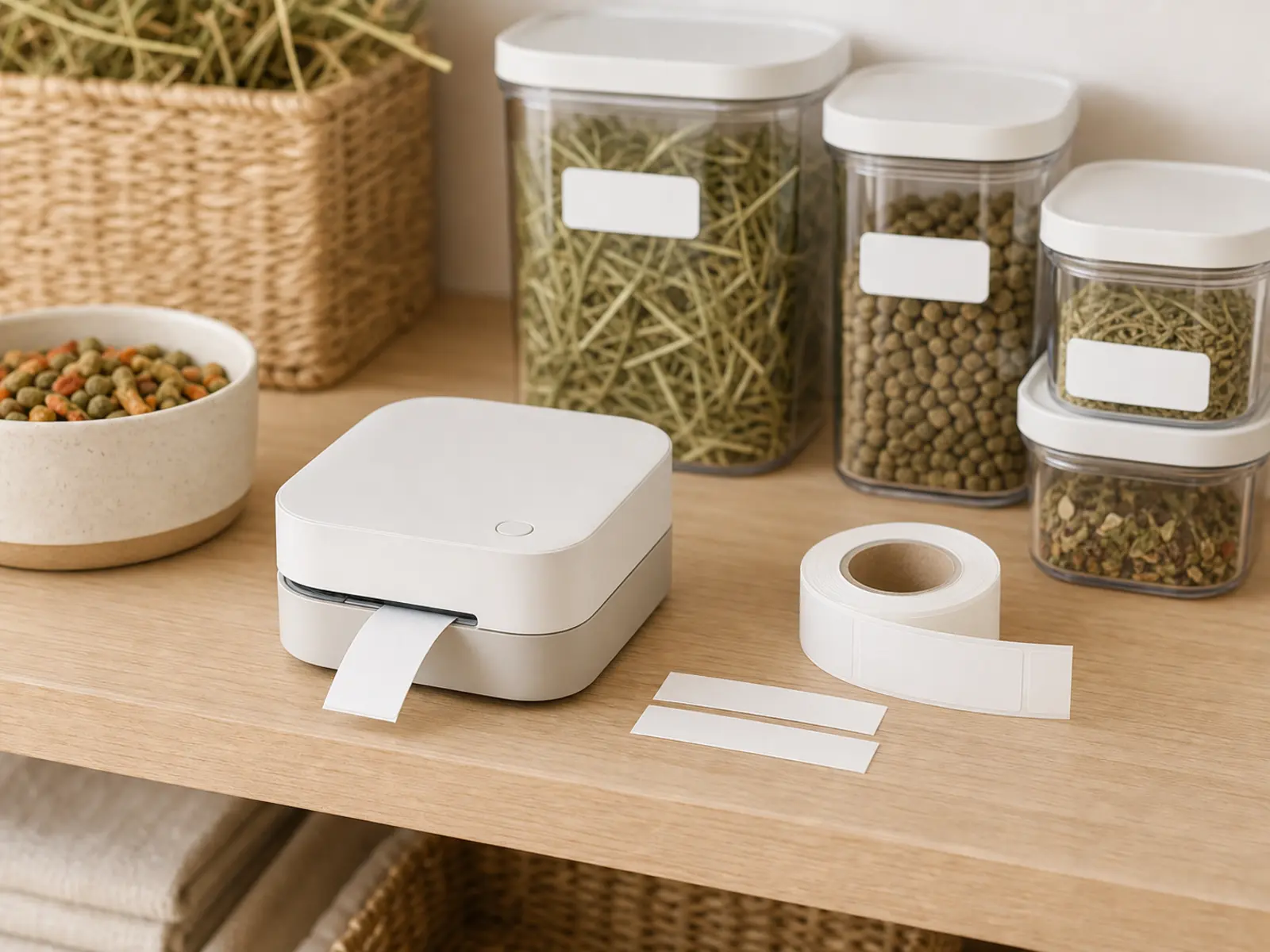
Label maker
Mark alfalfa, grass hay, cubes, and pellets separately so similar green products never become interchangeable during a hurried refill.
Shop label maker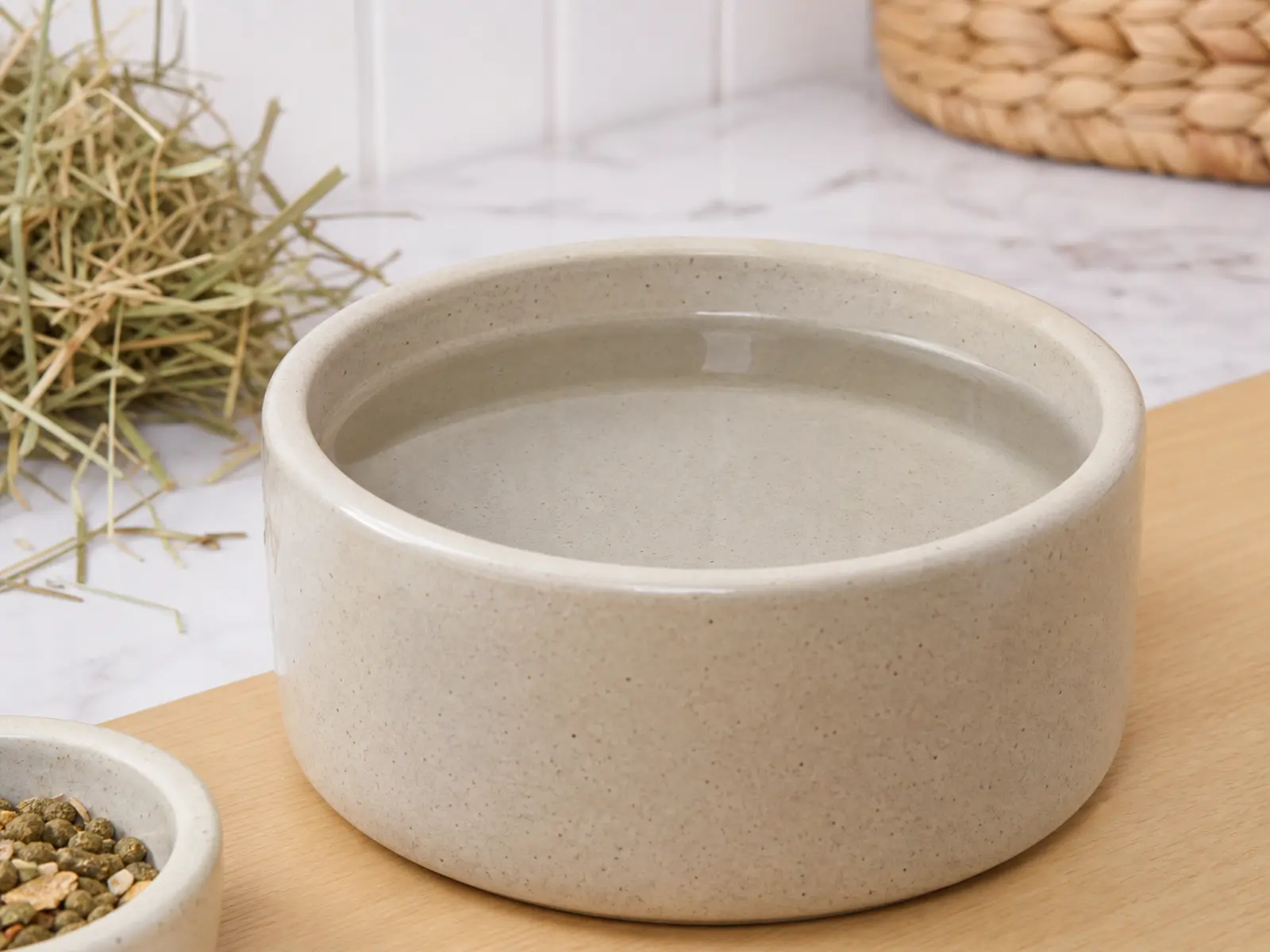
Heavy water crock
Keep plain water beside the hay station in a stable crock that stays easy to inspect and refill every day.
Shop heavy water crock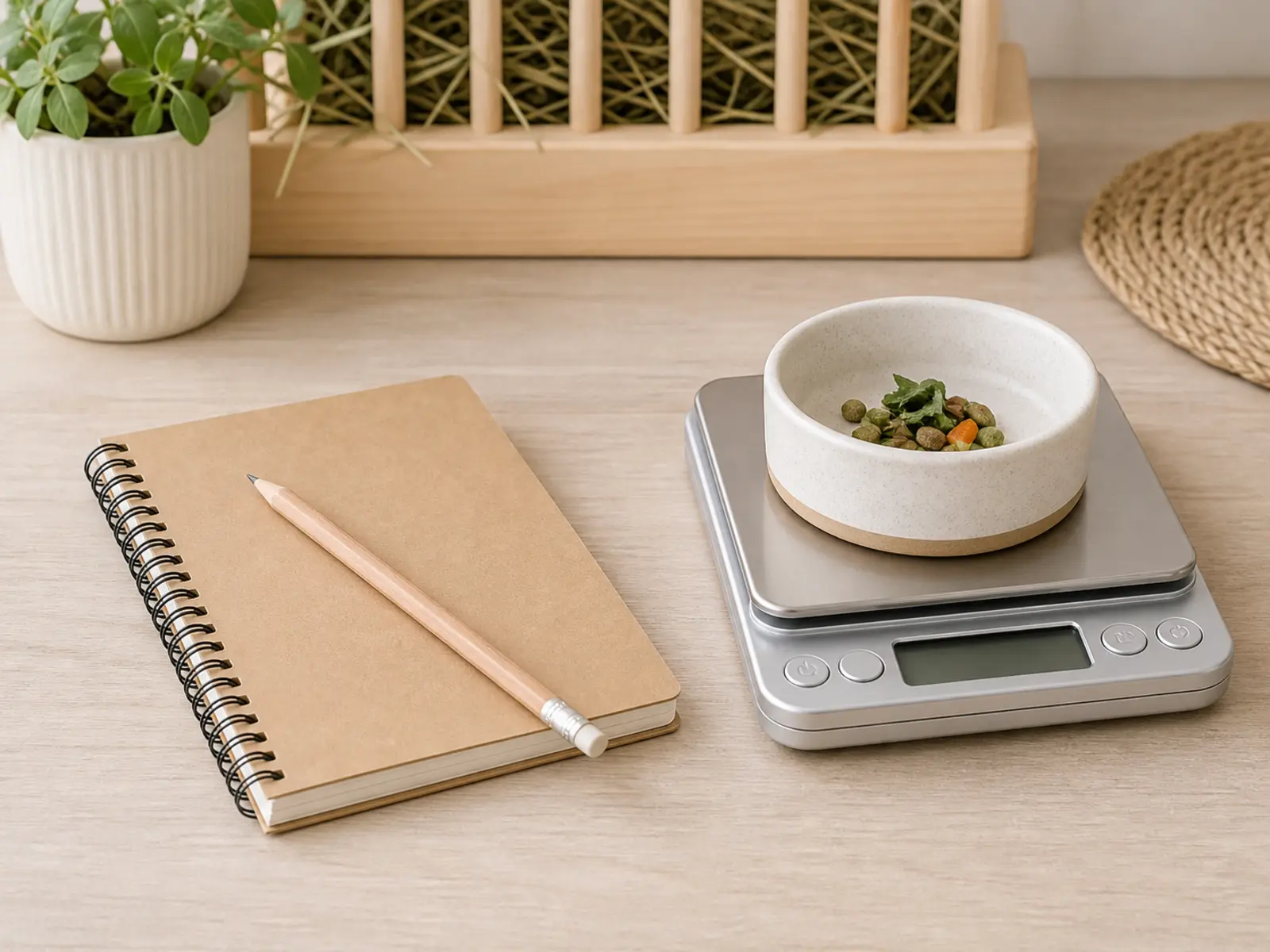
Rabbit care notebook
Record why alfalfa was started, which rabbit receives it, the start date, weight trend, and the planned veterinary review.
Shop rabbit care notebook