Updated
Rabbit food check
Can Rabbits Eat Carrot Tops? Yes—Wash the Stems
Yes—fresh leafy tops
Yes. Adult rabbits can eat fresh carrot tops as a leafy green. Keep the greens attached to a labeled grocery bunch until prep, wash one small sprig and its tender stem, and serve it plain beside unlimited grass hay. The sweeter orange root is a separate, limited serving.
 Carrot Tops
Yes—the leafy top is a rabbit-safe green
House Rabbit Society lists carrot tops, Daucus carota, among safe leafy greens. VCA also names carrot tops as a particularly good vegetable for rabbits. One washed sprig can join a varied adult plate while hay remains the food that never runs out.
The green top and orange root are different servings
A carrot bunch puts a leafy vegetable and a sweet root in one rubber band. The tops fit the greens rotation; VCA advises limiting carrot roots because they are high in carbohydrate. Clip the rabbit's sprig where green stem meets the carrot shoulder.
Keep the leaves attached until you know them
Carrot foliage is lacy, but shape alone is a poor grocery label. Keep the bunch intact; orange shoulders confirm the source. Mystery garden clippings stay off the rabbit's saucer.
Rinse where all the stems meet
Grit hides in the tight crown above the root and along dozens of little leaf branches. Pull one sprig aside, open it over the sink, and run cool water through the foliage. A brown slippery crown or sour smell sends the bunch to the compost.
Keep the carrot bunch together
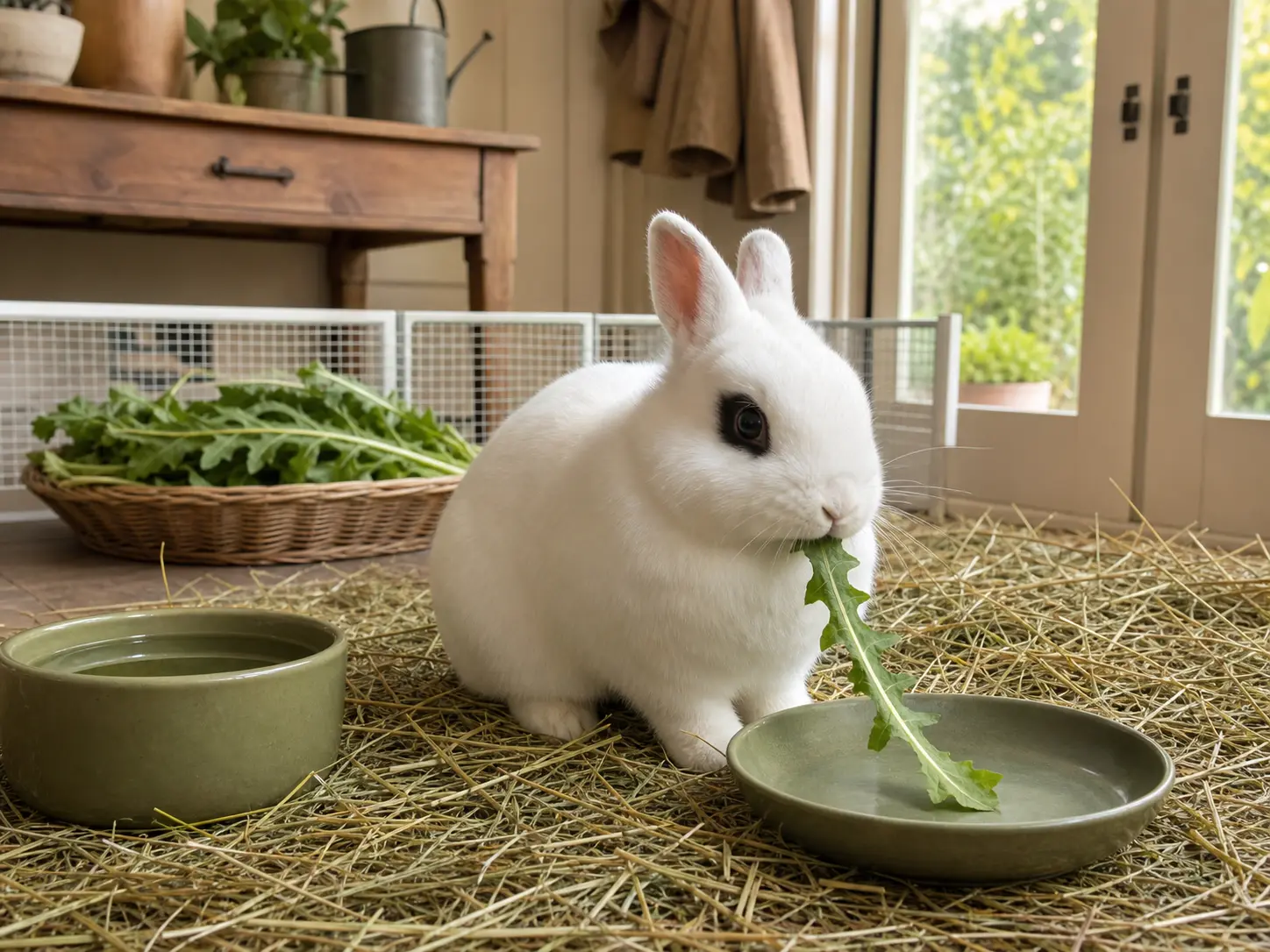
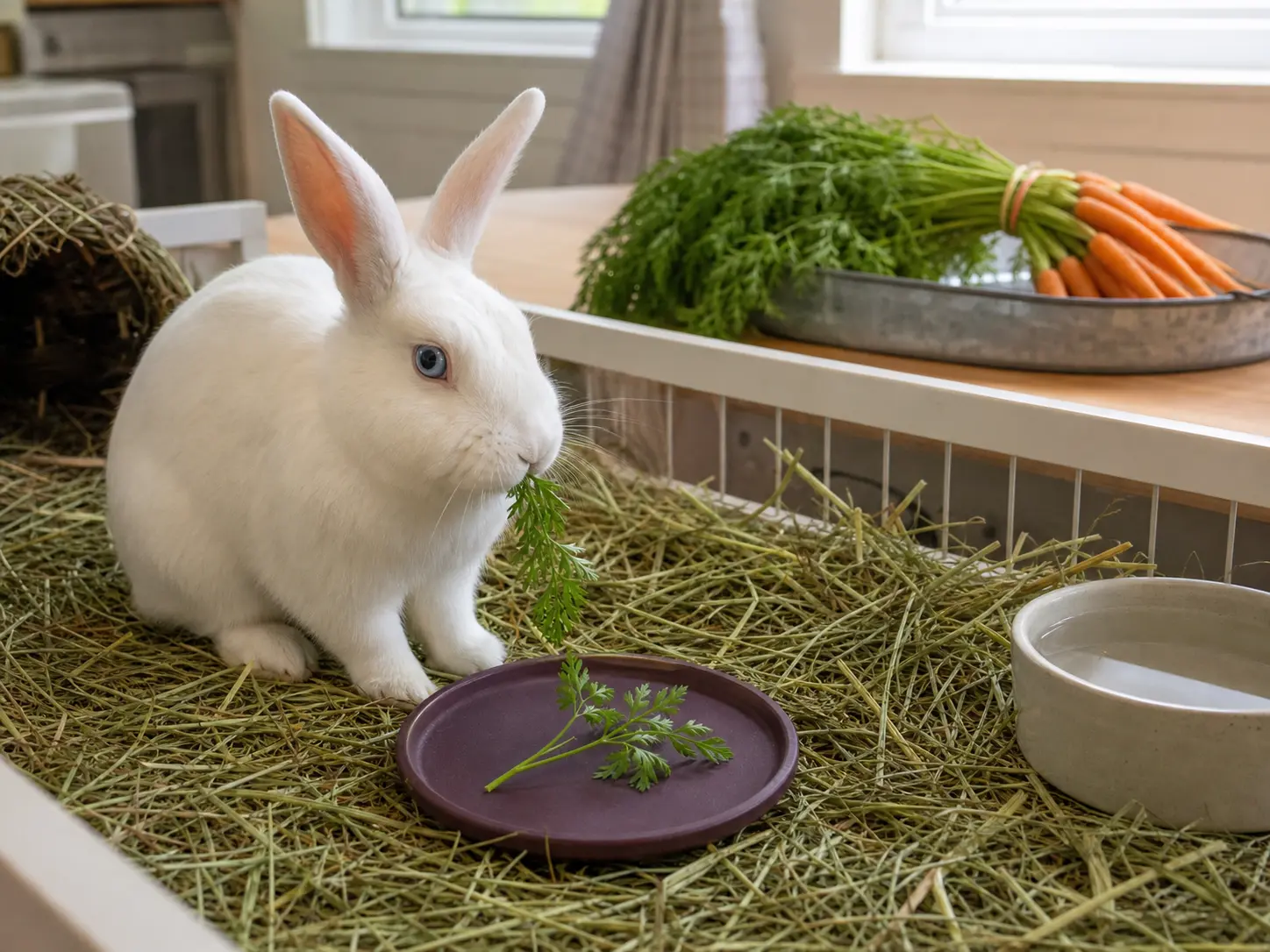
The grocery bunch still has orange shoulders and leafy green tops attached. The blue-eyed white rabbit waits beside orchard hay while one small sound sprig is clipped above the root and carried to the sink.
Open the crown and rinse the sprig
Spread the fine leaves and rub the short green stem under cool water. Packed soil, a blackened junction, wet yellow leaves, or fuzzy growth means that piece never reaches the plum saucer.
Serve the top without the carrot
Set the leafy sprig beside hay and water, then return the orange roots to the kitchen. The rabbit gets a known green, not a large sweet root hiding underneath it and not seasoned shreds from dinner.
Look past the empty saucer
Finishing the carrot top shows interest, not tolerance. Later, check for ordinary hay chewing, relaxed movement, and separate round droppings. Slower eating or output, hunching, or a painful posture needs prompt rabbit-savvy veterinary advice.
Serve
- Confirm that the leaves are attached to a known carrot bunch. Look for branching green stems and finely divided leaves rising directly from recognizable carrot shoulders.
- Spread the bunch where the stems crowd together. Discard yellow slime, fuzzy growth, sour odor, blackened stems, insect damage, and any piece coated with stubborn soil.
- Clip one small leafy sprig with a short tender stem. Rinse through the fine branches and rub the stem junction where grit collects.
- Serve the sprig plain beside hay and water. Put the orange roots and the rest of the greens away before grating, roasting, seasoning, or salad prep begins.
Avoid
- A feathery clipping guessed to be carrot top after it has been separated from the bunch. Parsley, fennel, dill, and wild lookalikes need their own reliable identification.
- Roadside, park, lawn, or community-garden foliage when spray history, animal waste, plant identity, or permission is uncertain.
- A whole orange carrot attached to the leafy serving. The root is sweeter and should not quietly turn a greens portion into a large treat.
- Cooked carrots, glazed carrots, soup, slaw, juice pulp, restaurant garnish, or tops carrying oil, salt, butter, sugar, dressing, stock, sauce, or seasoning.
- A moldy, slimy, sour-smelling, badly wilted, heavily soiled, pest-damaged, or unidentified sprig.
Watch
- The carrot-top sprig disappearing while the rabbit continues ordinary visits to the hay pile
- Normal posture, movement, water use, and interest in familiar food
- The rabbit's usual separate round droppings after a first carrot-top tasting
- Reduced eating or droppings, soft stool, diarrhea, belly pressing, hunching, tooth grinding, weakness, or unusual quietness; contact a rabbit-savvy veterinarian promptly
Portion
For an adult already eating leafy vegetables, one small carrot-top sprig can share the usual greens allowance. Start with less when it is new. Remove any orange root from this serving; carrot root is higher in carbohydrate and belongs in the occasional-treat lane, not the daily leafy-greens bowl.
Keep carrot tops identifiable, clean, and separate from the root
These produce-prep tools help keep the bunch together until identification, expose the crowded crown, rinse fine leaves, and reserve one plain leafy sprig before the carrots reach the kitchen.
Affiliate links: Furball Cove may earn from qualifying purchases at no extra cost to you.
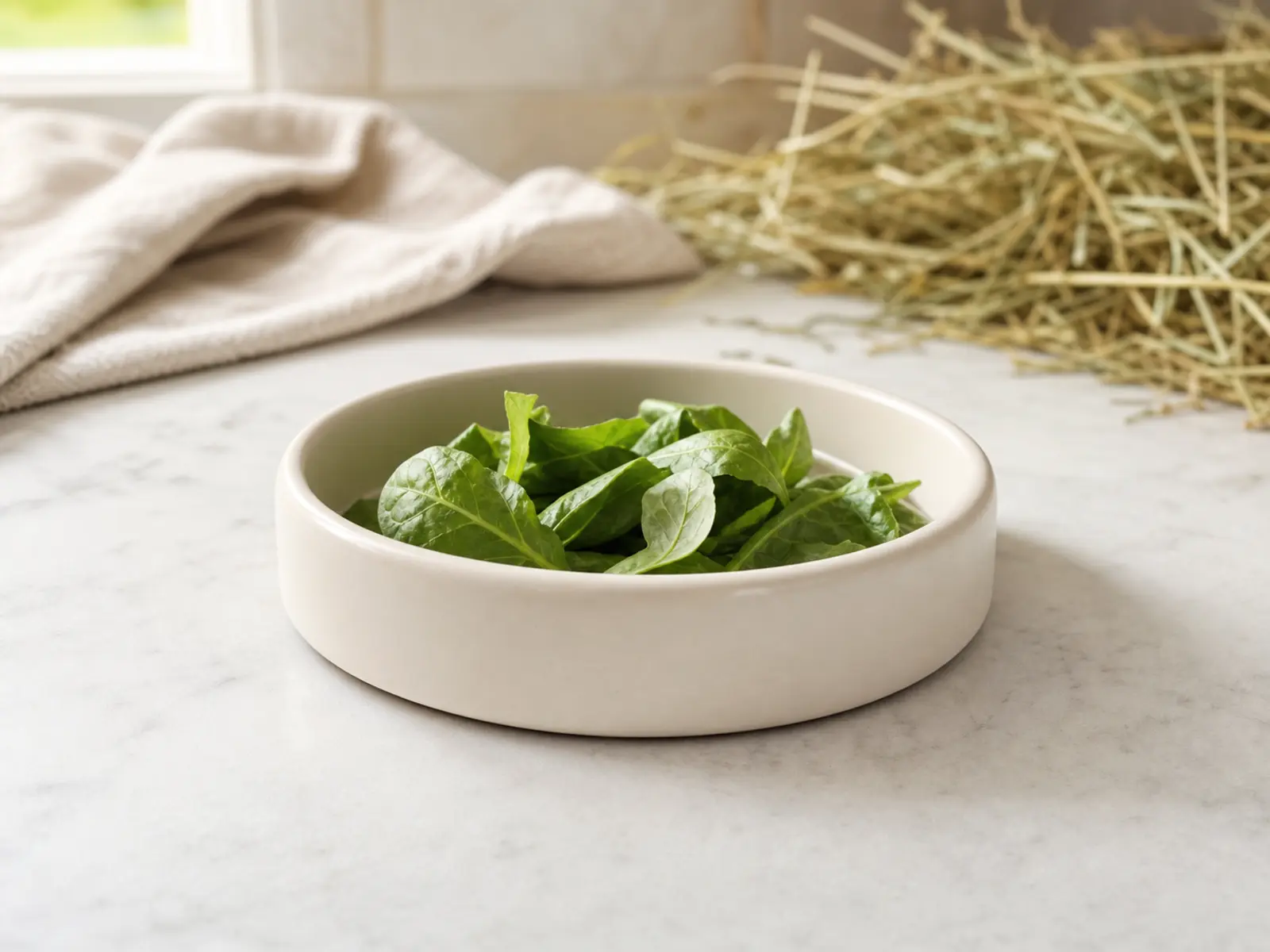
Ceramic food dish
Place one leafy sprig on a washable saucer with no orange root, pellets, dressing, or seasoned kitchen scraps underneath.
Shop ceramic food dish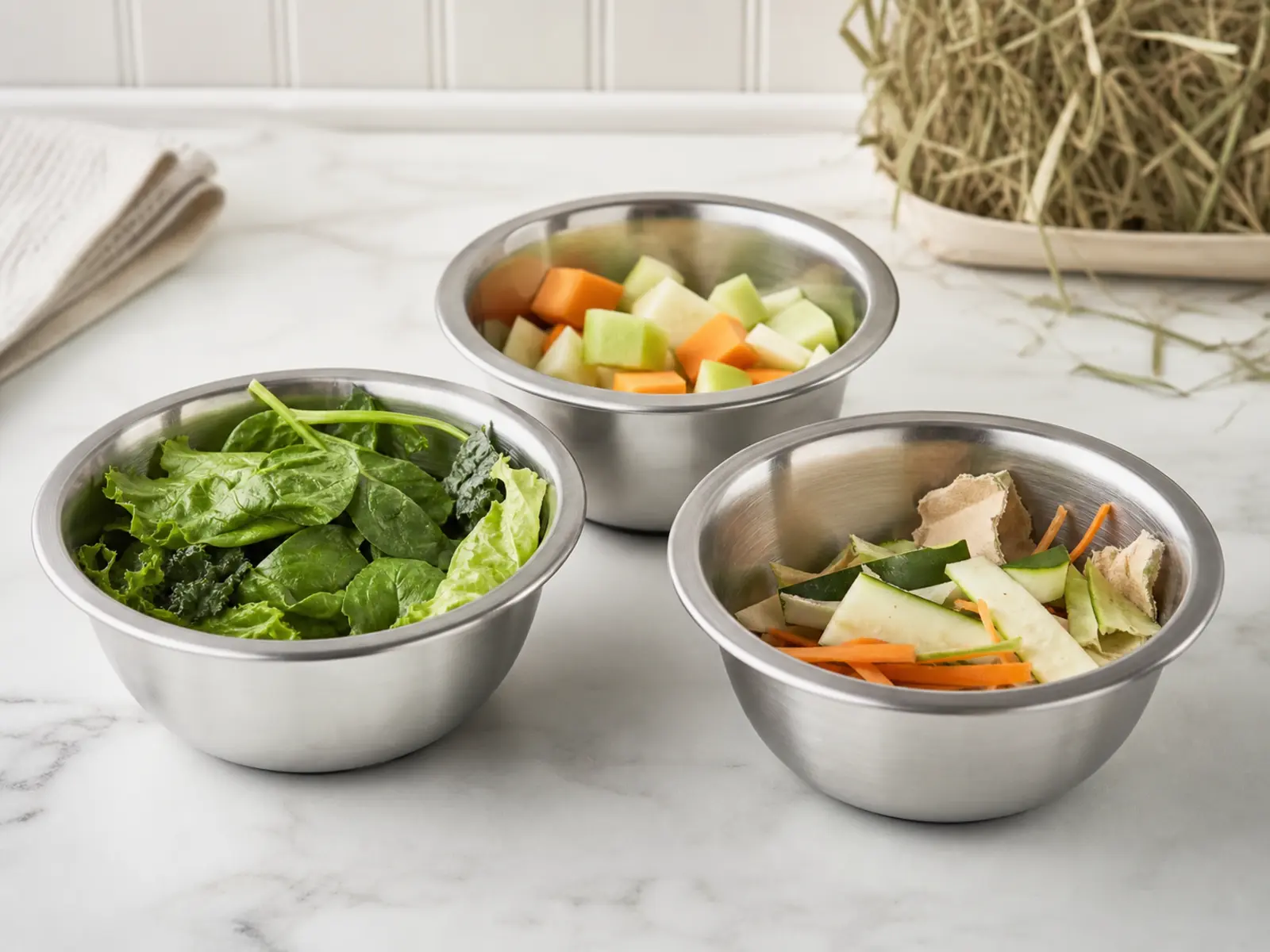
Stainless prep bowls
Reserve the rabbit's washed top before the roots meet oil, salt, sugar, stock, dressing, sauce, or the oven.
Shop stainless prep bowls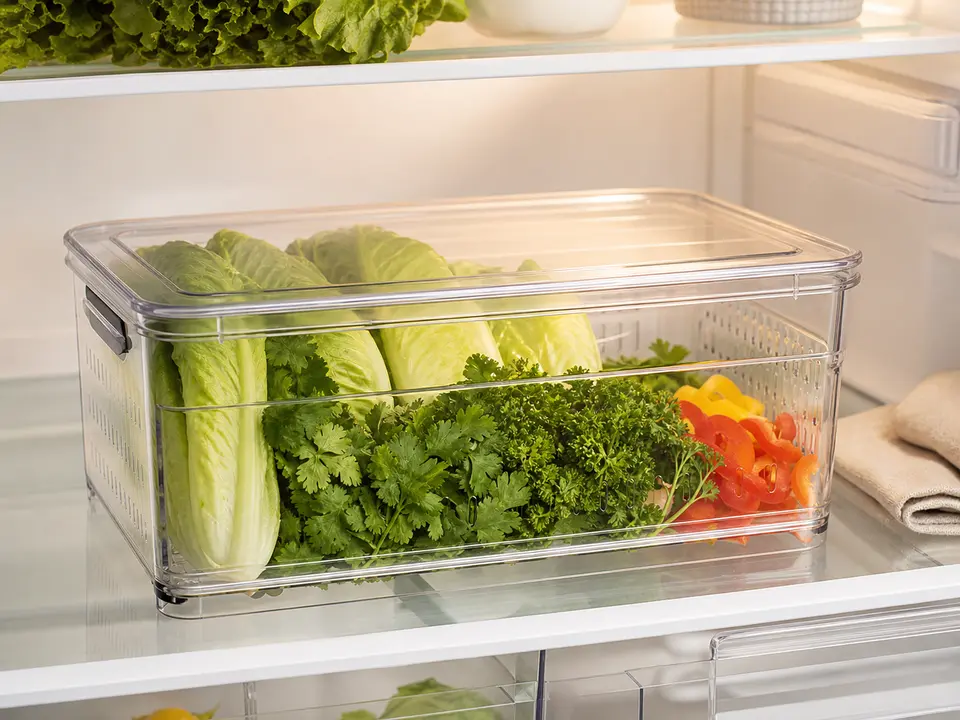
Rabbit greens bin
Give the intact carrot bunch a visible refrigerator space where wilted tops, wet crowns, and the opened date stay easy to check.
Shop rabbit greens bin