Updated
Rabbit food check
Can Rabbits Eat Collard Greens? Yes—Rotate This Leaf
Yes—rotate, do not free-feed
Yes. Adult rabbits can eat fresh collard greens in a varied rotation. Wash one modest leaf piece and its tender pale rib, serve it plain, and keep grass hay unlimited. Collards are calcium-rich, so do not offer them free-choice or every day, and follow the clinic's plan for urinary disease.
 Collard Greens
Yes—collards can join a varied greens plate
House Rabbit Society lists collard greens among rabbit-safe leafy vegetables. The broad fresh leaf is not poisonous, and it does not need cooking. Wash one modest piece and serve it plain while unlimited grass hay stays at the center of the adult diet.
Broad, flat, and sturdy is the collard look
Collards are broad, smooth, and dark blue-green with a thick pale rib. Curly kale has tight frills; collards do not form a head. Keep the produce band through washing.
Calcium changes the schedule, not the answer
VCA calls collards calcium-rich and advises against free-choice or daily servings. Rotate the leaf instead. A rabbit with sludge, stones, or painful urination needs a clinic plan for the whole diet.
A first piece should be easy to track
House Rabbit Society notes that some rabbits are sensitive to cabbage-family greens. Start with a small collard piece on an otherwise familiar day. Steady hay chewing and normal separate droppings matter more than how eagerly the first bite disappears.
Find collards on the produce band
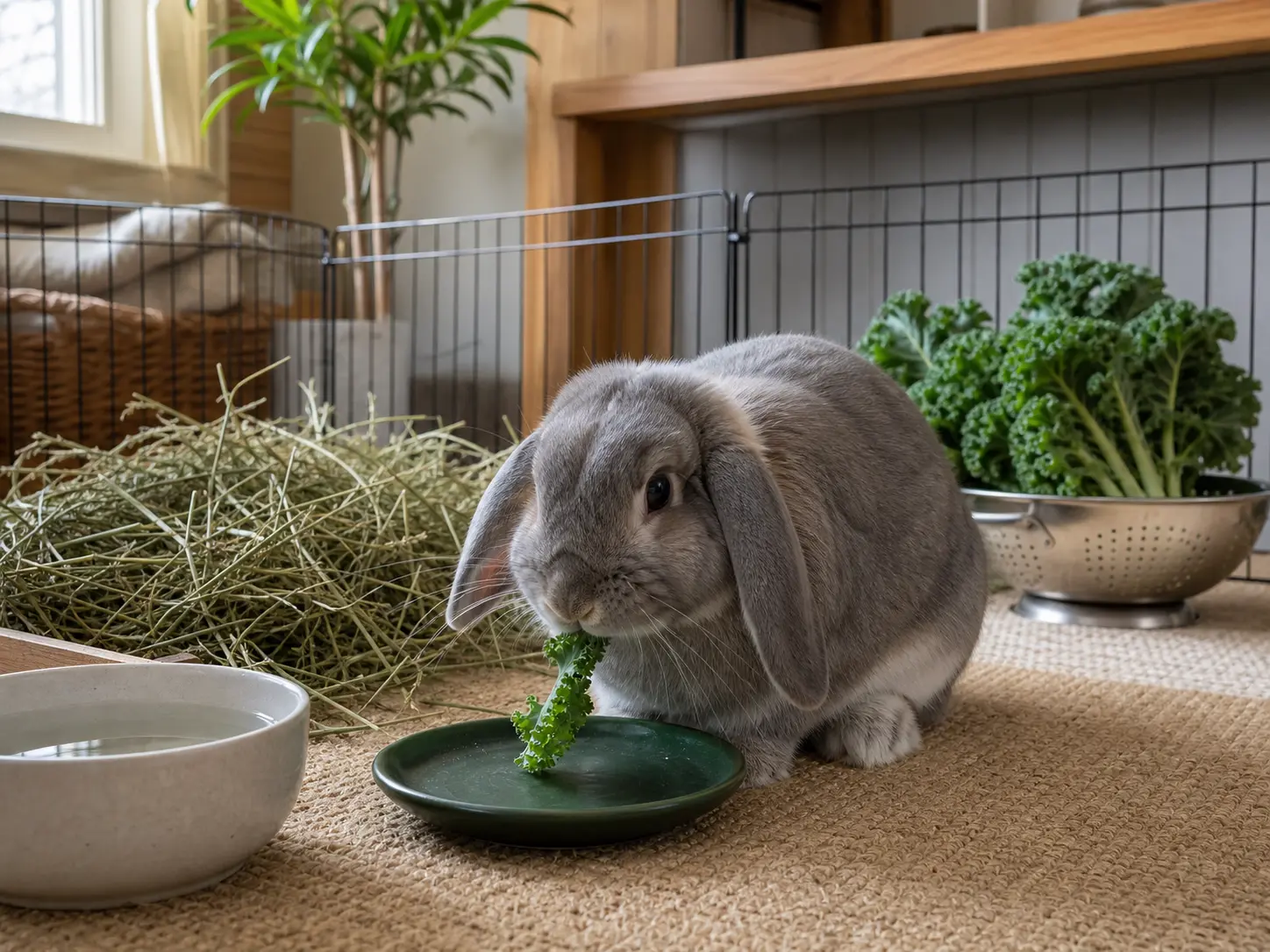
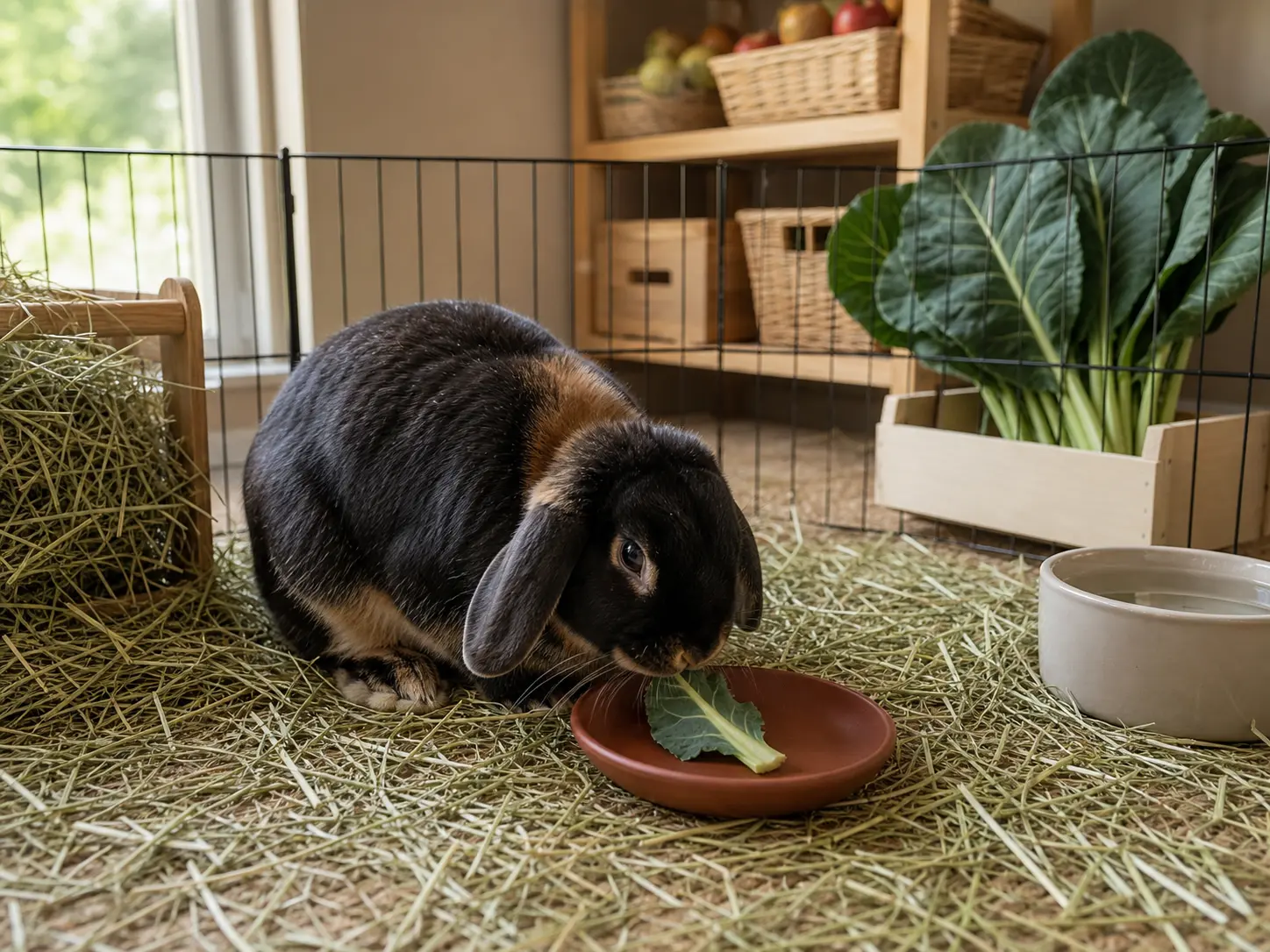
The band says collard greens. Broad dark leaves and thick pale ribs rise from the cream crate. The black-otter lop waits beside orchard hay while one sound outer leaf moves to the sink.
Wash both faces and the pale rib
Rub the smooth upper surface, turn the leaf over, and rinse along the central rib. Brown slime, fuzzy spots, sour odor, or a blackened stem end sends that leaf to the compost.
Tear one piece for the brick-red saucer
A modest leaf piece with a short tender rib goes beside hay and water. The rest returns to the refrigerator before anyone starts a pot of cooked greens or reaches for salt, stock, meat, or oil.
Check the litter box after the collard piece
An empty saucer only records interest in collards. Later, look for pulled hay stems, relaxed movement, round droppings, and comfortable urination. Slower eating or output, straining, or blood in urine needs prompt rabbit-savvy veterinary care.
Serve
- Read collard greens on the band or produce sign. Look for broad mostly flat dark blue-green leaves, gently wavy edges, thick pale midribs, and sturdy green stems.
- Open the bunch and inspect the crowded stem ends. Discard yellow slime, fuzzy growth, sour odor, blackened ribs, pest damage, and wet collapsed patches.
- Rinse both leaf faces under cool water, rubbing along the pale central rib and opening any folded edge where grit can hide.
- Tear off one modest piece with a short tender rib and serve it plain. Refrigerate the bunch before cooking liquid, meat, oil, salt, or seasoning reaches the counter.
Avoid
- A broad dark leaf guessed to be collard after the band is gone. Kale, cabbage, chard, mustard greens, and spinach need their own names and feeding decisions.
- A whole large leaf, repeated refills, or a free-choice collard pile. This calcium-rich green belongs in a varied rotation rather than every meal.
- Southern-style cooked greens, canned collards, soup, pot liquor, restaurant sides, or leaves carrying meat, stock, oil, butter, salt, sauce, spice, or seasoning.
- Using one food ban or one calcium chart as a home treatment for urinary sludge or stones. The clinic needs to review hay, pellets, all greens, water, weight, and medical findings together.
- A moldy, slimy, sour-smelling, badly wilted, gritty, pest-damaged, chemically treated, or unidentified leaf.
Watch
- The collard piece disappearing while the rabbit continues ordinary visits to the hay pile
- Normal posture, movement, water use, urination, and interest in familiar food
- The rabbit's usual separate round droppings after a first collard tasting
- Reduced eating or droppings, soft stool, diarrhea, belly pressing, hunching, tooth grinding, straining to urinate, blood in urine, weakness, or unusual quietness; contact a rabbit-savvy veterinarian promptly
Portion
For an adult already eating leafy vegetables, one modest torn collard piece can share the usual greens allowance. If it is new, begin smaller. VCA advises against giving calcium-rich collards free-choice or every day; a rabbit with sludge, stones, or painful urination needs an individual plan from the rabbit-savvy clinic.
Keep broad collard leaves clean, portioned, and out of the cooking pot
These produce-prep tools help expose damp stem ends, rinse both leaf faces, reserve one plain rabbit piece, and keep the rest identifiable in the refrigerator.
Affiliate links: Furball Cove may earn from qualifying purchases at no extra cost to you.
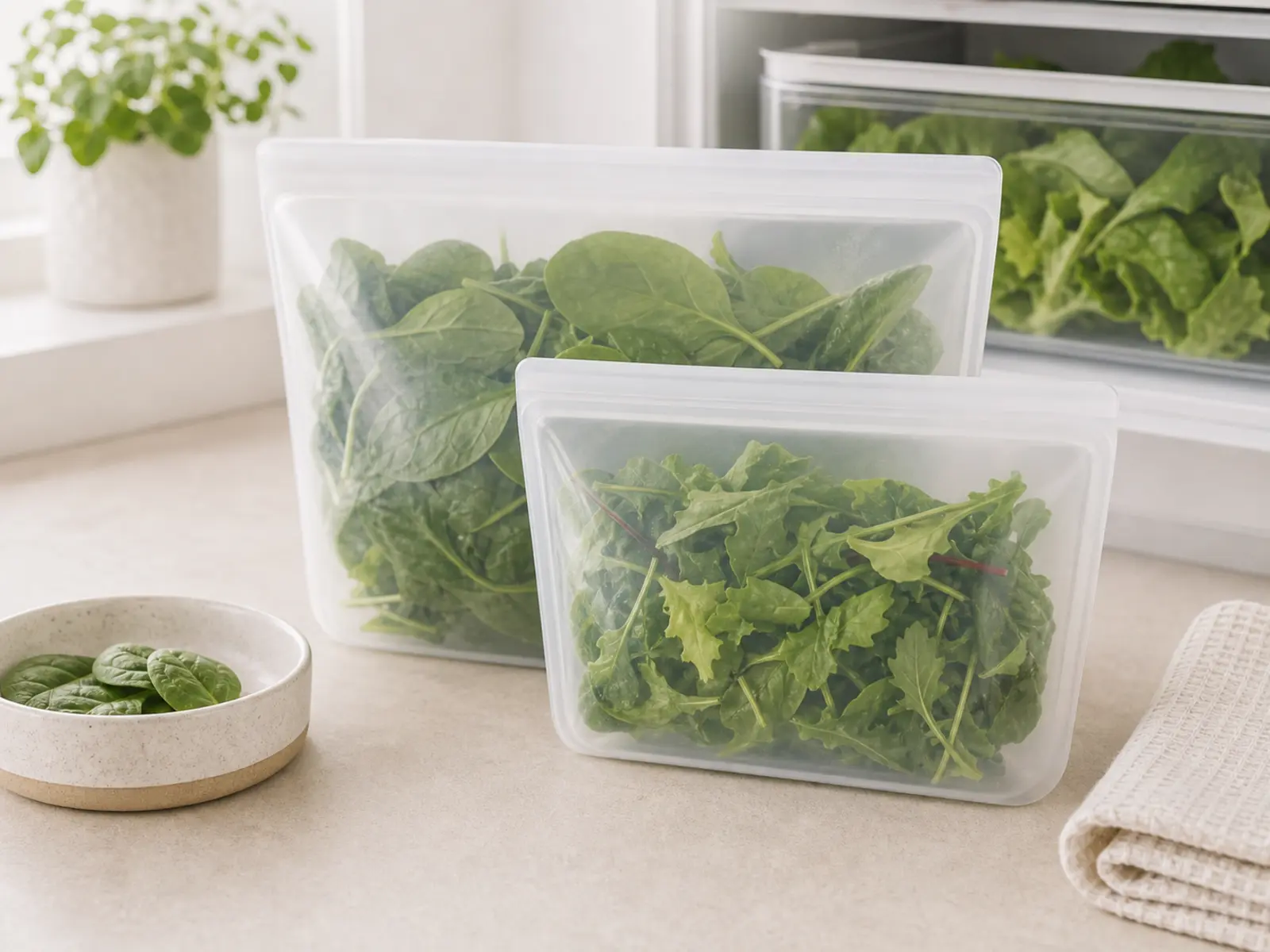
Produce storage bags
Store sound dry leaves loosely with an absorbent liner instead of sealing wet broad surfaces into a heavy bundle.
Shop produce storage bags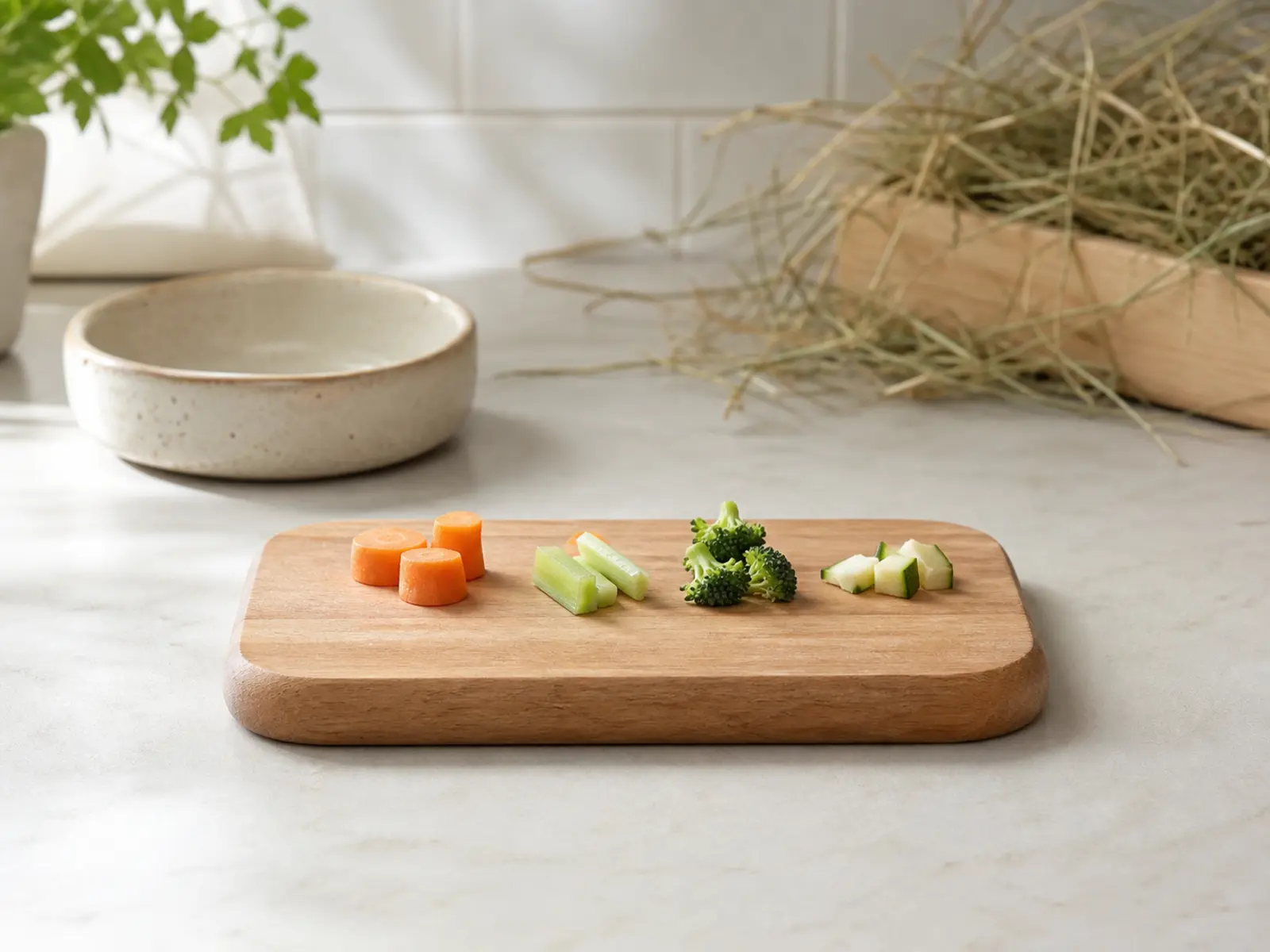
Mini cutting board
Use a compact stable surface to inspect the pale rib and tear or trim one rabbit portion without chopping the entire leaf.
Shop mini cutting board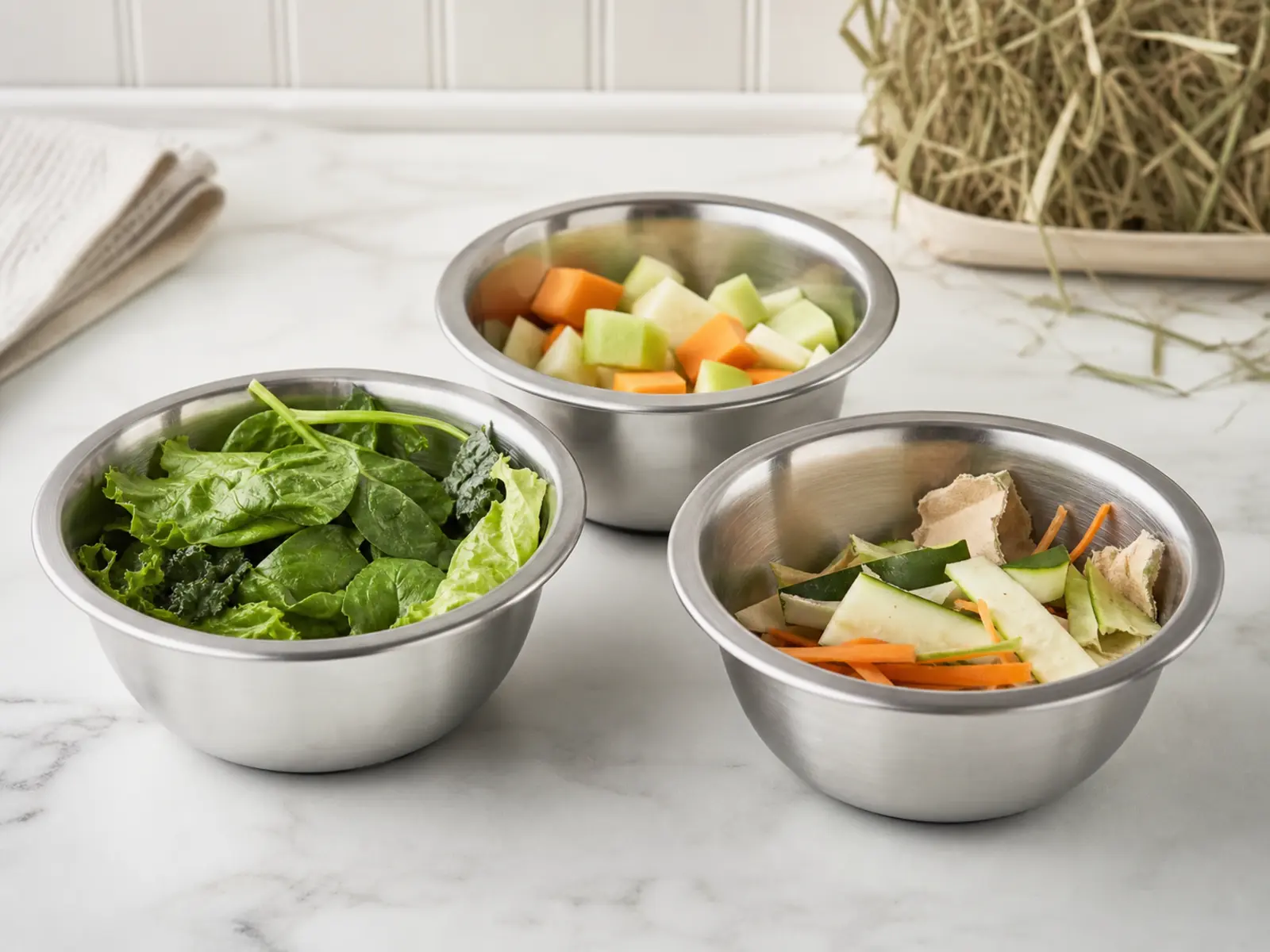
Stainless prep bowls
Reserve the rabbit's washed collard before the remaining leaves reach the cooking pot or any seasoned human recipe.
Shop stainless prep bowls