Updated
Rabbit food check
Can Rabbits Eat Commercial Rabbit Treats? Read the Label
Usually skip—read the label
Most are better skipped. A rabbit picture on the bag does not make yogurt drops, seed sticks, colorful cereal pieces, or sweetened fruit appropriate. If you buy a treat, choose a short recognizable plant ingredient list—plain dried forage is easiest—and offer one small occasional piece while hay remains the meal.
 Commercial Rabbit Treats
For rabbits is a shelf category, not a verdict
A package can show a rabbit, carrots, herbs, and a rustic field while the first ingredients are grain, sugar, or seeds. House Rabbit Society warns that many store-bought treats are no better than junk food. Treat the front as advertising. The useful evidence begins on the ingredient panel and ends with the actual pieces inside.
The first five ingredients tell the real story
Ingredients are listed by weight, so a treat led by wheat, corn, oats, fruit concentrate, molasses, or seed is not transformed by a pinch of parsley near the end. A single-ingredient bag of dried dandelion leaf is much easier to judge. If you cannot say what every piece is, the rabbit does not need to perform the experiment.
Fortified does not mean necessary
Bright cereal shapes often advertise added vitamins, and papaya tablets may borrow the language of digestion. A rabbit already eating appropriate hay, greens, and measured pellets usually does not need nutrients delivered in sugar or starch. When a veterinarian identifies a deficiency or special need, use the product and dose that clinic recommends.
A chew can be a better present than a snack
Treats disappear in seconds. A plain willow bundle, seagrass mat, cardboard box, or apple stick can occupy a rabbit much longer without adding another sweet bite. House Rabbit Society recommends edible toys as an alternative; affection can also look like floor time, a fresh hay refill, or a good forehead rub.
Turn the bag around in the shop aisle
Keep your thumb over the rabbit photo and read from the ingredient heading downward. A bag led by yogurt powder, seed, colored cereal, or sweetener goes back on the peg. Photograph a promising short list if you want to compare it with the known herbs and flowers already in the rabbit's greens rotation.
Sort the promise from the product at home
At the navy pantry counter, pour only enough pieces to inspect into a steel bowl. Compare the shapes with the label. Plain dried dandelion should look and smell like a dry leaf; it should not arrive glued to a seed stick or hiding under white candy drops. Close the rejected container before floor time begins.
Put one forage piece beside the hay eater
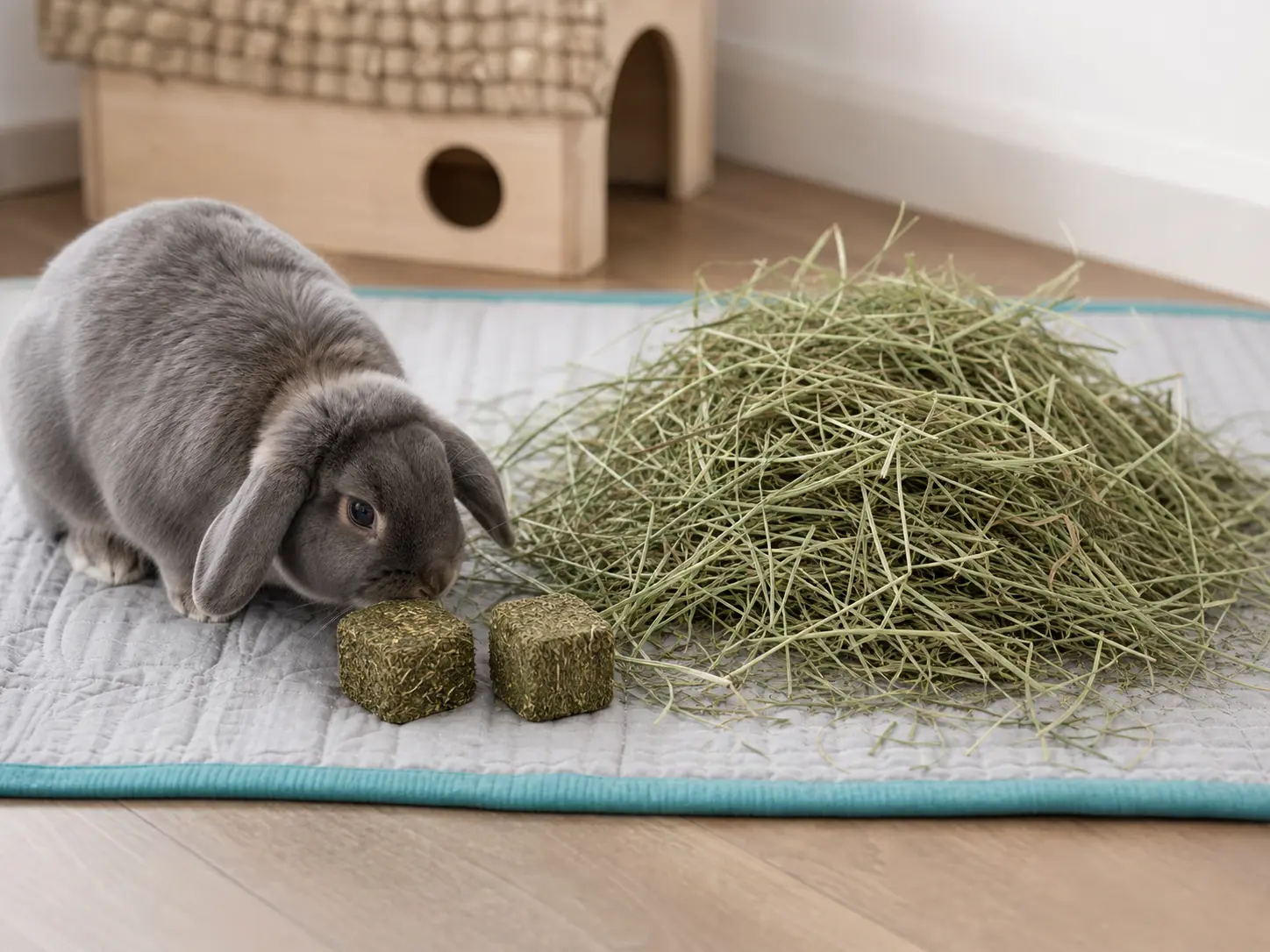
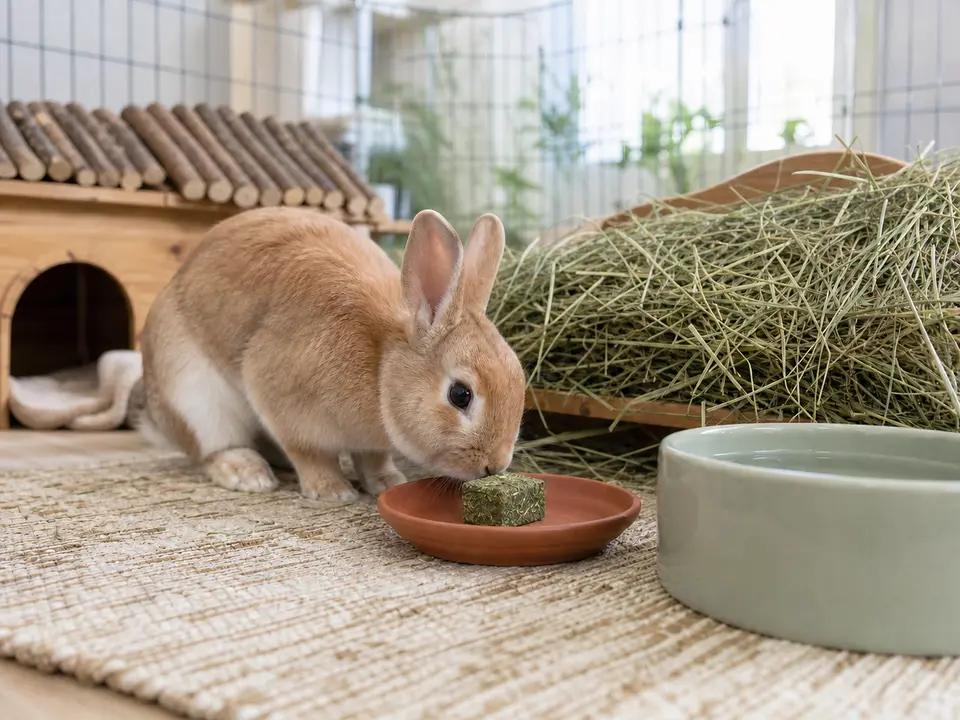
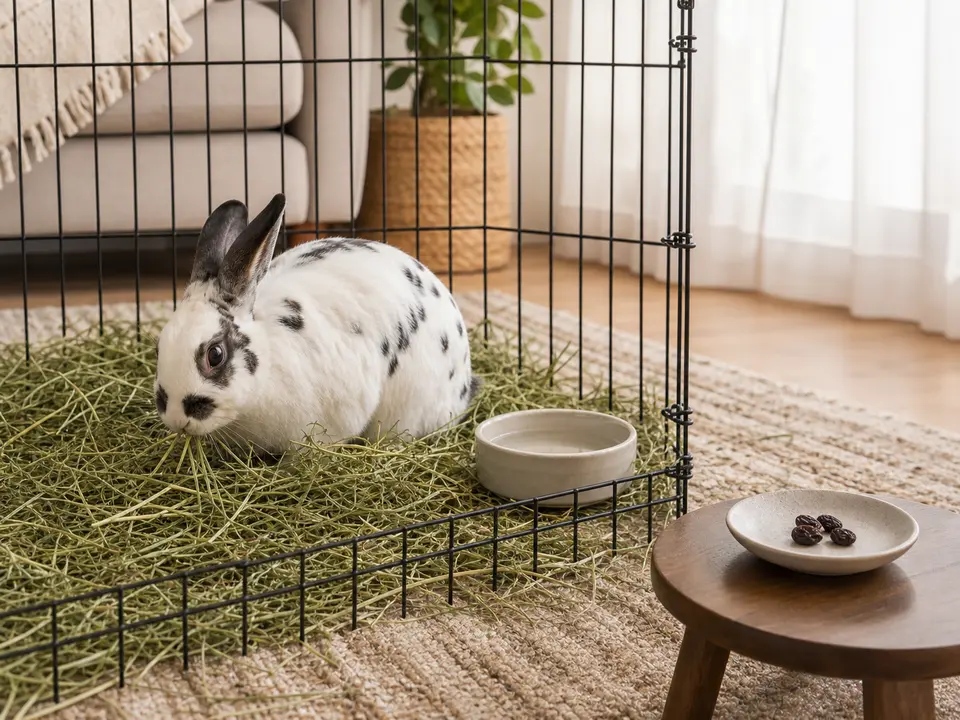
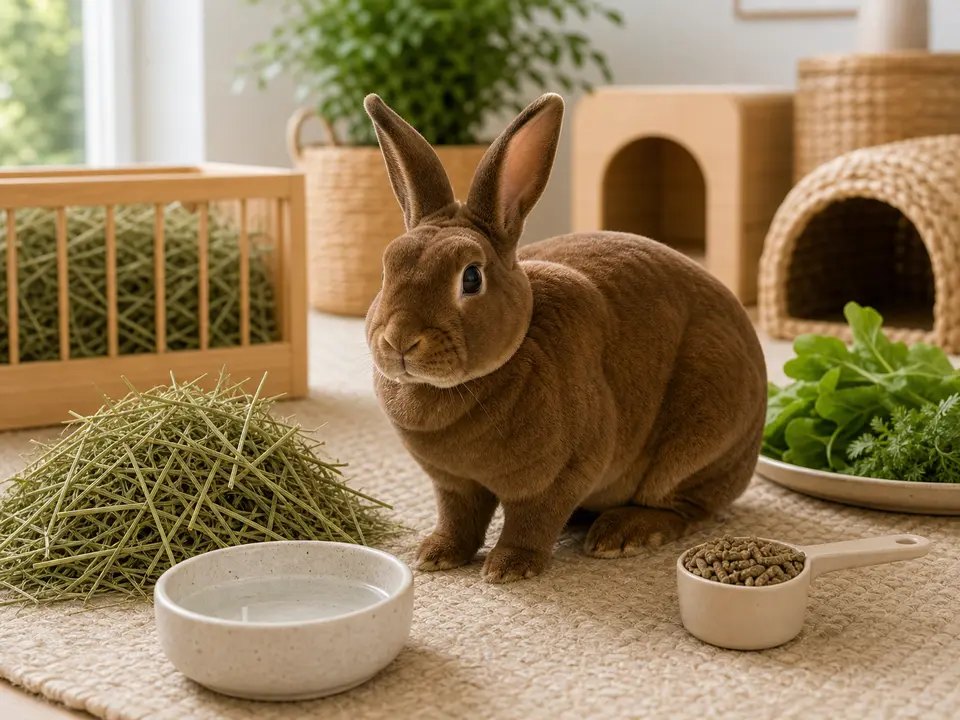
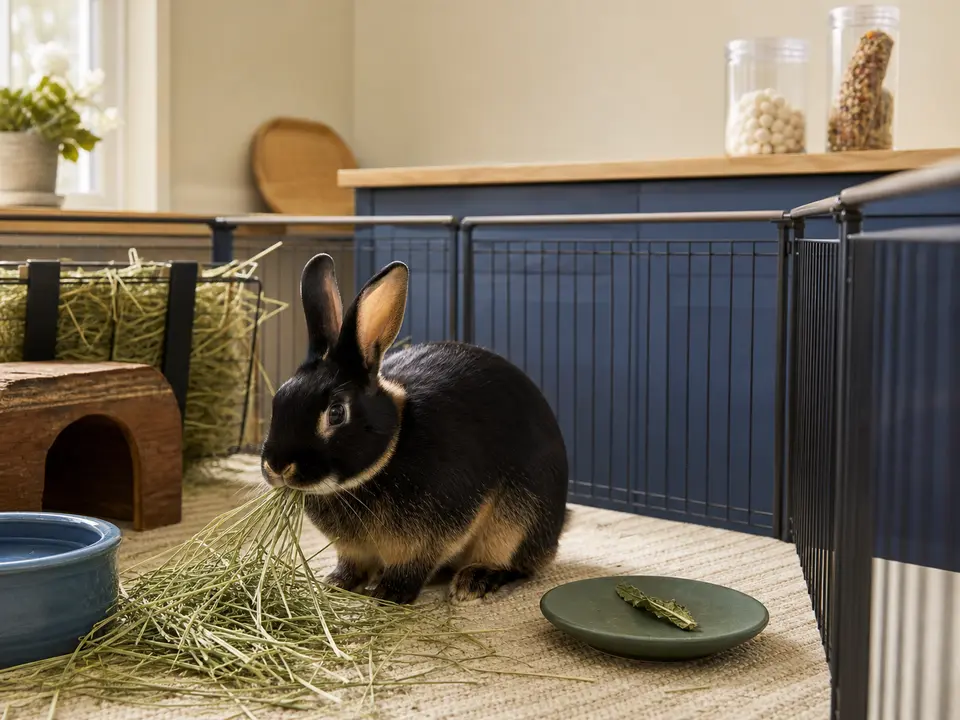
Fill the black-otter rabbit's timothy rack and blue water crock first. Place one crisp dried leaf section on the forest-green saucer, then step away. The rabbit may eat it quickly. Do not answer the empty plate with a refill; let the long loose strands take over the rest of the chewing session.
Make the cupboard boring again
Seal the simple forage in its labeled jar and keep every candy-like or seed product outside the rabbit supply. At the next scheduled feeding, look at the hay hollow and litter liner before considering another extra. A treat that changes the appetite, stool, or household begging routine has failed even if the package looked charming.
How to offer it
- Ignore the rabbit portrait, farm colors, carrot shape, natural badge, and feeding claim until the complete ingredient list has passed inspection.
- Prefer one named rabbit-safe plant or a very short forage list. Check the guaranteed analysis too; higher fiber does not rescue yogurt, seeds, added sugar, or mystery cereal ingredients.
- Open the bag over a stainless bowl and identify every shape. Reject dust clouds, greasy pieces, sticky coatings, insects, webbing, damp clumps, mold, rancid odors, or faded fragments that no longer match the label.
- Set one selected piece on its own saucer. Close and store the package before the pen opens, then refresh loose hay so the treat remains a brief side note.
Avoid
- Chocolate and yogurt or dairy drops; call a rabbit-savvy veterinarian promptly after chocolate exposure. Also reject seeds, nuts, corn, puffed cereal, colorful kibble, candy-like pieces, and seed-coated sticks.
- Honey, molasses, glucose, sucrose, syrup, added fruit concentrate, artificial sweetener, artificial color, artificial flavor, or an unspecified bakery-style binder.
- A mixed bag where the rabbit can select sweet fruit or cereal pieces and leave the fibrous-looking fragments behind.
- Vitamin-fortified treats used as a routine supplement; special nutrient needs belong in a rabbit-savvy veterinary plan, not an impulse-buy snack.
Watch
- One dried leaf disappearing, followed by an unprompted trip back to the hay rack
- Normal interest in the next planned meal rather than waiting beside the treat cupboard
- The rabbit's ordinary dry litter-box output, with a clean tail area and no uneaten sticky cecotropes
- Reduced eating or droppings, diarrhea, a swollen or painful-looking belly, tooth grinding, hunching, or unusual quietness; stop treats and call your rabbit-savvy veterinarian promptly
Portion
There is no universal serving for products sold as rabbit treats. With plain dried forage, begin with one identifiable leaf, petal, or short stem—not a poured handful. A fruit-based product belongs in the separate sweet-treat calculation. Do not use the generous scoop pictured on a package as the household measure.
Build the treat shelf around labels, portions, and hay
The useful setup makes ingredients readable, keeps one small piece visible, closes the package after serving, and offers a longer-lasting chew or fresh hay instead of an automatic second treat.
Affiliate links: Furball Cove may earn from qualifying purchases at no extra cost to you.
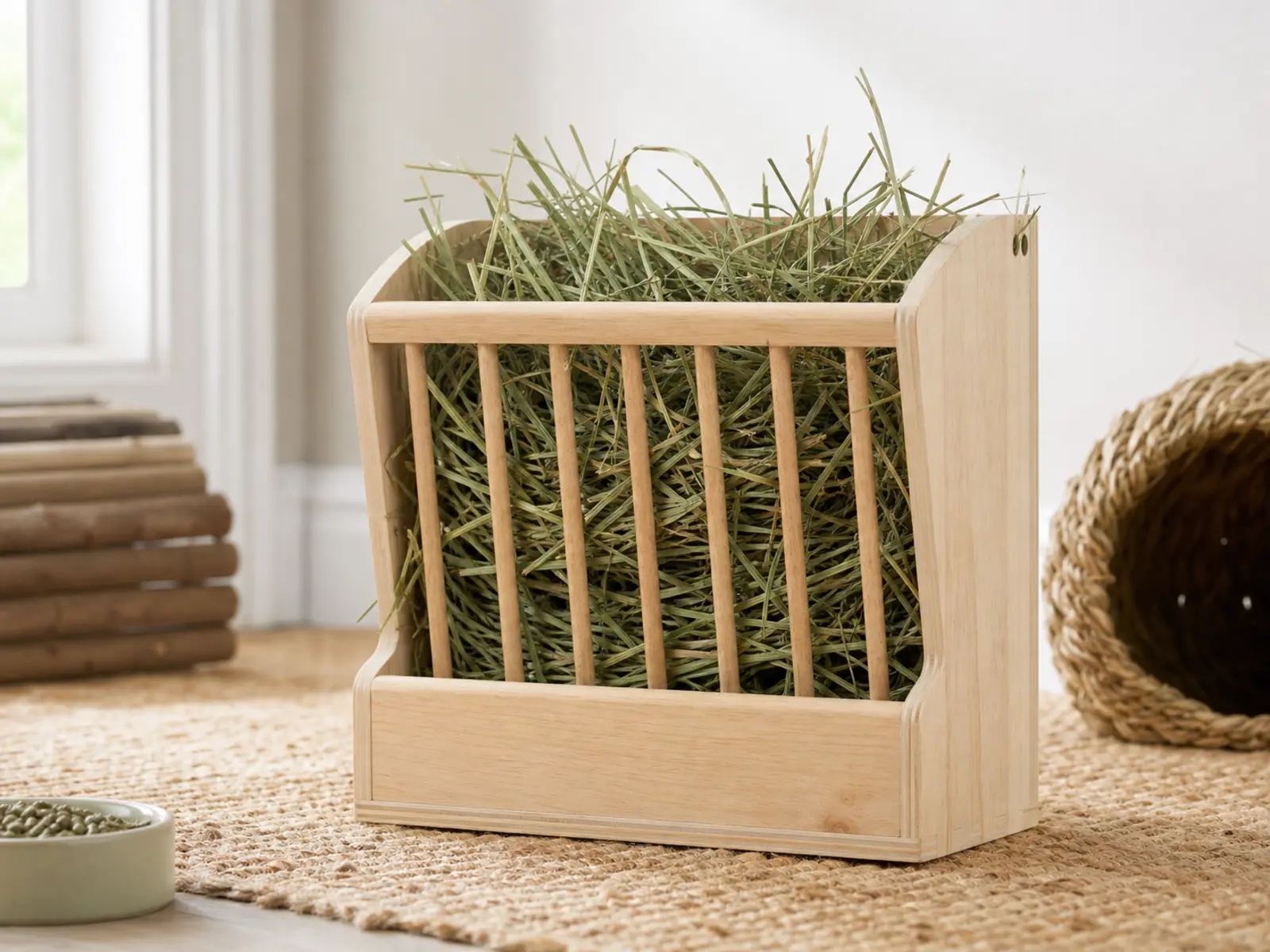
Rabbit hay feeder
Top up the hay rack first. A rabbit who has abundant long strands to sort through is less likely to treat a packaged snack as the main event.
Shop rabbit hay feeder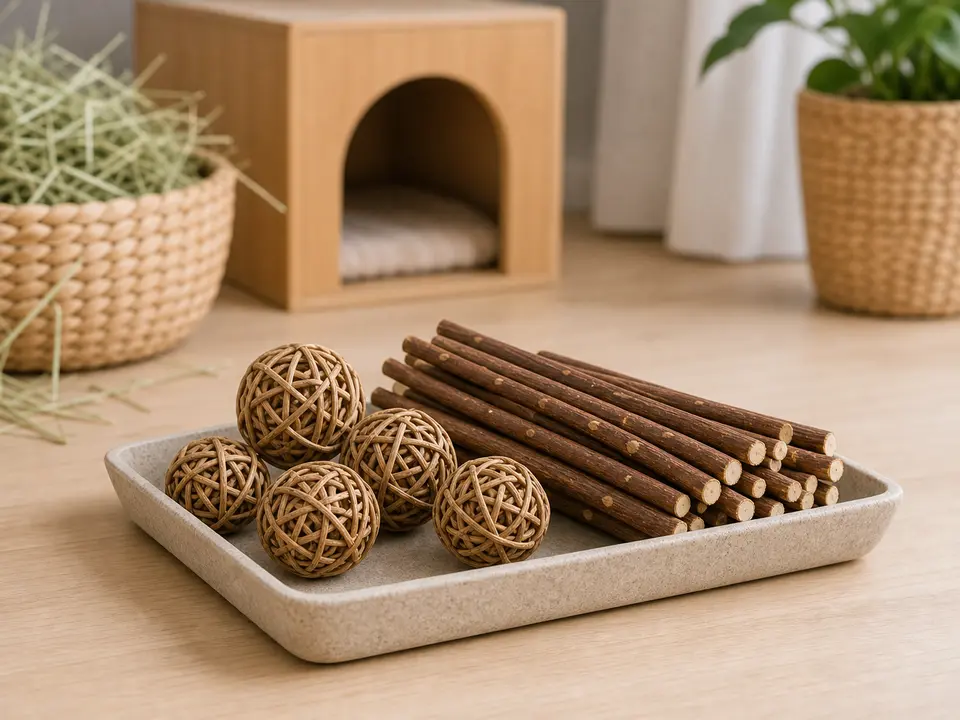
Willow chew bundle
Offer a plain chew project when the real goal is enrichment, giving the rabbit something that lasts longer than a sugary bite.
Shop willow chew bundle
Digital gram scale
Compare package pieces by weight when their shapes vary, especially for concentrated dried fruit that must stay separate from forage.
Shop digital gram scale