Updated
Rabbit food check
Can Rabbits Eat Dill? Yes—Fresh Leaves and Stems
Yes—fresh leaves and stems
Yes. Adult rabbits can eat fresh dill leaves and tender green stems. Confirm the feathery herb is culinary dill, wash one modest sprig, and serve it plain before the bunch reaches pickles or seasoned food. Rotate it with other familiar greens while hay stays unlimited.
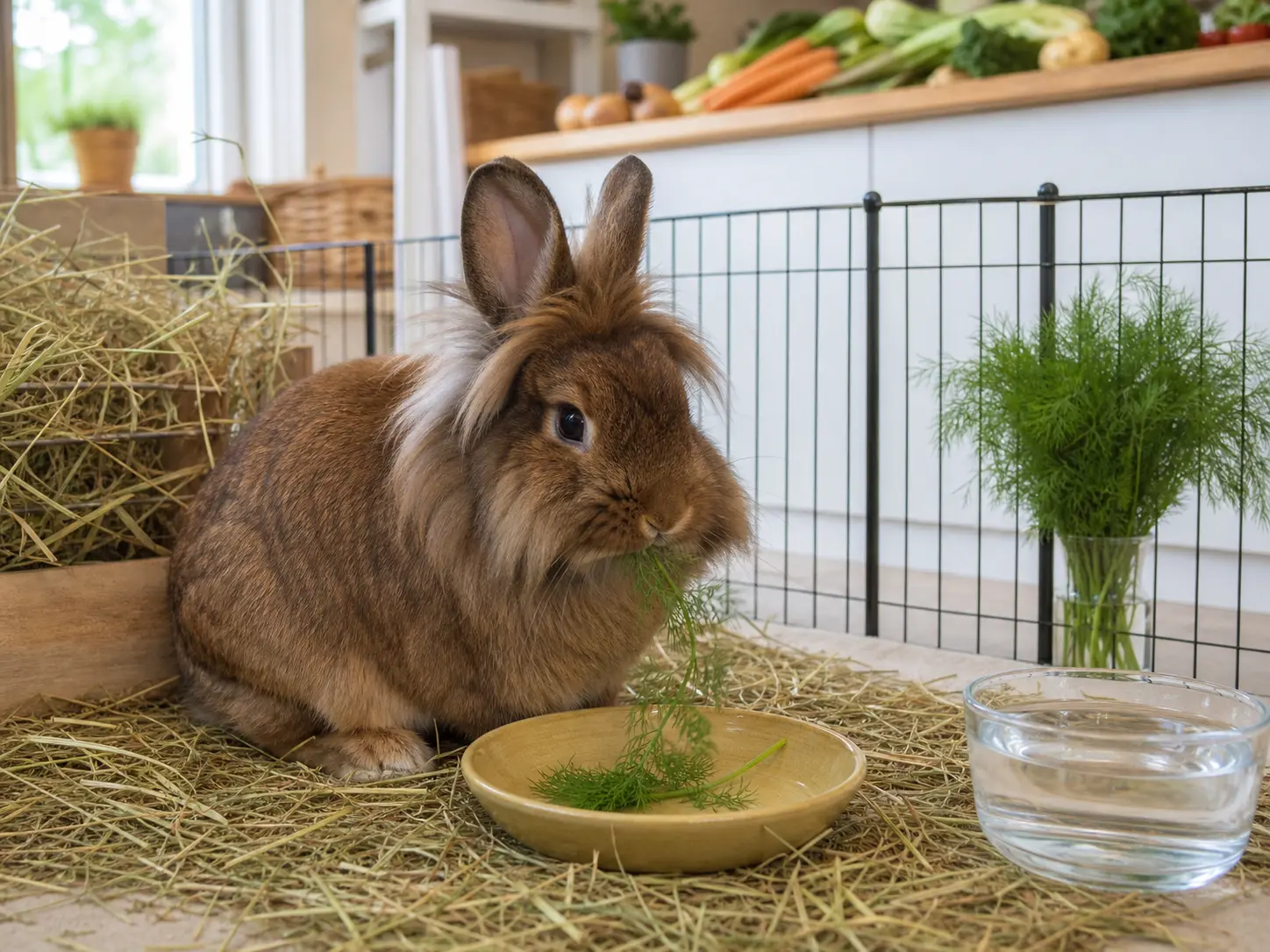 Dill
DillYes—fresh dill leaves are rabbit-safe
House Rabbit Society lists dill leaves, Anethum graveolens, among rabbit-safe greens, and the Rabbit Welfare Association includes dill in its supermarket herb list. One fresh plain sprig can join an adult rabbit's familiar greens. The loose hay pile still supplies the long chewing that matters most.
The feathery bunch still needs a label
Dill has airy threadlike leaves on smooth stems; fennel fronds can look similar. Read the produce band before a sprig reaches the rabbit's saucer. If the label is missing, choose another green.
Tender green stems can stay
A soft upper dill stem is fine to serve with its leaves. Trim away a tough flower stalk, brown base, root end, or any slimy joint, then rinse the sound sprig. Seed heads and dried dill seed are separate from the fresh leafy serving answered here.
Dill does not make a pickle rabbit food
A pickle jar adds brine, vinegar, salt, sugar, and spices to the dill. Keep that jar on the human side of the gate. The rabbit gets a fresh washed sprig from the produce drawer beside hay and water.
Find dill on the produce band
The band says fresh dill. Soft blue-green threads branch from slender stems, and no flower heads sit above them. The chestnut Lionhead waits beside the meadow-hay box while one labeled sprig moves from the refrigerator to the sink.
Fan the fronds over the colander
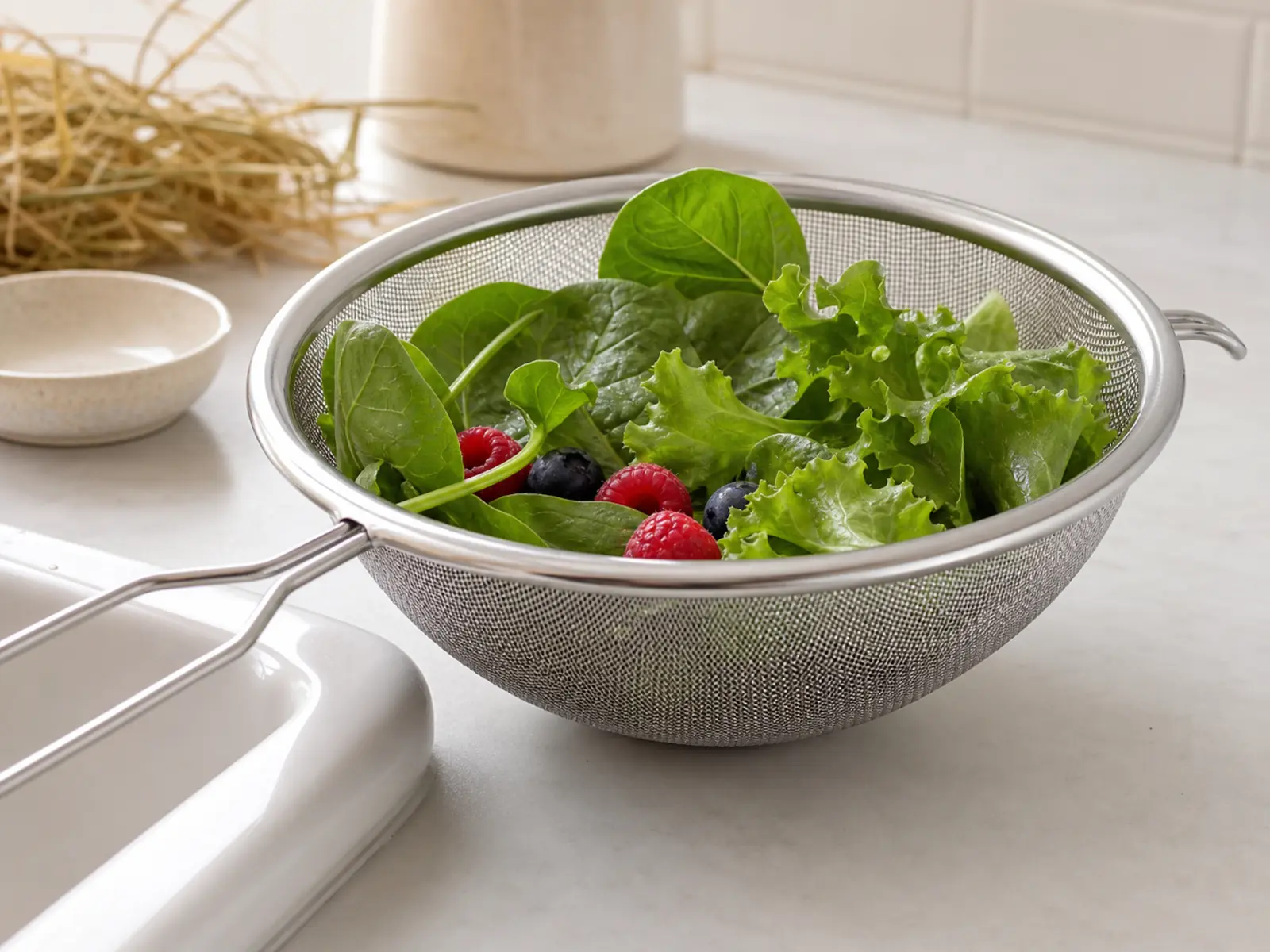
Remove the tie and spread the dill over a small colander. Open the damp middle where fine branches press together. A crisp sprig turns under cool water; yellow slime, fuzzy growth, grit-packed joints, and sour-smelling stems stay out of the rabbit room.
Save the plain tuft before dinner
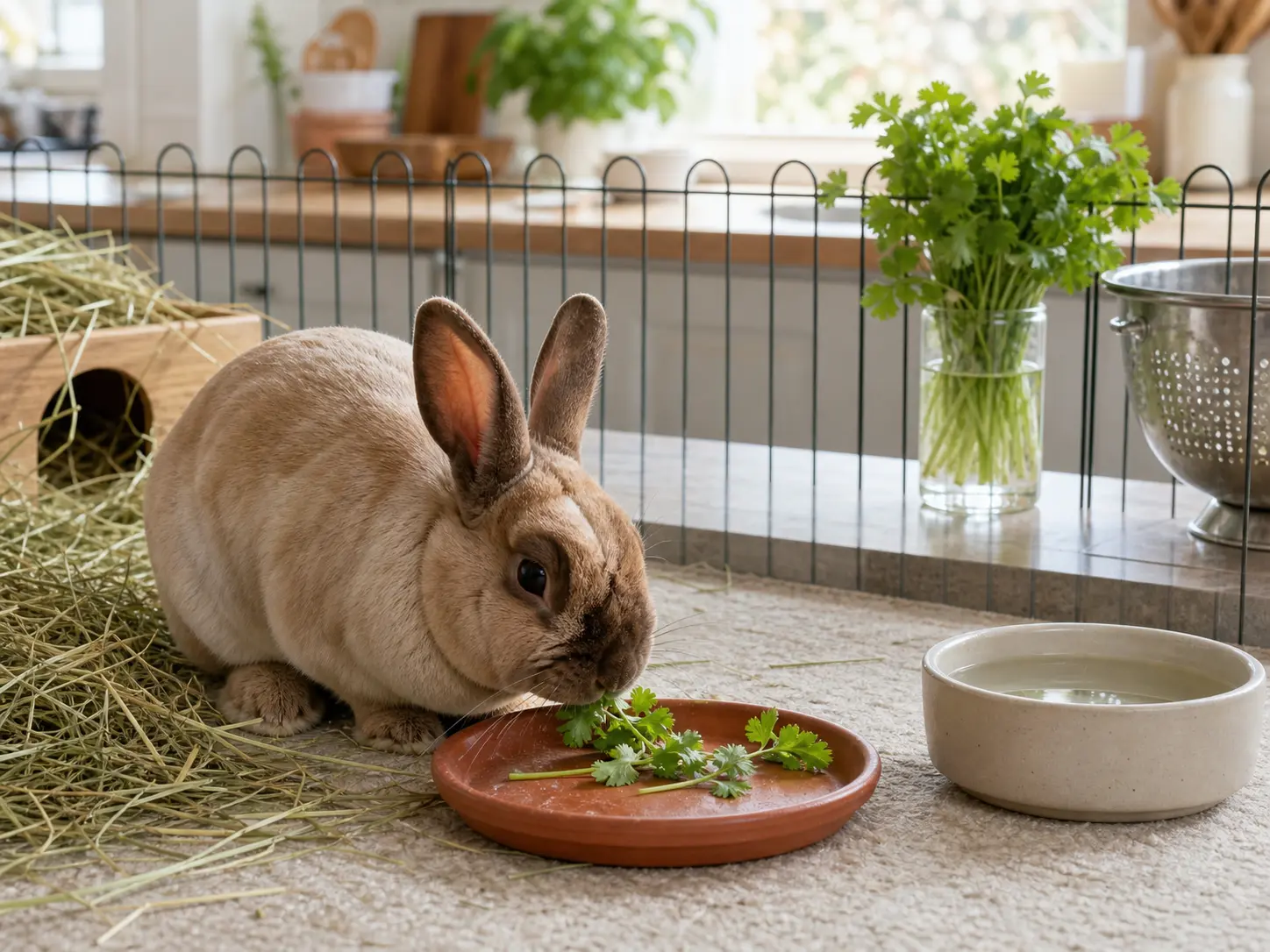
Set a few feathery leaves with their tender stem on the muted-yellow saucer, then return the bunch to the refrigerator. The rabbit gets that plain sprig beside hay and water before any dill reaches pickle brine, sauce, soup, fish, or potatoes.
Check the litter box, not the aroma
Dill's smell can bring a rabbit running, but excitement only records preference. Later, look for ordinary hay chewing, relaxed movement, and the usual round droppings. If eating or output slows, contact the rabbit-savvy clinic promptly instead of trying dill oil or another new herb.
Serve
- Confirm fresh culinary dill from the package, produce sign, plant tag, or a garden plant grown from a known seed. Look for fine blue-green threads branching from slender smooth stems.
- Spread the bunch and inspect its damp center. Discard yellow slime, fuzzy growth, sour-smelling pieces, blackened stems, pest-heavy fronds, and plants exposed to garden chemicals.
- Rinse one leafy sprig under cool running water. Turn the feathery branches and separate crowded stem joints so grit and tiny insects cannot stay hidden.
- Serve the leaves and tender green upper stem plain. Keep tough flower stalks, seed heads, roots, soil, essential oil, pickle brine, and seasoned kitchen food outside the pen.
Avoid
- Dill pickles, pickle slices, relish, or brine. Their vinegar, salt, sugar, spices, garlic, and other ingredients make them a different food.
- Dill essential oil, extracts, tinctures, capsules, concentrated supplements, or a home digestive remedy given without a veterinarian's direction.
- An unidentified feathery plant. Dill and fennel can resemble each other, while wild members of the carrot family can be dangerous; use a labeled grocery or known garden plant.
- Dried seasoning blends, seasoned fish or potatoes, soup, sauce, dip, restaurant garnish, and cutting-board scraps.
- A slimy, moldy, pesticide-treated, sour-smelling, badly yellowed, flowering, or seeding sprig.
Watch
- The dill fronds disappearing while the rabbit continues ordinary visits to the hay pile
- Normal posture, activity, water use, and interest in familiar food
- The rabbit's usual separate round droppings after the dill trial
- Reduced eating or droppings, soft stool, diarrhea, belly pressing, hunching, tooth grinding, weakness, or unusual quietness; remove the new food and contact a rabbit-savvy veterinarian promptly
Portion
For an adult already eating leafy greens, one modest leafy dill sprig can share the usual greens allowance. If dill is new, begin with a small tuft and a short tender stem rather than a dill-filled bowl. Keep the meadow, timothy, orchard, or other grass hay supply generous all day.
Keep the feathery dill clean and separate
These produce-prep tools help keep the dill label with the bunch, open its damp center, rinse fine fronds, and reserve the rabbit sprig before pickle or dinner prep.
Affiliate links: Furball Cove may earn from qualifying purchases at no extra cost to you.
Produce strainer
Fan delicate dill branches over a small colander so grit, insects, and loosened yellow pieces rinse away without vanishing down the sink.
Shop produce strainer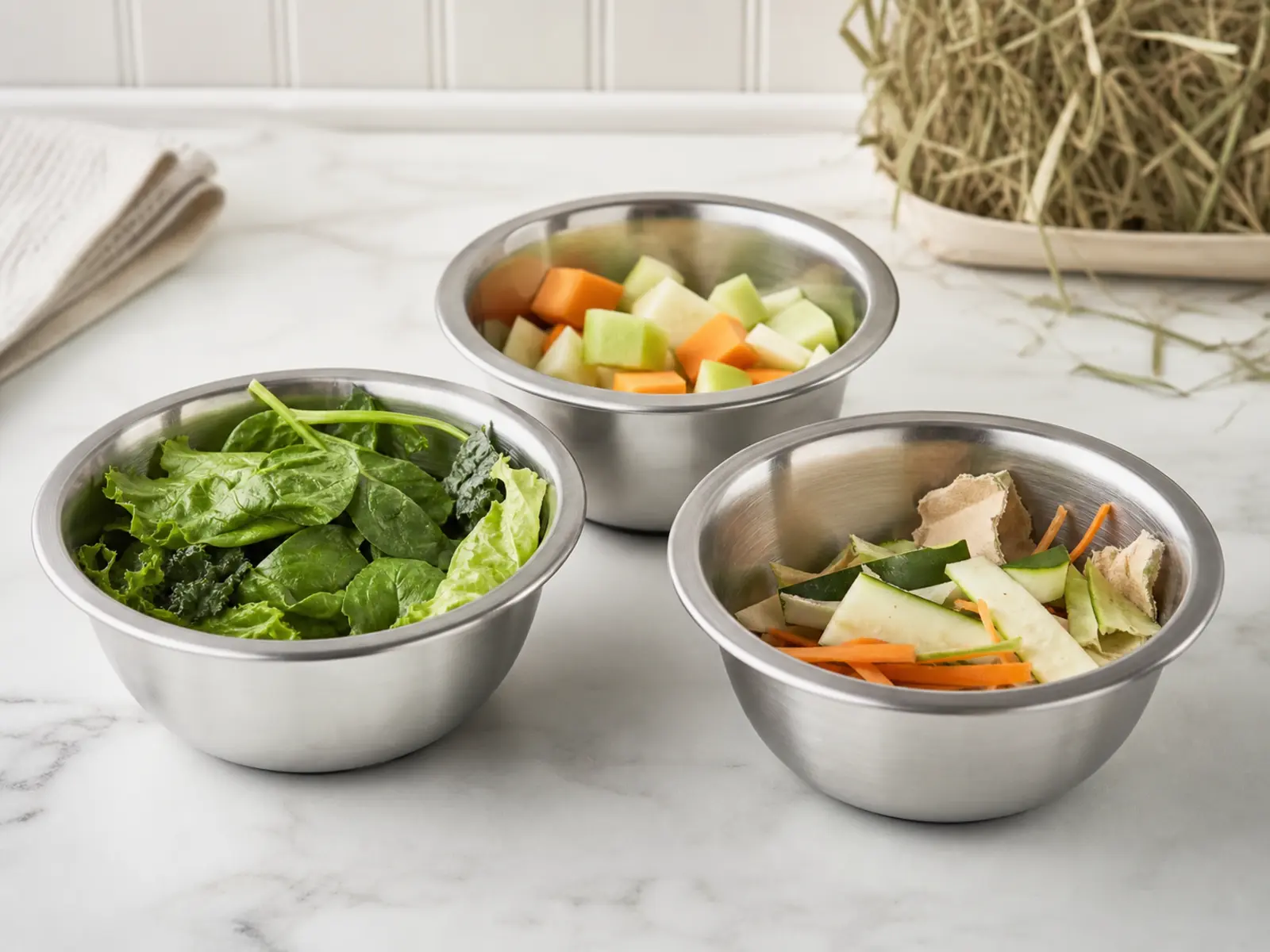
Stainless prep bowls
Reserve the rabbit's washed dill before the remaining bunch reaches soup, sauce, fish, potatoes, dip, or pickle prep.
Shop stainless prep bowls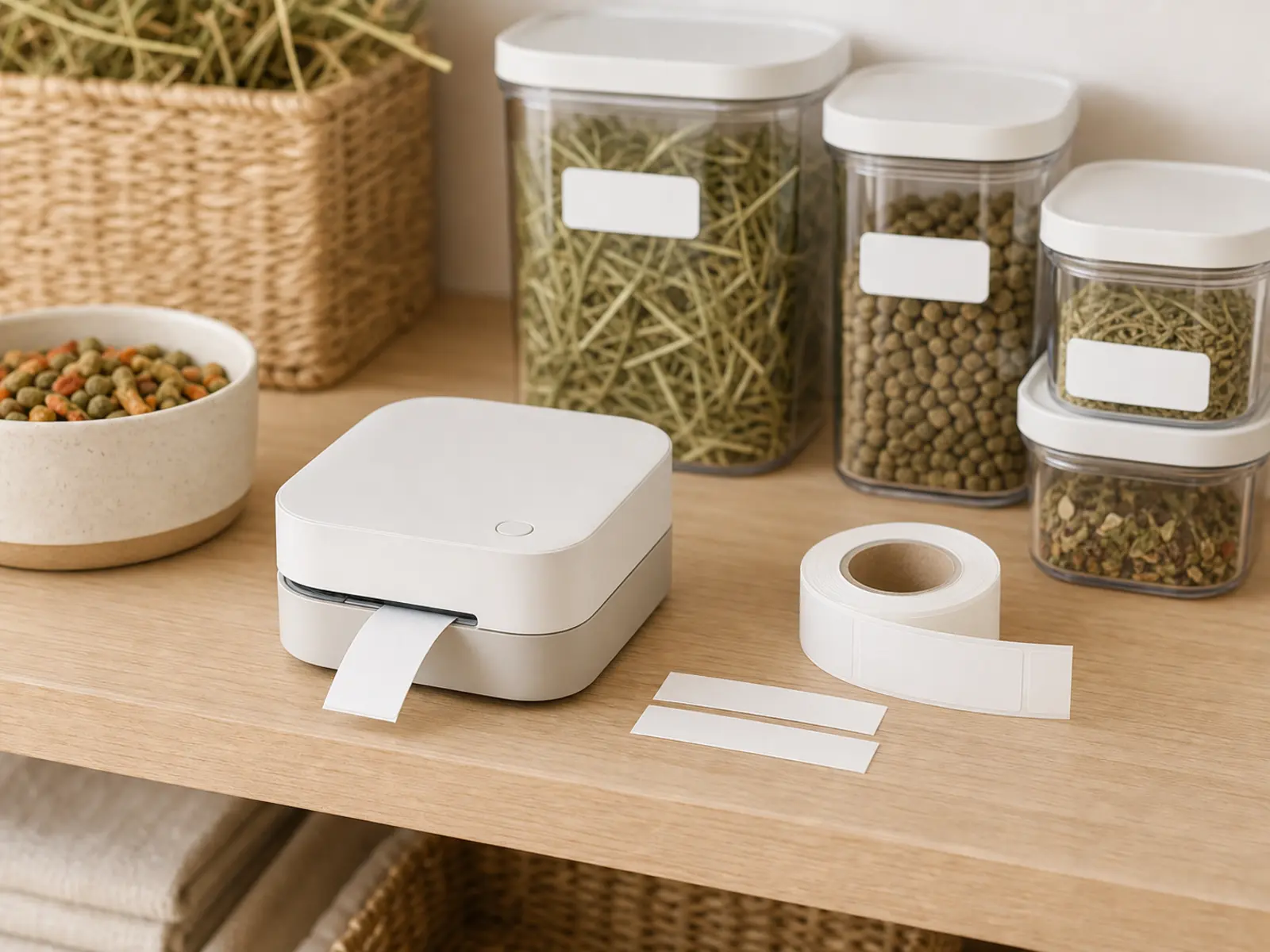
Label maker
Mark a repotted or home-grown herb dill and add the picked date while the original seed packet or nursery tag is available.
Shop label maker