Updated
Rabbit food check
Can Rabbits Eat Frozen Vegetables? Choose Fresh Greens
No—do not serve them frozen
No—do not give a rabbit vegetables that are still frozen, frosty, or hard with ice. Offer the usual hay and fresh greens instead. Did a piece go missing? Check the bag, and call your veterinarian promptly if the mix contains onion or garlic.
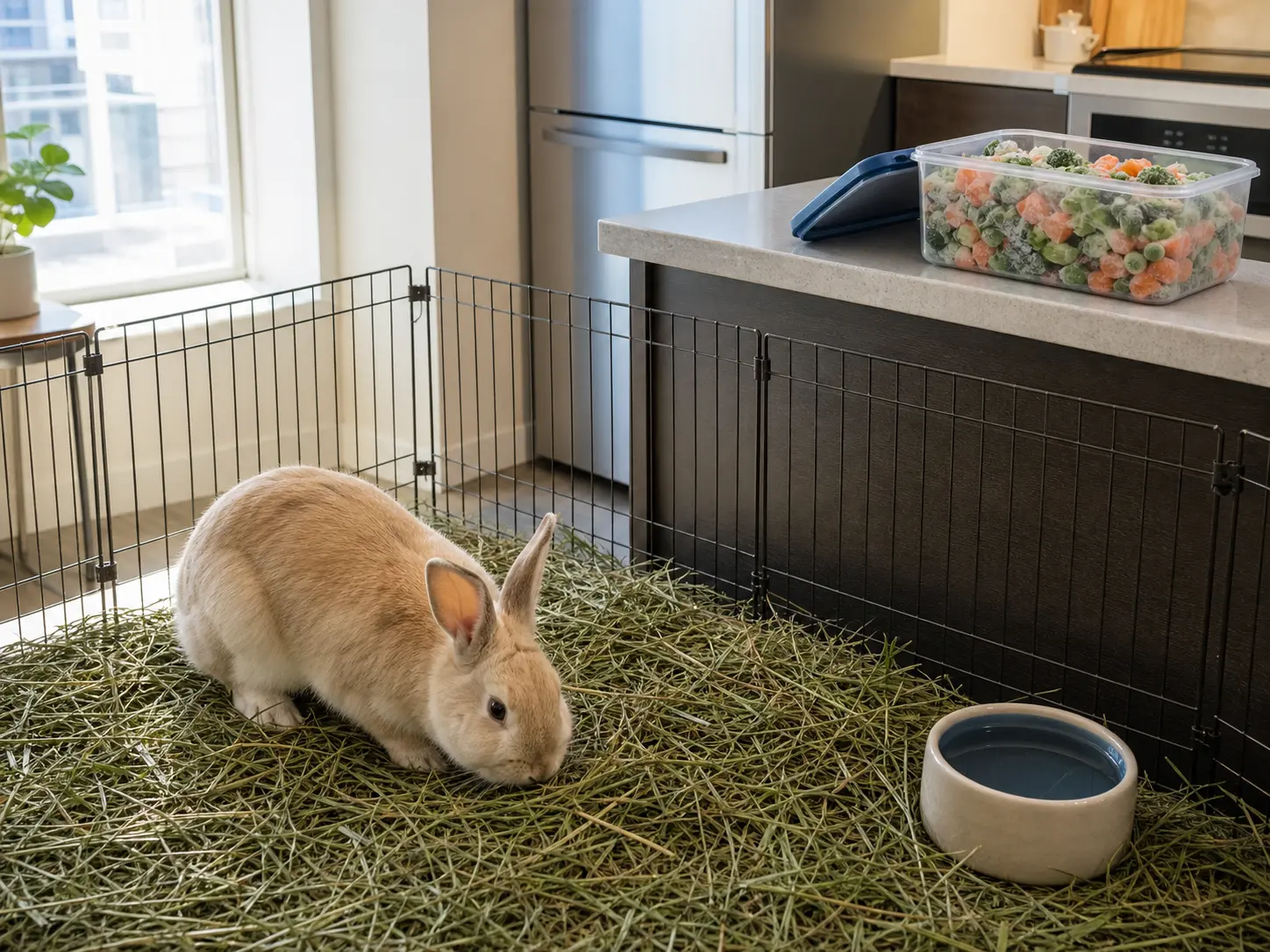 Frozen Vegetables
When to call your vet
Phone a rabbit-savvy veterinarian if the mix contained onion, garlic, or another worrying ingredient, or if a large amount may be gone. Eating less, smaller droppings, a hunched posture, or unusual quietness also deserve a prompt call. Keep the freezer bag beside you.
Frozen and frosty are a no
The RSPCA advises against feeding rabbits greens or vegetables that are frosty or frozen. That does not mean every vegetable becomes poisonous in a freezer. It means an icy piece should not go in the rabbit bowl. Choose fresh, washed greens instead.
Thawed does not automatically mean suitable
Once a piece has thawed completely, you still have to ask what it is. A soft medley of peas, corn, carrot cubes, beans, and broccoli is still a medley—not a serving of leafy greens. Each vegetable needs its own answer.
Seasoned bags are a different problem
A plain bag of chopped vegetables and a ready-to-roast mix can look almost identical through frosted plastic. Check for butter, oil, stock, salt, sauce, onion, garlic, and seasoning packets. If your rabbit ate onion or garlic, call a rabbit-savvy veterinarian promptly.
When a piece goes missing
Take the rest away and check the package. A thawing pea from a one-ingredient bag and a mouthful of seasoned vegetables call for different decisions. Keep hay and water available, watch eating and droppings, and phone your veterinarian if the recipe is worrying or your rabbit seems uncomfortable or unusually quiet.
Put the bag away before floor time
Seal the bag while the pen gate is latched, then carry it straight back to the freezer. One loose pea or carrot cube rolling off the counter can turn dinner prep into a scavenger hunt.
Peas roll farther than you think
Scan the floor along the freezer, cabinets, and pen panels while your rabbit waits inside the pen. Small pieces hide against kickboards and travel under shoes, sometimes turning up hours after dinner.
Make fresh greens easy to grab
Wash a day or two of familiar leaves and store them where everyone can see them. Ready-to-serve romaine or dill beats digging through a freezer drawer when the rabbit's bowl is empty.
Watch the habits you already know
Once you know what went missing, return to the habits you see every day. Is timothy disappearing? Are fresh droppings showing up? A berry proves only that a berry was tempting, so skip treats for now. Phone the clinic if your rabbit grazes less, sits differently, or loses their normal spark.
How to handle it
- Put the bag back in the freezer before the rabbit has access to the kitchen.
- Look under the freezer, cabinets, and pen edge for peas, corn, carrot cubes, or torn bits of packaging.
- If anything is gone, take a picture of the package. Write down the vegetable, how many pieces may be missing, and whether they were icy or thawed.
- Keep meals normal: plenty of hay, fresh water, and the greens and pellets your rabbit already knows.
Avoid
- Vegetables that are frosty, icy, or still hard in the middle.
- Steam-in-bag, glazed, creamed, stir-fry, and ready-to-roast mixes. These are seasoned side dishes, not bags of untouched produce.
- Any mix with onion, garlic, leek, chives, or ingredients you cannot identify. Call your veterinarian promptly if your rabbit ate one of these.
- Heating a frozen mix for the rabbit. A trip through the microwave does not earn it a place beside the hay rack.
Watch
- Your rabbit eating hay at their usual pace
- Coming over for the evening greens or pellets as expected
- The litter tray filling with this rabbit's usual round droppings
- Reduced eating or droppings, diarrhea, a swollen or painful-looking belly, hunching, tooth grinding, weakness, or unusual quietness; call a rabbit-savvy veterinarian promptly
Portion
Do not serve vegetables straight from the freezer. Once a piece has thawed completely, judge it as the raw vegetable it came from. A medley of peas, corn, carrots, and beans belongs with the family meal; give the rabbit their usual leafy greens.
Make fresh greens easier than the freezer bag
These are practical ways to keep frozen food closed, prepare fresh greens, and make sure plenty of hay is ready during family meals.
Affiliate links: Furball Cove may earn from qualifying purchases at no extra cost to you.
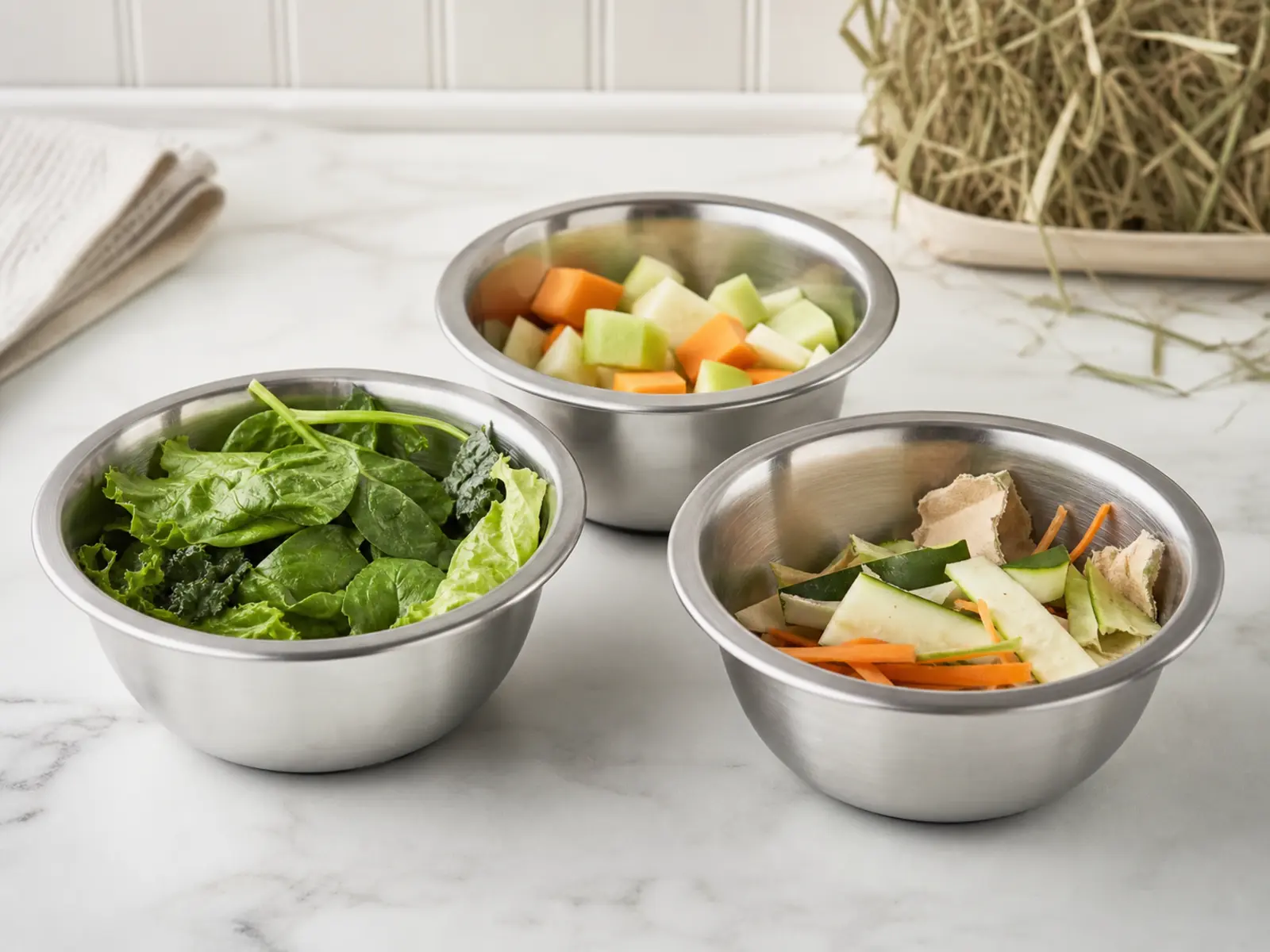
Stainless prep bowls
Give the rabbit's washed greens a dedicated prep bowl, away from frozen ingredients meant for the family meal.
Shop stainless prep bowls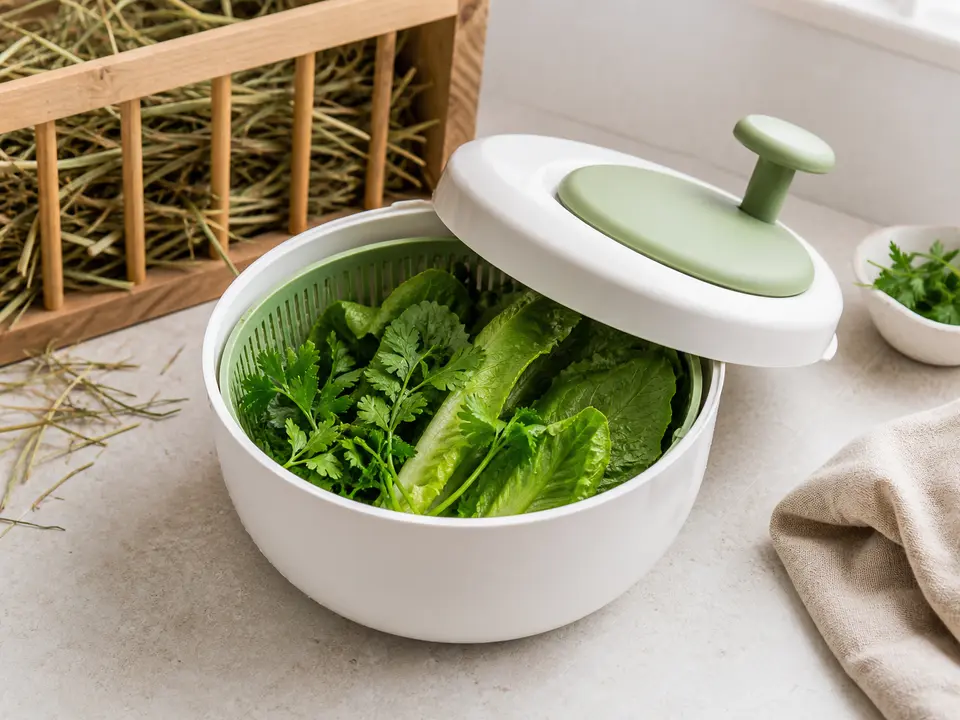
Salad spinner
Dry washed greens before they go back in the fridge, where they will stay easier to inspect and use.
Shop salad spinner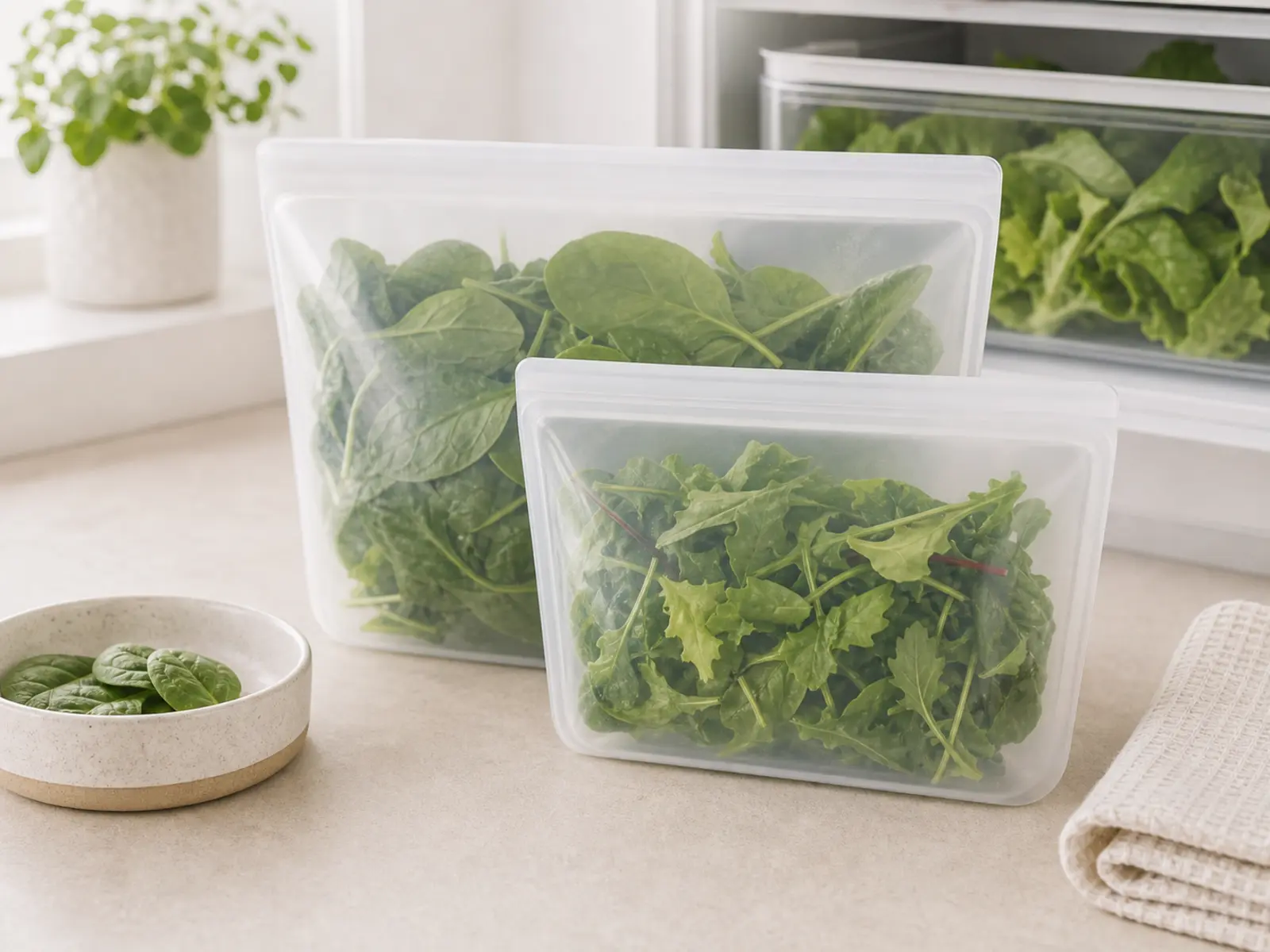
Produce storage bags
Store washed, familiar greens together in the refrigerator so the right choice is ready when dinner gets busy.
Shop produce storage bags