Updated
Rabbit food check
Can Rabbits Eat Green Leaf Lettuce? Yes—Wash It First
Yes—washed and plain
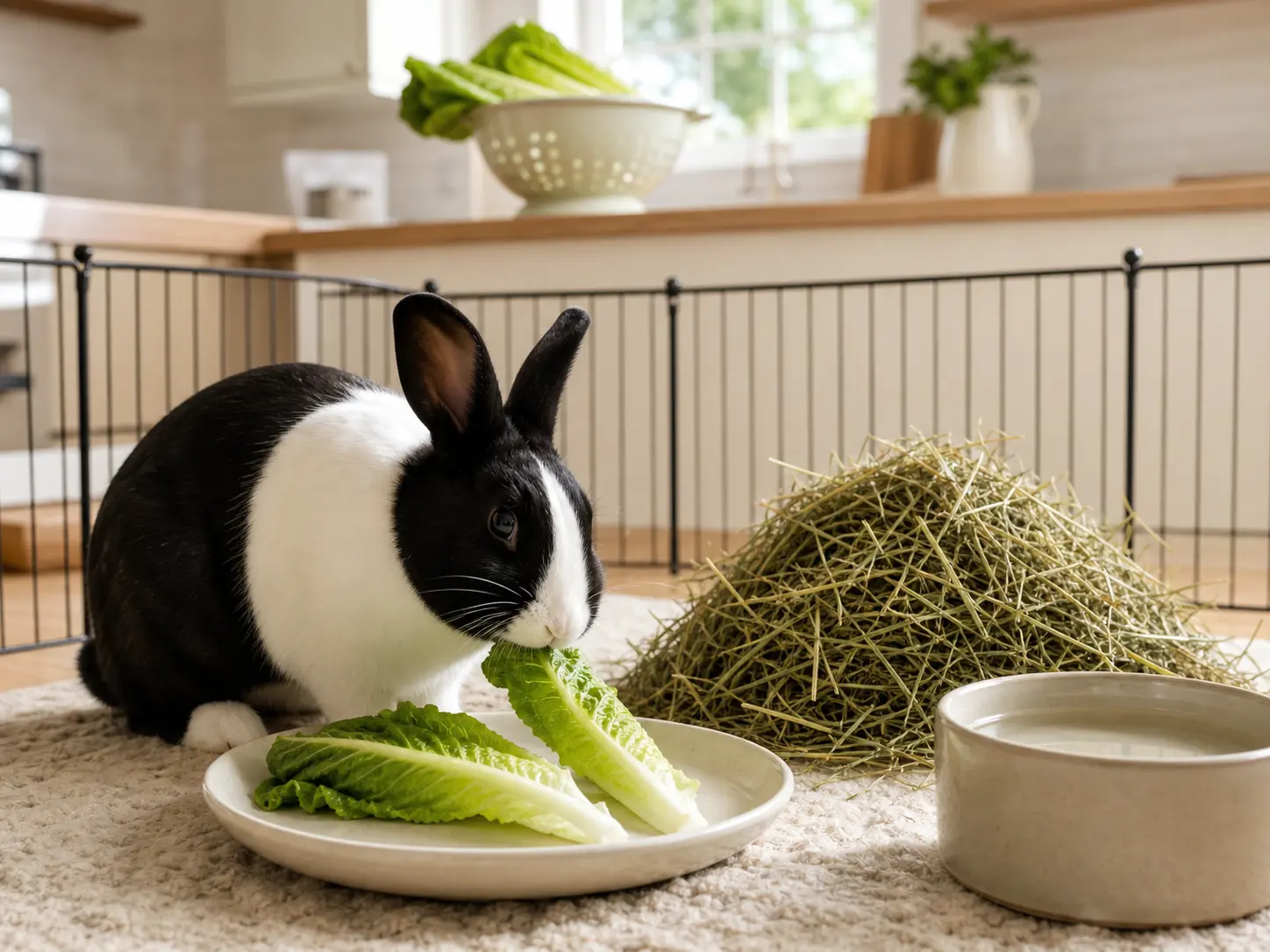
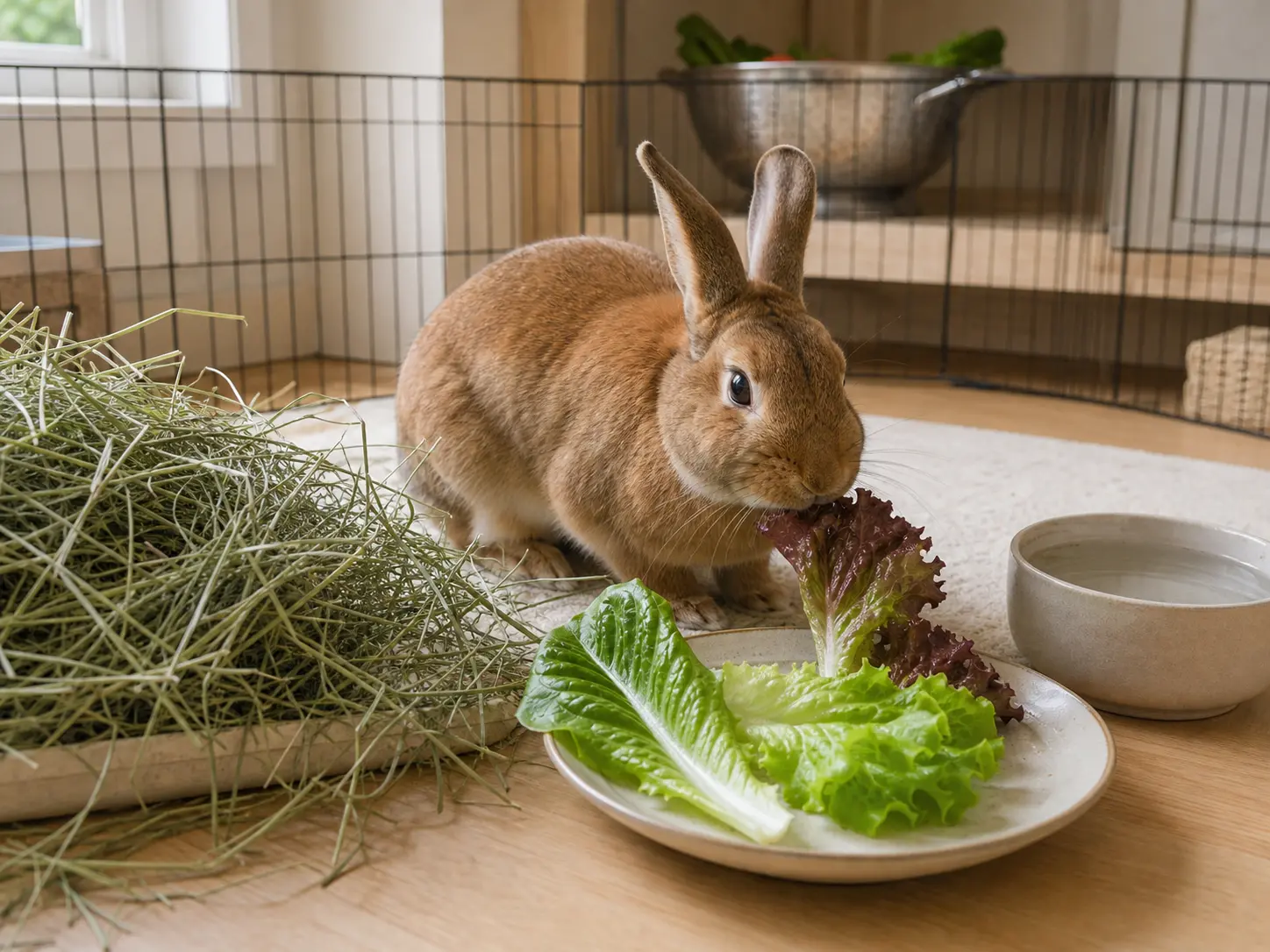
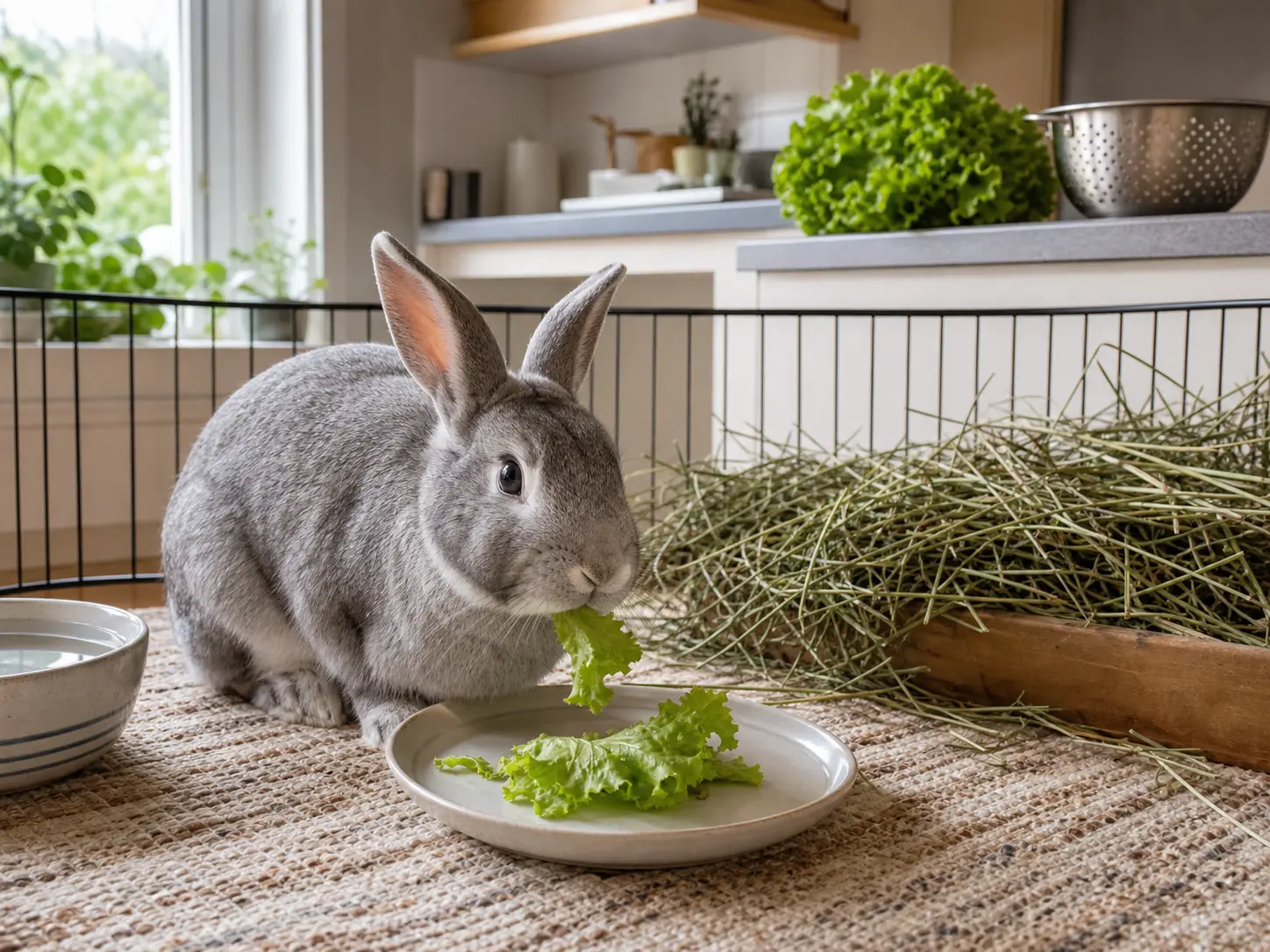
Yes. Adult rabbits can eat green leaf lettuce. Pull a crisp leaf from the loose head, wash the frilly folds, and serve it plain alongside the usual greens. If fresh vegetables are new, begin with one small torn piece. Leave the hay pile open all day.
 Green Leaf Lettuce
Yes—this is the loose, frilly lettuce
House Rabbit Society includes green leaf lettuce on its list of rabbit-safe leafy greens. It grows as an open head with soft ruffled leaves rather than the tight ball of iceberg or the upright heart of romaine. For an adult rabbit that already eats vegetables, it can take one place on a varied greens plate.
Give every fold a rinse
The loose edges are exactly where grit and damaged bits can hide. Pull the leaves apart, look along both sides, and rinse through the folds under running water. Trim the base and throw away any leaf that has become slimy, moldy, badly bruised, or sour-smelling. Plain water is enough; produce wash does not belong on the rabbit serving.
Take it from the head, not the dinner plate
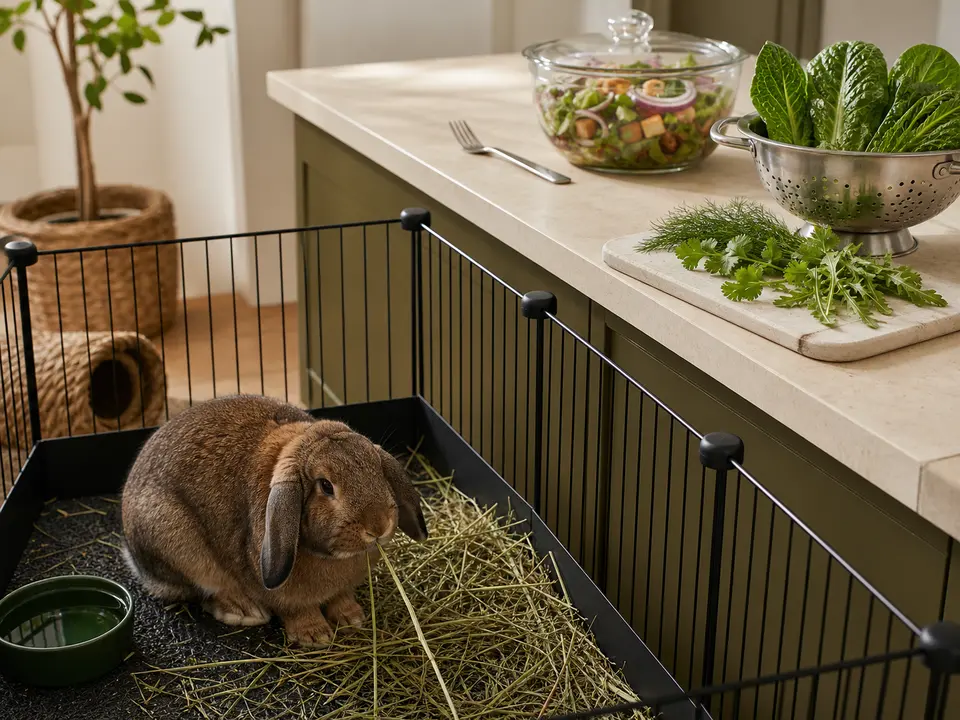
A clean leaf from the produce drawer is easy to answer. A leaf under a burger or mixed into a dressed salad has picked up sauce, oil, salt, cheese, seasoning, and possibly ingredients rabbits should not eat. Leave the people food alone and prepare a separate piece from the whole head.
A green leaf is still not the main meal
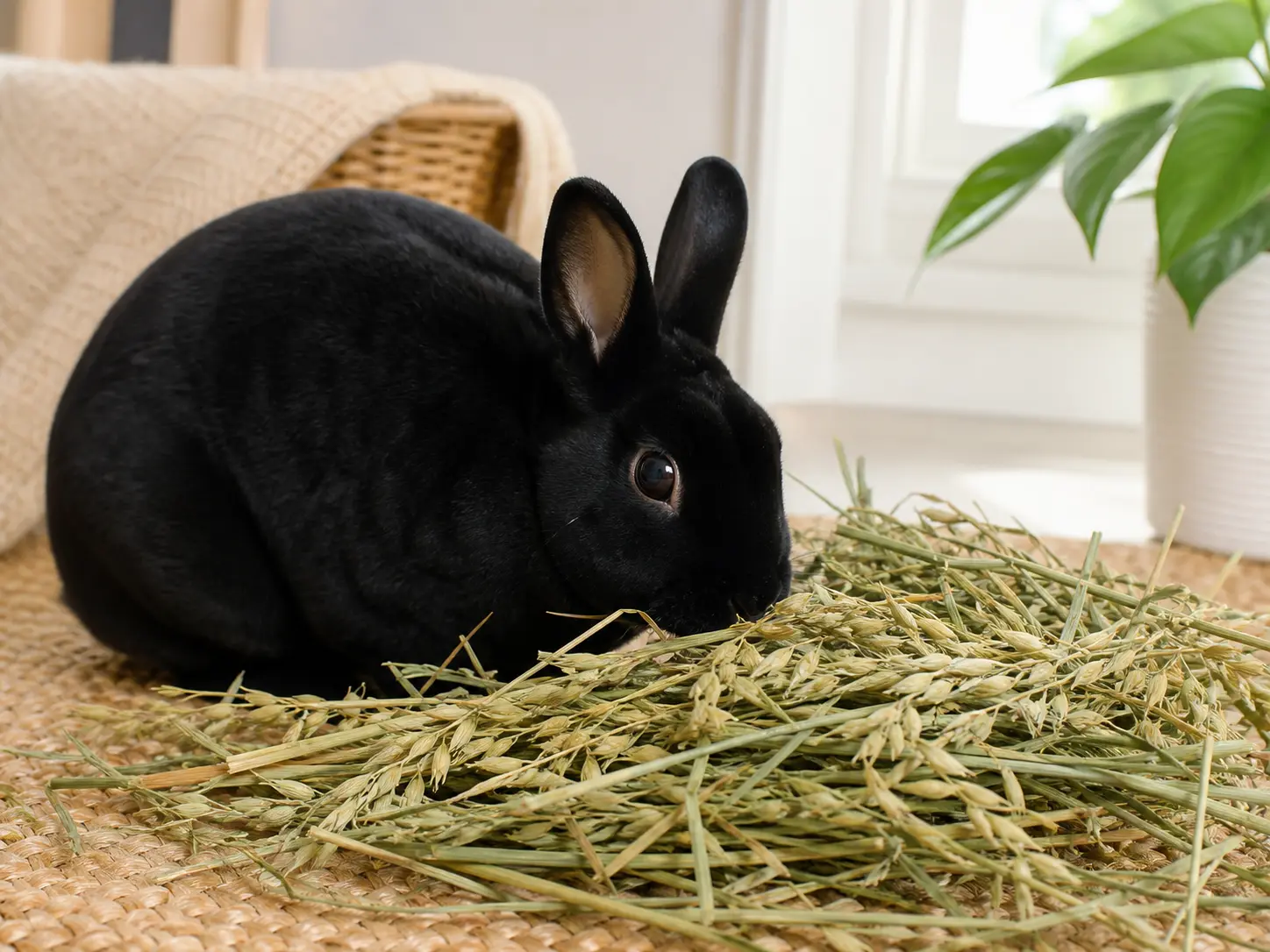
Leafy greens add variety, but they do not take over the hay rack. Put a small plain serving beside abundant grass hay and clean water. If this is the first fresh green, offer one torn piece and keep the rest of the menu familiar so any change in appetite or droppings is easy to notice.
Lift off the outer leaf
Set the whole head on the counter and peel back the loose outside leaves. A crisp leaf with fresh green color can move to the sink. A wet dark patch, slime, mold, or sour smell sends that leaf to the compost or bin.
Run water through the frills
Spread the ruffled edge open under cool running water and use your fingers to dislodge visible grit. Turn the leaf over and check the broad rib as well. Shake it gently or use a salad spinner so the stored batch is not left dripping wet.
Tear one first piece
If your rabbit has never had green leaf lettuce, tear off one small piece and serve it beside the familiar hay, water, and pellets. Do not build a sampler plate with three other new greens on the same day. The first taste should be easy to track, not impressive to photograph.
Park the rest in the fridge
Dry the remaining leaves, place them in a ventilated produce bag or bin with an absorbent liner, and refrigerate them before carrying the serving to the pen. A labeled rabbit-greens container also keeps plain leaves away from dressed salad kits and sandwich fixings.
Serve
- Check that the produce label says green leaf lettuce. The loose frilled head is different from a tight iceberg ball, a romaine heart, cabbage, or an unidentified salad mix.
- Lift off the outer leaves and discard anything slimy, moldy, badly bruised, or sour-smelling. Trim the dirty base from the leaves you keep.
- Open each leaf under clean running water and rub away grit from both sides, especially where the ruffled edges fold over themselves.
- Shake or spin off excess water, tear the serving by hand, and put it on a clean plate with no dressing, oil, salt, cheese, croutons, or seasoning.
Avoid
- Assuming any pale lettuce is green leaf. Iceberg forms a tight round head and is a poor regular choice; check the produce label when the variety is unclear.
- Pulling a leaf from a burger, sandwich, salad kit, buffet bowl, or dressed dinner salad. Sauce, salt, oil, cheese, and other toppings turn it into a different food.
- Serving an entire floppy outer leaf because lettuce feels light. Use green leaf as one part of the smaller fresh-food portion while hay remains the all-day food.
- Washing a head, sealing the wet leaves in a puddle, and ignoring wilt, slime, mold, dark wet patches, or a sour smell at the next serving.
Watch
- The rabbit eating the small piece and going back to the hay pile
- The usual appetite, comfortable movement, and interest in familiar food later in the day
- Separate round droppings in the rabbit's usual number and size
- Eating less, fewer droppings, watery diarrhea, a hunched pose, tooth grinding, weakness, or unusual quietness; call a rabbit-savvy veterinarian promptly
Portion
For an adult already comfortable with leafy greens, green leaf lettuce can share the usual greens plate with other familiar leaves. If it is new, begin with one small torn piece rather than a full leaf. A whole loose head is refrigerator stock, not one rabbit serving.
Keep loose leaves clean, crisp, and separate
These are practical tools for the green-leaf job: trimming the dirty base, catching grit from ruffled edges, plating one modest serving, and keeping the rest from sitting wet in the refrigerator.
Affiliate links: Furball Cove may earn from qualifying purchases at no extra cost to you.
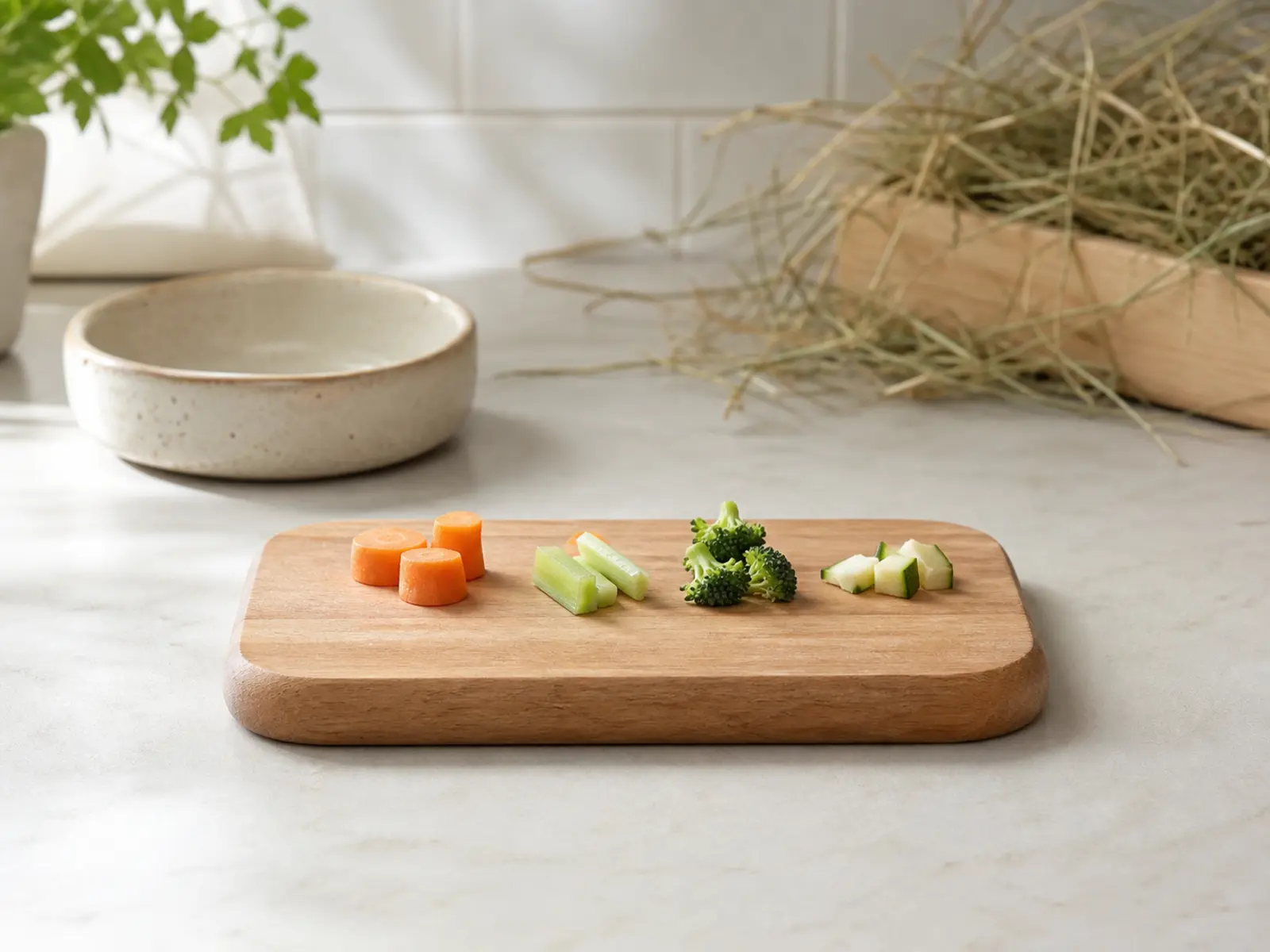
Mini cutting board
Use a small clean board to trim the dirty base and bruised edges without mixing rabbit greens into dinner prep.
Shop mini cutting board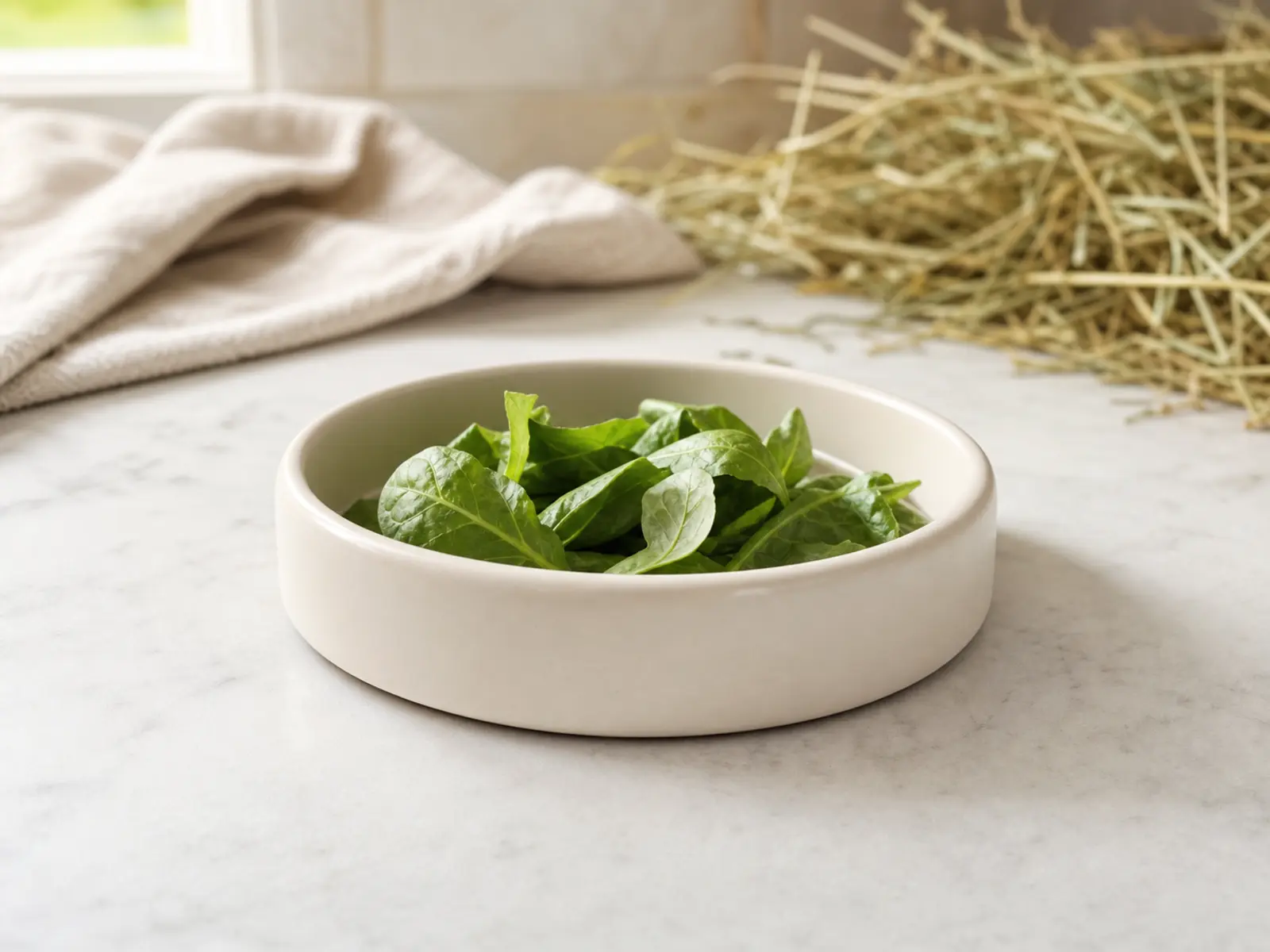
Ceramic food dish
Put the small plain lettuce piece on its own washable plate beside hay, away from pellets and human salad toppings.
Shop ceramic food dish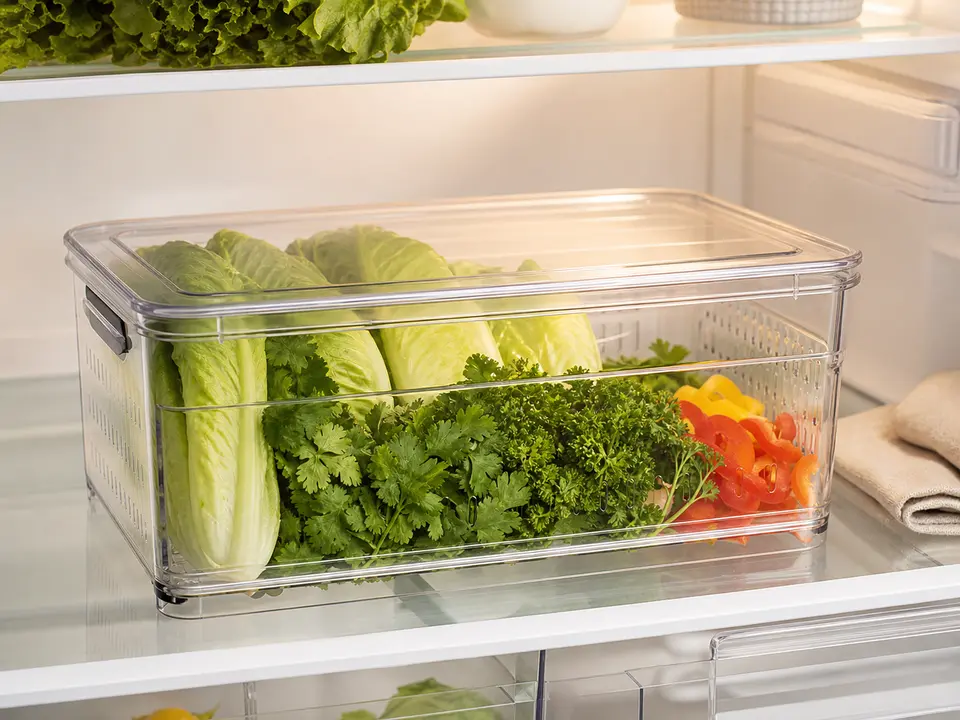
Rabbit greens bin
Give the loose head its own refrigerator bin so rabbit greens stay separate from dressed salad kits and sandwich ingredients.
Shop rabbit greens bin