Updated
Rabbit food check
Can Rabbits Eat Kale? Yes—Rotate It with Other Greens
Yes—rotate it with other greens
Yes. Adult rabbits can eat kale as one leaf in a varied greens rotation. Wash it, serve it plain, and introduce one small torn piece if it is new. Do not let kale replace unlimited grass hay, and ask your rabbit-savvy veterinarian how it fits if your rabbit has urinary sludge, stones, or a prescribed calcium plan.
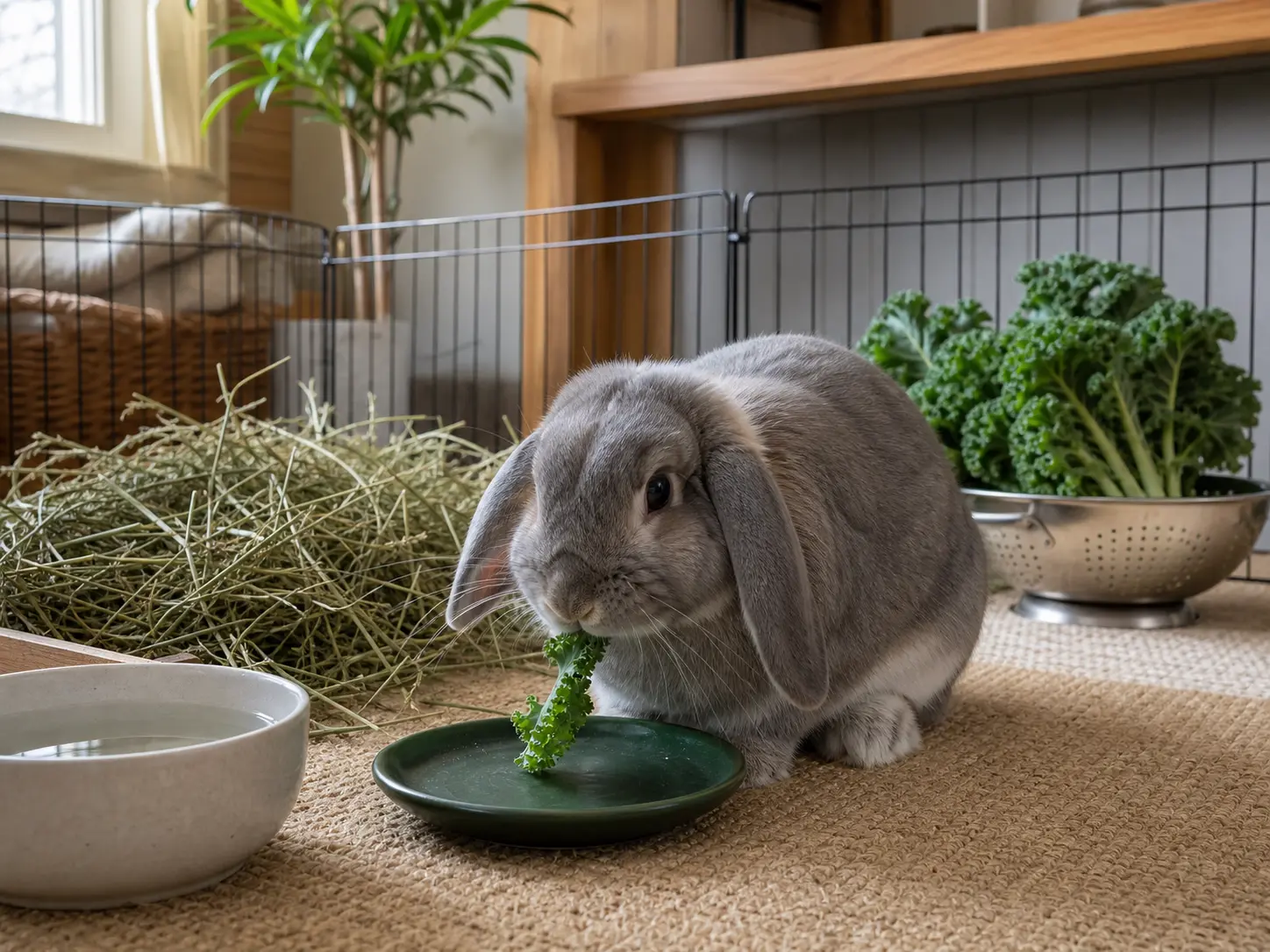 Kale
KaleYes—kale can join the greens plate
House Rabbit Society includes kale among rabbit-safe leafy greens. Treat that as permission to use a clean plain leaf, not a reason to turn dinner into an enormous kale bowl. One torn piece can sit beside other familiar greens while the loose hay pile remains open all day.
The name curly kale tells you what to wash
Curly kale folds soil and tiny insects into tight blue-green ruffles. Lacinato has a long dark blade with a pebbled surface; red Russian has flatter toothed leaves and colored stems. Check the label, then wash the leaf you actually bought instead of relying on one stock photo of kale.
The rib changes the chew, not the answer
The thick center rib is firmer than the leafy edge. It is not a human salad topping that must be stripped away, but a small first serving is easier to judge when it includes mostly leaf and one short rib section. If the rabbit leaves the tougher piece, clear it at the next pen tidy instead of disguising it in sweeter food.
Calcium advice belongs to the whole rabbit
Kale contains more calcium than some leafy options, which is why several veterinary guides recommend rotation or limits. That does not make a washed leaf poisonous. A rabbit with sludge, stones, painful urination, or a clinic-set diet needs an individual review of hay, pellets, greens, water, and medical history—not one forbidden-food meme.
Name the bunch at the produce drawer
Lift the band before the pen opens. The label says curly kale, and the bunch has tight ruffled leaves on pale firm ribs. A loose unmarked handful from a salad kit goes back; tonight's rabbit leaf comes from the intact bunch you can identify.
Open the ruffles under running water
Hold one leaf by its rib over the sink. Spread each curled edge, rinse the front and back, and rub away grit caught in the folds. A wet brown bruise or sour soft patch goes to the compost; the crisp section moves to a clean green saucer.
Tear one first piece beside the hay
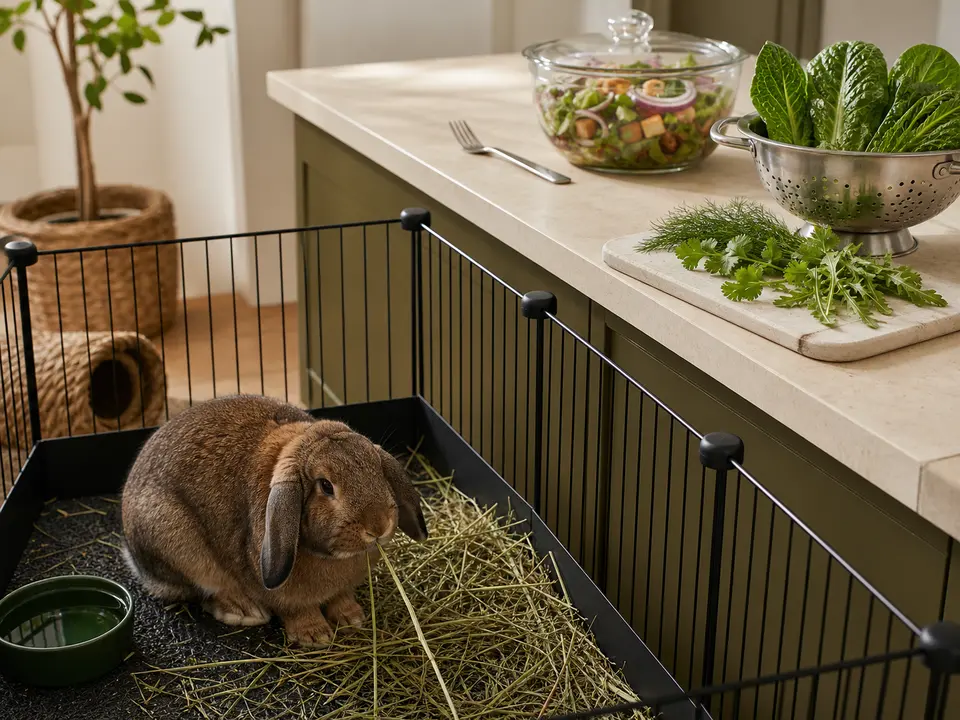
Break off a small leafy piece with a short section of rib and put the bunch back in the refrigerator. Set the saucer beside the full orchard-hay pile and water bowl. The blue-gray lop may choose kale first, but the rack must stay easy to reach afterward.
Check the routine, not an empty saucer
An empty plate proves only that the kale tasted good. Later, notice whether long hay strands moved, the rabbit rests and explores normally, and the litter box holds its usual round droppings. A slowdown in eating or output needs prompt veterinary advice rather than a second food experiment.
Serve
- Read the produce sign or package and identify the kale. Curly kale has tight ruffles; lacinato has long dark pebbled blades; baby kale has small tender leaves.
- Choose a crisp leaf without slime, fuzzy growth, a sour smell, yellow wet patches, or wilted tissue collapsed around the stem.
- Rinse both sides under cool running water. Open curly edges with your fingers and follow the central rib where soil and small insects can hide.
- Tear off the small serving and offer it plain. Refrigerate the remaining bunch with airflow before the rabbit gets access to the plate.
Avoid
- Kale chips, cooked kale, creamed kale, smoothies, restaurant salad, or leaves carrying oil, salt, dressing, cheese, garlic, onion, seasoning, or sweetener.
- Making kale the only fresh green day after day when several rabbit-safe leafy plants can share the rotation.
- A wilted, slimy, moldy, sour-smelling, heavily bruised, pest-damaged, or warm pre-cut bag.
- Changing a veterinarian-directed urinary or calcium plan from a generic online food list. The clinic needs the rabbit's diagnosis and whole diet.
Watch
- The kale piece disappearing while the rabbit continues normal visits to the hay pile
- Comfortable posture, ordinary activity, water use, and interest in familiar food
- The rabbit's usual separate round droppings and normal urine pattern
- Reduced eating or droppings, soft stool, diarrhea, belly pressing, hunching, tooth grinding, straining to urinate, blood in urine, urine-soaked fur, weakness, or unusual quietness; contact a rabbit-savvy veterinarian promptly
Portion
For an adult already comfortable with leafy greens, kale can share the usual greens allowance with other familiar leaves. If it is new, begin with one small torn piece—not a packed bowl or a kale-only meal. Follow an individual veterinary plan when urinary disease or calcium management is already part of the rabbit's care.
Prep the ruffled leaf without turning it into a project
These tools help open the kale curls under water, keep the bunch from sitting wet, separate one small serving, and mark a produce rotation without crowding the hay routine.
Affiliate links: Furball Cove may earn from qualifying purchases at no extra cost to you.
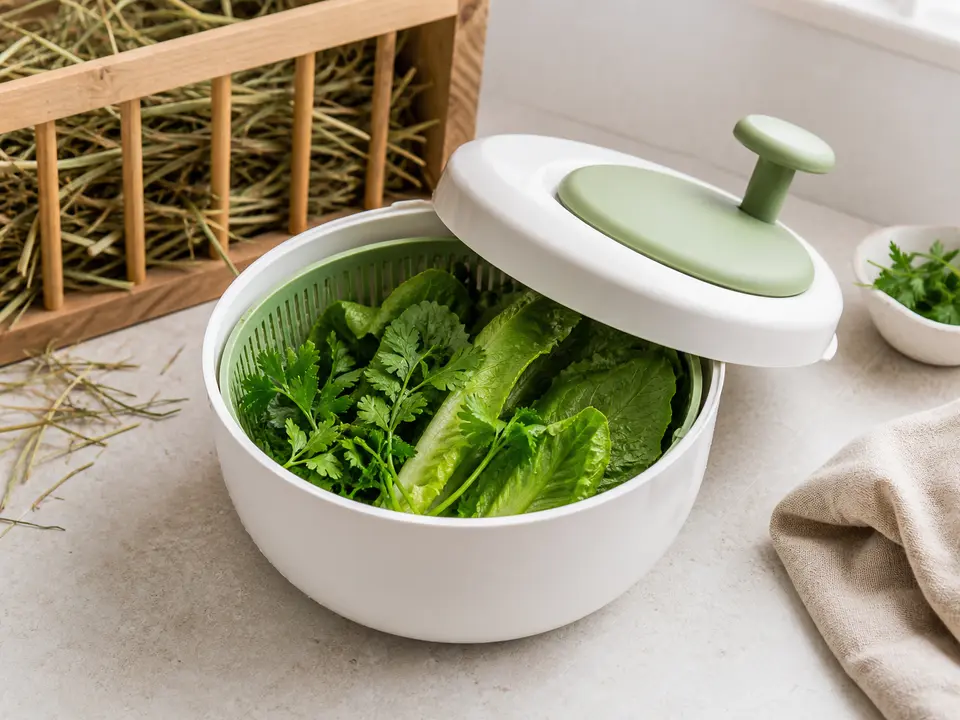
Salad spinner
Remove excess wash water before refrigerating the batch without squeezing the ruffled leaves into a damp knot.
Shop salad spinner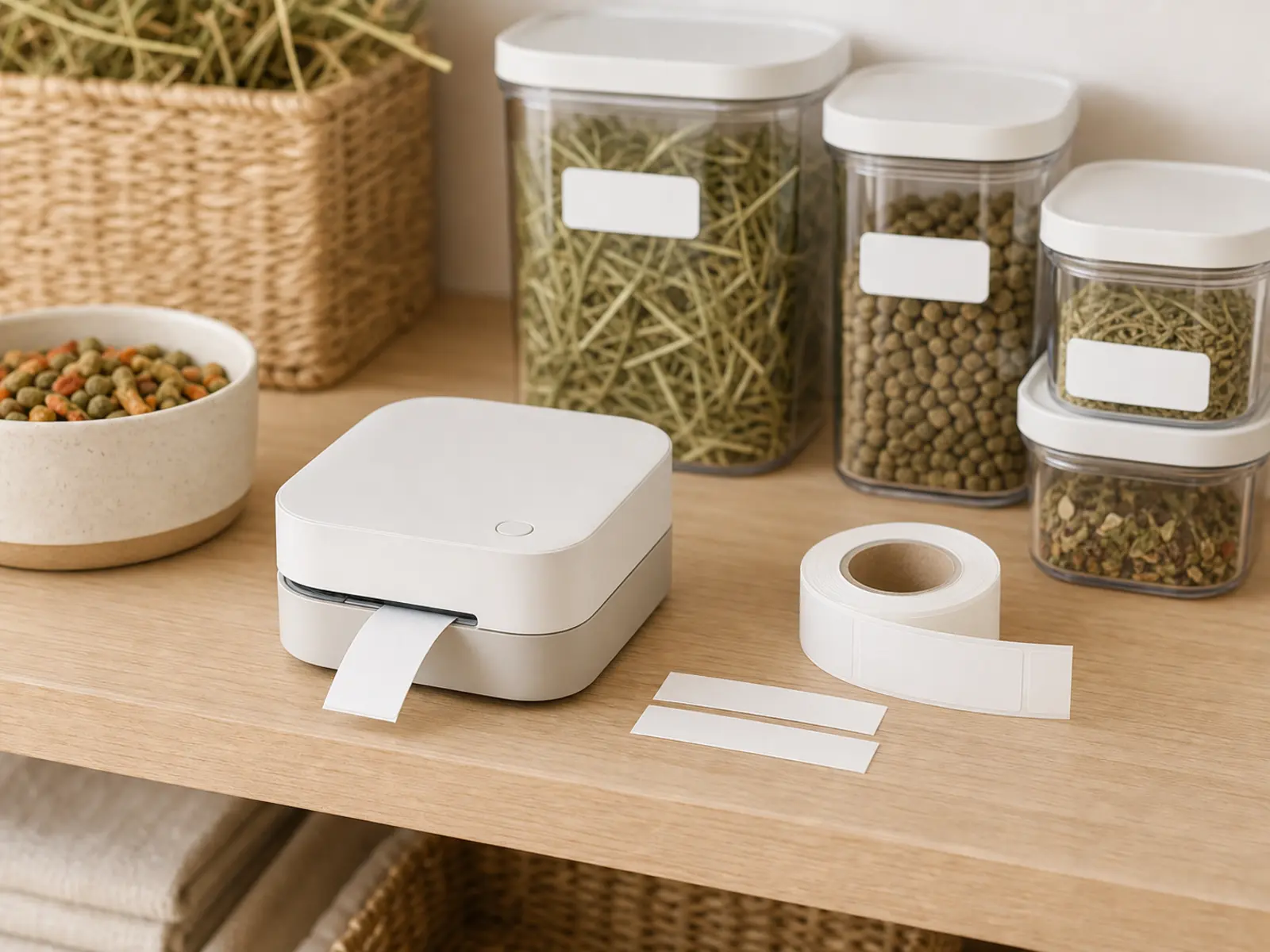
Label maker
Mark the opened date and kale variety on the greens bin when several leafy plants are rotating through the refrigerator.
Shop label maker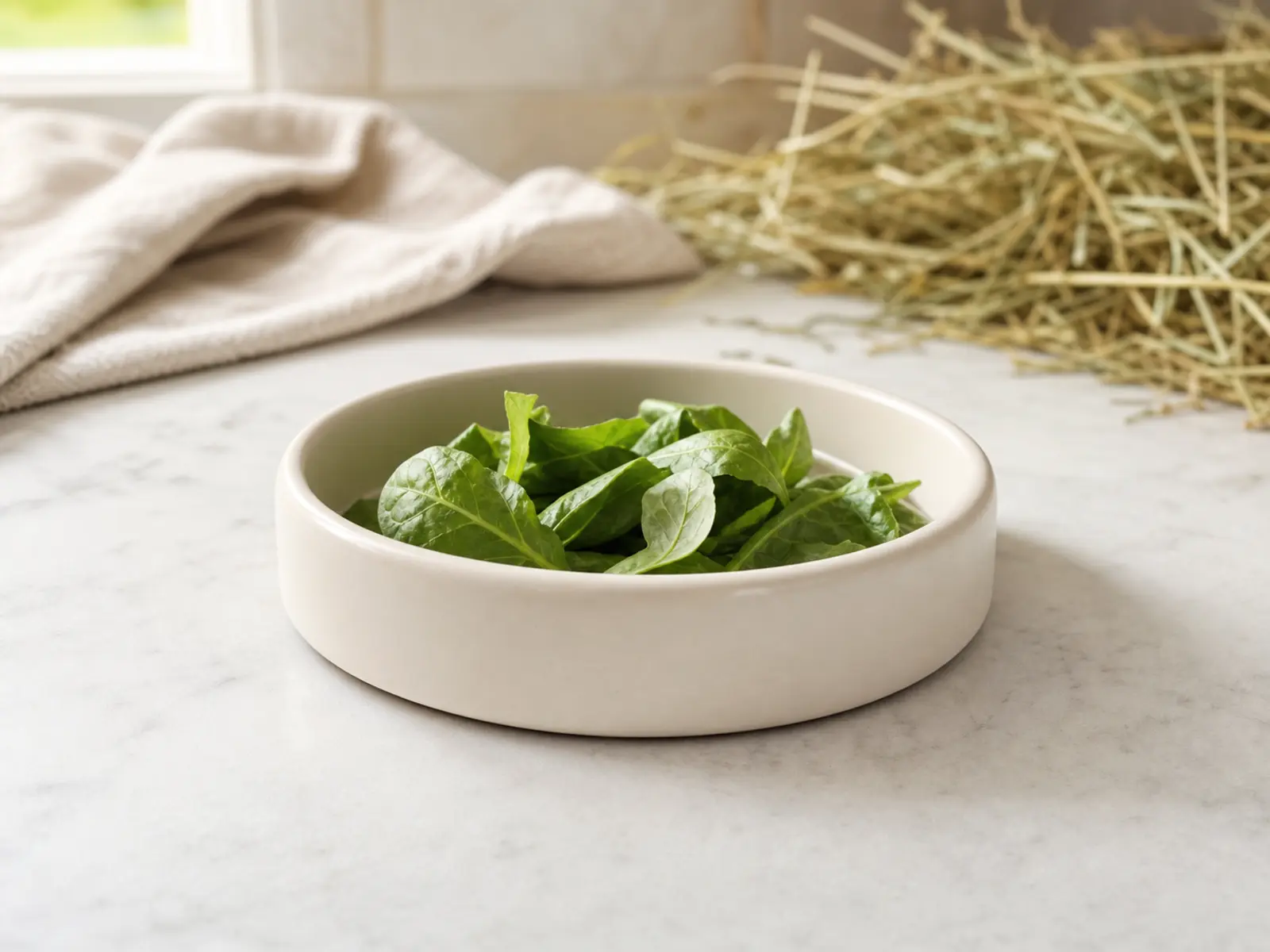
Ceramic food dish
Place one small plain leaf piece on a washable saucer so it remains separate from pellets and human salad toppings.
Shop ceramic food dish