Updated
Rabbit food check
Can Rabbits Eat Mixed Salad? Check Every Leaf First
Only when every leaf checks out
Only if it is plain and you can approve every ingredient. A home-built mix of washed rabbit-safe leaves can fit the established greens portion. Do not share dressed salad, restaurant leftovers, or a mystery bag. Set the rabbit's leaves aside before dressing, cheese, croutons, nuts, seeds, or other human toppings reach the bowl.
 Mixed Salad
The word salad answers almost nothing
Salad can mean washed romaine and coriander, a sealed restaurant bowl under ranch dressing, or an anonymous bag with several baby leaves. Only the actual ingredients matter. House Rabbit Society excludes iceberg lettuce, nuts, seeds, yogurt, bread, crackers, and several common savory vegetables from a rabbit menu, so the human label salad is never the safety check.
Build the rabbit bowl before the human bowl
Once dressing or toppings land, picking out the visible red rings does not restore a plain salad. Oil and seasoning coat neighboring leaves, while crumbs hide in folds. Put the rabbit's verified greens into their own bowl with clean hands and utensils first; then finish the human recipe on the other side of the counter.
Variety does not mean five simultaneous surprises
RSPCA recommends a variety of safe washed leafy greens and also says new types should be introduced gradually. Those ideas work together. A mature rabbit can receive a rotating mix of familiar leaves. A bag containing three new greens is a poor first test because a stool or appetite change cannot be tied to one ingredient.
Freshness and handling still count
A plant can be rabbit-safe and still arrive spoiled or contaminated. Open bagged leaves before the use-by edge, reject slime and sour odor, wash loose produce, and keep it away from raw-meat boards and dressed serving forks. RSPCA advises safe washed greens; the wash and the word safe are both part of the instruction.
Start at the produce drawer, not the salad bowl
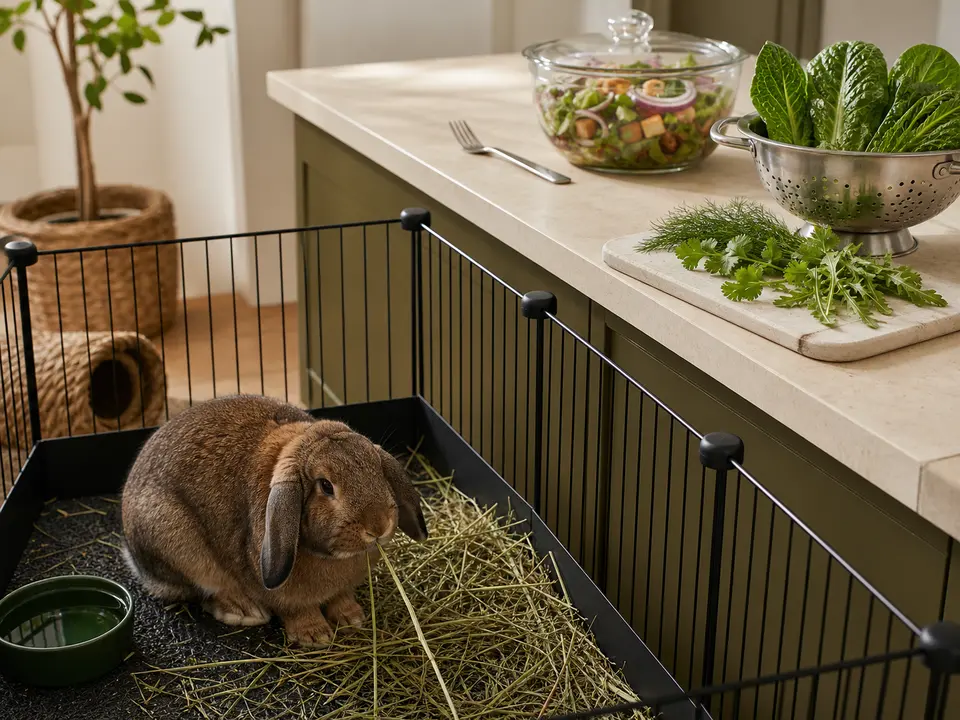
Pull out the romaine, coriander, dill, and rocket separately on the pale stone counter. Compare each choice with the rabbit's known-safe list and recent feeding notes. The covered bowl in the back is already dressed and topped with croutons, so it belongs to the people without a rescue mission for its leaves.
Sort the rabbit leaves on a clean board
Use the small board reserved for produce. Turn each leaf over, open tight folds, and remove yellow tips, slimy stems, soil clumps, insects, or a plant you cannot name. A clean board prevents yesterday's strong seasonings, meat juices, and dressing from becoming invisible ingredients in tonight's rabbit plate.
Wash, drain, and close the rabbit portion
Rinse the approved greens in the steel colander, then spin or drain until water is no longer pooled between leaves. Move only the established daily amount into its own prep bowl and cover it. Now the family can add dressing, cheese, or croutons elsewhere without changing what the sable lop will receive.
Serve greens beside the hay eater
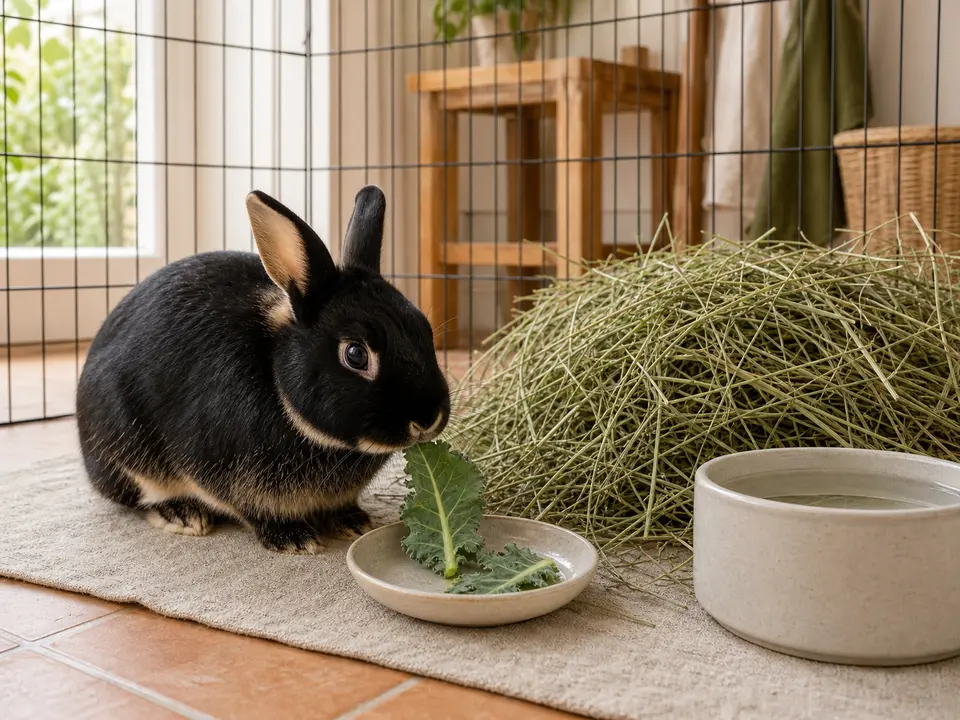
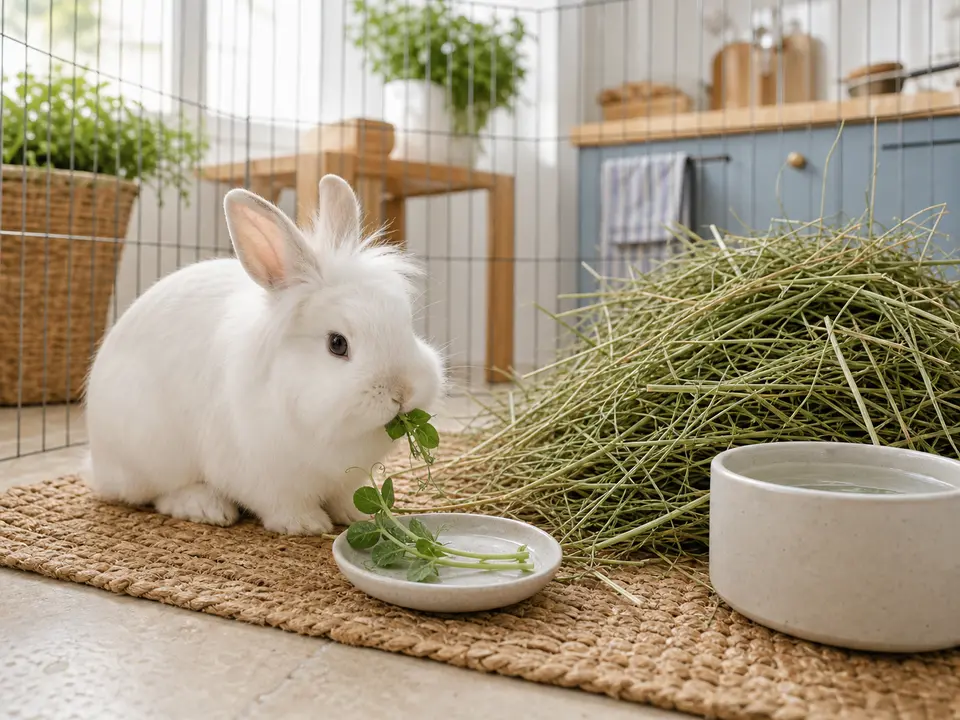
Refresh the timothy in the pen before setting down the plain greens. The rabbit may finish tender dill first and romaine later; selective order is less important than continued hay eating and ordinary litter output. At cleanup, discard the human leftovers separately and wash both sets of tools before the next feeding.
How to offer it
- Read the package or recipe from top to bottom and identify every leaf, herb, vegetable, garnish, topping, and dressing component.
- Set aside the rabbit-safe greens before dressing, croutons, cheese, nuts, seeds, or other human toppings touch the bowl or utensils.
- Wash leaves under clean running water, inspect both sides, trim spoiled edges, and drain them so the serving is fresh rather than slimy or waterlogged.
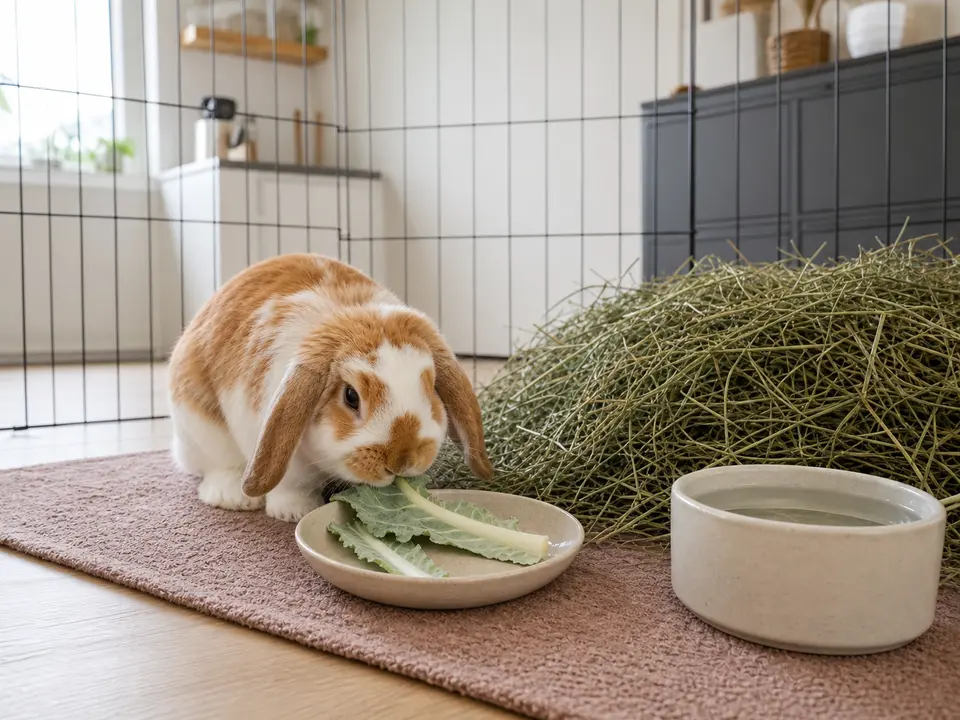
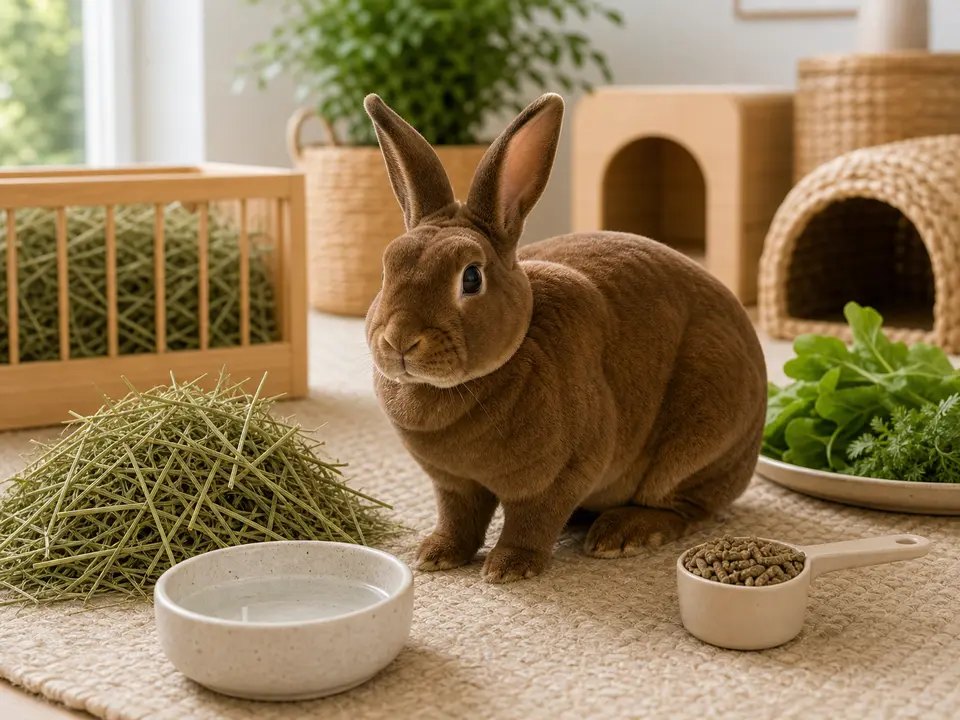
- Plate the rabbit's established greens amount beside a replenished hay rack. Put the covered human salad beyond the exercise pen before serving either meal.
Avoid
- Any salad already mixed with oil, vinegar, mayonnaise, seasoning, salt, sugar, sauce, or an unknown dressing.
- Onion, garlic, iceberg lettuce, croutons, bread, crackers, cheese, yogurt, nuts, seeds, chocolate, or other non-leafy toppings. Call a rabbit-savvy veterinarian promptly after onion, garlic, or chocolate exposure.
- A bag labeled spring mix, garden mix, power greens, or chef salad when individual leaves or added ingredients are not fully listed and recognizable.
- Wilted, slimy, sour-smelling, moldy, bruised, frost-damaged, or recalled produce, and greens contaminated by raw meat or a shared cutting board.
Watch
- Long visits to the timothy pile continuing after the greens plate is empty
- The rabbit approaching the next familiar meal without waiting only for salad leaves
- Litter output matching this rabbit's usual count and shape, with no wet smear around the tray
- Reduced eating or droppings, diarrhea, belly pressing, hunching, tooth grinding, weakness, or unusual quietness; remove the new greens and call a rabbit-savvy veterinarian promptly
Portion
A mixed salad does not create a bonus serving. Keep it within the amount of leafy greens already appropriate for this rabbit. When one leaf is new, offer that type separately in a small amount and keep the familiar greens unchanged; add it to a blend only after you know how the rabbit handles it.
Set aside the rabbit greens before dressing the human salad
Separate tools make the rule easy to follow: inspect leaves on a clean board, rinse them well, drain them, close the rabbit portion, and keep fresh hay waiting beside the greens plate.
Affiliate links: Furball Cove may earn from qualifying purchases at no extra cost to you.
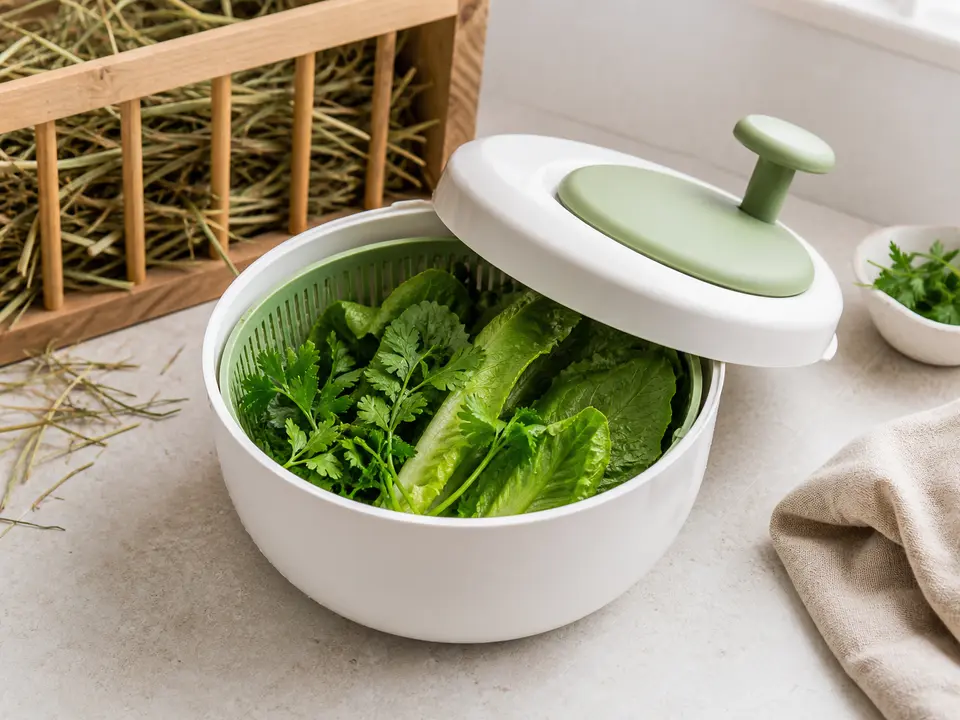
Salad spinner
Remove pooled wash water from layered greens so freshness, texture, and any slimy patch remain easy to judge.
Shop salad spinner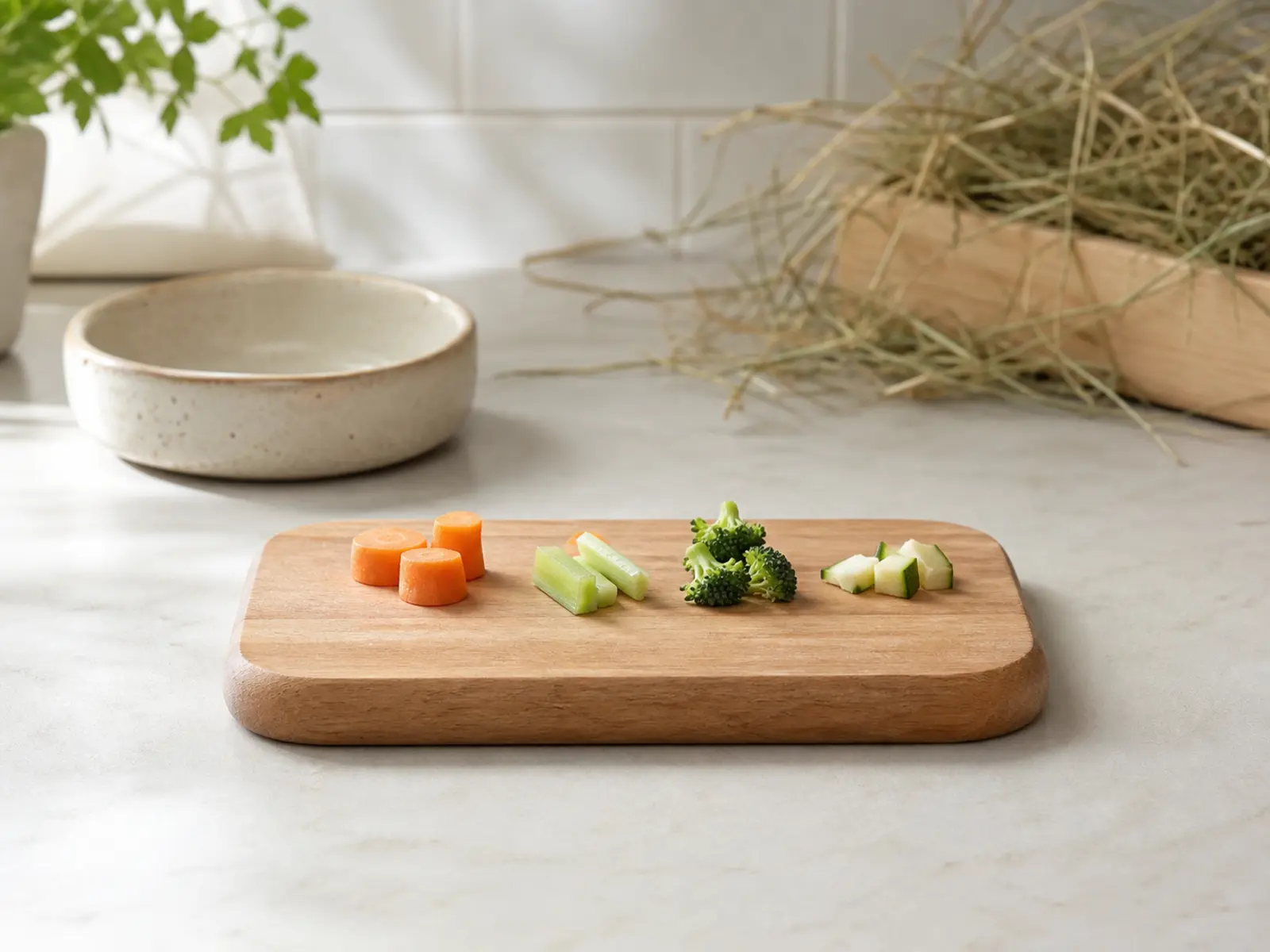
Mini cutting board
Reserve one washable board for rabbit produce so strong seasoning residue and raw-meat juices never join the greens by accident.
Shop mini cutting board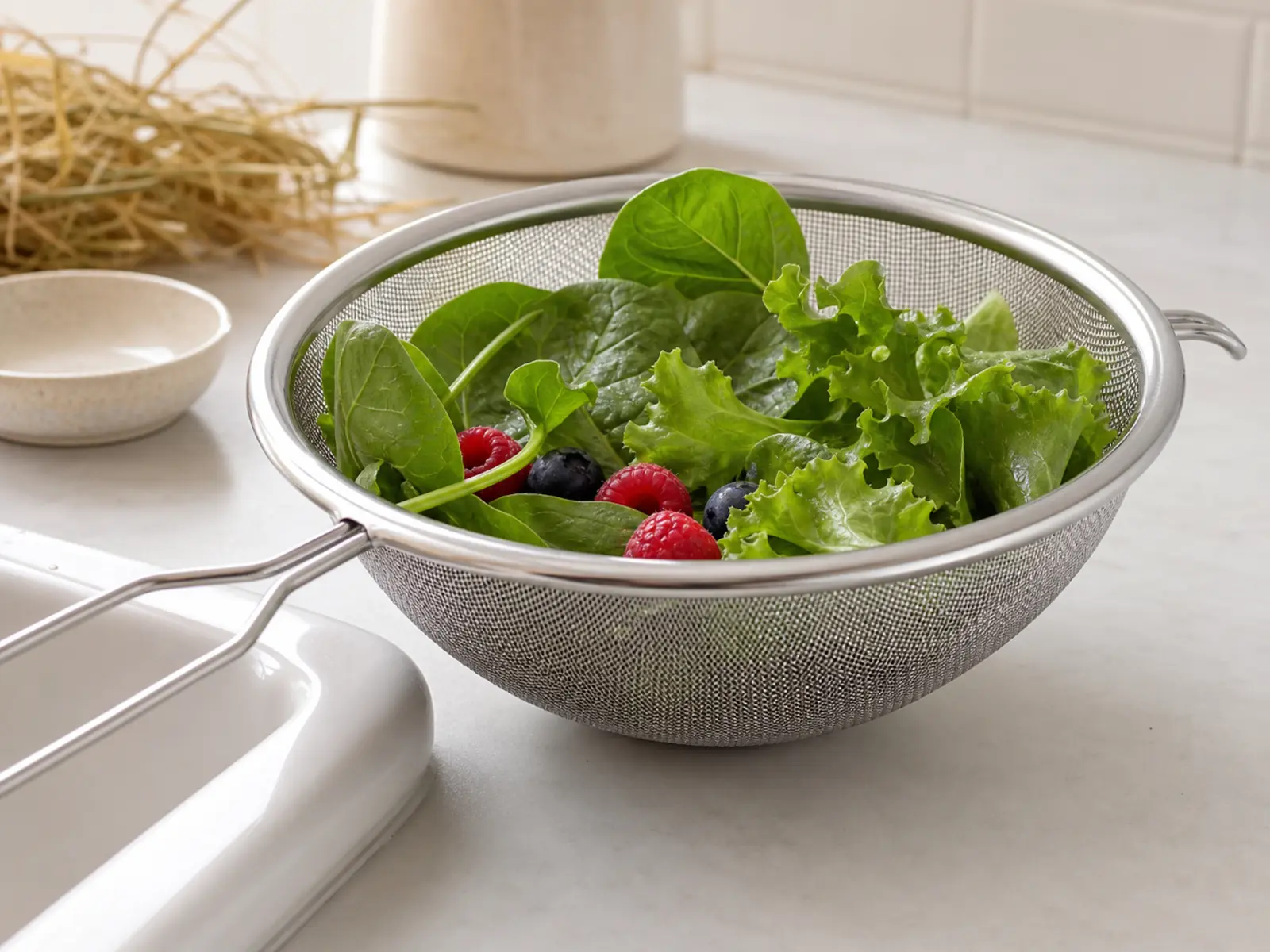
Produce strainer
Rinse loose soil and debris from every approved leaf without letting tender herbs disappear down the sink.
Shop produce strainer