Updated
Rabbit food check
Can Rabbits Eat Radish Greens? Yes—Wash the Rough Leaves
Yes—fresh leafy tops
Yes. Adult rabbits can eat fresh radish greens. Keep the leafy tops attached to a labeled grocery bunch until prep, wash one modest sprig carefully around its rough leaves and gritty crown, and serve it plain beside unlimited grass hay. The radish root is also rabbit-safe, but it is a separate serving rather than part of the leafy handful.
 Radish Greens
Yes—the tops are edible
House Rabbit Society lists radish tops among rabbit-safe leafy greens, and RWAF includes radish greens and roots on its supermarket list. A washed leafy sprig can join an adult rabbit's varied greens while unlimited grass hay remains the main food.
The root and top are not one serving
An intact bunch is useful for identification, not a portion guide. Take one leafy sprig for the greens plate. If you also offer a piece of the red root, count that separately instead of treating every bulb under the leaves as part of the same handful.
Grit hides where the stems meet the radish
Radish leaves feel rough and their narrow stems gather tightly at the crown. Open that junction under the tap, rinse both leaf faces, and look between the veins. Soil that is easy to miss on a quick swish is obvious once the sprig is spread flat.
Use the bunch, not a leaf guess
Radish, turnip, and mustard-family leaves can all look coarse, lobed, or toothed. The attached red roots and grocery identification settle the question. Skip a loose garden or roadside leaf when its identity, spray history, or collection site is uncertain.
Keep the red roots attached until prep
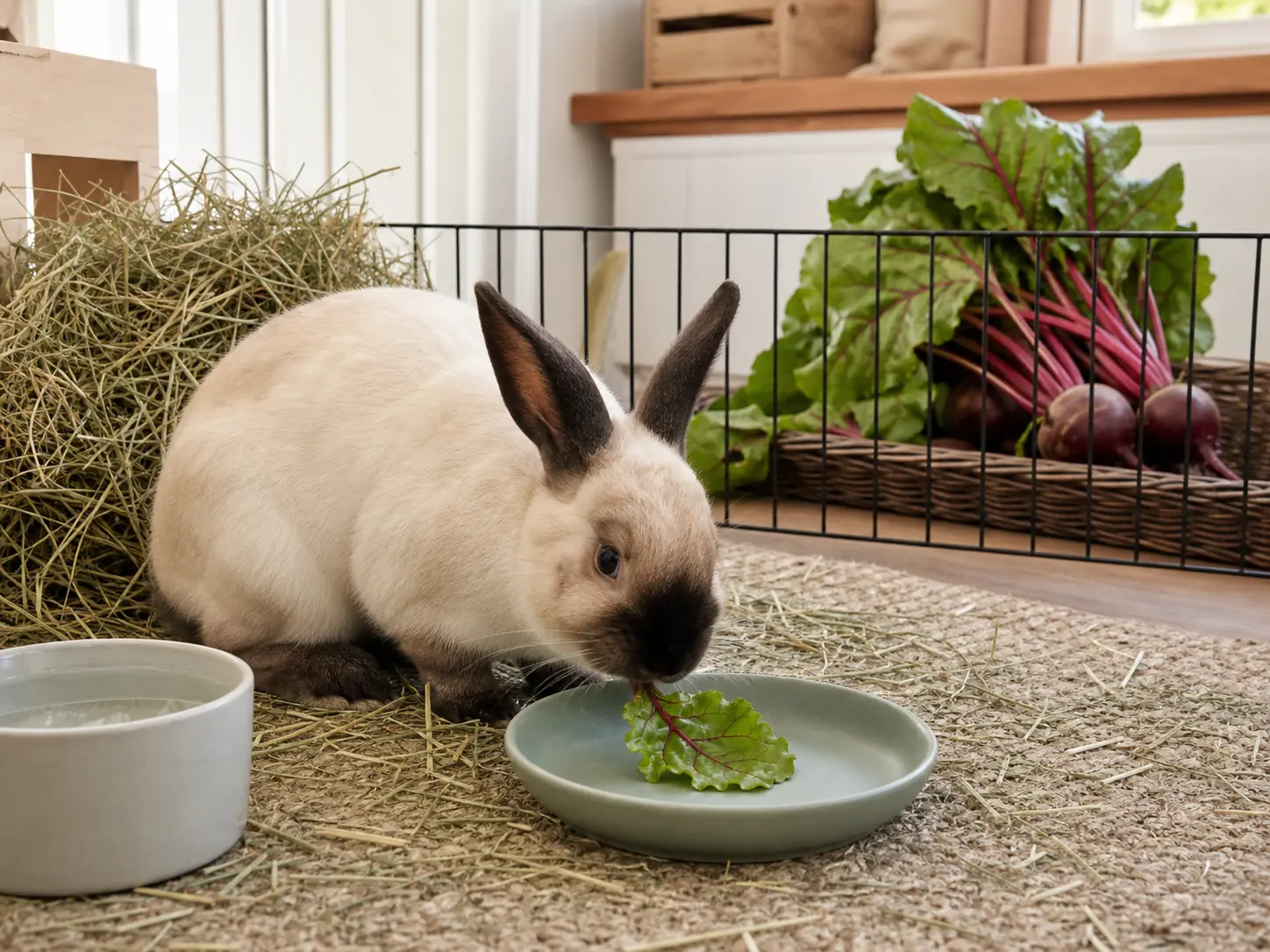
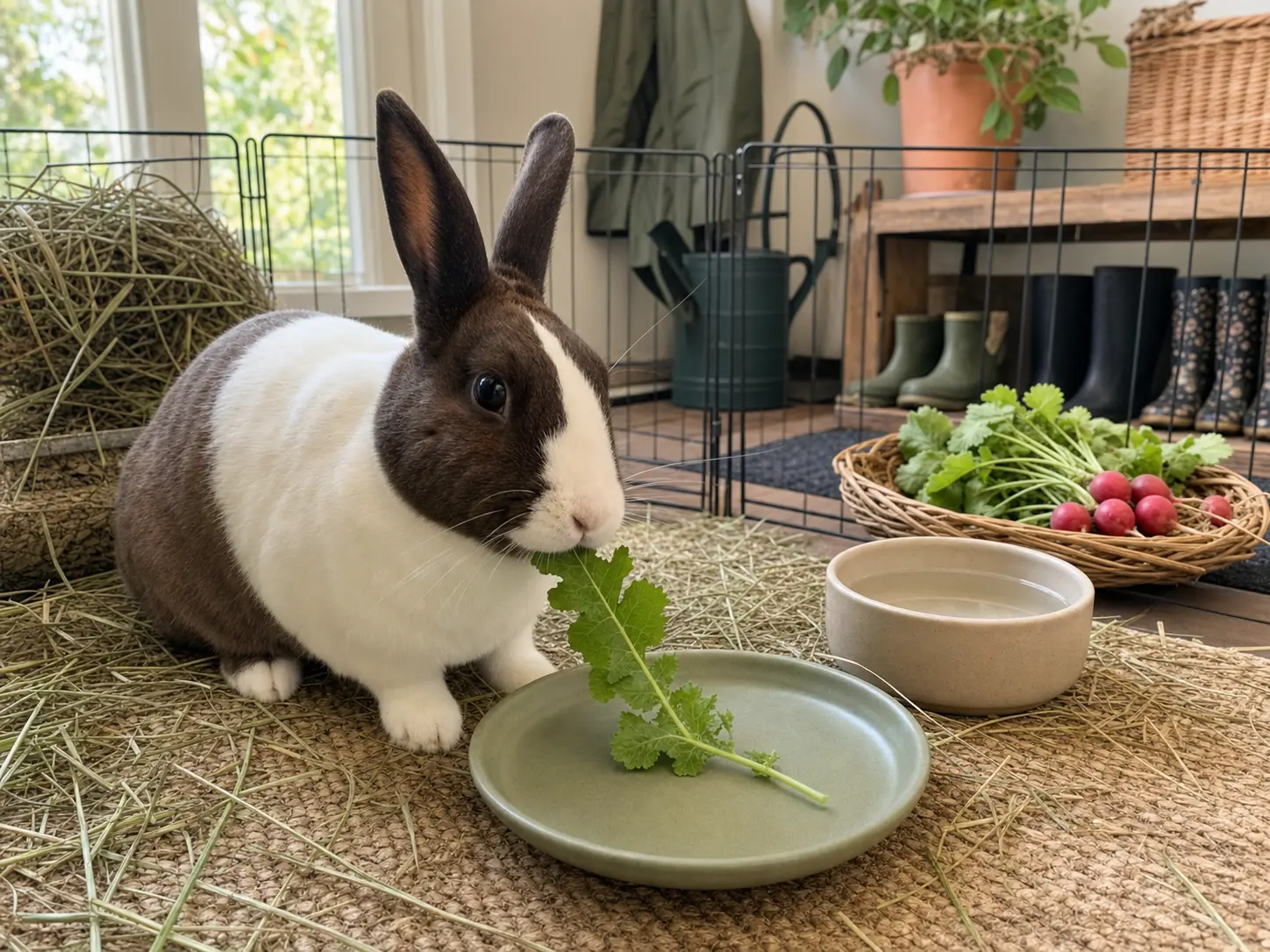
The intact bunch in the willow basket shows exactly where these rough green tops came from. The brown-and-white Dutch waits beside timothy hay while one sound sprig, still connected to its red radish, moves to the sink.
Work the tap around the crown
Hold the sprig low in the sink and fan the stems apart under cool water. Turn the bristly leaf over. Rub along its pale veins, then flush the tight junction above the root until no grit remains. Slime, fuzzy spots, sour odor, or stubborn damage sends that sprig to the compost before the rabbit plate comes out.
Put one top on the sage saucer
Trim away the red root and any tough end, then set one leafy sprig beside the full hay pile and water bowl. The rest of the bunch returns to the kitchen before pickling brine, butter, salt, oil, or dressing appears.
Look past the empty plate
Finishing the radish top only tells you the rabbit liked it. Later, look for more hay pulled from the pile, easy movement, and the usual round droppings. Slower eating or output, hunching, or a painful posture needs prompt rabbit-savvy veterinary advice.
Serve
- Confirm radish greens while the tops are still attached to a grocery bunch or clearly labeled as Raphanus sativus. Rough lobed leaves alone are not a reliable field identification.
- Spread the stems where they crowd around the radish crowns. Discard yellow slime, fuzzy growth, sour odor, pest damage, and leaves that are badly wilted or collapsing.
- Rinse both rough leaf faces under cool running water. Rub gently along the pale veins and flush soil from the stem forks and crown before separating the rabbit's sprig.
- Trim off the radish root and any tough damaged stem. Serve one modest leafy sprig plain before salt, butter, dressing, pickling brine, or a cooked recipe reaches the rest.
Avoid
- A loose rough leaf guessed to be a radish top after the root and produce label are gone. Mustard-family leaves and unknown garden plants need their own identification.
- Putting the entire radish bunch in the pen. The leafy top and root are both listed as safe, but the root is a separate non-leafy bite rather than a reason to offer unlimited bulbs.
- Leaves from a roadside, treated garden, dog-walking strip, or bed with an unknown spray history, even when they look like familiar radish tops.
- Pickled radish, cooked greens, slaw, restaurant salad, or leaves carrying brine, oil, butter, salt, dressing, sauce, spice, or seasoning.
- A gritty, slimy, moldy, sour-smelling, pest-damaged, badly wilted, chemically treated, or unidentified leaf.
Watch
- The radish-green sprig disappearing while the rabbit continues ordinary visits to the hay pile
- Normal posture, movement, water use, and interest in familiar food
- The rabbit's usual separate round droppings after a first radish-top tasting
- Reduced eating or droppings, soft stool, diarrhea, belly pressing, hunching, tooth grinding, weakness, or unusual quietness; contact a rabbit-savvy veterinarian promptly
Portion
For an adult already eating leafy vegetables, one modest radish-green sprig can share the usual varied greens allowance. Begin with less if the leaf is new. Count any piece of radish root separately instead of handing over the whole bunch, and keep unlimited grass hay available before and after the greens are gone.
Make the gritty crown easy to inspect and rinse
These produce-prep tools help keep the radish bunch recognizable, open the crowded stems under running water, and separate one plain leafy serving from the roots and human recipe.
Affiliate links: Furball Cove may earn from qualifying purchases at no extra cost to you.
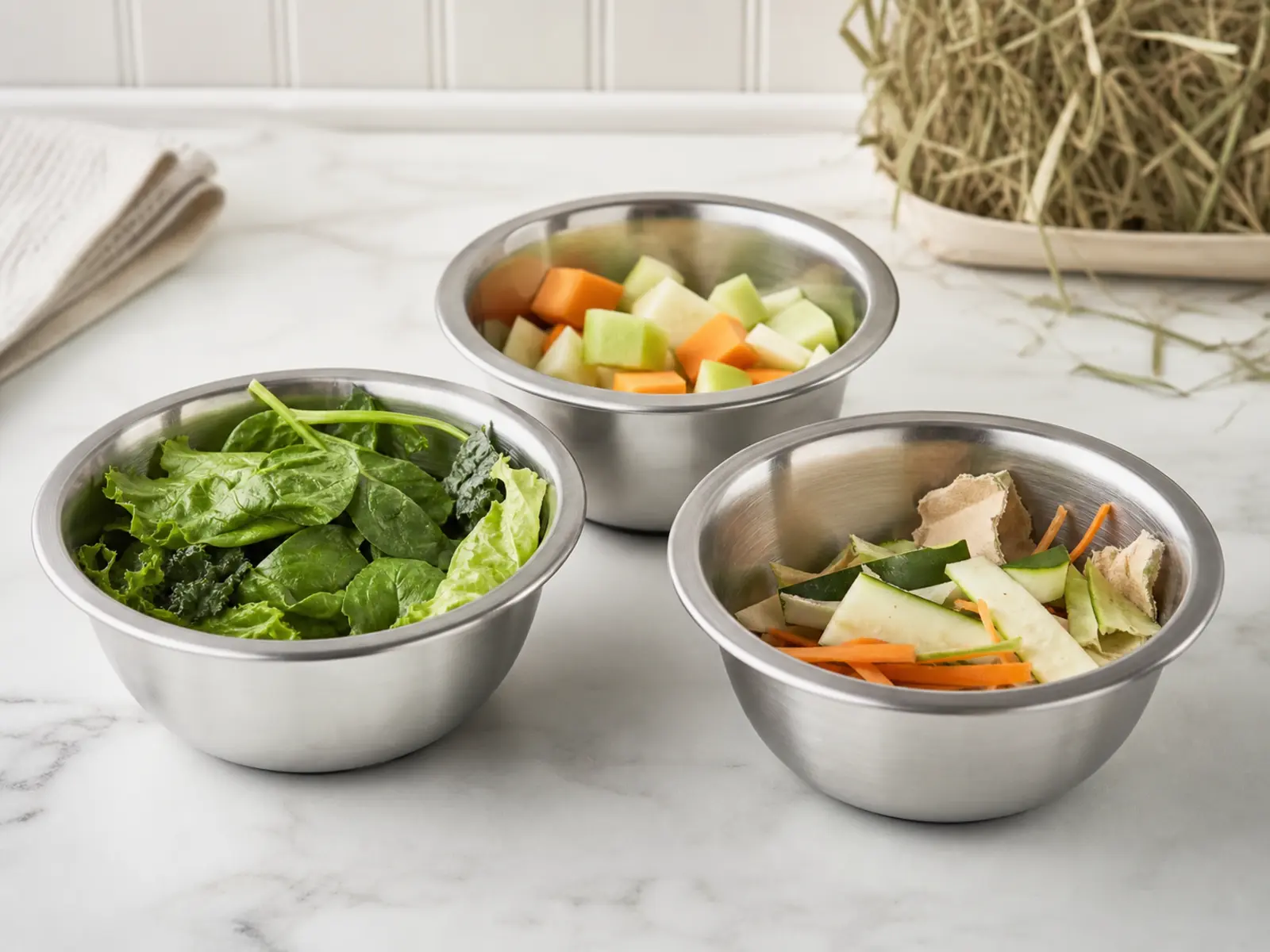
Stainless prep bowls
Reserve the rabbit's plain washed top before the remaining radishes reach brine, butter, salt, oil, dressing, or the stove.
Shop stainless prep bowls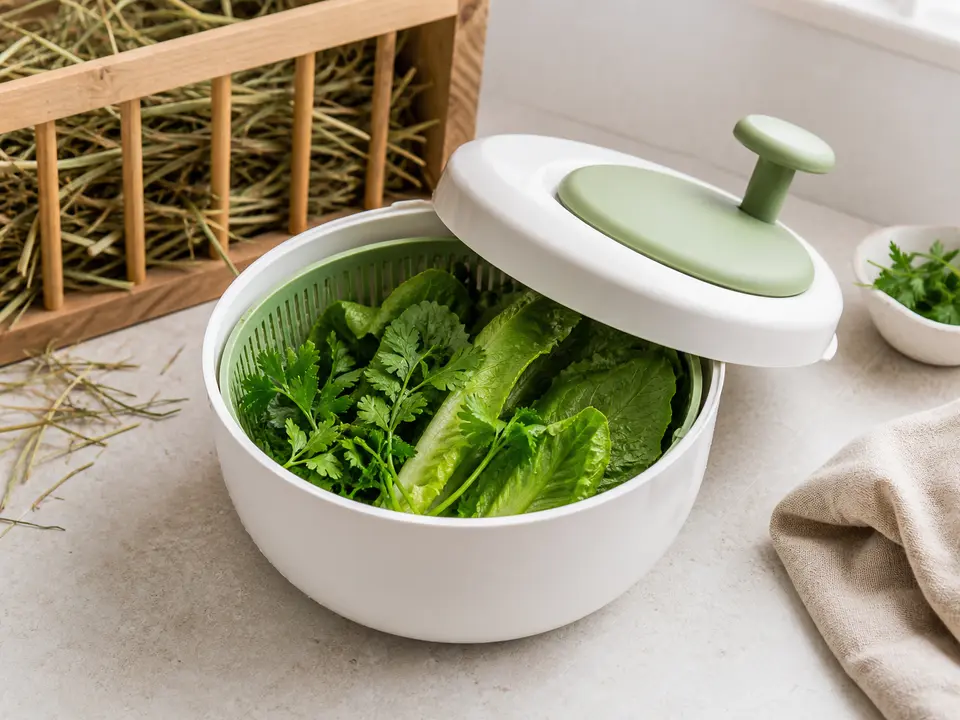
Salad spinner
Dry already inspected radish greens gently so rinse water does not collect around the rough leaves and crowded stem ends in storage.
Shop salad spinner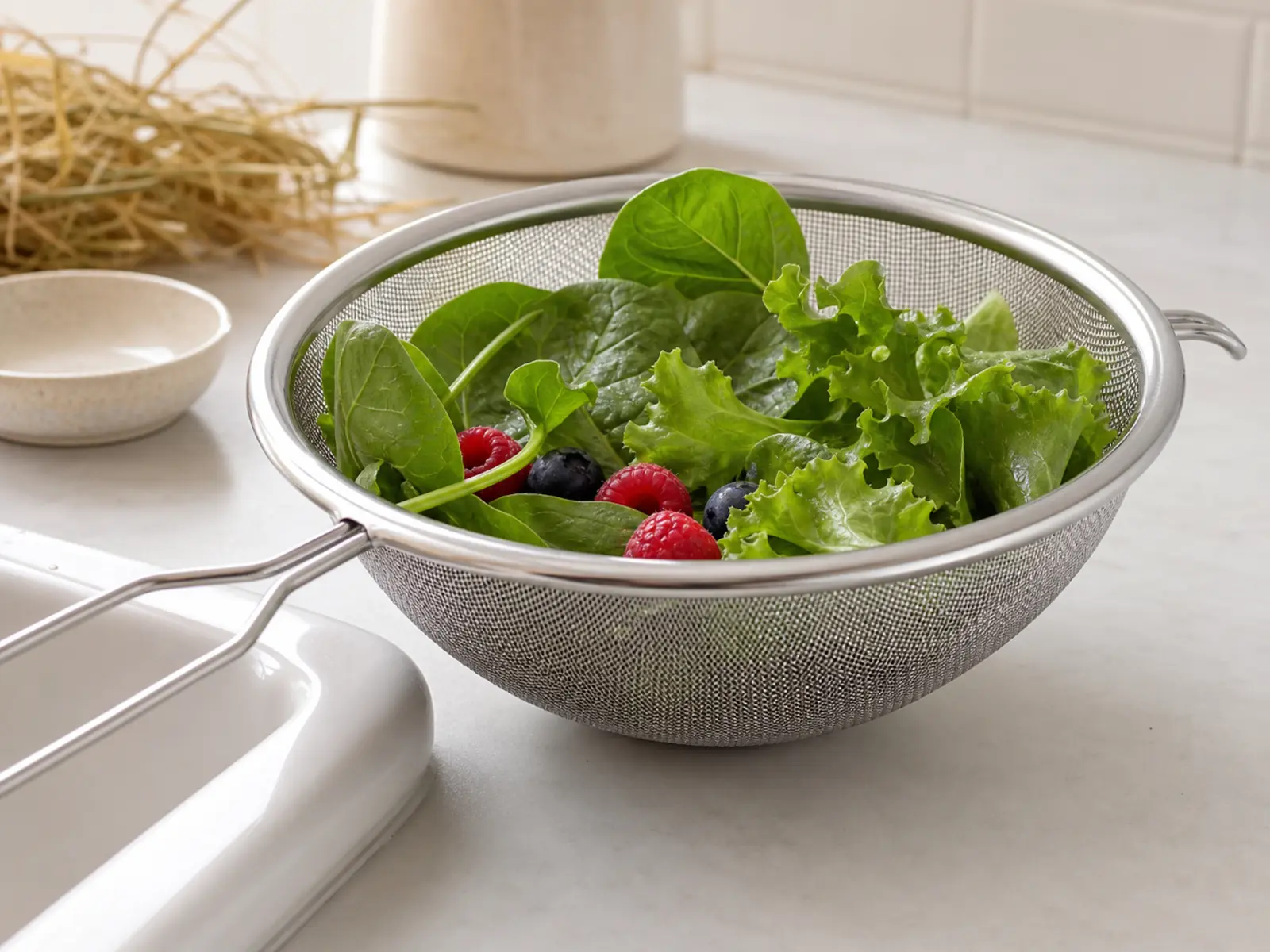
Produce strainer
Spread the rough leaf and crowded stem junction over a small colander so loosened soil rinses away instead of settling back onto the sprig.
Shop produce strainer