Updated
Rabbit food check
Can Rabbits Eat Red Leaf Lettuce? Yes—Serve It Plain
Yes—washed and plain
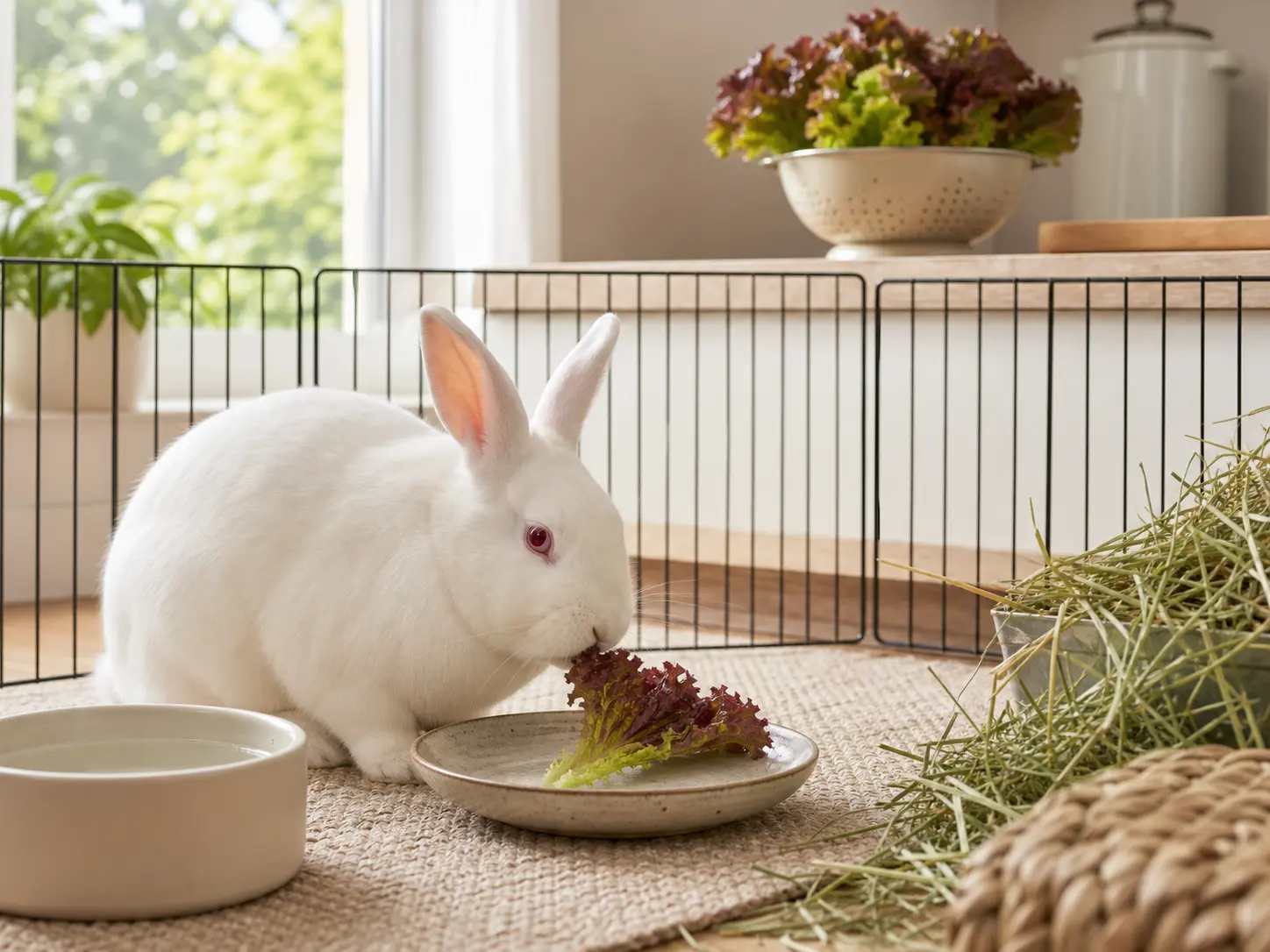
Yes. Adult rabbits can eat red leaf lettuce. Choose a crisp leaf with green ribs and burgundy tips, rinse the ruffled edges, and serve it plain. If it is new, begin with one small torn piece. Keep the hay pile open all day.
 Red Leaf Lettuce
Yes—the burgundy tips are still lettuce
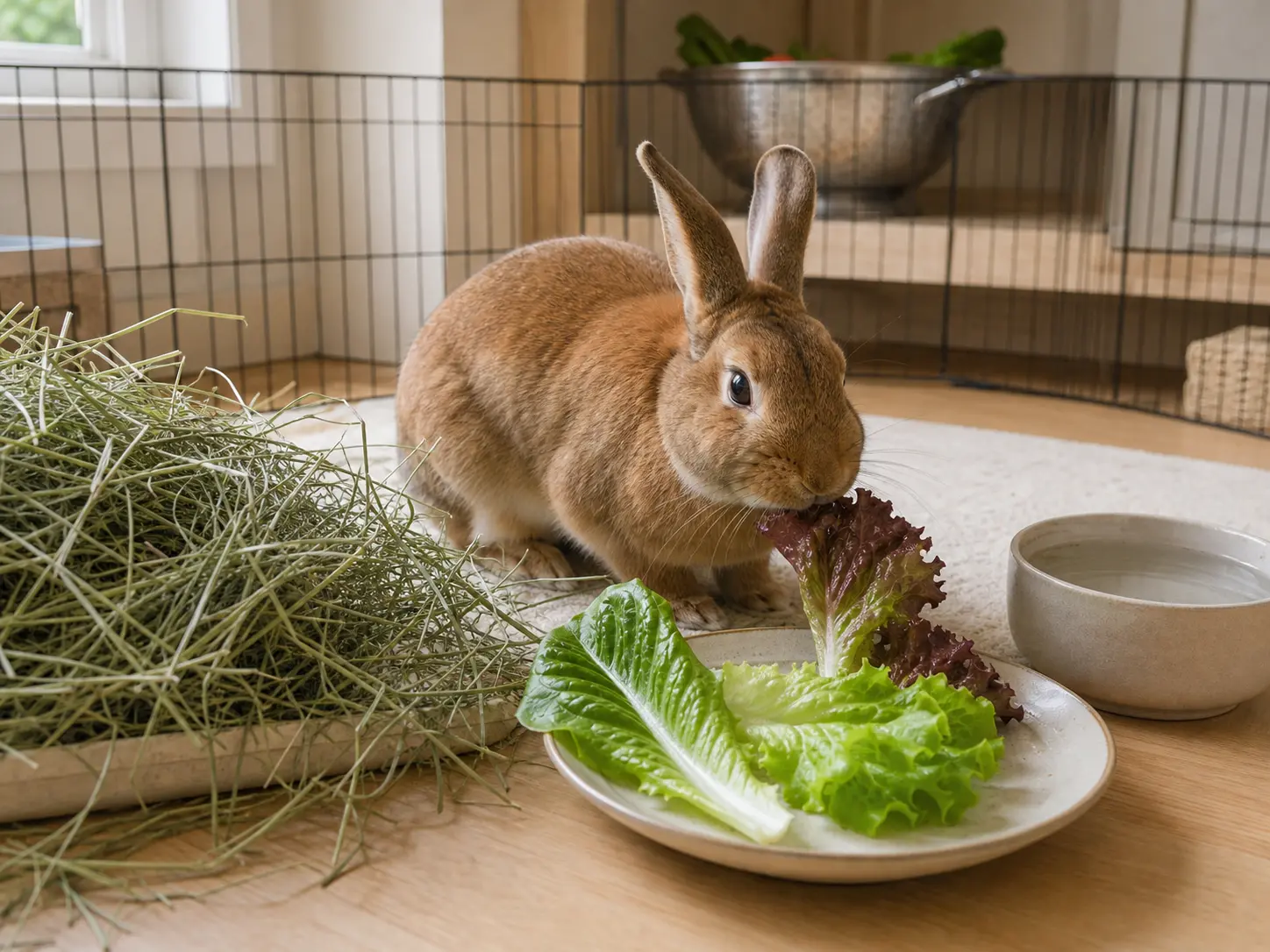
House Rabbit Society lists red leaf lettuce among rabbit-safe leafy greens. The red-purple color at the soft ruffled edges is normal for this variety; the ribs and inner leaf usually stay green. For an adult rabbit that already eats vegetables, one washed plain leaf can join a varied greens plate.
Do not let red cabbage answer the question
Color is not enough to identify the vegetable. Red leaf lettuce grows as a loose open head. Red cabbage is packed into a heavy round ball, while radicchio commonly forms a compact head with broad white veins. Read the produce label and use the answer for the food you actually bought.
Burgundy is normal; slime is not
A dry wine-red edge can be fresh. A slippery edge, fuzzy patch, wet dark bruise, collapsed leaf, or sour smell is a reason to throw that leaf away. Open the head before serving, inspect both sides, trim the base, and rinse the folds under running water without soap or produce wash.
Keep it on the greens plate, not over the hay
Red leaf lettuce adds color and texture, but it does not replace the fibrous food rabbits need all day. Put a modest plain serving beside abundant grass hay and clean water. When this is a new green, change only that one thing and leave the rest of the feeding routine familiar.
Read the sign before you rinse
Start at the produce display. The sign, band, or receipt should say red leaf lettuce. Lift the head: it should feel light and open, with green ribs and soft red-tipped ruffles falling away from the base. A dense purple ball is cabbage, and a compact white-veined head is usually radicchio; set either aside until you check it separately.
Pull away one crisp leaf
Peel back the outside of the head and choose a leaf that feels crisp rather than slippery. The burgundy edge can stay. Cut away the dirty base and discard any piece with slime, mold, a wet dark patch, or a sour smell.
Wash from rib to red tip
Hold the leaf under cool running water and rub visible soil from both faces. Spread the ruffled tip with your fingers so water reaches the folds. Shake it gently or use a salad spinner, then tear off one small piece for a first serving.
Cool the rest before dinner
Dry the remaining leaves and place them in a ventilated produce bag or bin with an absorbent liner. Return the batch to the refrigerator before carrying the rabbit plate to the pen. Plain rabbit greens stay much easier to recognize when they have their own container.
Serve
- Confirm that the produce sign or band says red leaf lettuce. A tight purple cabbage, compact radicchio, romaine heart, and unidentified salad mix are different foods.
- Pull the leaves apart and look from the pale green rib to the burgundy edge. Discard anything slimy, moldy, badly bruised, or sour-smelling.
- Rinse both sides under clean running water, opening the ruffled tips and folds with your fingers so trapped grit can wash away.
- Shake or spin off excess water, tear the serving by hand, and serve it plain with no dressing, oil, salt, cheese, croutons, or seasoning.
Avoid
- Guessing from the color alone. Red cabbage forms a dense ball and radicchio usually has compact wine-red leaves with strong white veins; neither should be mislabeled as red leaf lettuce.
- Treating normal burgundy coloring as spoilage while overlooking the signs that matter: slime, mold, wet dark patches, a collapsed texture, or a sour smell.
- Pulling a leaf from a burger, sandwich, salad kit, buffet bowl, or dressed dinner salad where sauces, seasoning, cheese, or other ingredients have touched it.
- Filling the plate because the leaves feel light. Fresh greens are the smaller part of the menu, while grass hay remains available around the clock.
Watch
- The rabbit finishing the small piece and returning to the hay pile
- The usual appetite, comfortable movement, and interest in familiar food later in the day
- Separate round droppings in the rabbit's usual number and size
- Eating less, fewer droppings, watery diarrhea, a hunched pose, tooth grinding, weakness, or unusual quietness; call a rabbit-savvy veterinarian promptly
Portion
For an adult already eating leafy greens, red leaf lettuce can share the usual greens plate with other familiar leaves. If it is new, start with one small torn piece rather than a full leaf. The rest of the loose head belongs in the refrigerator, not in one rabbit bowl.
Wash the red-tipped leaves and keep the rest crisp
These produce-prep tools fit the actual job: opening the ruffled tips under water, trimming a damaged edge, serving one plain portion, and storing the remaining head without trapping a puddle.
Affiliate links: Furball Cove may earn from qualifying purchases at no extra cost to you.
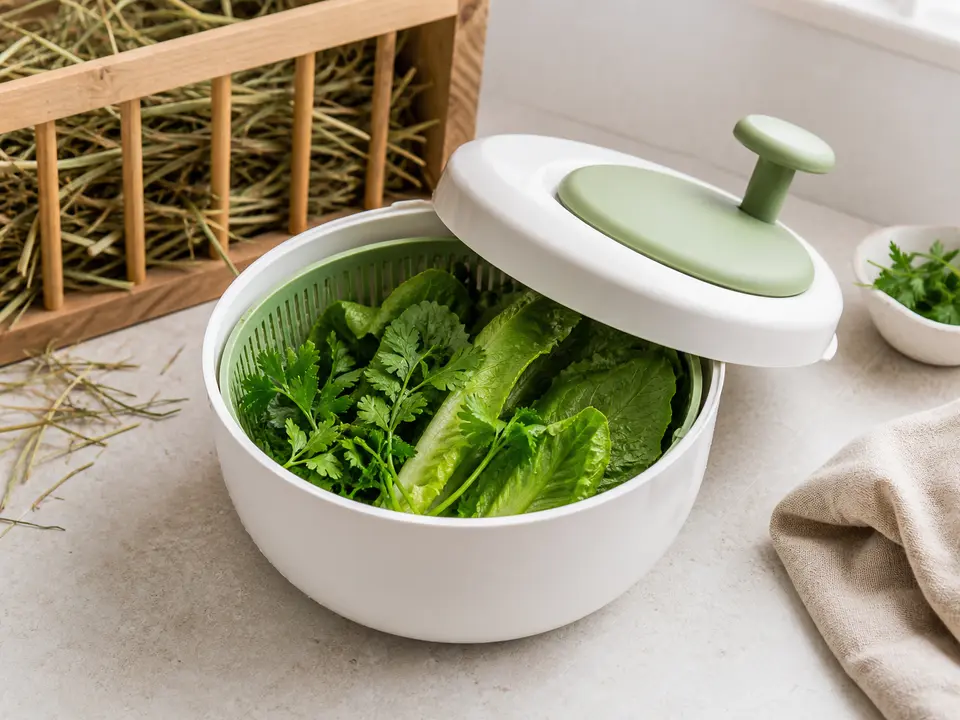
Salad spinner
Rinse the loose red-tipped leaves as a batch, spin off excess water, and avoid refrigerating them in a puddle.
Shop salad spinner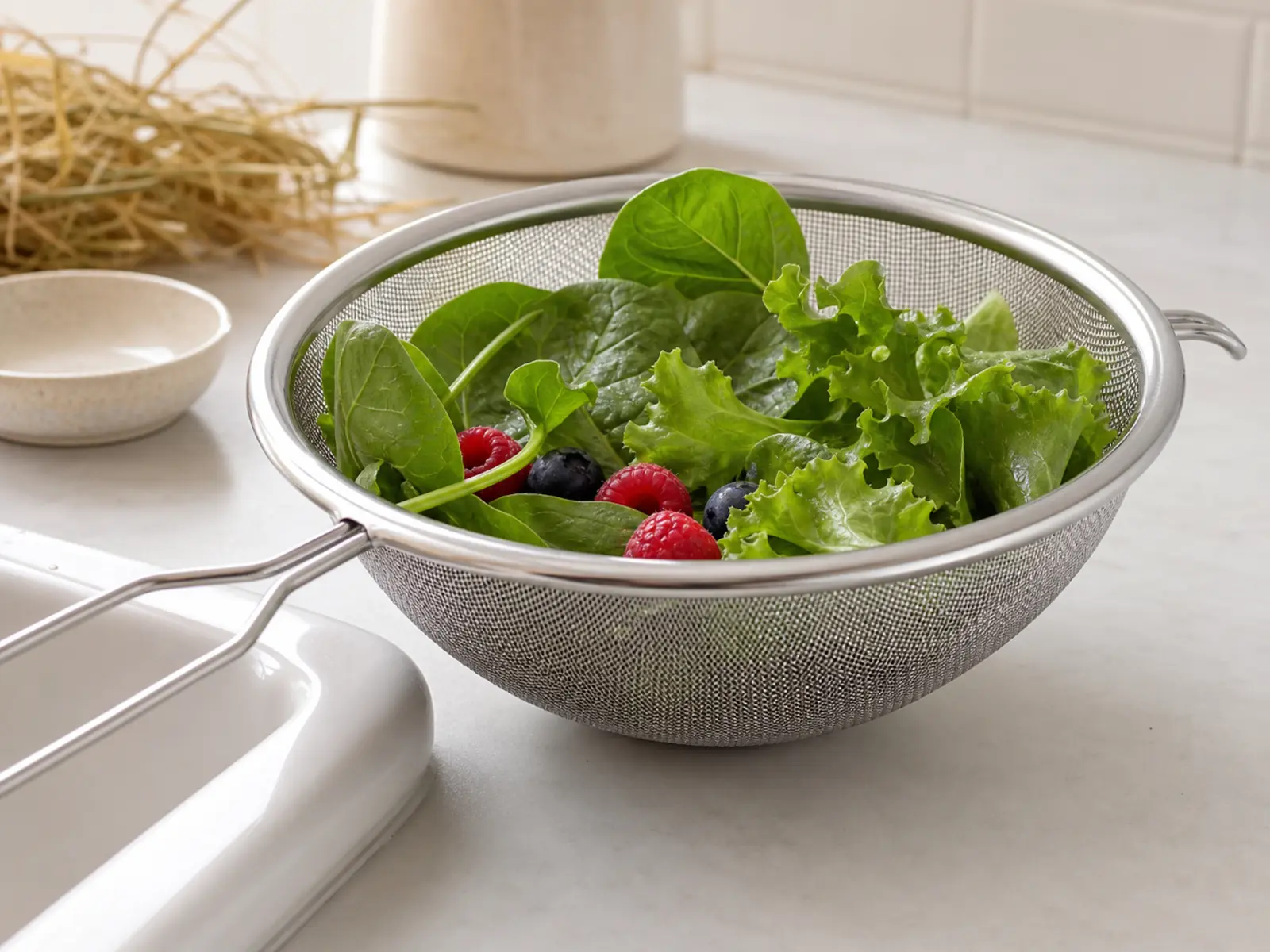
Produce strainer
Spread each ruffled tip over a colander and rinse both faces so grit leaves the folds instead of reaching the rabbit plate.
Shop produce strainer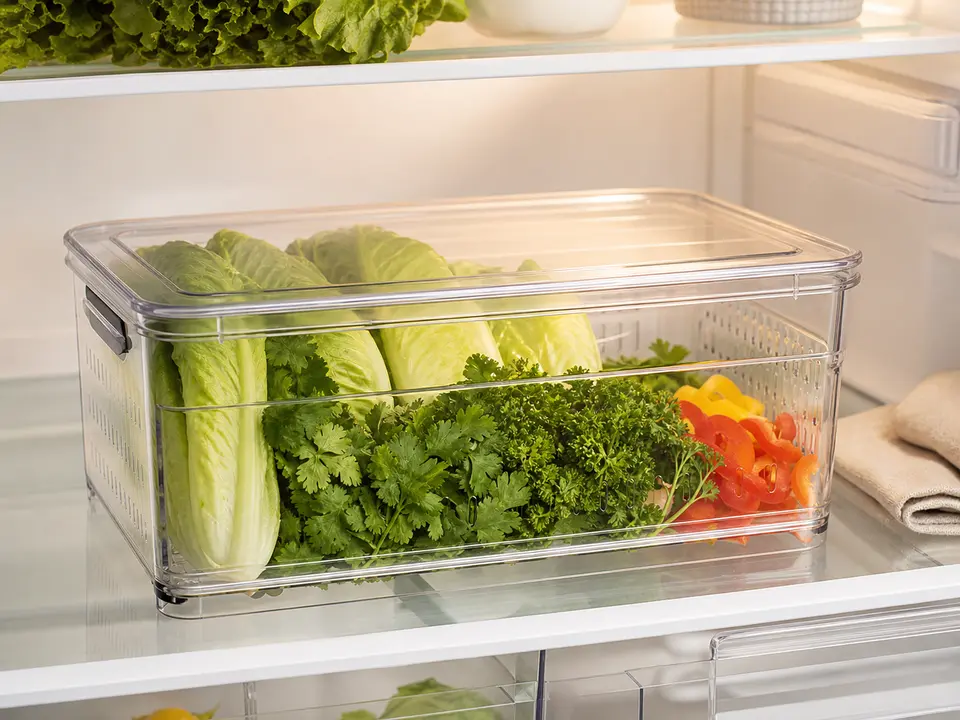
Rabbit greens bin
Keep the open head in its own ventilated refrigerator bin, separate from red cabbage, radicchio, and dressed salad kits.
Shop rabbit greens bin