Updated
Rabbit food check
Can Rabbits Eat Romaine Lettuce? Yes—Serve It Plain
Yes—washed and plain
Yes. Romaine lettuce is a rabbit-safe leafy green for adults and can join a varied greens rotation. Wash it, serve it plain, and introduce one small torn piece first if your rabbit does not already eat fresh greens. Hay stays unlimited.
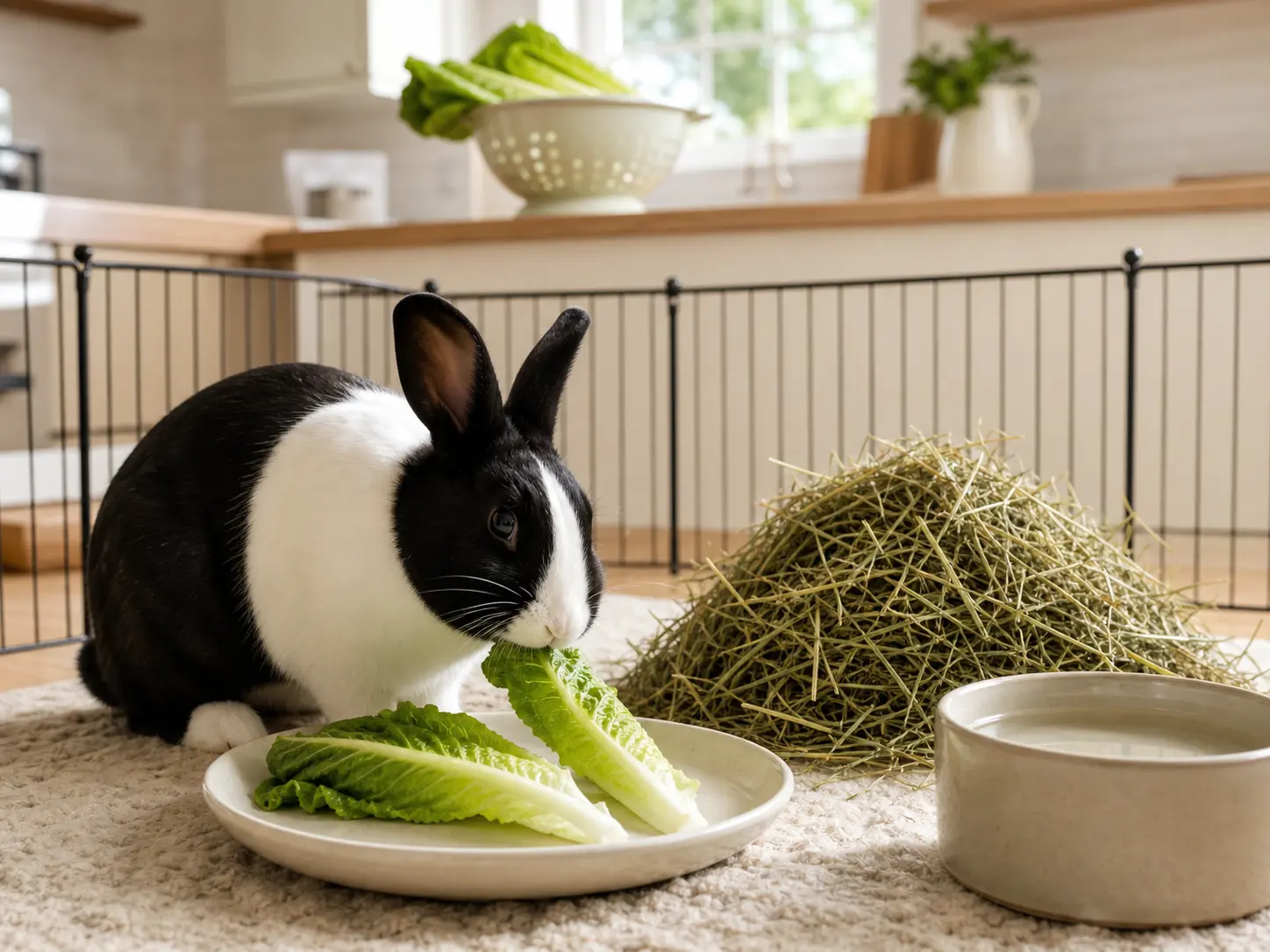 Romaine Lettuce
Yes—romaine belongs on the greens plate
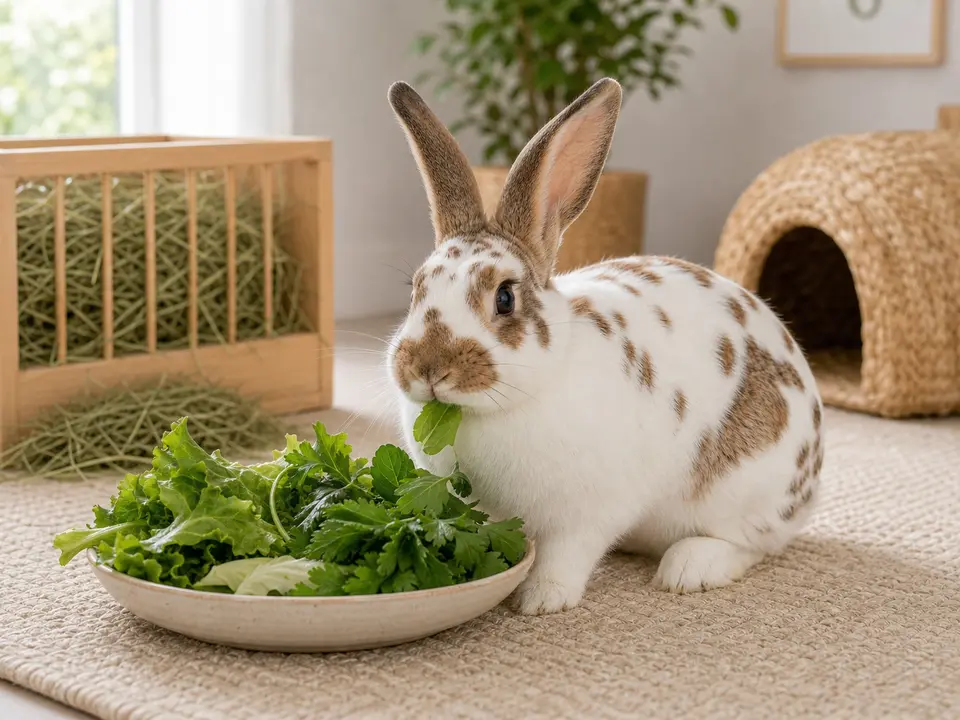
House Rabbit Society lists romaine among rabbit-safe leafy greens. For an adult who already eats vegetables, it can share the plate with other familiar leaves. It is not a replacement for hay: the hay pile stays open all day, while the greens arrive as the much smaller fresh part of the menu.
A lettuce leaf is not a whole salad
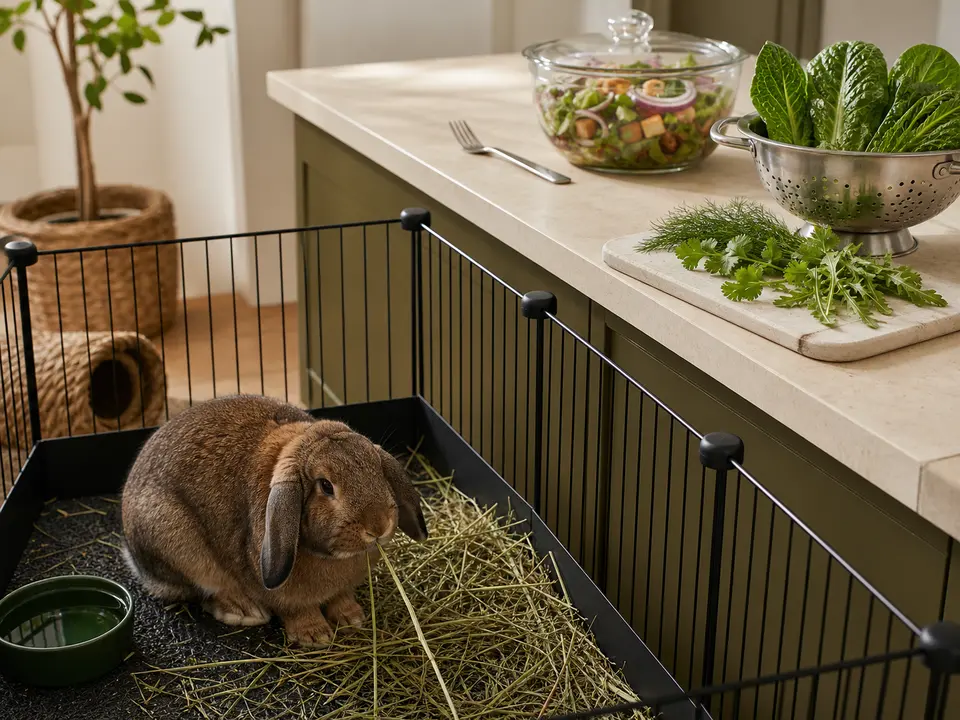
Plain romaine and Caesar salad are different foods. Keep dressing, cheese, croutons, bacon bits, and every seasoned topping on the people side of the room. The same goes for romaine tucked into a sandwich or burger; pull a clean leaf from the produce drawer and put it on the rabbit plate beside hay instead.
Wash the ribs and folds
Romaine can hold grit and damaged bits where the thick white rib meets the leaf. Separate the leaves, trim the base, discard anything slimy or sour-smelling, and rinse both sides under running water. A salad spinner is useful for the batch, but the leaves do not need to be bone-dry before serving.
Hay still gets the biggest space
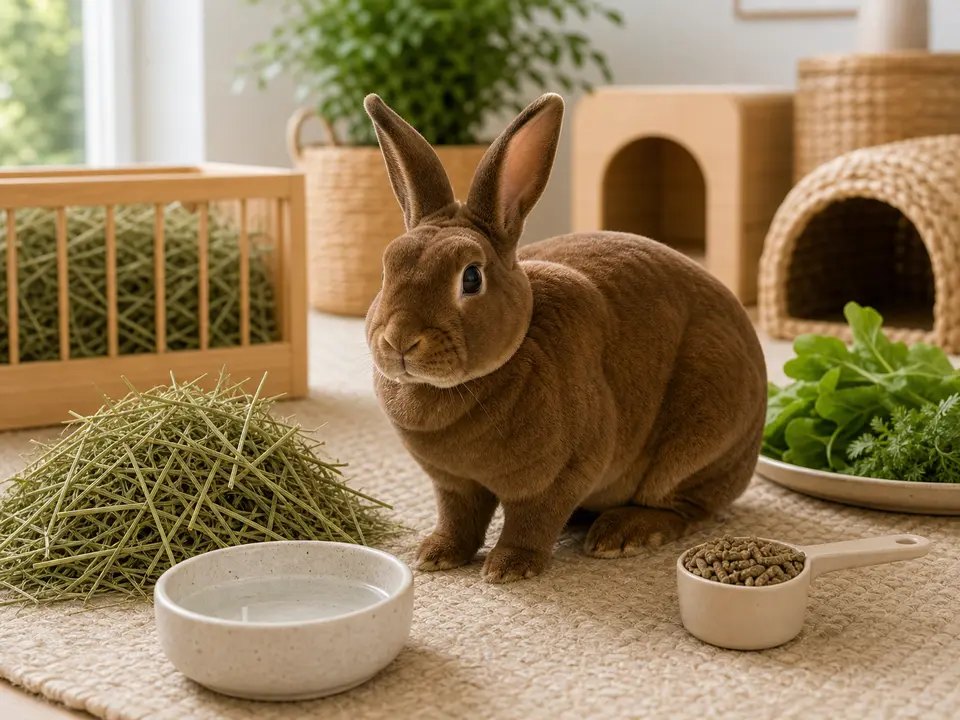
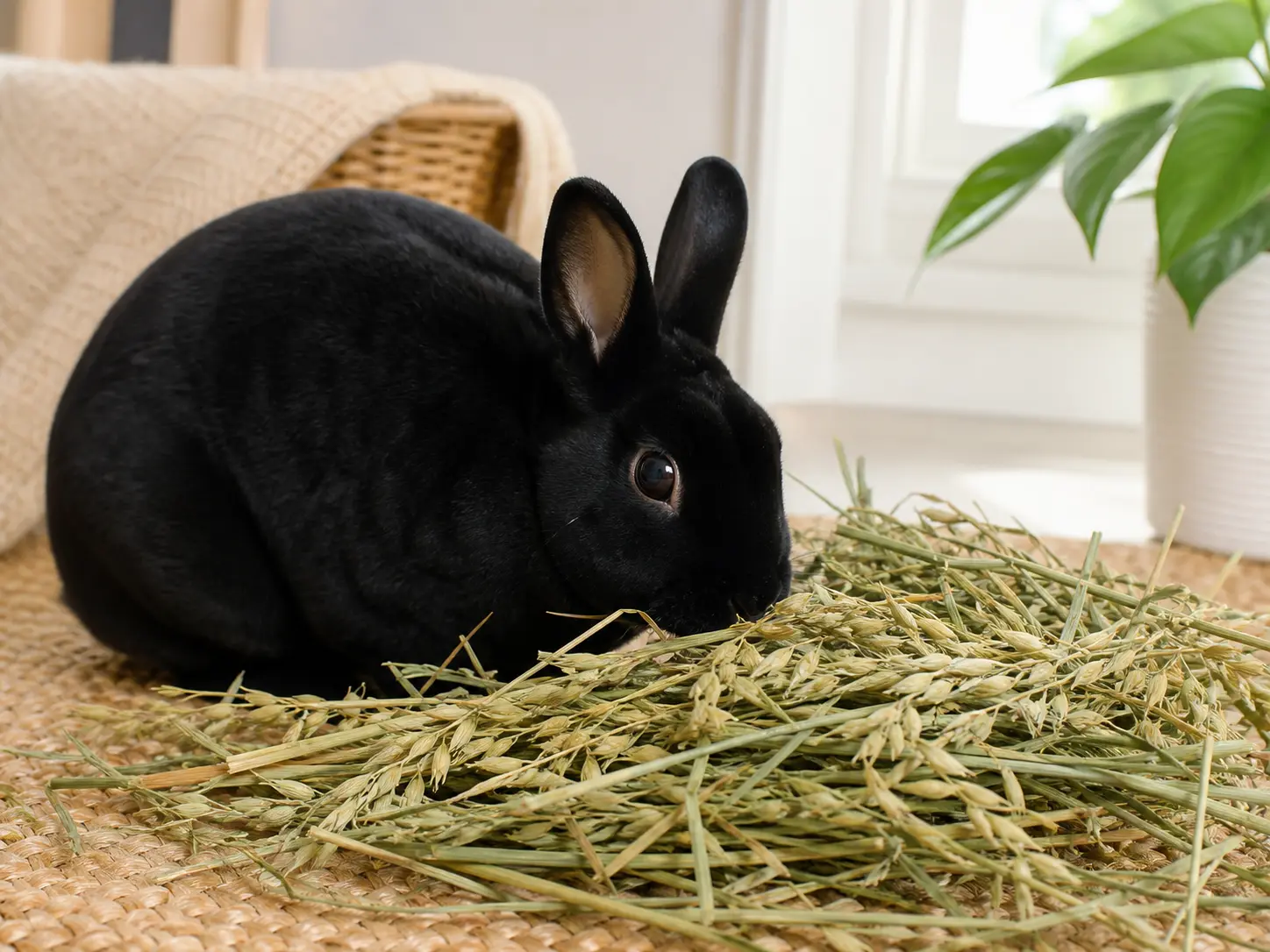
A rabbit may rush over for a wet romaine leaf and still need hours of grass-hay chewing. Plate a modest amount of greens and leave the hay feeder full. If lettuce starts replacing hay, pellets, or other familiar foods—or if appetite and droppings slow down—step back and check the whole feeding routine.
Pull off the bruised leaves
Set the romaine heart on the counter and peel away wilted or damaged outer leaves. Cut off the dirty base, then inspect what remains. Crisp ribs and fresh green leaves can go on the rabbit plate beside hay; slime, mold, dark wet patches, and a sour smell send the affected leaf to the compost or bin.
Rinse between the ribs
Separate the leaves under cool running water, rubbing away visible soil without soap or produce wash. Check both faces and the folds near the base. Shake off the excess or use a salad spinner so the storage container does not fill with water.
Tear one test piece
When romaine is new, tear off one small piece and put it on a clean plate beside the usual hay station. Do not add three other new greens to make the plate look generous. One change at a time makes the next appetite and litter-box check much easier to understand.
Store the rest before serving
Put the washed batch into a clean ventilated produce container with an absorbent liner, then return it to the refrigerator. Close the drawer before taking the small plate to the rabbit pen. The rest stays cold while the rabbit eats one test piece beside the usual hay pile.
Serve
- Confirm that the leaves are romaine or cos lettuce. Do not swap in iceberg, an unidentified salad mix, or a dressed restaurant salad and assume the same answer applies.
- Remove the base, wilted outer edges, and any leaf that is slimy, moldy, badly bruised, or smells sour.
- Rinse both sides under clean running water, paying attention to the thick rib and the folds near the base where soil can collect.
- Shake or spin off dripping water, tear the leaves into manageable pieces, and serve them plain with no dressing, oil, salt, cheese, croutons, or seasoning.
Avoid
- Handing over a whole romaine heart because lettuce looks light. Greens are the smaller part of the diet; hay still fills most of the day.
- Sharing from a Caesar salad, sandwich, burger, salad kit, or restaurant plate. Dressing, cheese, seasoned croutons, cured meat, salt, and other ingredients change the question.
- Using slimy, sour, moldy, or badly bruised leaves, or storing washed romaine in a sealed puddle where it spoils quickly.
- Adding several new vegetables at once. If the litter box changes, you should be able to identify which food was new.
Watch
- The rabbit finishing the small test piece and returning to hay rather than waiting only for more lettuce
- The usual appetite and comfortable movement later in the day
- Separate round droppings in the rabbit's usual number and size
- Eating less, fewer droppings, watery diarrhea, a hunched pose, tooth grinding, weakness, or unusual quietness; call a rabbit-savvy veterinarian promptly
Portion
For an adult rabbit already comfortable with leafy greens, romaine can make up part of the usual mixed-greens serving. A whole heart is not one portion. For a first taste, use one small torn piece and wait before adding more or introducing another new green.
Wash, dry, and store the greens properly
These produce-prep basics help rinse grit from romaine ribs, remove the excess water that speeds spoilage, and keep the rest of the batch organized for small plain servings.
Affiliate links: Furball Cove may earn from qualifying purchases at no extra cost to you.
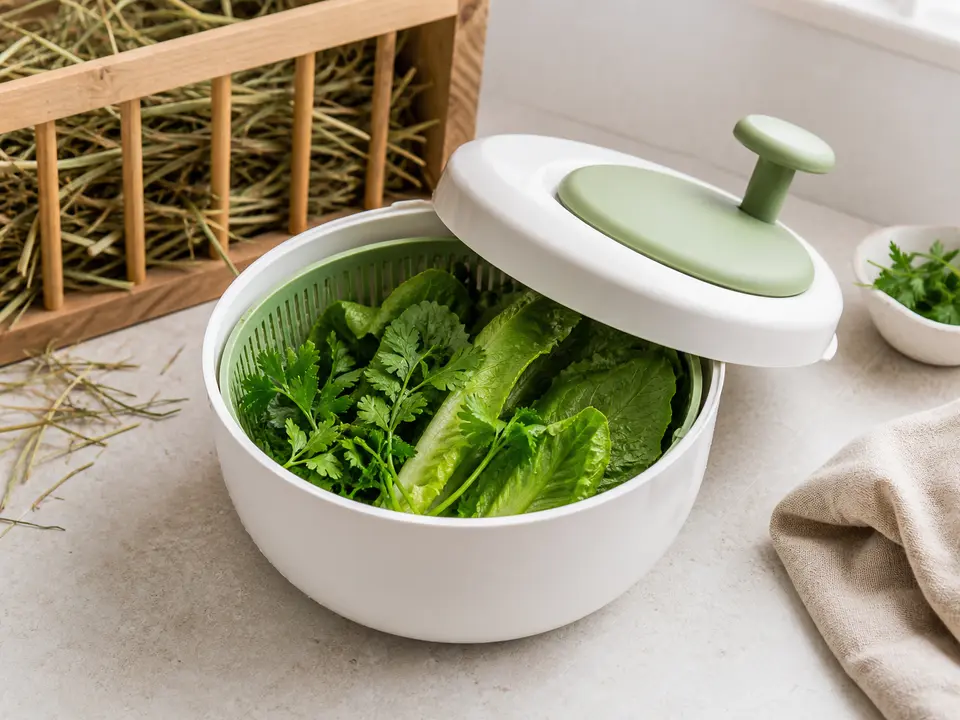
Salad spinner
Rinse a batch, spin off the excess water, and avoid putting dripping leaves straight into the refrigerator.
Shop salad spinner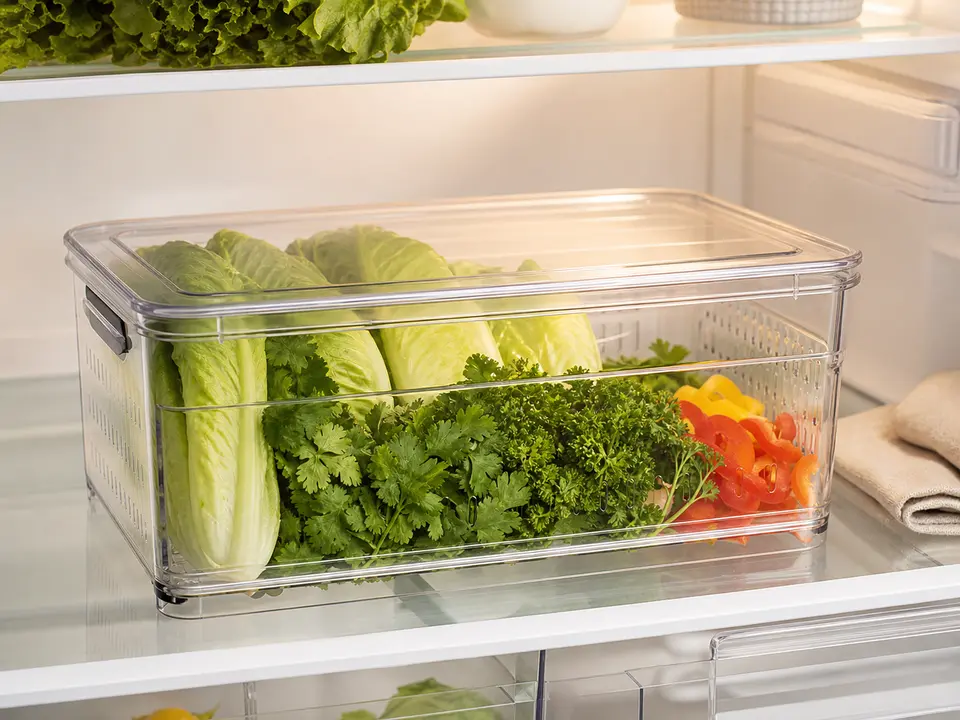
Rabbit greens bin
Keep washed rabbit greens in their own ventilated refrigerator bin instead of losing them beneath dressed salad kits.
Shop rabbit greens bin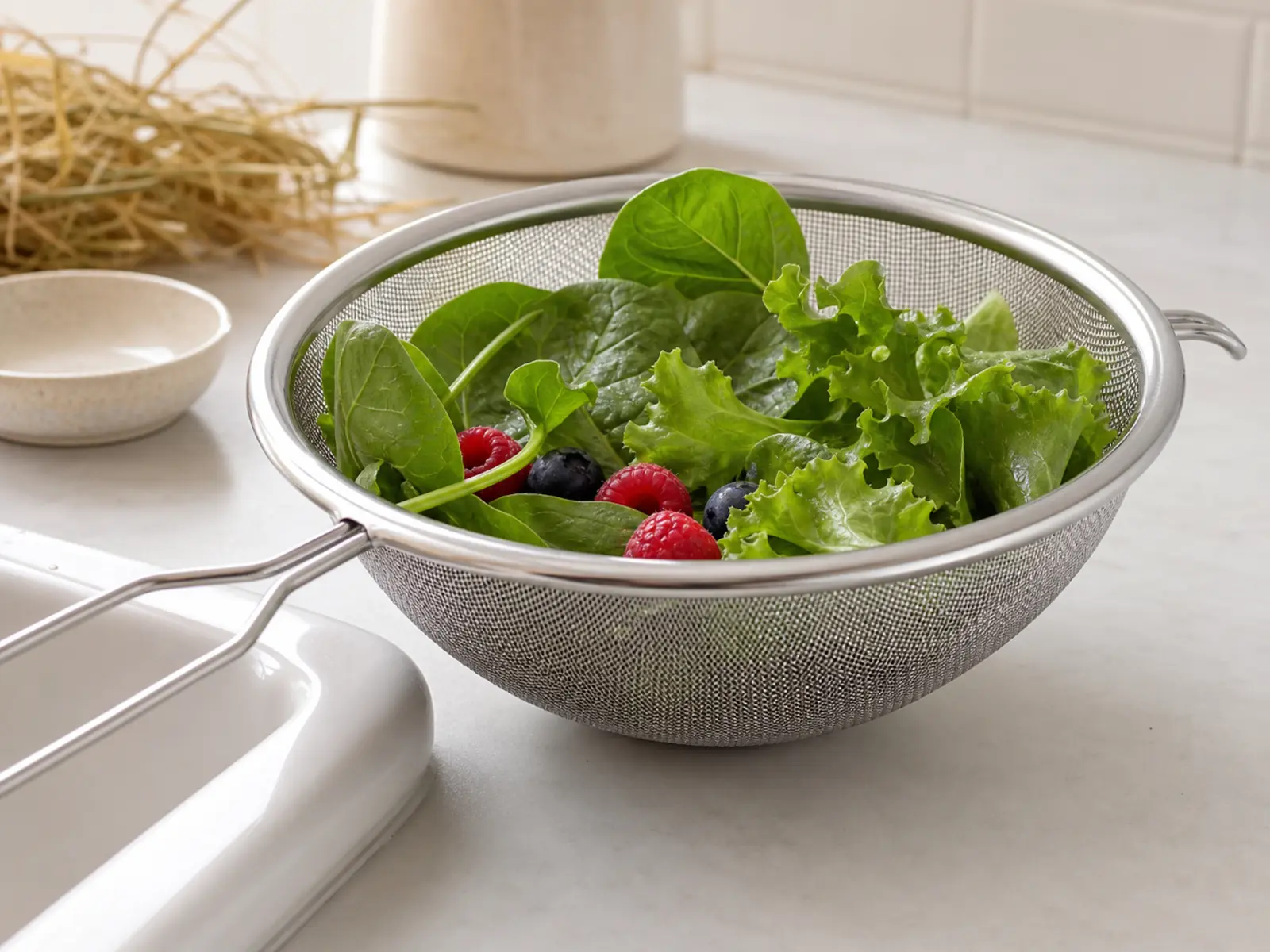
Produce strainer
Separate romaine leaves and rinse both sides over a colander so grit leaves the thick ribs and folds.
Shop produce strainer