Updated
Rabbit food check
Can Rabbits Eat Sage?
Safe in moderation
Sage is best treated as a small rotation herb, not a main green.
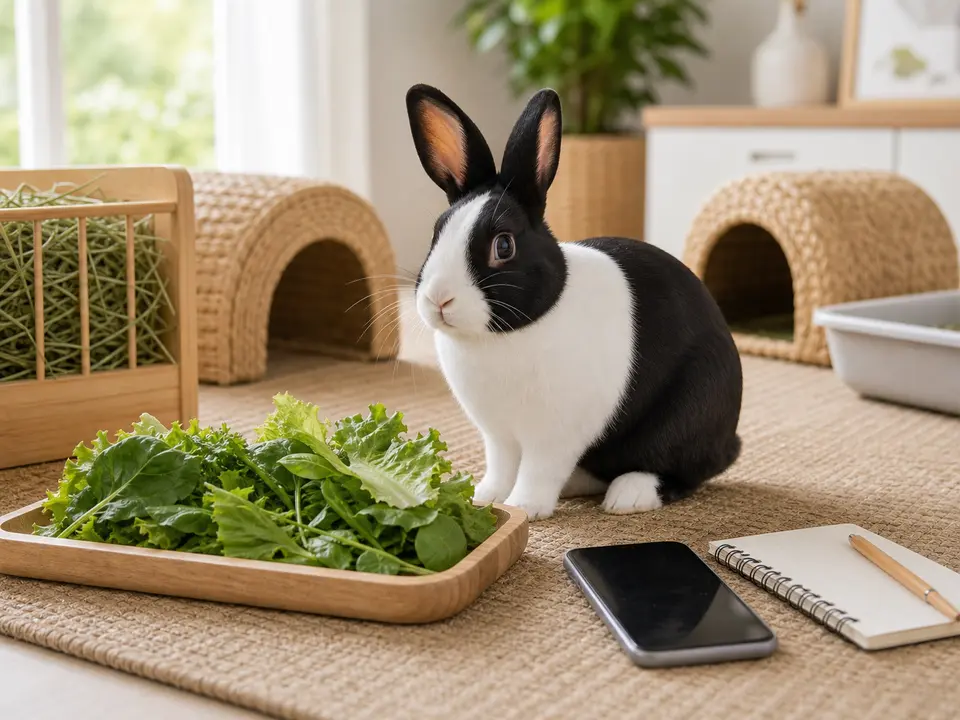 Sage
SageUse sage as rotation, not a reset
Sage is best treated as a small rotation herb, not a main green.
Do not stack new foods with sage
Try one new item at a time so soft stool, fewer poops, or skipped hay have a clearer explanation.
Keep notes if sage is new
A quick phone note helps everyone in the house remember which greens worked and which ones made the litter box messy.
Make sage a measured change
Sage belongs in the careful part of feeding: washed, plain, and introduced while the rest of the day stays familiar. That gives your rabbit room to show you whether it agrees with them.
Do the first sage test on a calm day
Avoid adding a new green during travel, recovery, a stressful house change, or a day when appetite already seems off. Normal days give clearer answers.
Use sage for variety, not drama
A steady rotation of tolerated greens is more useful than a constantly changing salad. Rabbits usually do better when new foods arrive slowly and predictably.
Share the sage rule
If more than one person feeds your rabbit, write down whether this green is a yes, a no, or still being tested. That keeps kind helpers from accidentally doubling the experiment.
Decide on sage after the litter box looks normal
Do not decide from the first eager bite alone. Wait until your rabbit has gone back to hay, rested normally, and left normal poops. That is the point where a small test can become a sensible rotation choice.
Serve
- Wash it well and serve it plain.
- Try one new green at a time.
- Keep the next meal familiar while you watch the litter box.
Avoid
- Seasoning, dressing, sauces, or cooked leftovers.
- A large new greens pile when your rabbit has not tried it before.
Watch
- Soft stool
- Smaller or fewer poops
- Belly discomfort
- Ignoring hay afterward
Portion
Start with a small piece or small handful, depending on the rabbit and the rest of the greens routine.
Useful tools for a steady food routine
These optional picks can help you wash, measure, store, and serve rabbit food while keeping hay at the center of the day.
Affiliate links: Furball Cove may earn from qualifying purchases at no extra cost to you.
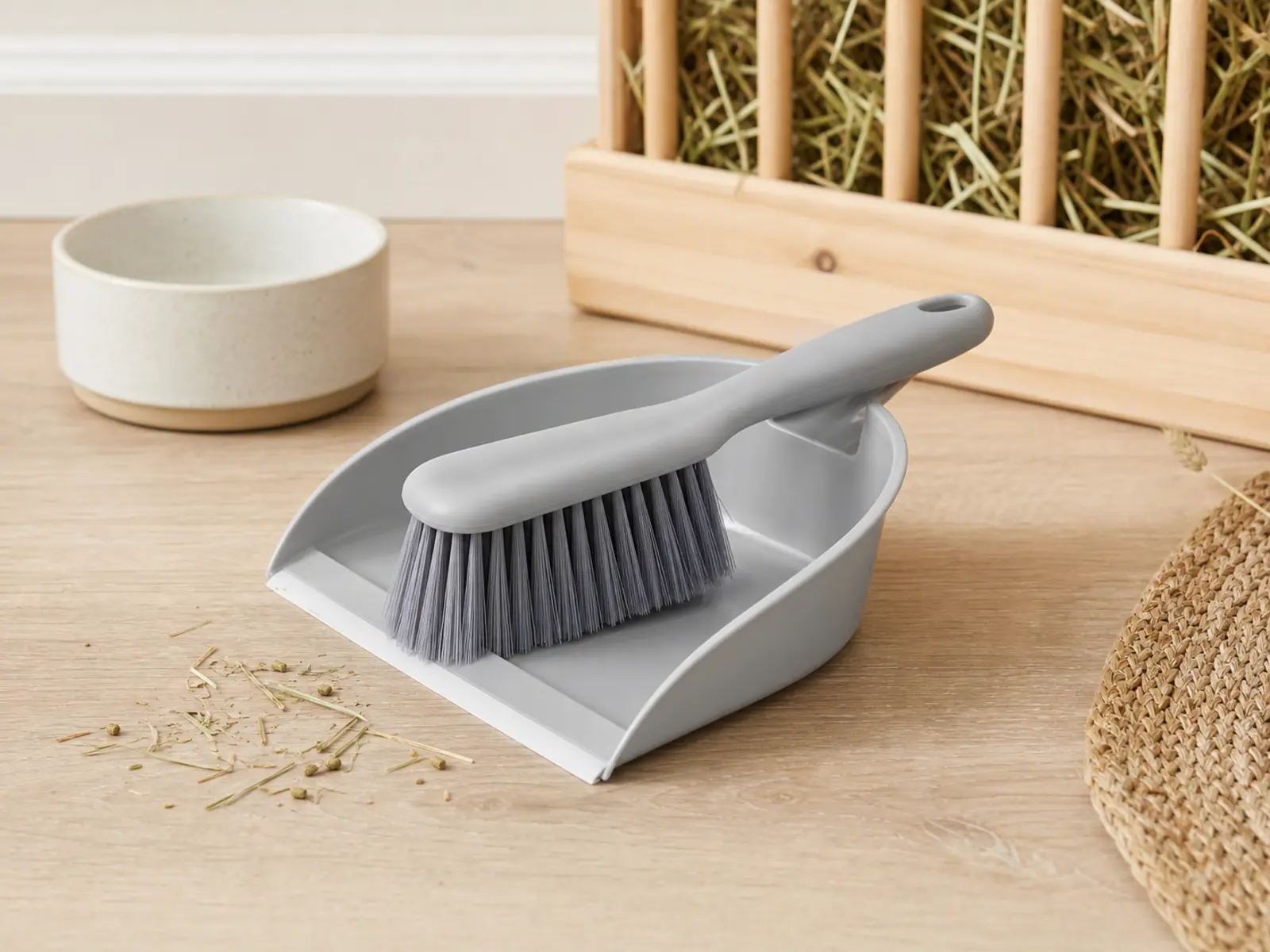
Small dustpan and brush
Sweep hay, pellet crumbs, and dropped food before your rabbit finds the leftovers under a chair.
Shop small dustpan and brush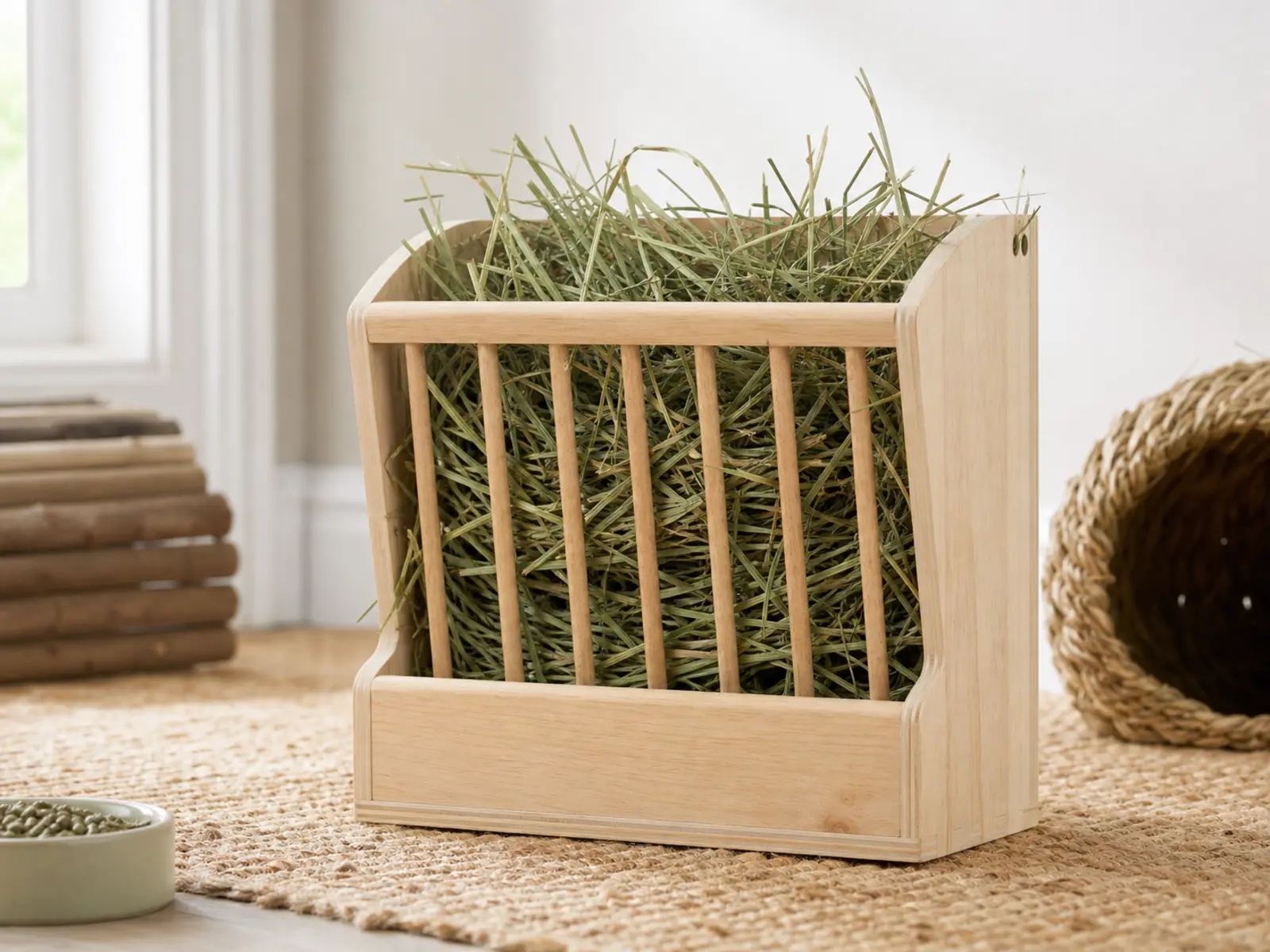
Rabbit hay feeder
Keeps a generous hay supply beside the litter box where your rabbit is most likely to use it.
Shop rabbit hay feeder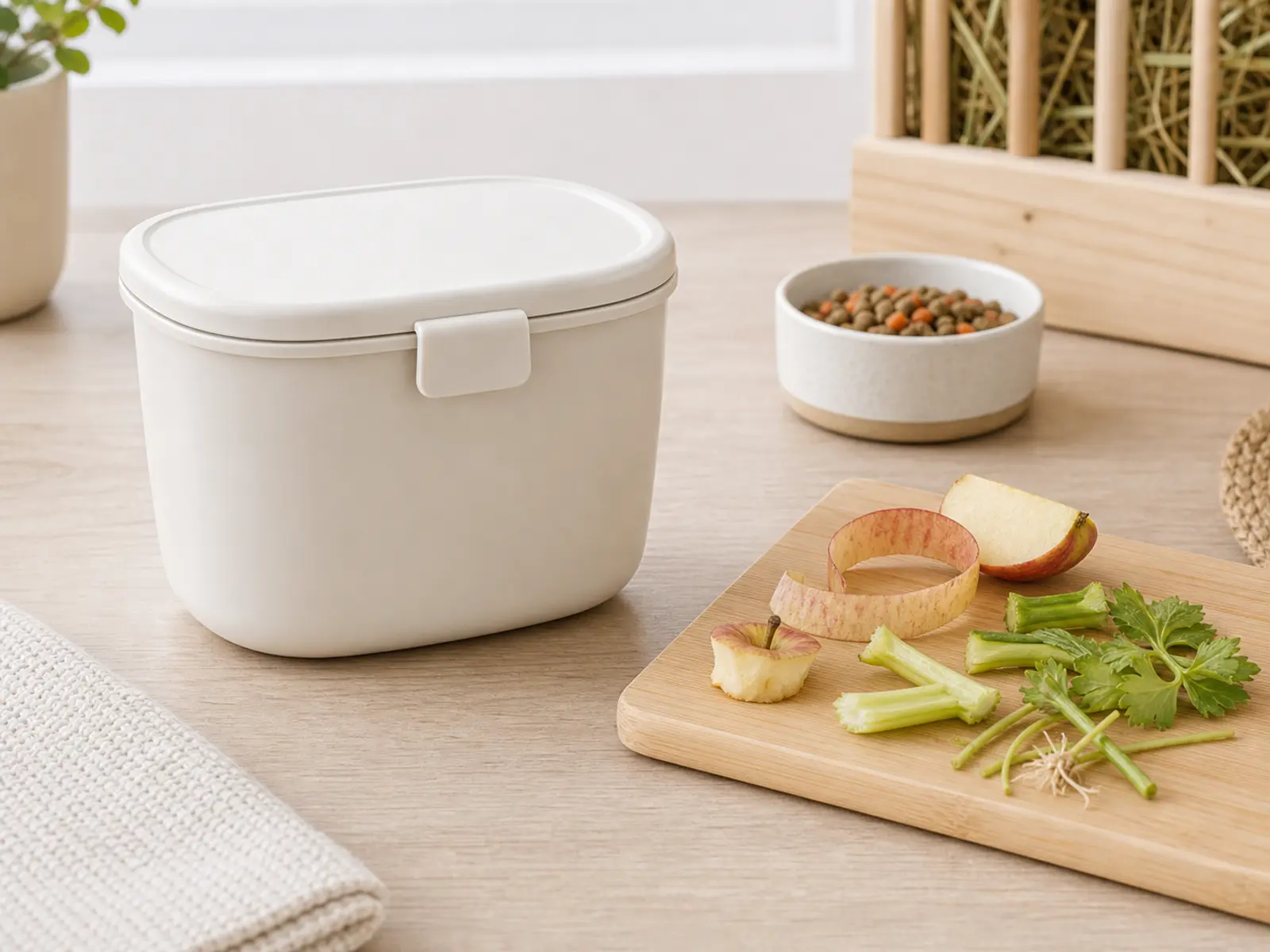
Lidded scrap bin
Move peels, pits, seasoned scraps, and wilted pieces out of rabbit reach as soon as prep is finished.
Shop lidded scrap bin