Updated
Rabbit food check
Can Rabbits Eat Tomatoes? Fully Ripe Fruit Only
Only—fully ripe fruit
Only the fully ripe tomato fruit is rabbit-safe. Remove the green calyx and stem, wash the ripe fruit, and offer one small plain wedge with its skin and soft seed pulp. Keep unripe fruit, leaves, stems, and vines away; call a rabbit-savvy veterinarian promptly if one of those plant parts was eaten.
 Tomatoes
Only the fully ripe tomato fruit is safe
House Rabbit Society lists tomato as a rabbit-safe non-leafy vegetable with a firm boundary: ripe fruit only. One small plain wedge can join an adult rabbit's varied vegetables. The green plant and unripe fruit do not share that answer.
Skin and soft seed pulp can stay
At the kitchen sink, remove every green part and wash the fully ripe fruit. The wedge can keep its skin, mature flesh, soft seed gel, and ordinary pale seeds. Place it in the rabbit bowl beside hay instead of scraping the juicy center into an unrecognizable red smear.
Ripe does not always mean red
Most grocery tomatoes ripen red, but some named varieties mature yellow, orange, purple, or green. Keep the label and whole fruit on the kitchen counter. An unlabeled hard green tomato from a mixed garden harvest does not move toward the rabbit pen while its maturity is uncertain.
A missing plant part changes the next step
RWAF states that the tomato fruit is the exception to the unsafe plant. If a leaf, vine, stem, calyx, or unripe tomato was eaten, remove the plant and call a rabbit-savvy veterinarian promptly. Keep a photo or sample nearby so the clinic knows what went missing.
Separate red fruit from the vine tray
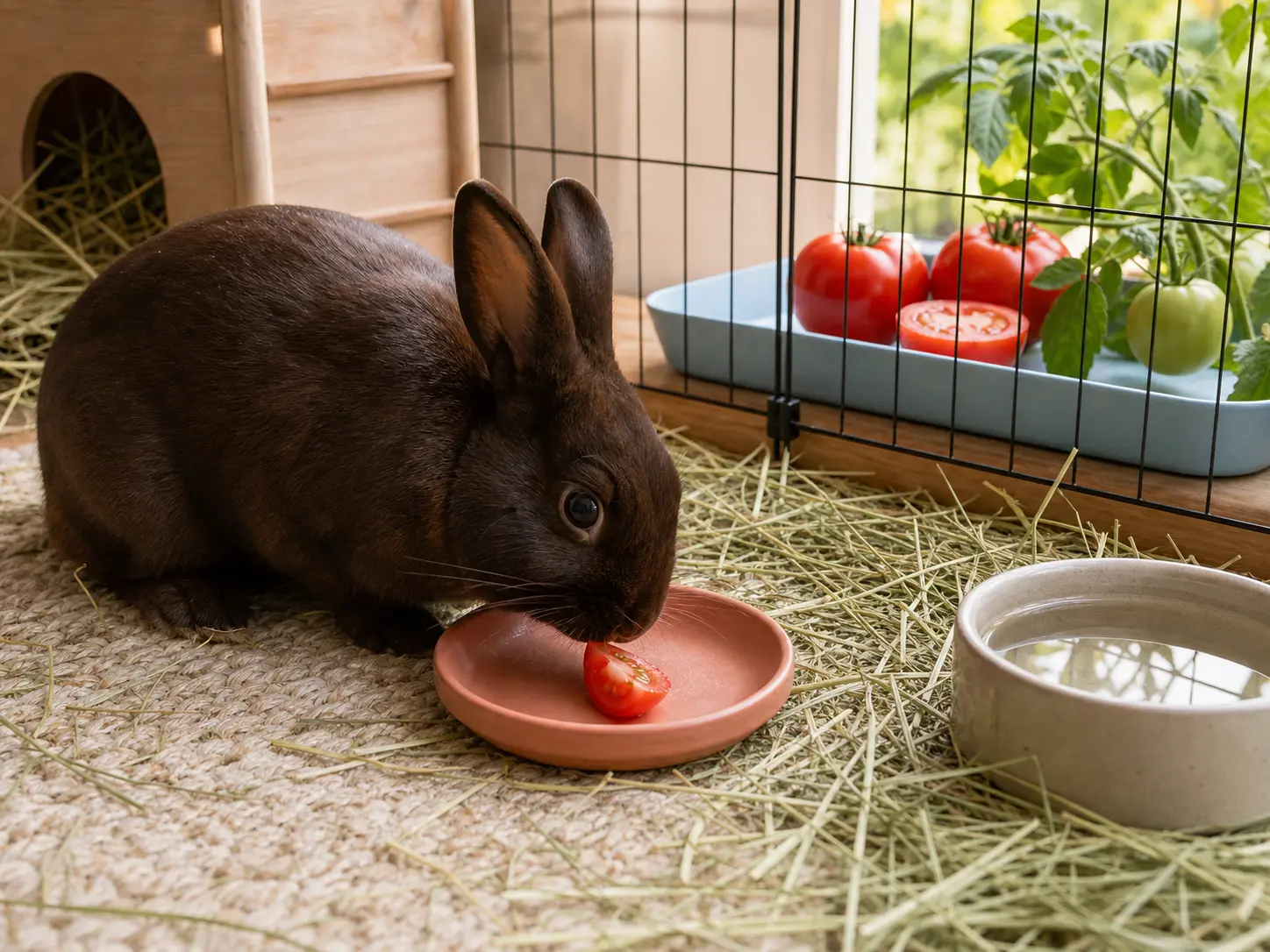
The sky-blue tray holds glossy ripe tomatoes, one cut red half, and a separate vine with leaves and an unripe green fruit. The seal-brown Satin waits beside meadow hay while one fully ripe tomato moves to a clean counter away from every green part.
Lift off the green cap before washing
Remove the star-shaped calyx and stem completely, then rinse the ripe fruit under cool water. Check the skin and stem scar. Slime, fuzzy growth, a fermented smell, or collapsing flesh sends that tomato to a closed scrap bin.
Cut one ripe wedge for the coral saucer
Slice one small wedge with red skin, mature flesh, and soft seed pulp intact. Place it beside hay and water with no leaf, vine, stem, or green cap attached, then cover and chill the remaining tomato before a recipe begins.
Check the plant and litter box afterward
After the wedge is gone, confirm the vine tray is still beyond the barrier and look for normal hay eating and round droppings. A missing plant part, slower eating or output, diarrhea, hunching, weakness, or unusual quietness needs a prompt rabbit-savvy veterinary call.
How to offer it
- Confirm a fully ripe food tomato. Use the variety label and a mature, even color with sound flesh; do not assume every green tomato is a ripe green cultivar.
- Remove the leafy green calyx, stem, and every piece of vine before washing. Keep the plant and any unripe fruit behind a barrier the rabbit cannot reach.
- Rinse the ripe fruit under cool water and inspect the cut face. The washed skin, red or mature-colored flesh, soft seed gel, and ordinary pale seeds can stay in one small wedge.
- Serve the wedge plain. Refrigerate the rest before salsa, pasta sauce, soup, sandwich, dressing, oil, salt, or seasoning enters the kitchen.
Avoid
- Tomato leaves, vines, stems, or the green star-shaped calyx. House Rabbit Society and RWAF exclude tomato plant parts from the safe fruit answer.
- An unripe tomato or a loose green fruit with uncertain variety and maturity. Use only a fully ripe tomato you can identify confidently.
- Letting a rabbit roam around a tomato pot, garden bed, fallen leaves, pruned vines, or compost pile where the plant is within reach.
- Ketchup, salsa, pasta sauce, soup, pizza topping, sun-dried tomato, restaurant salad, or fruit carrying oil, salt, sugar, vinegar, sauce, spice, or seasoning.
- A split, slimy, moldy, sour-smelling, fermented, badly bruised, collapsing, chemically treated, or unidentified piece.
Watch
- The small ripe tomato wedge disappearing while the rabbit continues ordinary visits to the hay pile
- Normal posture, movement, water use, and interest in familiar food after ripe fruit
- The rabbit's usual separate round droppings after a first ripe-tomato tasting
- Any missing leaf, vine, stem, calyx, or unripe fruit; or reduced eating or droppings, diarrhea, hunching, weakness, or unusual quietness; contact a rabbit-savvy veterinarian promptly
Portion
For an adult already eating fresh vegetables, one small fully ripe tomato wedge is enough. Tomato is watery and belongs in the modest non-leafy part of the vegetable menu. A bowl of wedges does not replace leafy greens, unlimited grass hay, or fresh drinking water.
Keep ripe tomato fruit separate from every green plant part
These produce-prep tools help isolate one fully ripe fruit, collect the calyx and stem, and reserve a small plain wedge before sauce, salsa, dressing, or seasoning starts.
Affiliate links: Furball Cove may earn from qualifying purchases at no extra cost to you.
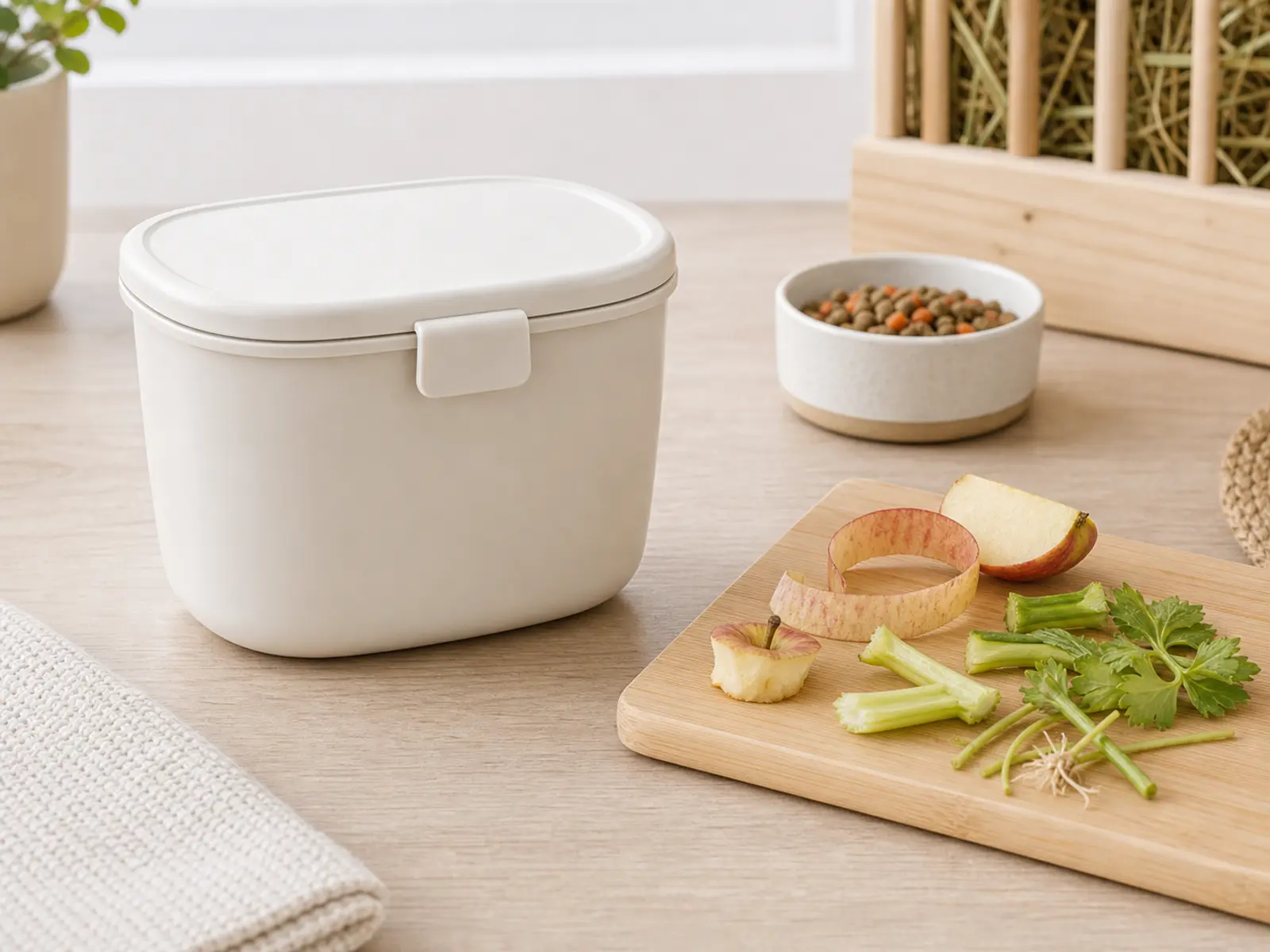
Lidded scrap bin
Close tomato leaves, vines, green caps, spoiled fruit, and unripe trimmings away from a rabbit that explores the kitchen floor.
Shop lidded scrap bin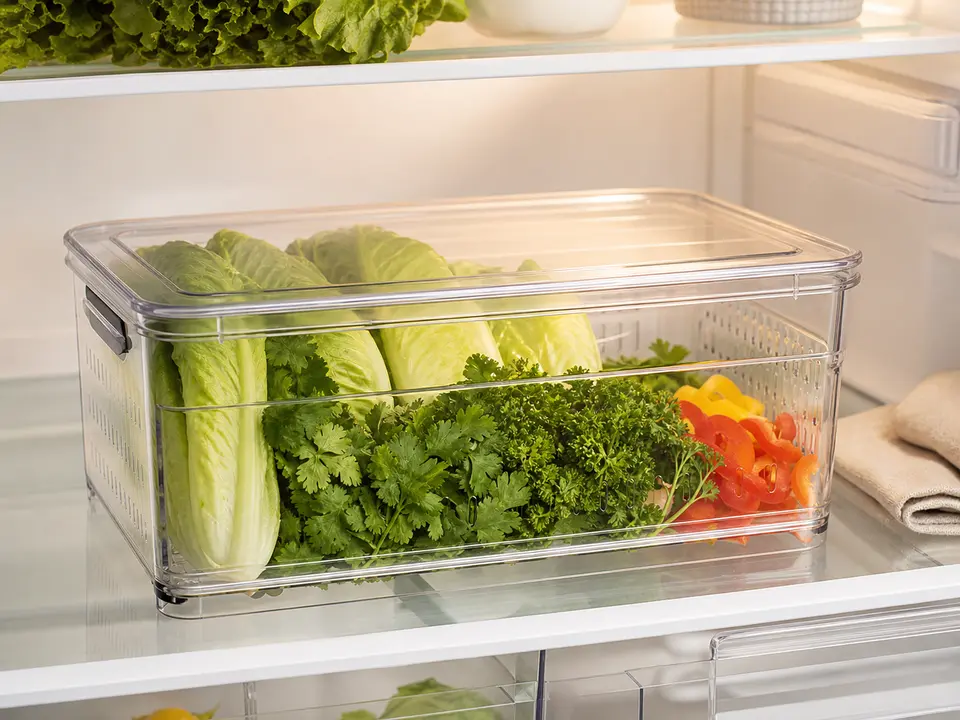
Rabbit greens bin
Keep sound ripe tomatoes visible in the refrigerator so split skin, wet patches, mold, fermentation, and the opened date remain easy to spot.
Shop rabbit greens bin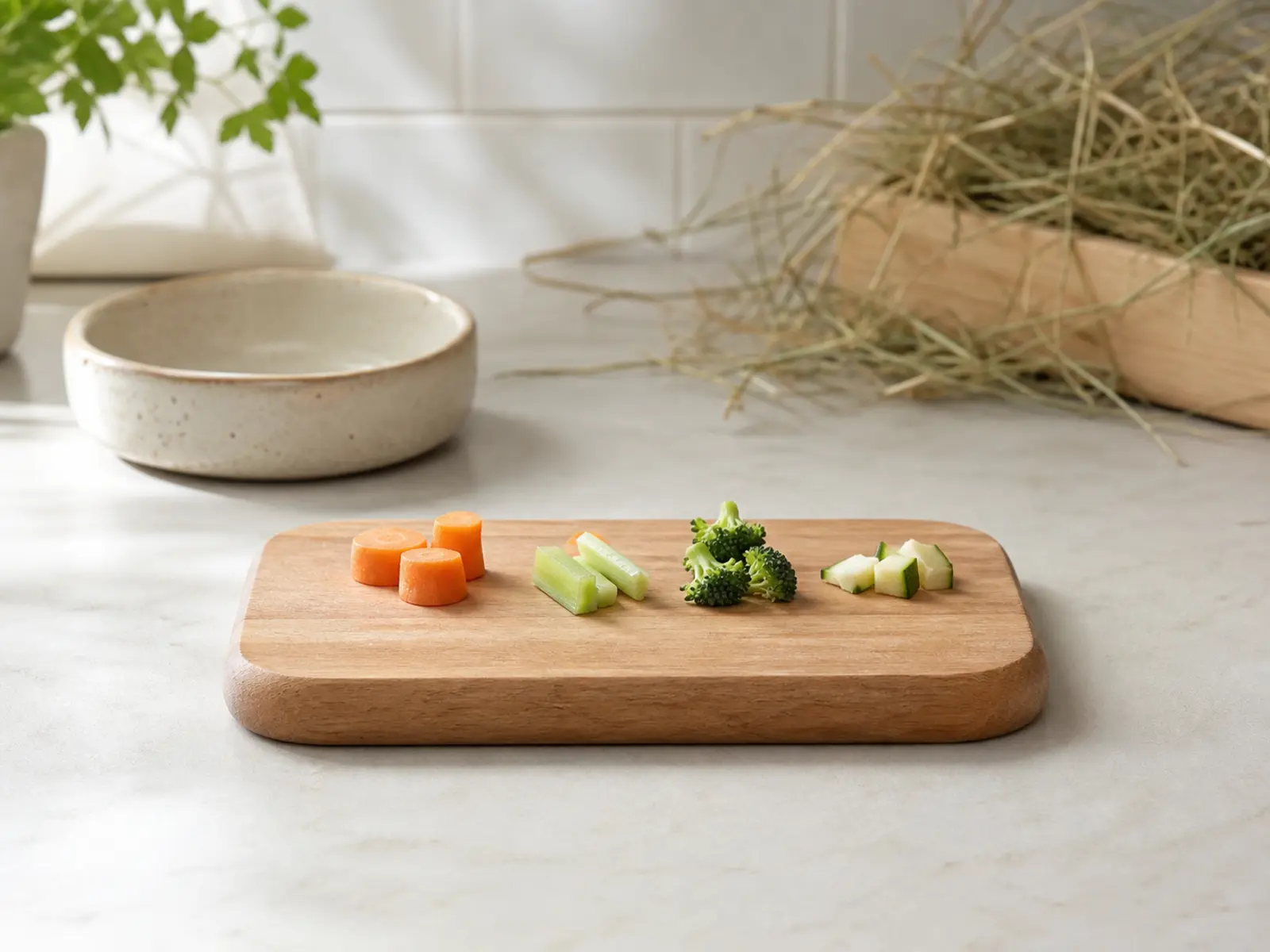
Mini cutting board
Use a compact stable surface to remove the green cap and cut one small ripe wedge while vines and unripe fruit stay on the other side of the barrier.
Shop mini cutting board