Updated
Rabbit food check
Can Rabbits Eat Turnip? Yes—Try One Raw Wedge
Yes—start with one wedge
Raw purple-top turnip root is okay as one non-leafy vegetable. Start with a small skin-edged wedge, and count any later serving within the whole fresh-food plate.
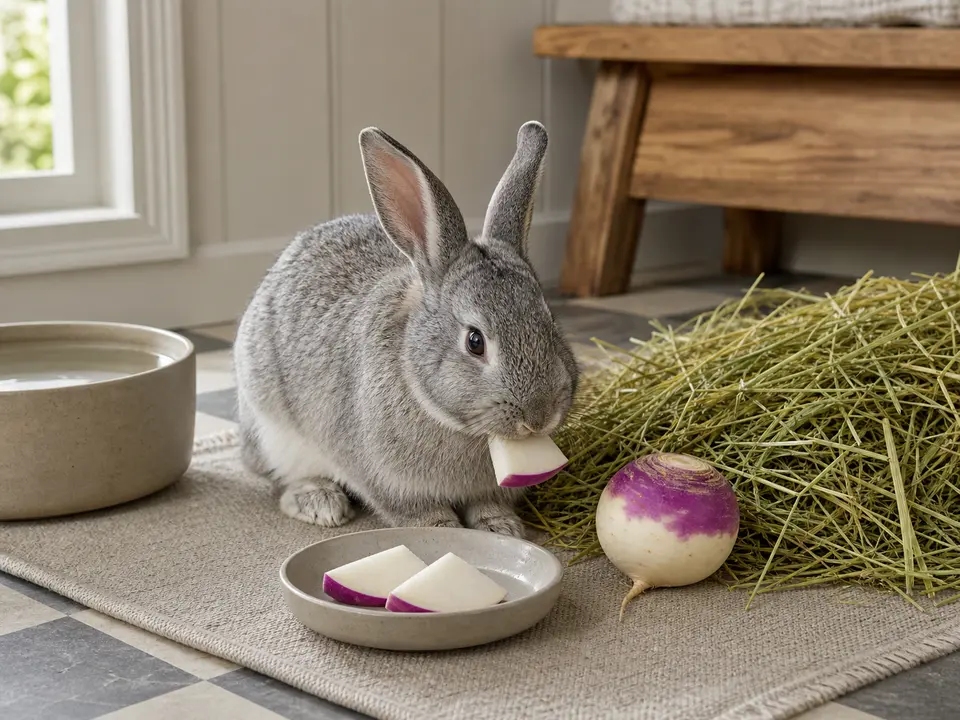 Turnip
The purple shoulder tells you which root is on the board
A common turnip is a round white globe with a violet cap and crisp white centre. That visual check matters because parsnip is long and ivory, while rutabaga is usually larger and yellow-fleshed. Keep the skin edge on the first wedge so everyone can see what reached the dish.
Root and greens belong in different columns
House Rabbit Society lists turnip root among non-leafy vegetables and turnip greens among leafy ones. Both can be edible, but they are not one combined portion. If your rabbit has a vet-directed calcium or urinary plan, ask how the higher-calcium greens fit instead of copying the root serving.
Turnip is not just a paler parsnip
The two roots share a roasting tray in human kitchens, but rabbit guidance does not label turnip high in sugar the way it labels parsnip. That does not make turnip unlimited. It means a modest raw wedge can sit in the non-leafy part of a varied plate rather than being treated as candy.
Use the first wedge to learn, not to fill a quota
Make the first wedge the only new food that day. Check for fresh hay bite marks, an active rabbit, and a normal litter corner. A good result leaves turnip available for some future plate; it still never needs a scheduled slot.
Roll the globe under the tap
Hold the turnip by its trimmed crown and rotate it while brushing from the purple cap toward the thin root. Grit often collects along the colour change. Rinse again until a white towel comes away clean.
Cut one wedge through the colour line
Stand the globe on its crown scar and cut one thin side wedge. Keep the purple edge visible; it stops the rabbit bowl's pale chunk from being confused with parsnip or potato.
Store the tops and root in separate containers
If the turnip arrived with greens attached, remove the band and inspect both foods. Dry leaves go in their own produce box; the scrubbed globe goes elsewhere. You can then choose each serving deliberately instead of grabbing a tangled handful.
Let the hay mound outlast the wedge
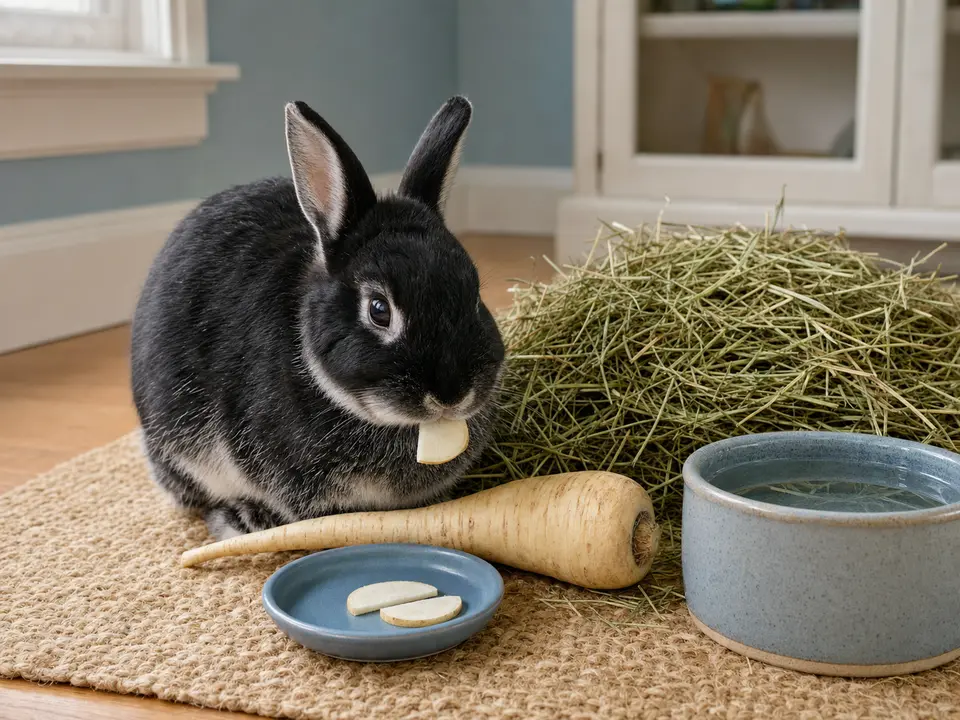
Nestle the small dish against the hay pile. The turnip may vanish in seconds; afterward, watch the rabbit brace coarse stems between the front teeth and chew through the seed heads.
Serve
- Identify a purple-top turnip by its round white globe, violet shoulder, and thin central taproot.
- Rotate the root under running water and scrub the crown scar, skin line, and fine root channels.
- Cut a narrow wedge through both purple skin and white flesh so the vegetable remains easy to identify.
- Trim away the crown, taproot, deep cracks, soft bruises, black spots, and any slimy patch.
Avoid
- Turnip mash, gratin, soup, roast vegetables, pickles, or any piece carrying butter, salt, sauce, or stock.
- Serving a whole small turnip simply because it fits inside the rabbit's dish.
- Confusing the white-and-purple globe with yellow-fleshed rutabaga or another root with different guidance.
- Garden tops or roots exposed to slug pellets, pesticide, weed killer, or unknown chemical spray.
Watch
- Hay strands being pulled and chewed after the wedge is finished
- Fresh dry pellets accumulating where this rabbit normally toilets
- Easy hops between the water bowl, litter area, and resting mat
- A normal appetite at the next familiar meal; call a rabbit-savvy vet if eating or droppings slow or stop
Portion
Use one thin wedge for the first try. Later, count turnip within the entire non-leafy vegetable portion rather than adding it on top; House Rabbit Society describes that category collectively as roughly one tablespoon per two pounds of rabbit.
Tools for separating the purple globe from its leafy top
Turnips often arrive dusty, banded to greens, and easy to confuse with nearby roots. These picks keep the two edible parts sorted, give the round globe a stable cutting surface, and stop one wedge from becoming a bowl of chunks.
Affiliate links: Furball Cove may earn from qualifying purchases at no extra cost to you.
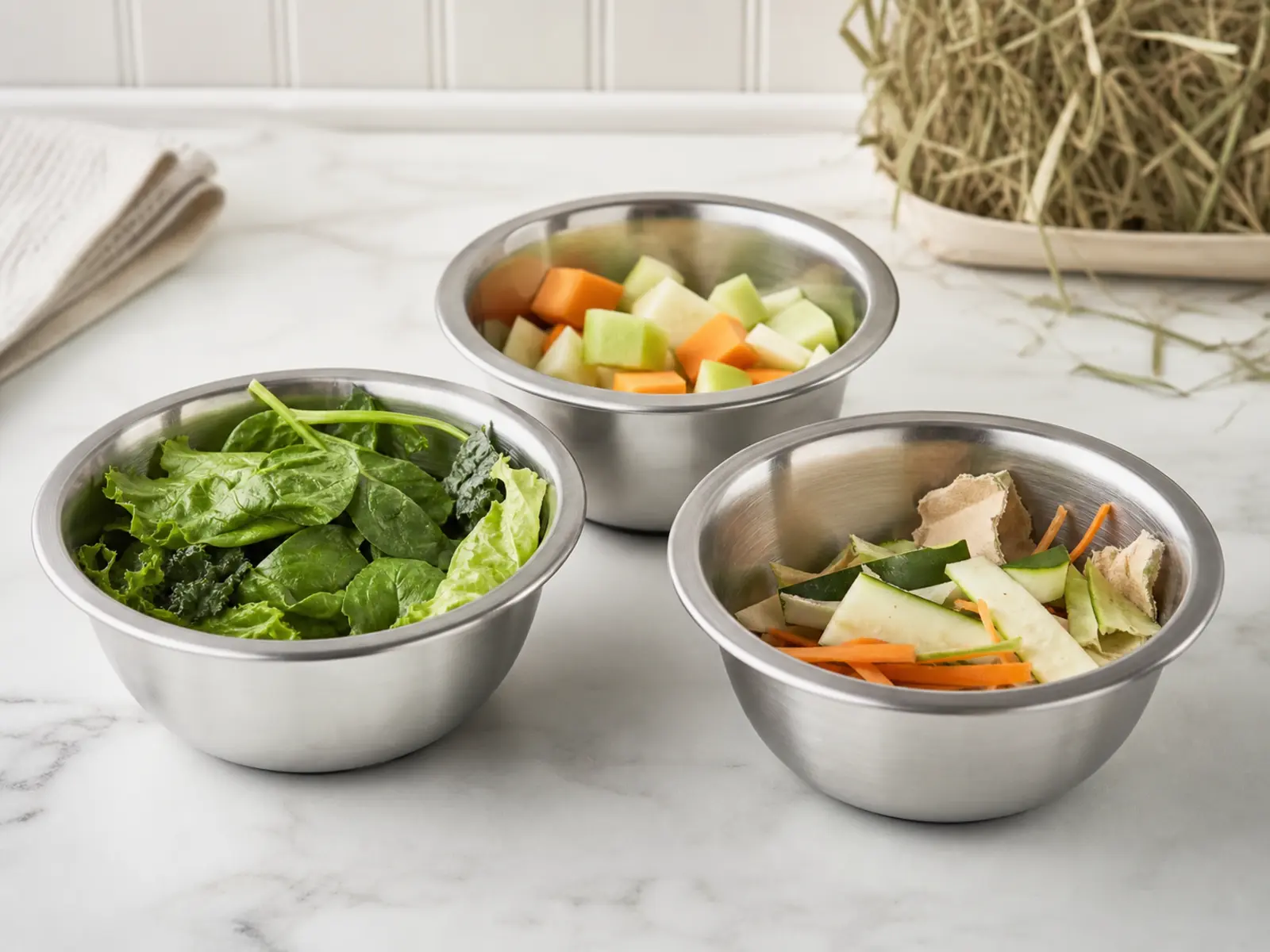
Stainless prep bowls
Place the washed globe in one bowl and detached greens in another so the root wedge and leafy serving never blur into one unmeasured pile.
Shop stainless prep bowls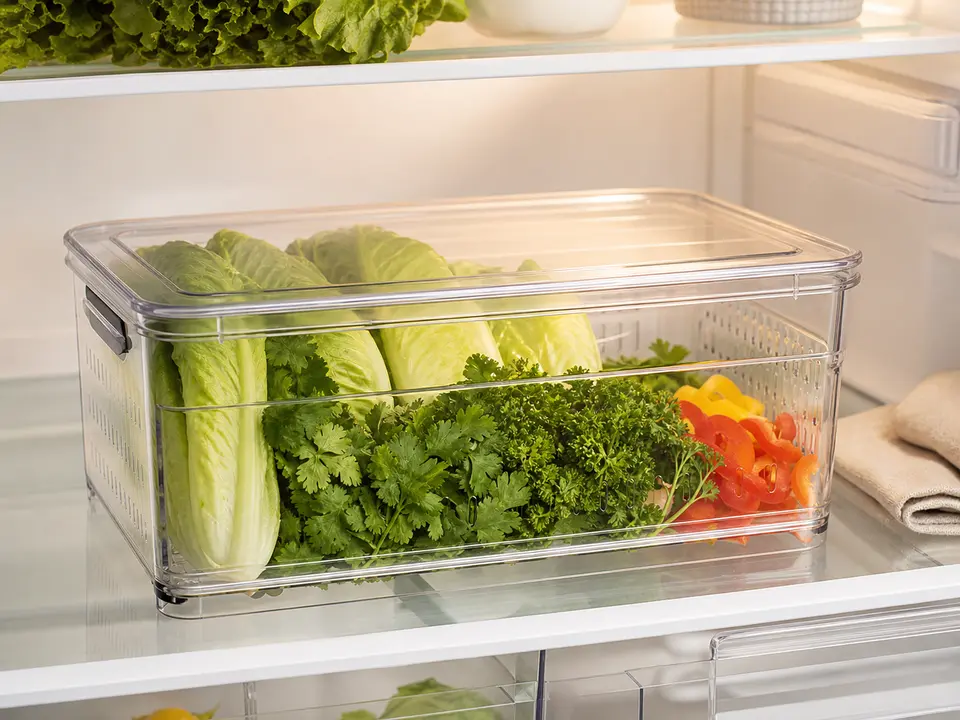
Rabbit greens bin
Store dry turnip greens away from the damp scrubbed root, with enough airflow to spot wilting or slime before rabbit dinner.
Shop rabbit greens bin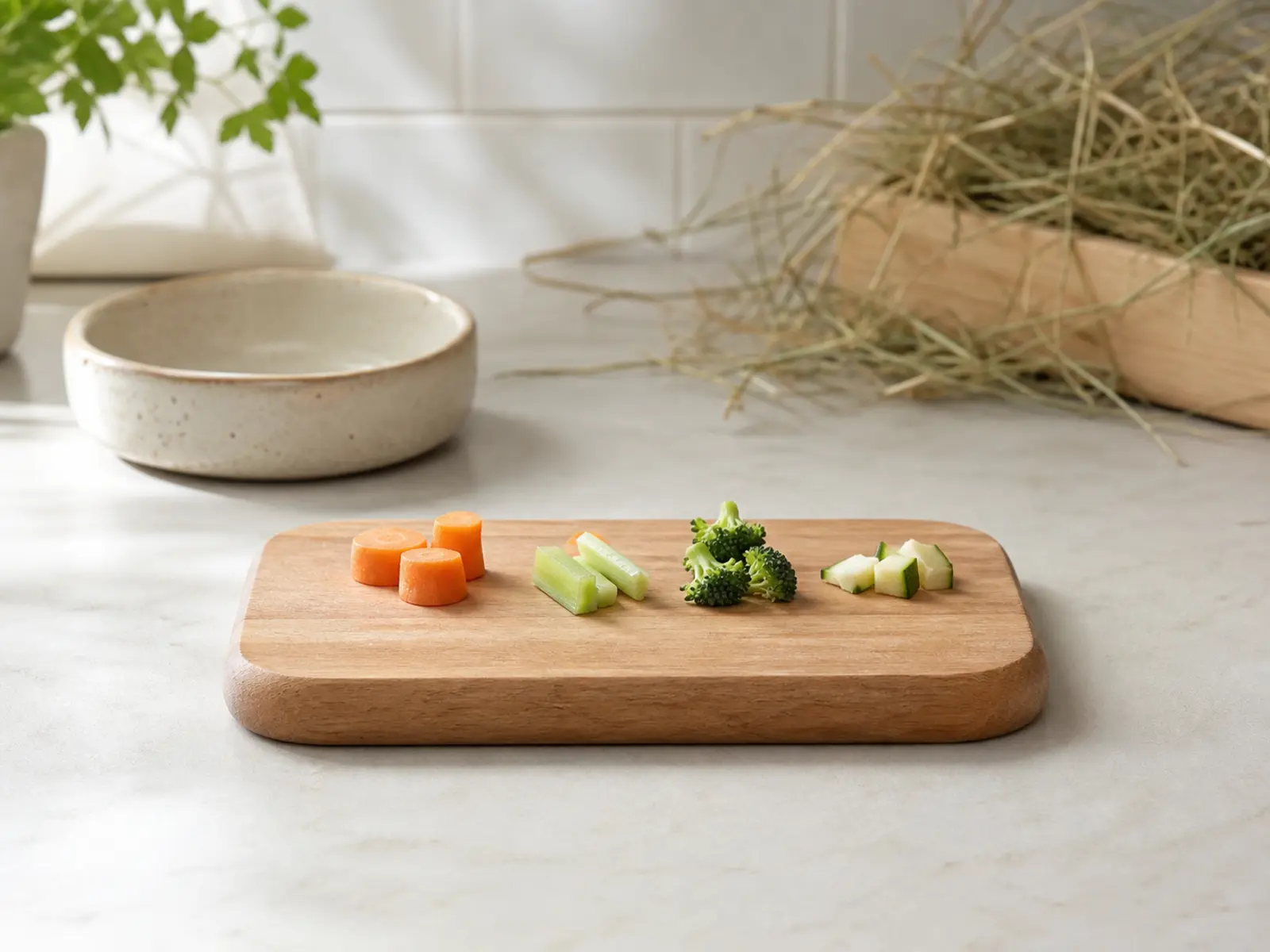
Mini cutting board
Steady the round turnip on its crown scar and cut one thin purple-edged wedge without letting the globe roll across a crowded counter.
Shop mini cutting board