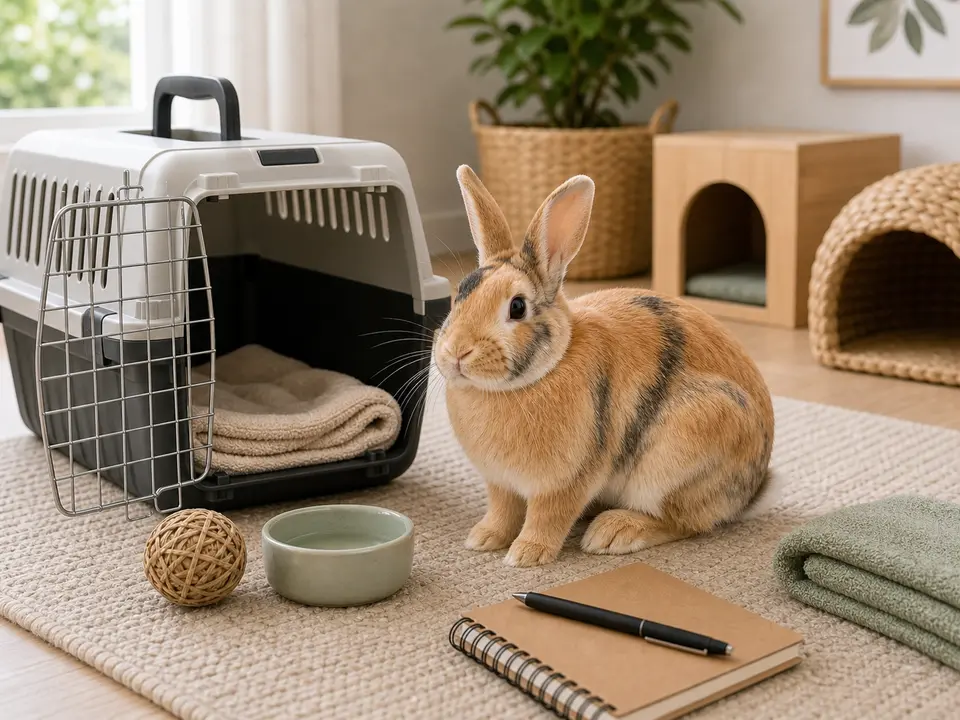
The best rabbit carrier is hard-sided, easy to clean, large enough for a towel and hay, and secure enough that your rabbit cannot push out during travel. Practice with it at home before you need it.
Rabbit supplies should earn their space in the daily routine. The best choice is the one that makes hay, litter, traction, chewing, transport, hiding, water, or cleanup easier tomorrow.
Choose a hard-sided carrier first
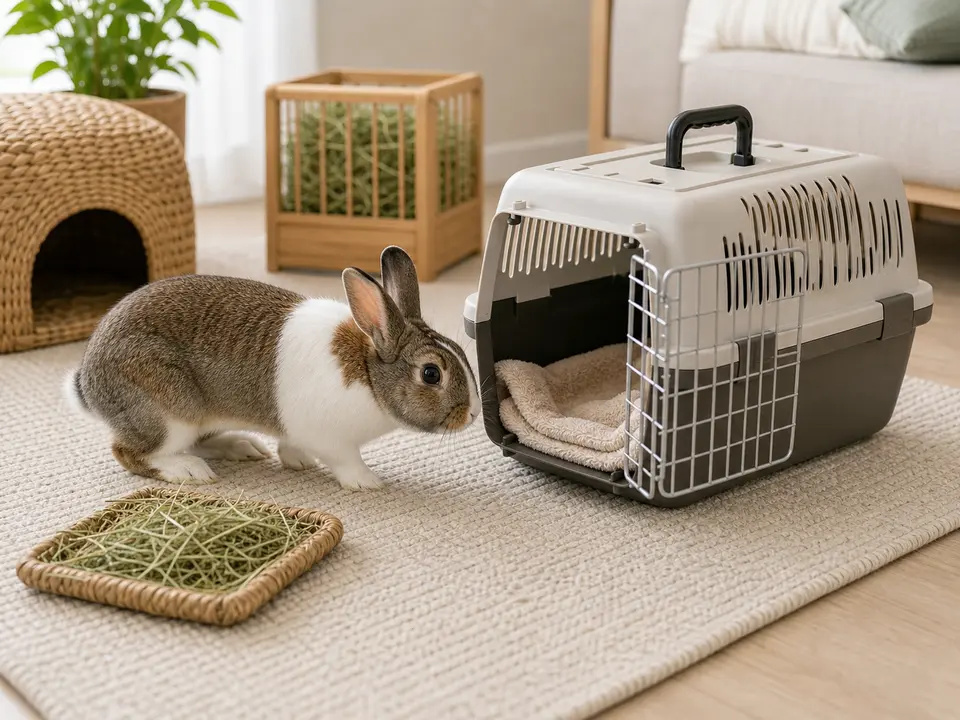
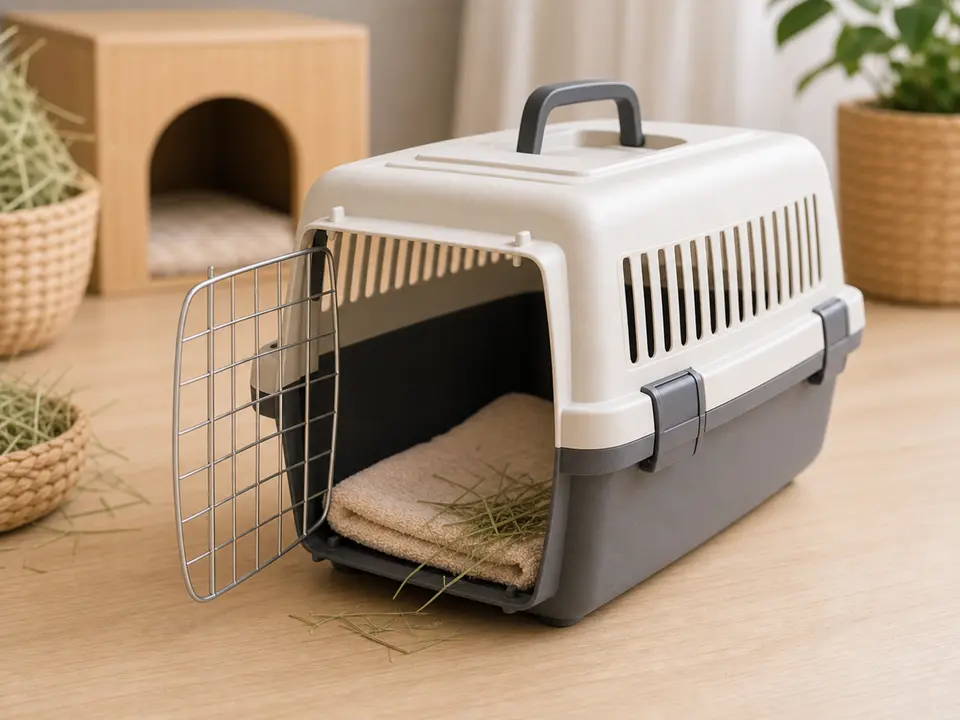
For most rabbits, the best everyday carrier is hard-sided, secure, and easy to clean. It should feel steady when you lift it, close firmly, and protect your rabbit from sudden bumps without feeling like a soft bag that collapses inward.
A top or wide front opening can make vet visits easier because you are not dragging a worried rabbit through a narrow door.
Skip carriers with weak latches, floppy sides, or openings your rabbit can push against. You want a carrier that feels calm in your hands before your rabbit is ever inside it.
Give the best carrier room to turn
The carrier should fit your rabbit standing normally, turning around, and resting on a towel. Too small feels cramped; too large can make the rabbit slide during car movement.
If you have a large rabbit or bonded pair, measure the actual rabbit instead of trusting product photos. The carrier has to work for the body in front of you.
For a bonded pair, ask your rabbit-savvy vet or rescue whether one shared carrier or two separate carriers is calmer for that pair. Some pairs settle together, while others need more space and less crowding.
Make the carrier floor grippy
A towel or washable pad gives traction and absorbs small messes. Slick plastic makes many rabbits brace, slide, or panic, especially when the carrier moves from room to car.
Avoid piles of loose bedding in the carrier. A flat, washable layer is usually easier to keep steady and clean.
Practice before the appointment
Leave the carrier open in the room, place hay or a tiny treat near the entrance, and let your rabbit investigate without being shut in every time. The carrier should not only appear on stressful days.
Short, boring practice makes real travel less dramatic because the box already smells and looks familiar.
Plan the ride home too
Bring a spare towel and keep the carrier level. After the vet appointment, check whether the liner is damp, whether your rabbit is sitting comfortably, and whether the door still feels secure before you leave.
A good carrier is not fancy; it is the one that keeps the trip calm, cleanable, and repeatable.
When you get home, open the carrier in a safe space and let your rabbit come out without being tipped or pulled. That final moment shapes how the carrier feels next time.
Before you decide
What changed recently?
Can your rabbit choose a quiet retreat?
Are hay, water, litter, and footing easy?
Is this normal for your individual rabbit?
Next best moves
Make one small change.
Watch what your rabbit chooses next.
Keep the setup calm enough to repeat tomorrow.
Helpful rabbit supplies
These are practical pieces for the routine, not clutter to buy all at once.
Affiliate links: Furball Cove may earn from qualifying purchases at no extra cost to you.
The best rabbit carrier is hard-sided, easy to clean, large enough for a towel and hay, and secure enough that your rabbit cannot push out during travel. Practice with it at home before you need it.
What should I change first?
Choose one small setup change that makes the daily routine easier: closer hay, better traction, a calmer hideout, a larger box, or a shorter handling session.
When should I get extra help?
If your rabbit stops eating or pooping, seems painful, breathes strangely, or changes suddenly, call a rabbit-savvy vet. For bonding or handling problems, an experienced rabbit rescue can also help.