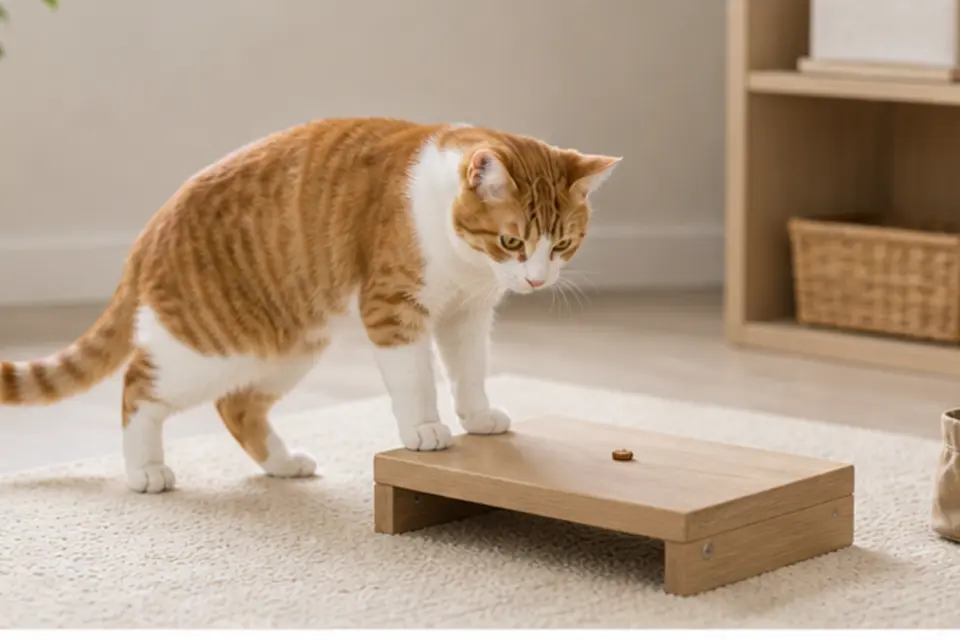
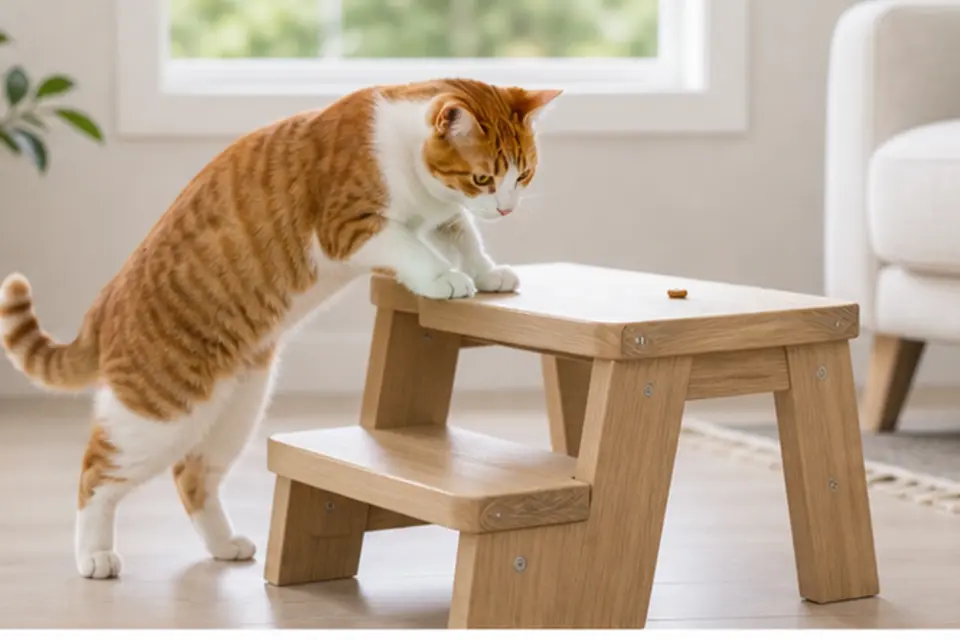
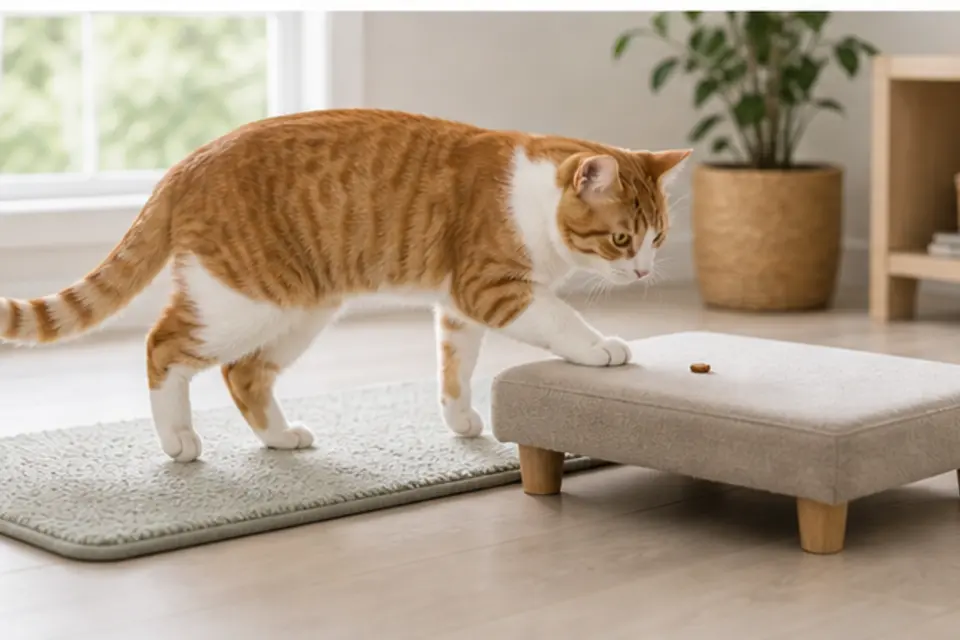
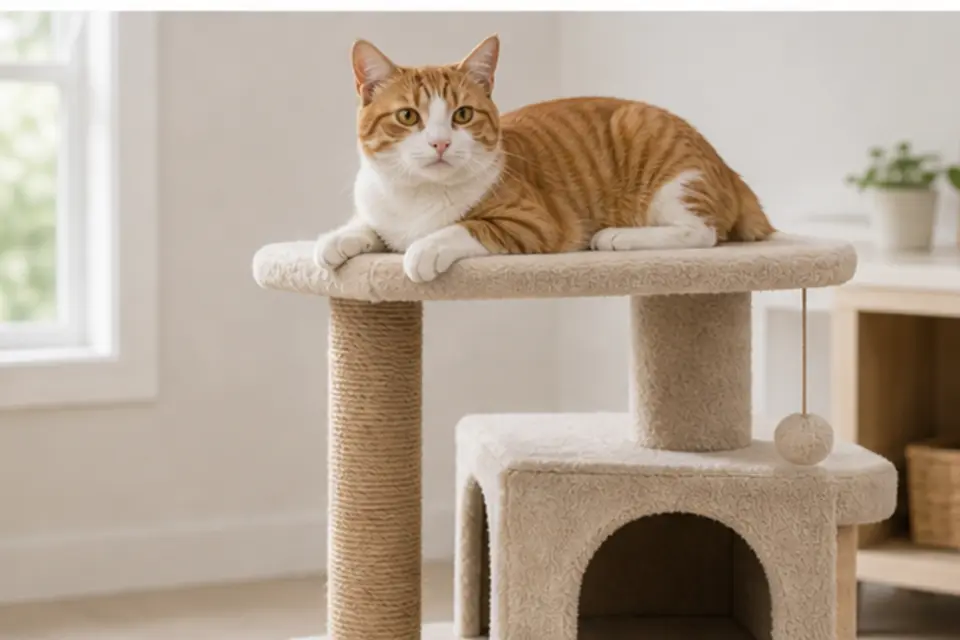
Build brave movement through tiny climbs, pauses, and rewards.
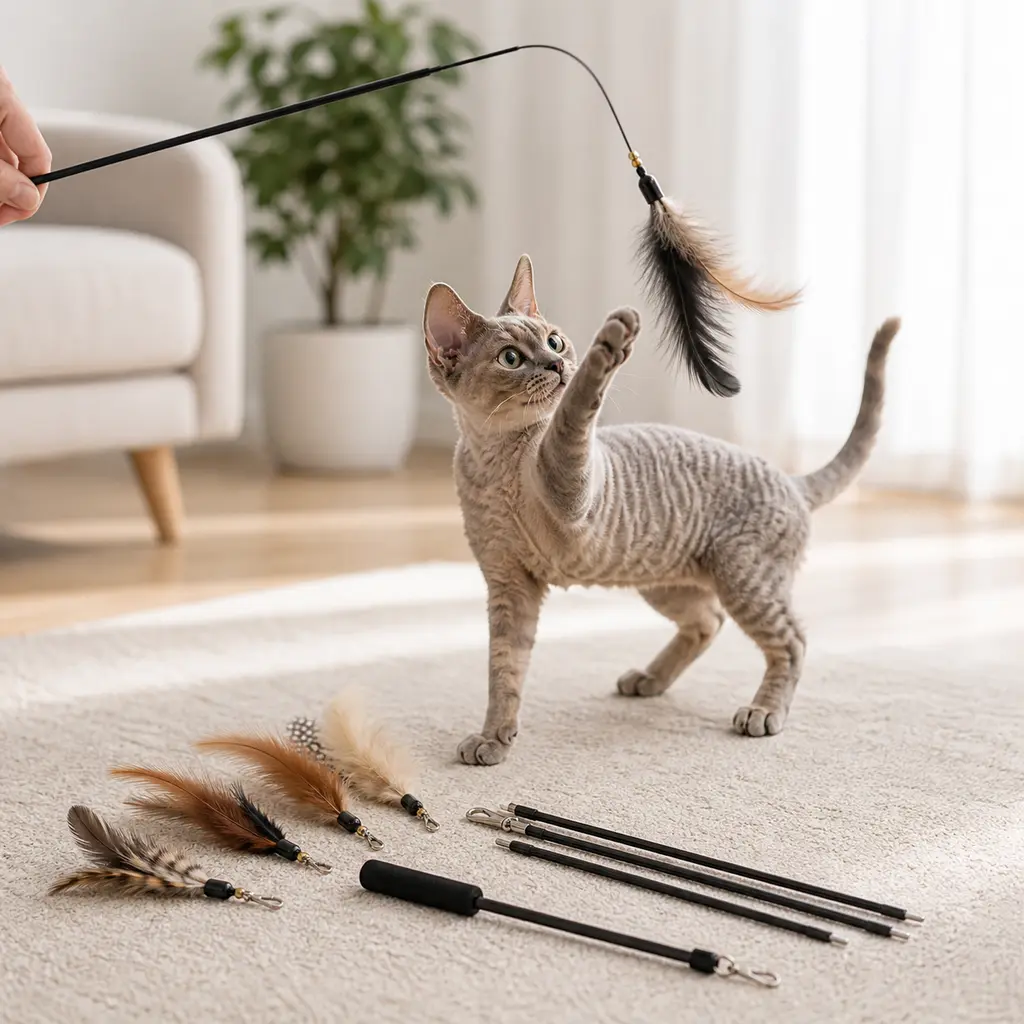
Keep the game short, safe, and satisfying. A good play routine gives your cat a real catch, then lets the energy settle.
What this game gives your cat
Confidence Ladder works best when it gives your cat a real job: watch, stalk, chase, sniff, touch, pounce, catch, or settle. The point is not constant excitement. It is a short routine that lets indoor energy land somewhere safe.
Set up the room
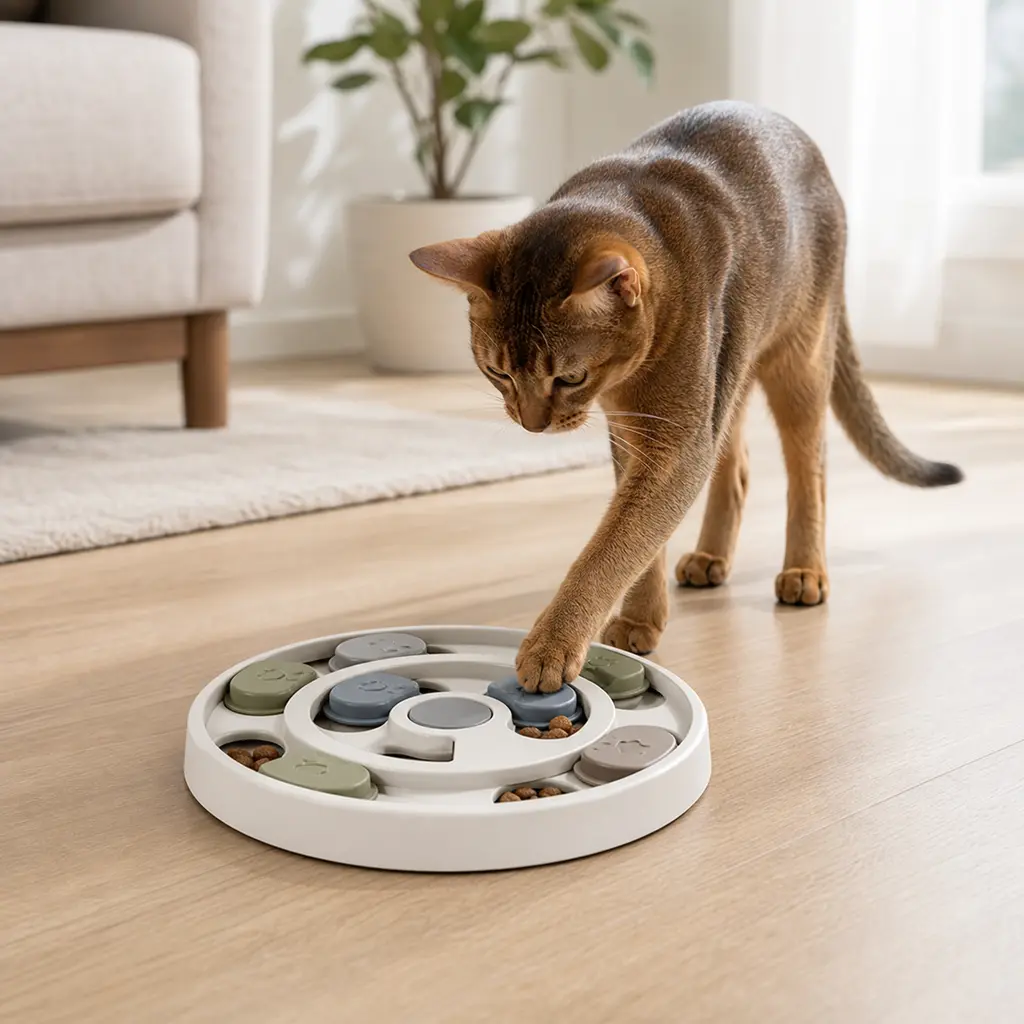
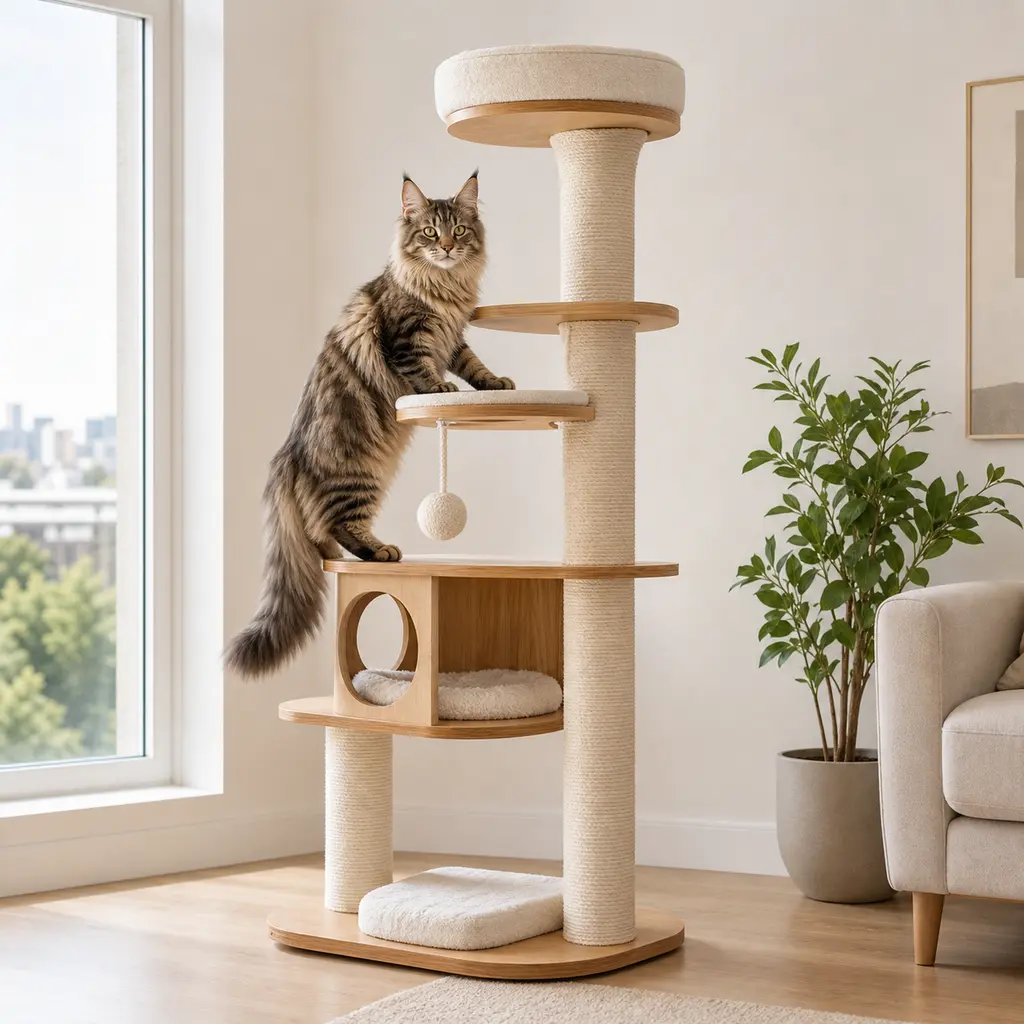
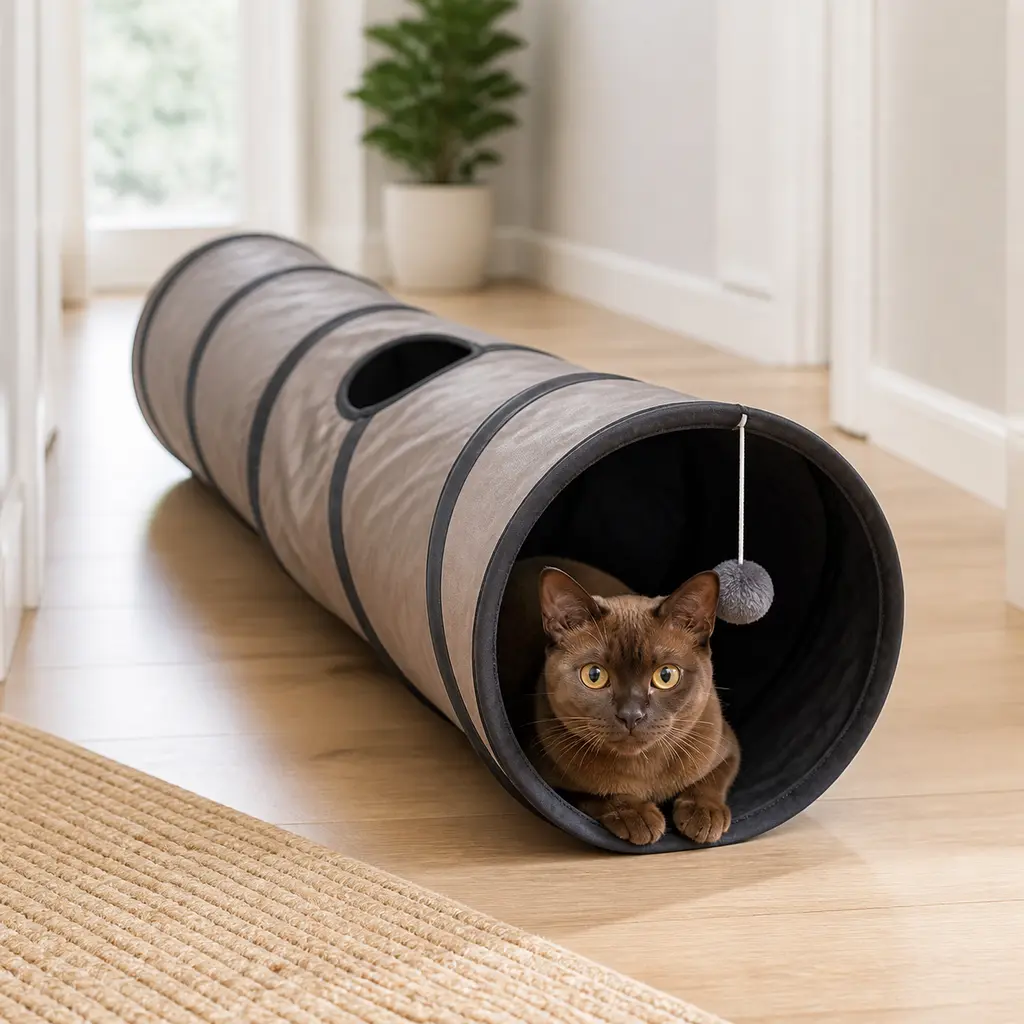
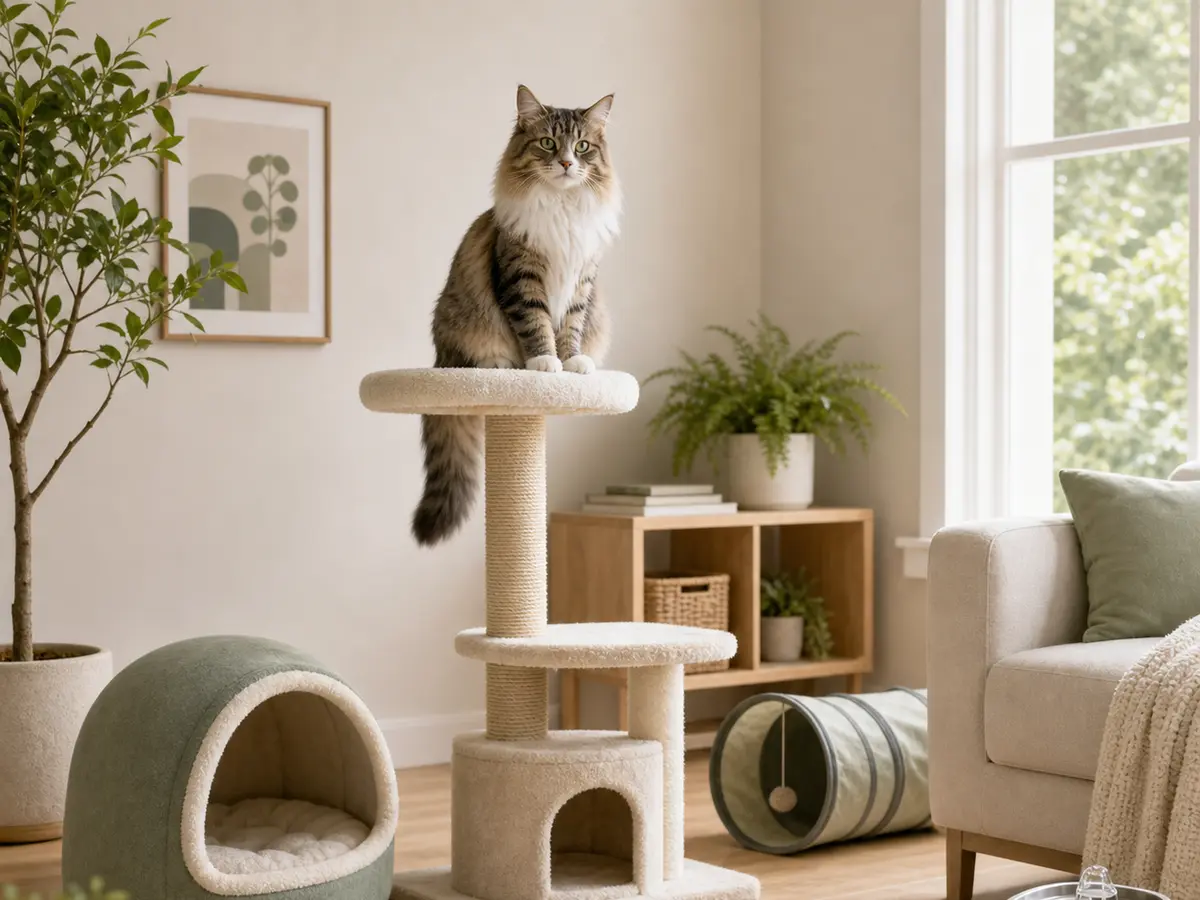
Clear a small area, choose one toy or food puzzle, and make the first round easy enough that your cat succeeds quickly. Shy cats may need distance and quiet. Bold cats may need slower movement so the game does not turn into rough play.
Play in a clean sequence
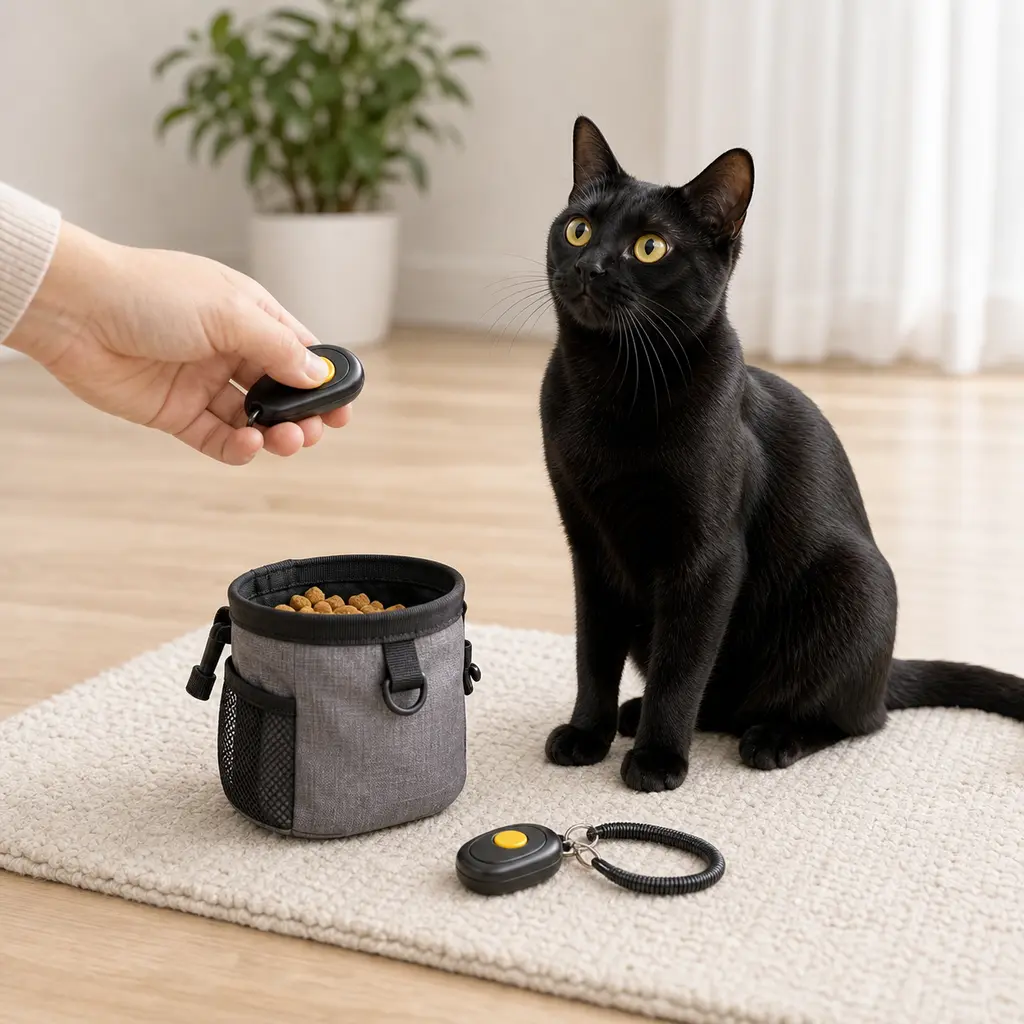
Let the game have a beginning and an ending. With confidence ladder, give your cat a chance to focus, make a move, and get a real catch or reward. A game that never lets the cat win can create frustration instead of enrichment.
Keep the body safe
Watch body language in the home room where the game happens: loose movement, curious ears, easy resets, and a soft tail usually mean it is still working. Panting, hiding, flattened ears, frantic grabbing, or sudden irritation means it is time to pause.
Make it part of the week
Rotate the game into the week instead of doing the same thing until it feels stale. A few clean minutes before dinner, after work, or before a quiet evening can be more useful than one long session that leaves everyone wound up.
Before you decide
Can your cat leave the session without being chased or carried back?
Is the reward something your cat wants today?
Is the room quiet enough for the first few attempts?
Did you stop while the cat still looked interested?
Next best moves
Practice for one or two minutes, then take a break.
Make the next rep easier if the cat hesitates, leaves, or gets grabby.
Use a vet or qualified behavior professional for pain, panic, biting, or sudden behavior changes.
Helpful setup picks
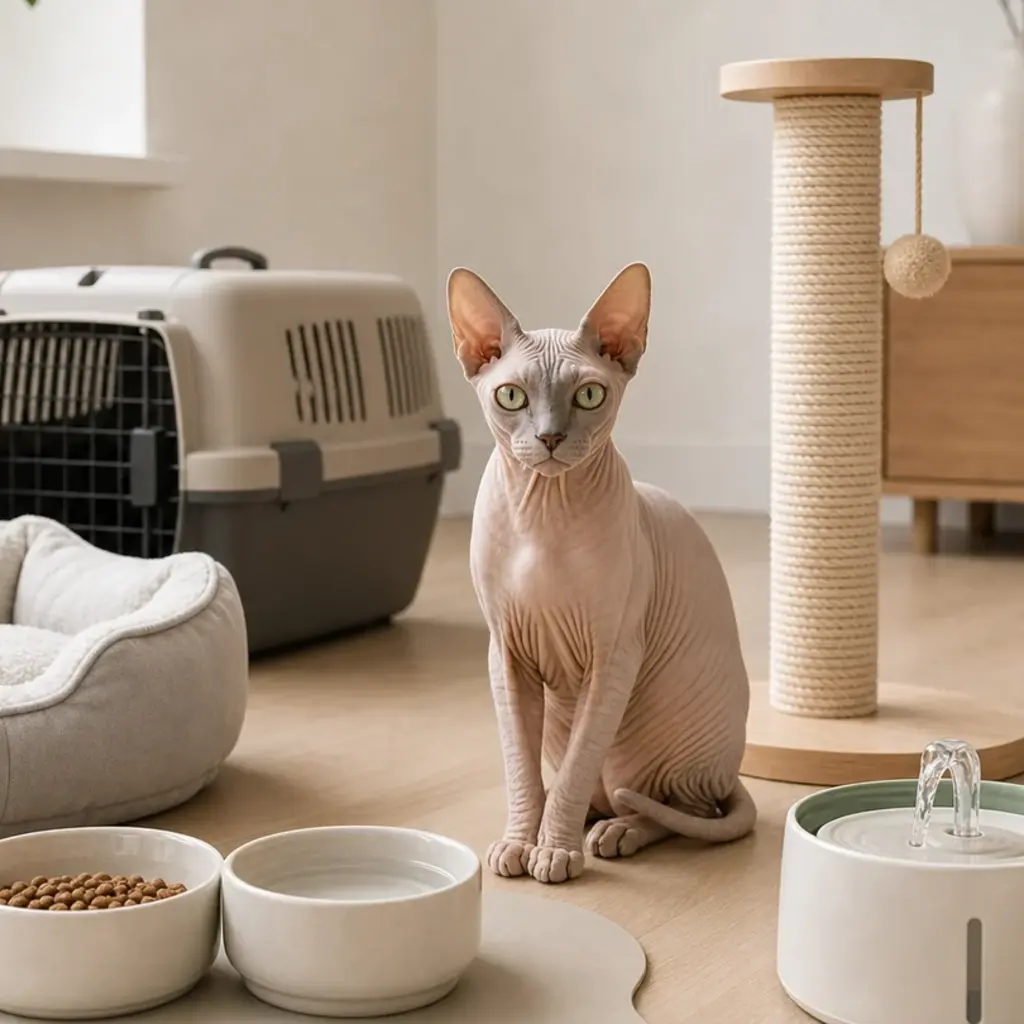
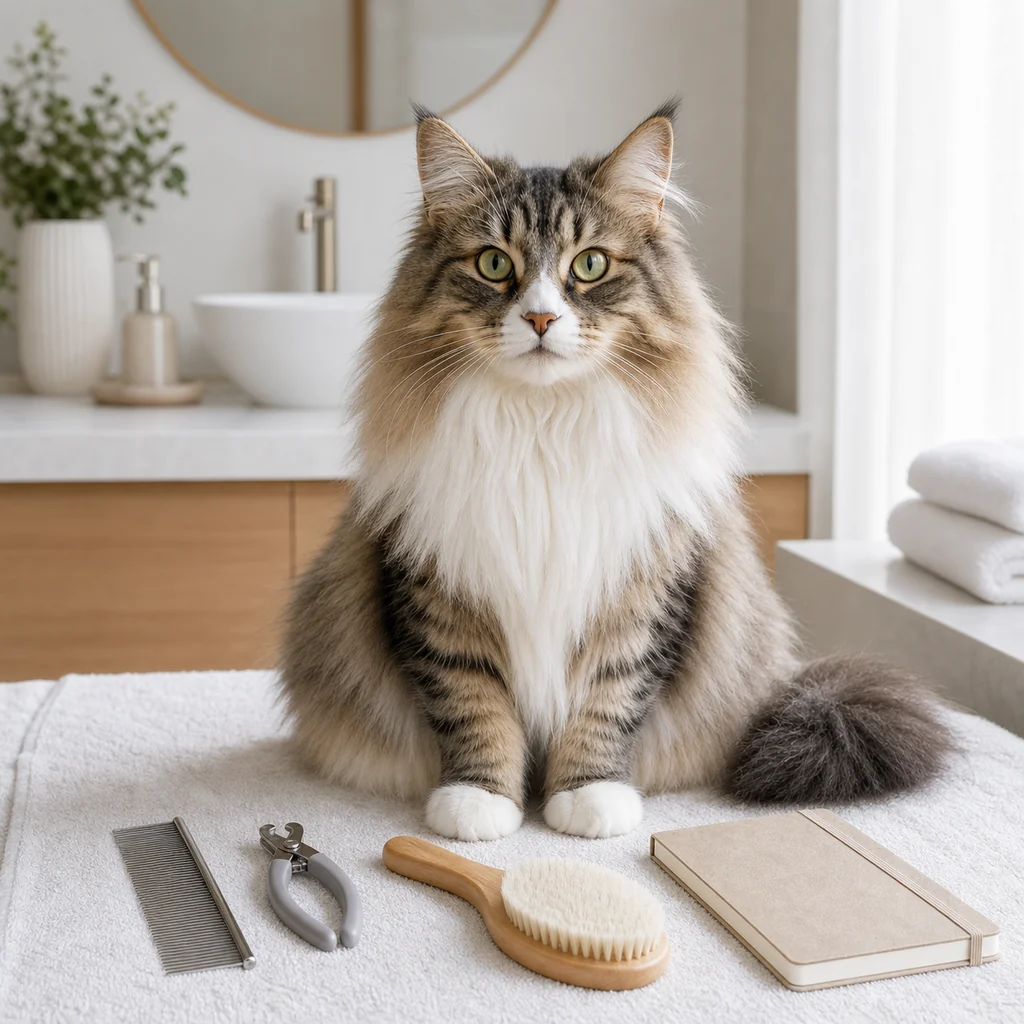
Use the smallest useful setup for confidence ladder: enough to observe, groom, travel, or handle without turning the moment into a fight.
Affiliate links: Furball Cove may earn from qualifying purchases at no extra cost to you.