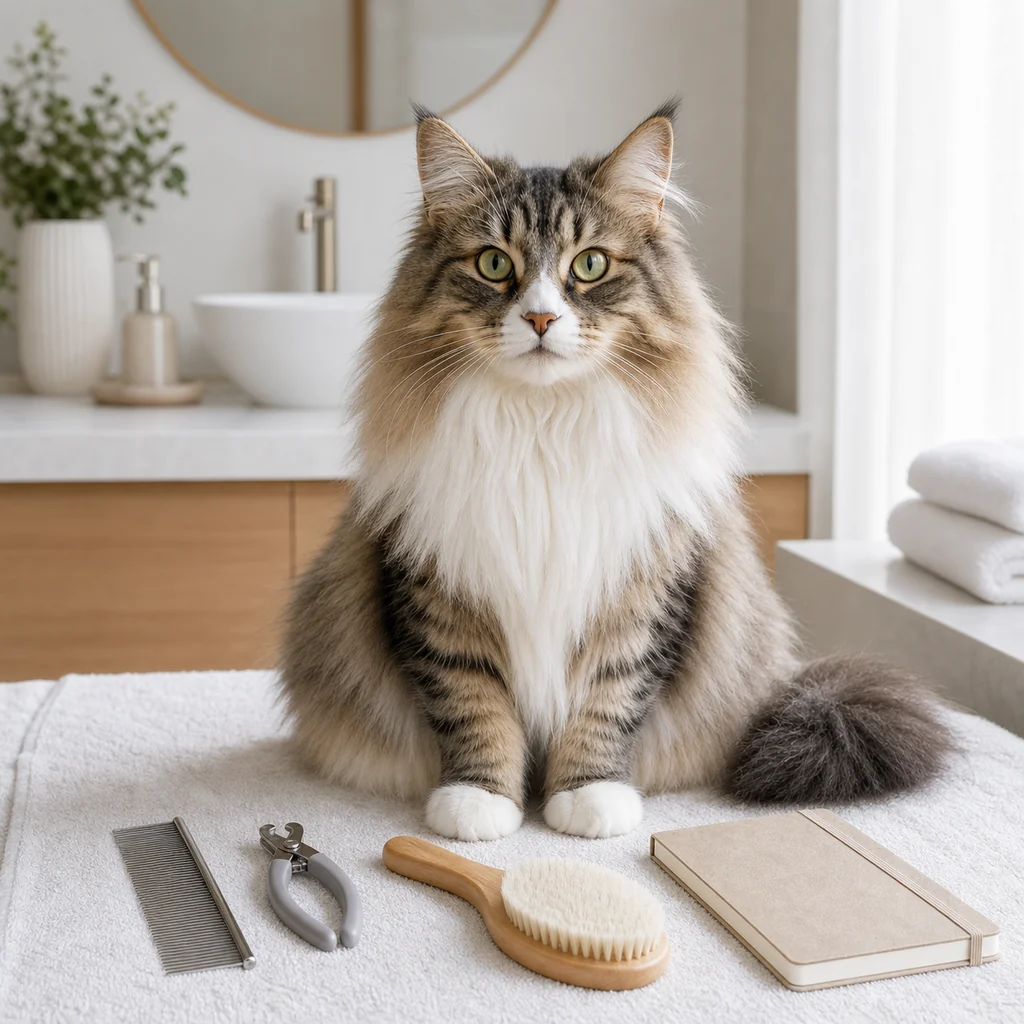
Why does my cat duck when I reach over their head?
A cat who ducks when you reach over their head is often saying the hand feels too sudden, too high, or too close to the face. Approach lower from the side and let your cat choose contact.
This is a trust-and-body-language page, not a page about making a cat tolerate handling. The goal is to make your hand predictable enough that your cat does not need to flinch first.
Stop reaching over the head
A hand coming from above can feel looming, especially to a shy cat or a cat who has been grabbed before. Offer your hand low and to the side, then pause before touching.
Treat the visible behavior as a clue rather than the whole answer. Track what happened right before it, how much choice your cat had, and how quickly the room returned to normal.
Let the cheek decide
Hold a relaxed finger near cheek level and wait. If your cat leans in, rubs, or stays loose, try a brief cheek or shoulder touch; if they duck, turn away, or tighten, stop there.
Start by making the scene calmer and safer, then look for the trigger. A cat who feels trapped, sore, or overstimulated will not learn from pressure.
Watch the whole body
Ears, pupils, whiskers, tail, shoulders, and paw position tell you whether the reach feels safe. A cat can be near you and still not be ready for a hand over the head.
Add distance, choice, and a safer outlet before adding more handling. Shorter sessions, clearer escape routes, and predictable routines often tell you more than one dramatic correction.
Practice tiny consent moments
Use calm seconds: offer a hand, wait, touch once, then stop before your cat has to dodge. Treats or a soft voice can help, but choice matters more than speed.
Get help quickly for bites, escalating fights, redirected aggression, fear that traps one cat, or sudden behavior that does not fit the cat's normal routine.
Get help if fear escalates
Talk with your veterinarian if head ducking starts suddenly or touch seems painful. Work with a qualified trainer or behavior professional if biting, panic, hiding, or reactivity is getting worse.
Get help quickly for bites, escalating fights, redirected aggression, fear that traps one cat, or sudden behavior that does not fit the cat's normal routine.
Before you decide
Are you reaching over your cat's head instead of coming low from the side?
Does your cat duck, blink hard, flatten ears, tense shoulders, or move away?
Can your cat leave, or are they cornered on a bed, couch, carrier, or hallway?
Did this start suddenly enough to ask your veterinarian about pain?
Next best moves
Approach from the side and pause before touch.
Pet cheeks or shoulders briefly only if your cat leans in.
Get veterinary or qualified behavior help if fear, pain, or biting is escalating.
Quick cat question
Why does my cat duck when I reach over their head?
The reach may feel too sudden, too high, or too close to the face. Lower your hand, come from the side, and let your cat move into contact.
Should I keep practicing until my cat accepts it?
No. Practice should stay below the flinch point. If your cat ducks, the next repetition should be easier, slower, or farther away.