What to notice at home
Keep the bag near the carrier, not buried in storage. Include copies of records, medication names and doses, microchip details, a current photo, familiar food, collapsible bowls, waste bags, pads, and a towel.
Updated
Cat travel
A cat emergency go bag should support fast, safe transport: carrier supplies, records, medication list, food and water basics, litter cleanup, ID photos, towels, and your vet and emergency-clinic contacts.
The bag is not a substitute for calling a veterinarian; it keeps the facts and essentials ready when you need to move quickly.
Keep the bag near the carrier, not buried in storage. Include copies of records, medication names and doses, microchip details, a current photo, familiar food, collapsible bowls, waste bags, pads, and a towel.
Check the bag monthly, rotate food before it expires, update records after vet visits, and make sure another person in the home knows where the carrier and contacts are.

Call a veterinarian or emergency clinic for breathing trouble, collapse, toxin exposure, urinary straining, severe injury, repeated vomiting, heat stress, or a cat who stops eating or seems suddenly very unwell.
Travel gear works best when it is practiced before the trip, so the carrier, mat, harness, or reward pouch already feels familiar.
Affiliate links: Furball Cove may earn from qualifying purchases at no extra cost to you.
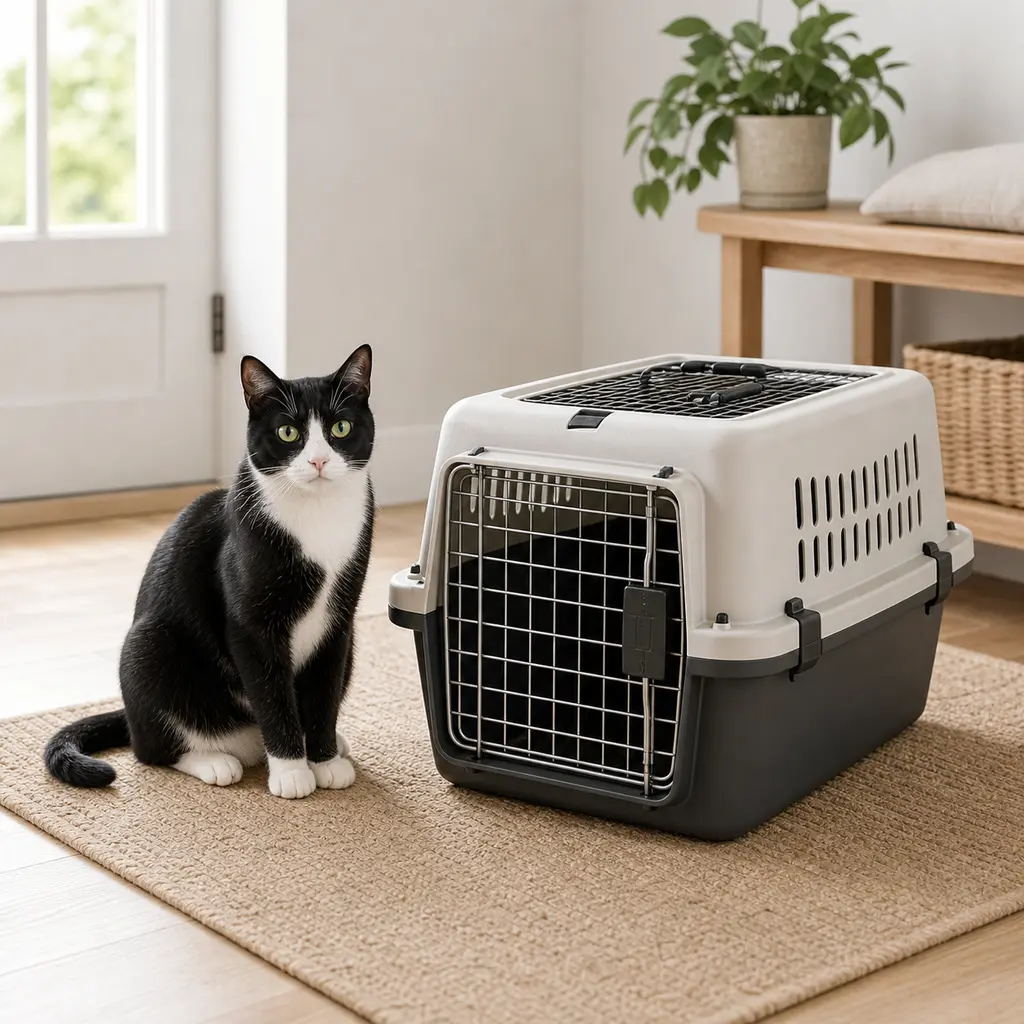
A sturdy carrier keeps travel and vet trips more controlled than carrying a loose cat.
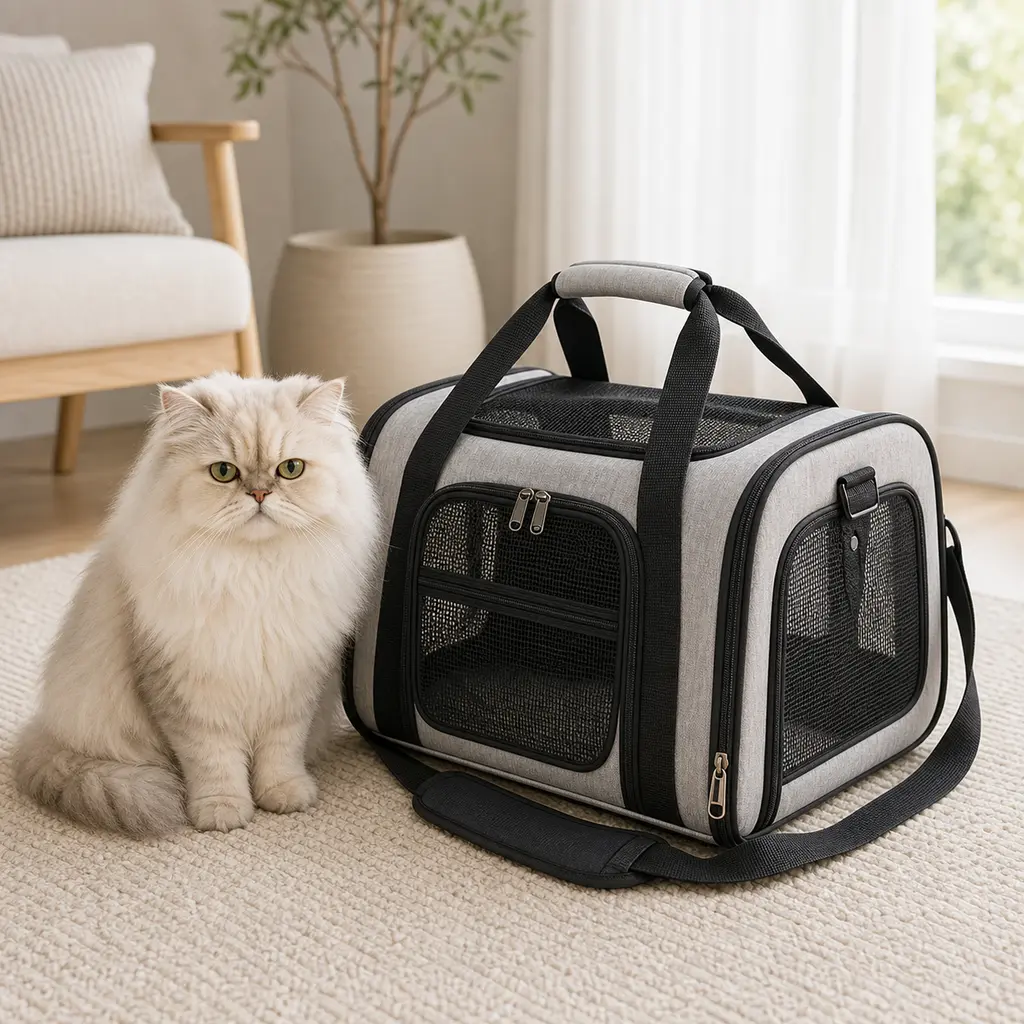
A soft carrier can work for calm, supervised travel when it fits the cat and trip.
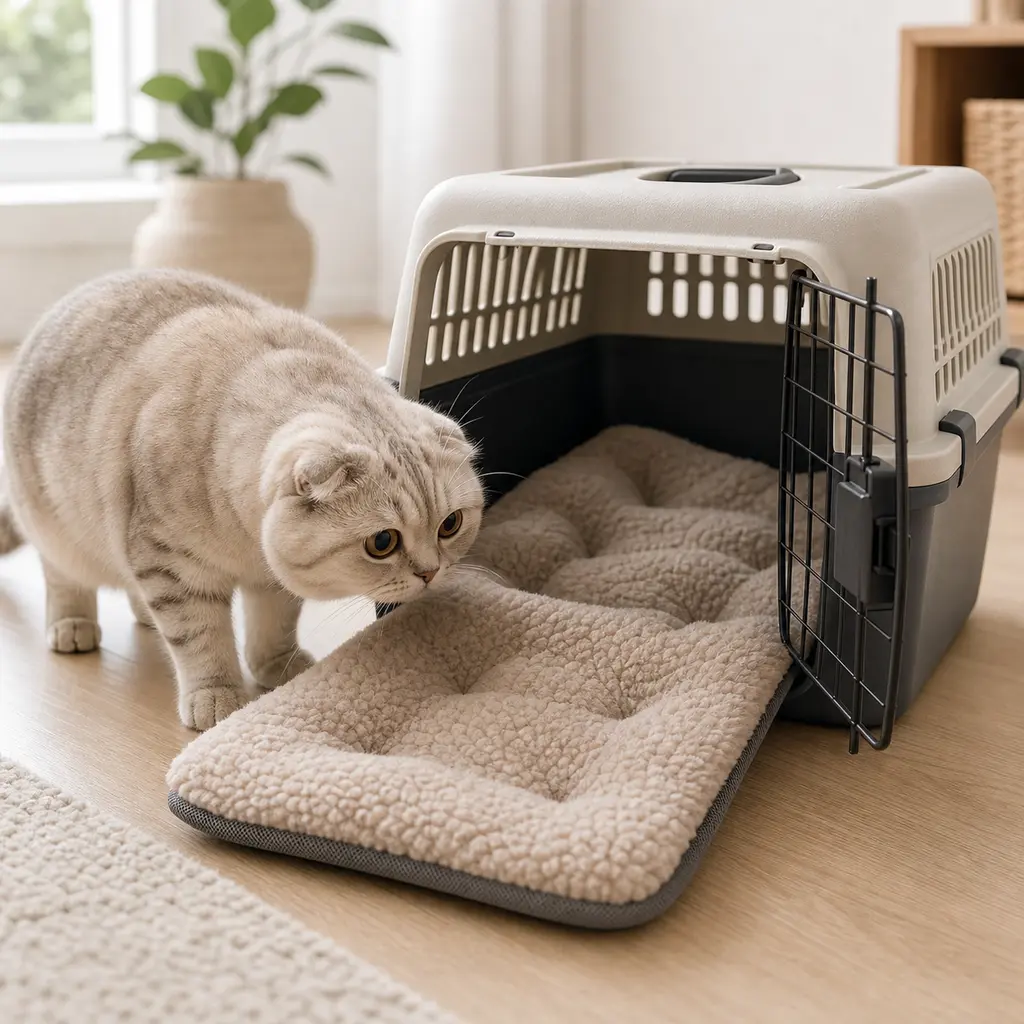
A familiar mat can help the carrier smell and feel less sudden.
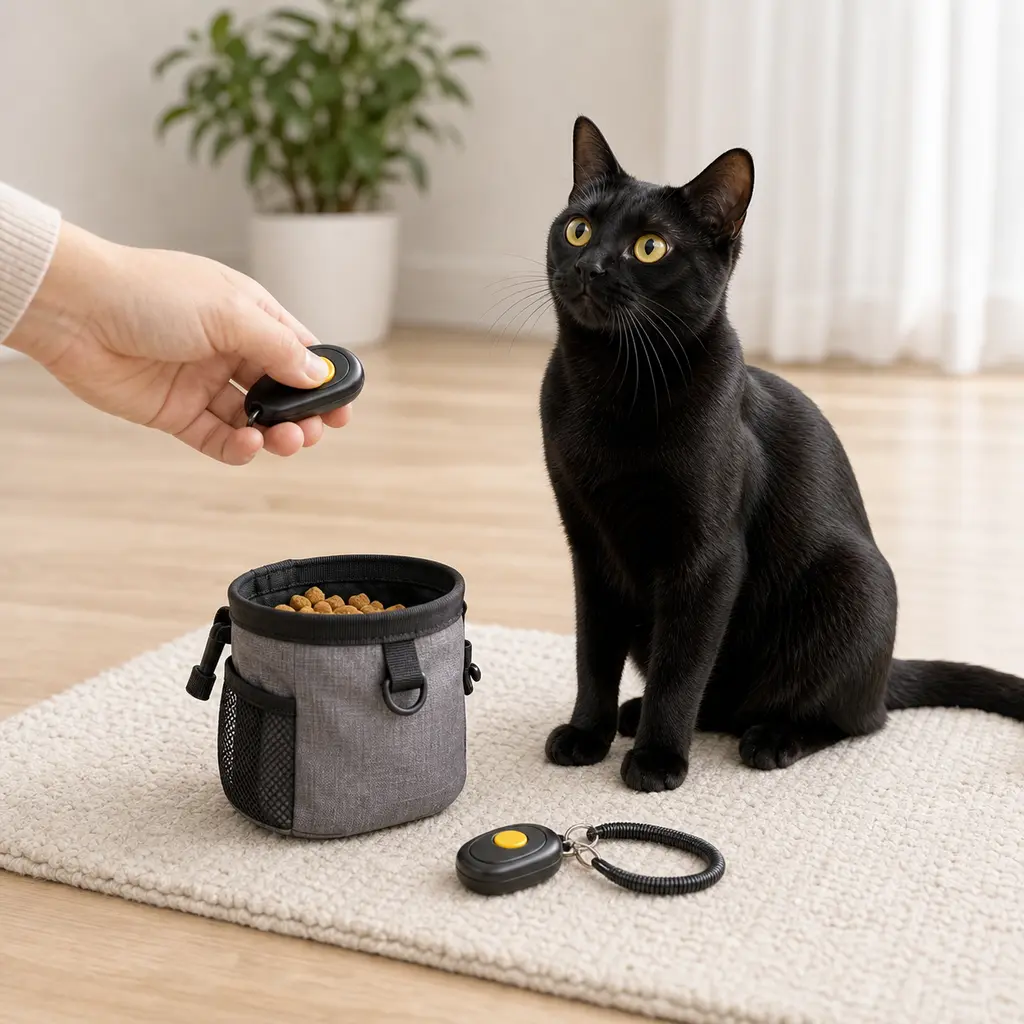
Small rewards help carrier, harness, and car practice stay low pressure.
A cat emergency go bag should support fast, safe transport: carrier supplies, records, medication list, food and water basics, litter cleanup, ID photos, towels, and your vet and emergency-clinic contacts.
Call a veterinarian or emergency clinic for breathing trouble, collapse, toxin exposure, urinary straining, severe injury, repeated vomiting, heat stress, or a cat who stops eating or seems suddenly very unwell.