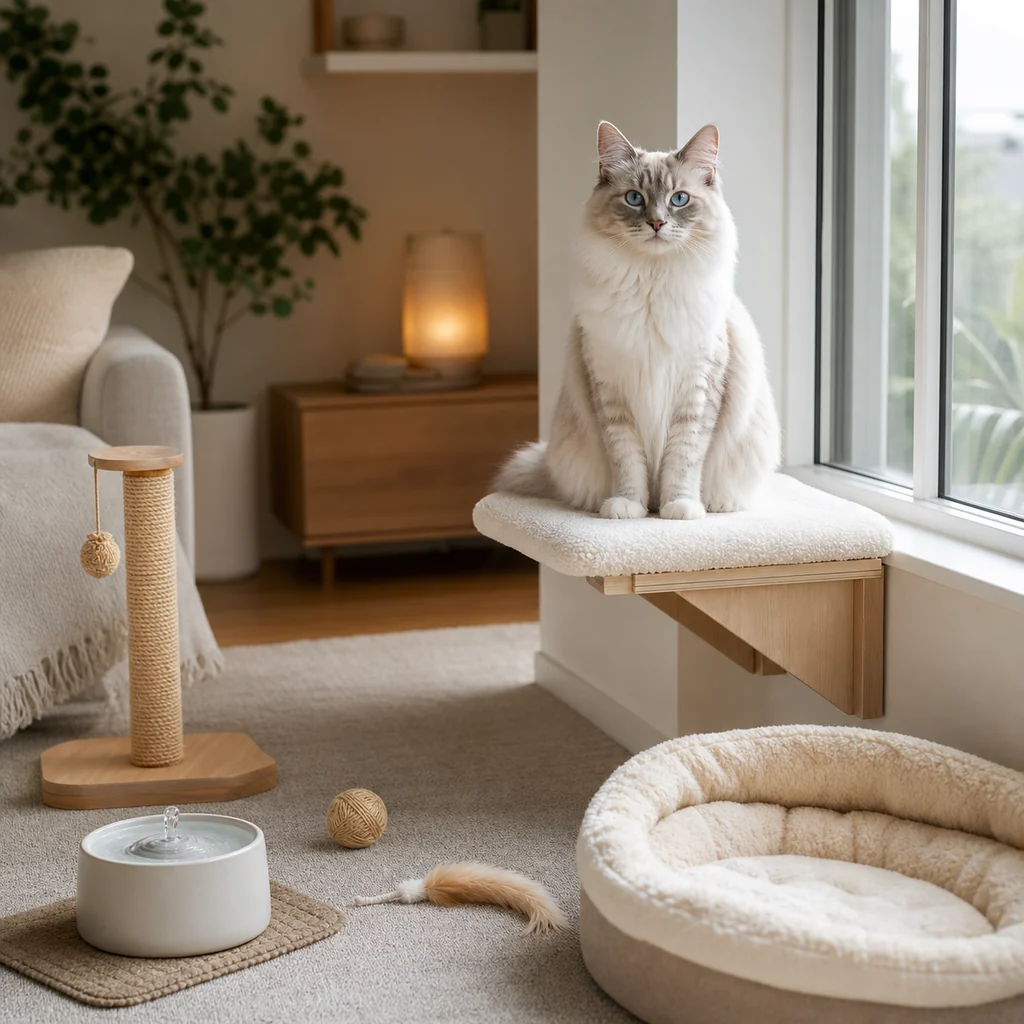
What to notice at home
Check fit, strap pressure, noise, footing, treats, room choice, and whether the harness predicts being carried outside. Some cats also freeze because the gear feels strange across shoulders or belly.
Updated
Cat travel
A cat who freezes in a harness is usually saying the step is too big; go back to easier indoor practice and rebuild comfort before asking for movement.
Freezing is not stubbornness. It is often uncertainty, pressure on the body, or fear of the next thing that usually follows the harness.
Check fit, strap pressure, noise, footing, treats, room choice, and whether the harness predicts being carried outside. Some cats also freeze because the gear feels strange across shoulders or belly.
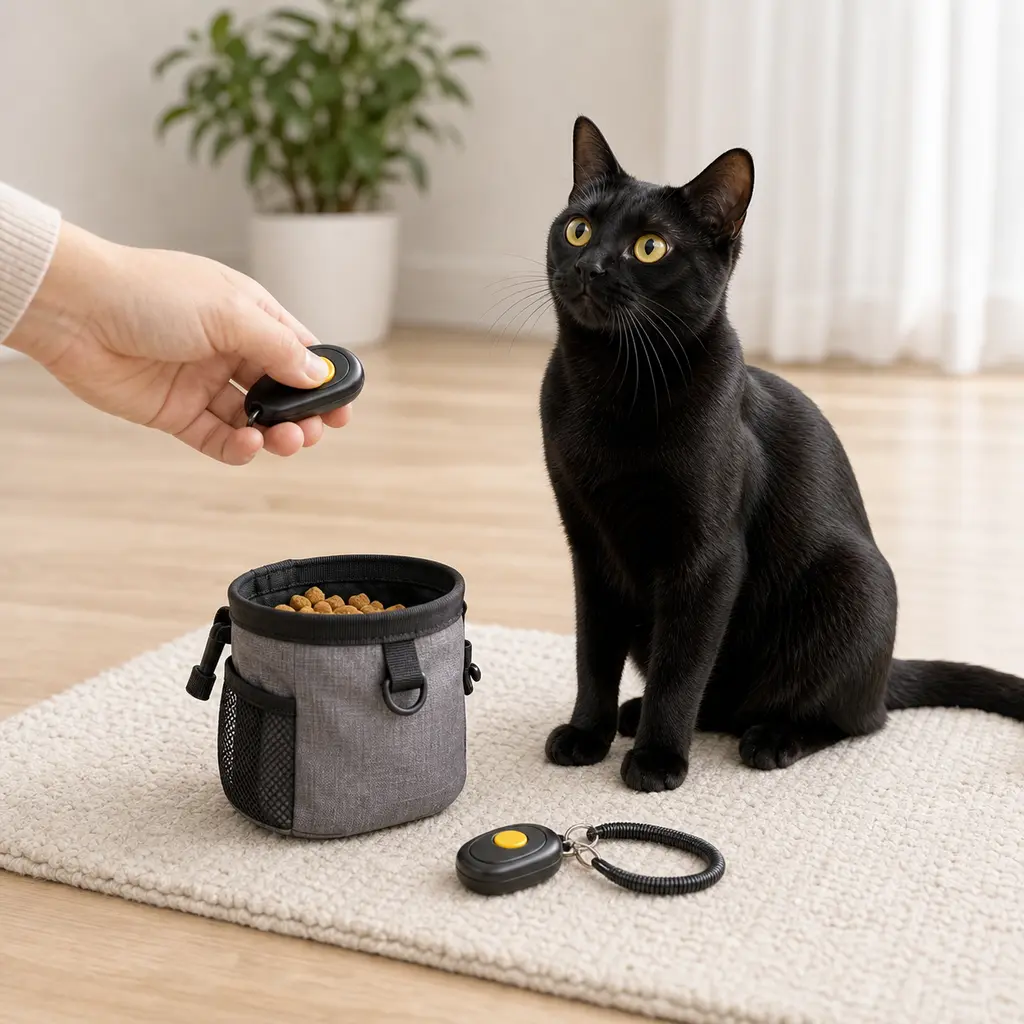
Return to one-second sessions: harness on the floor, treat, harness touch, treat, brief drape, treat, then remove it. Reward tiny head turns or steps and end while your cat can still recover calmly.
Stop if your cat pants, thrashes, bites, hides for a long time, or injures themselves. Use indoor enrichment instead if harness work keeps causing fear.
Travel gear works best when it is practiced before the trip, so the carrier, mat, harness, or reward pouch already feels familiar.
Affiliate links: Furball Cove may earn from qualifying purchases at no extra cost to you.
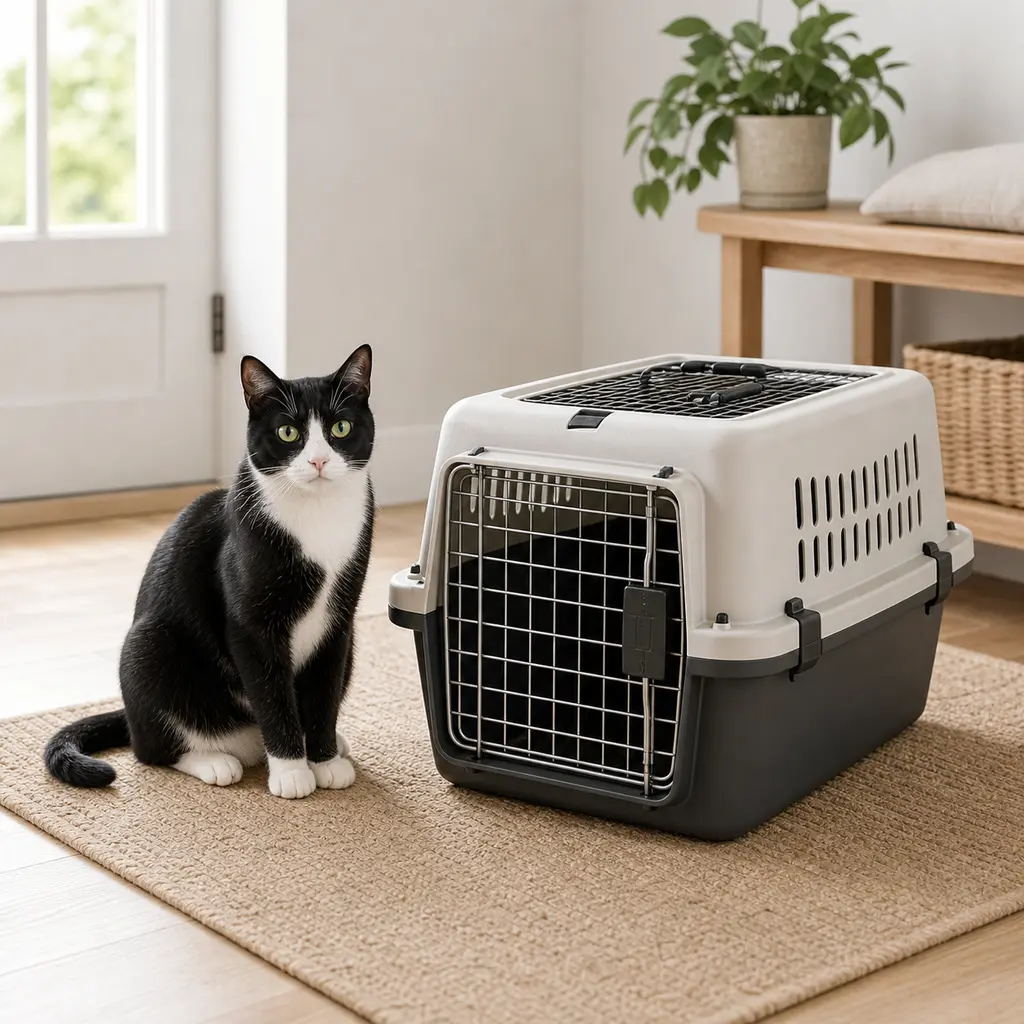
A sturdy carrier keeps travel and vet trips more controlled than carrying a loose cat.
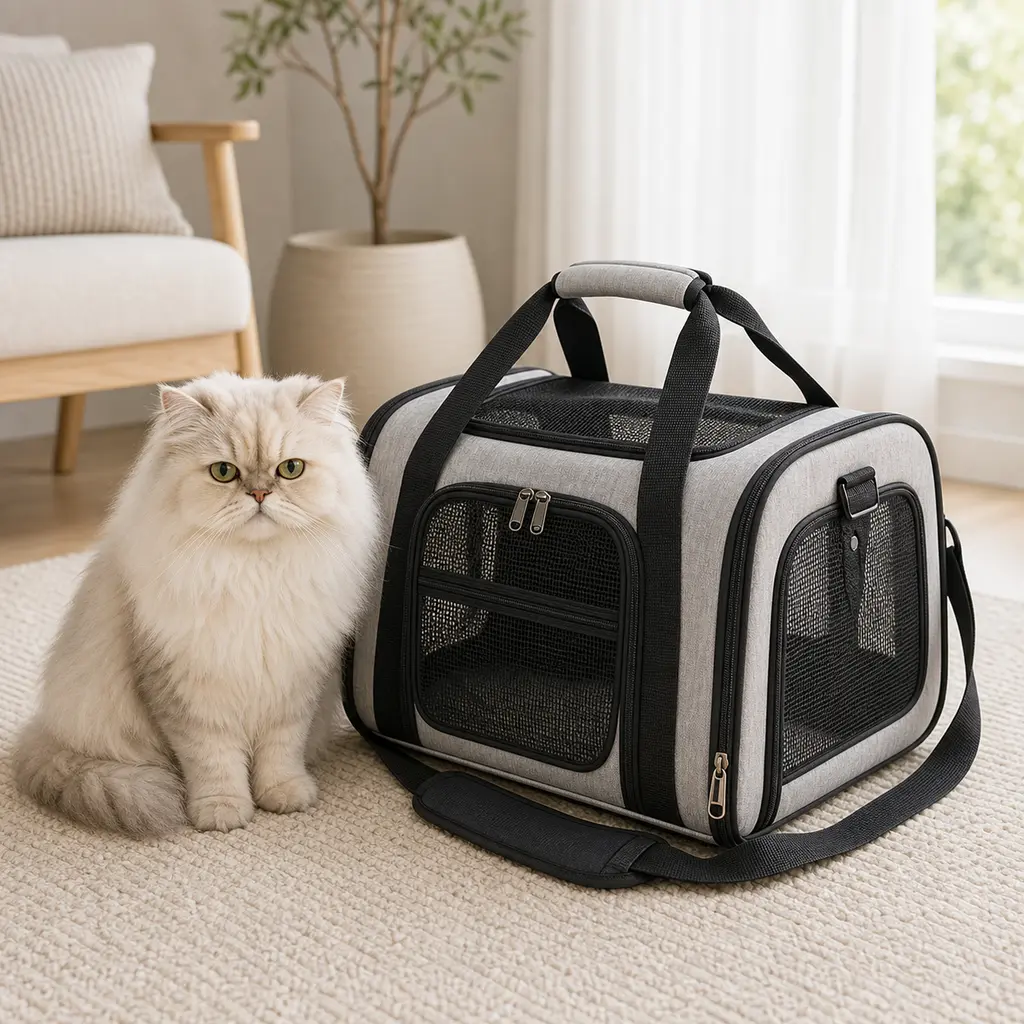
A soft carrier can work for calm, supervised travel when it fits the cat and trip.
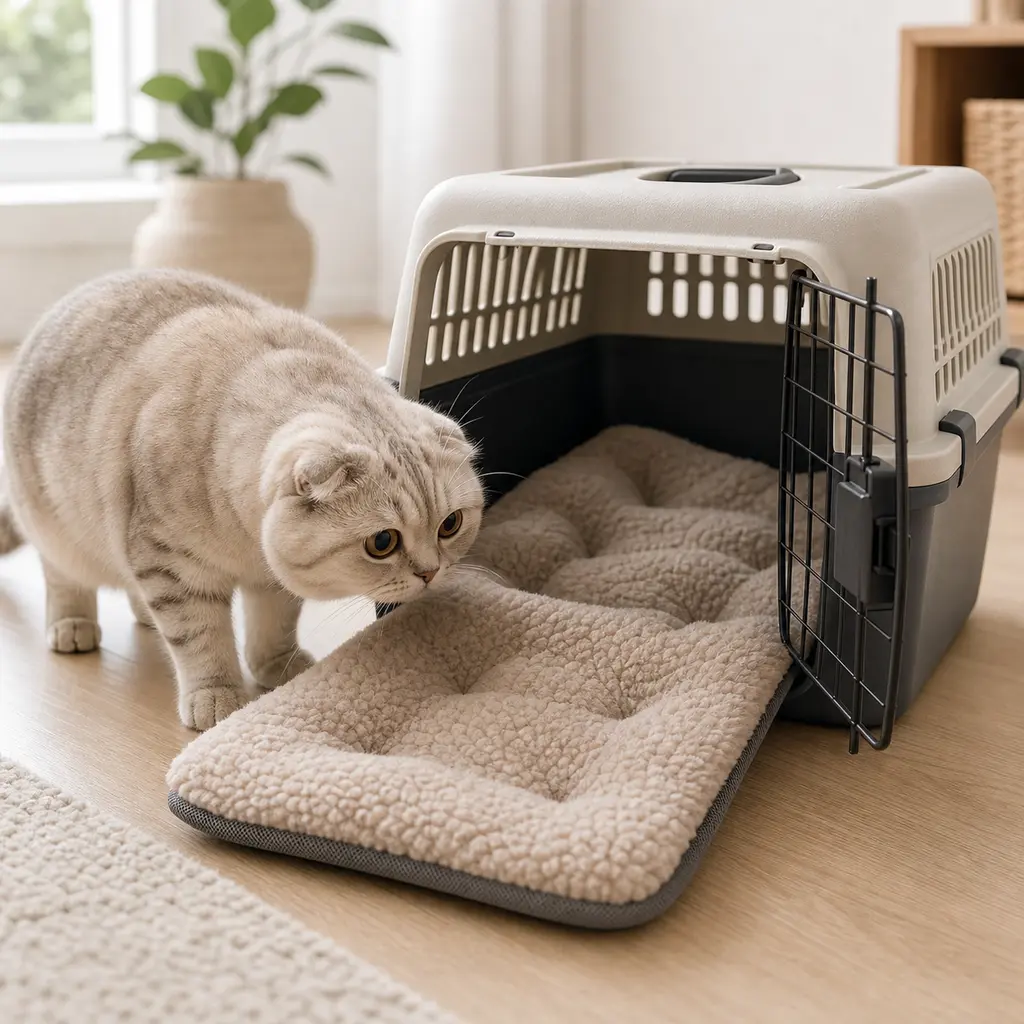
A familiar mat can help the carrier smell and feel less sudden.
Small rewards help carrier, harness, and car practice stay low pressure.
A cat who freezes in a harness is usually saying the step is too big; go back to easier indoor practice and rebuild comfort before asking for movement.
Stop if your cat pants, thrashes, bites, hides for a long time, or injures themselves. Use indoor enrichment instead if harness work keeps causing fear.