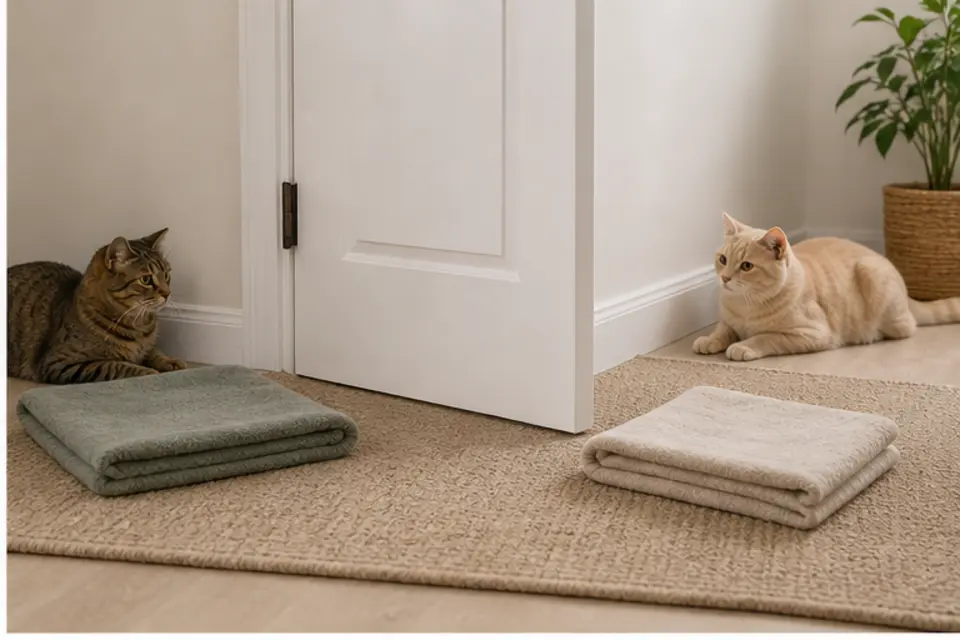
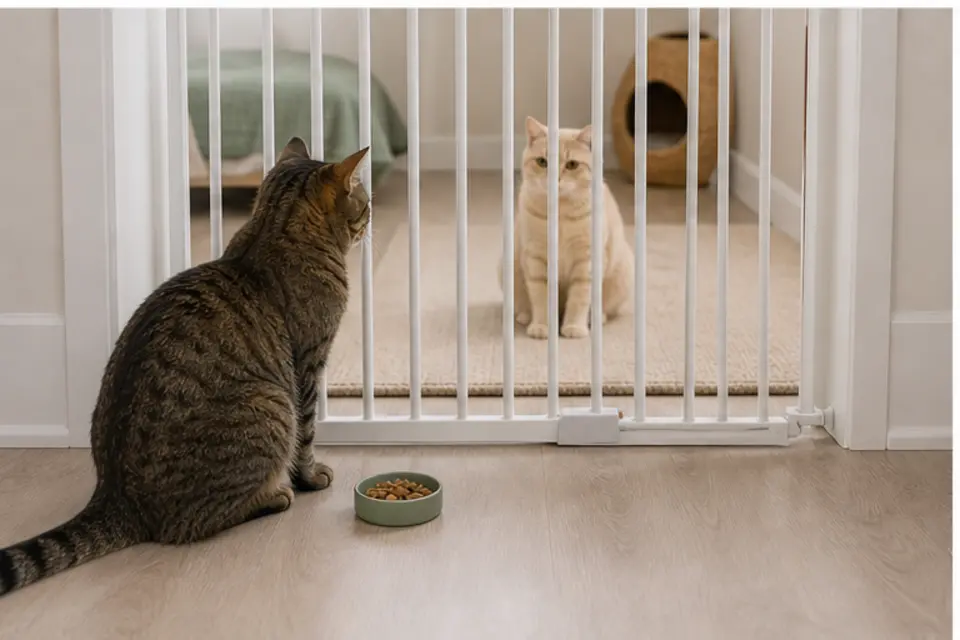
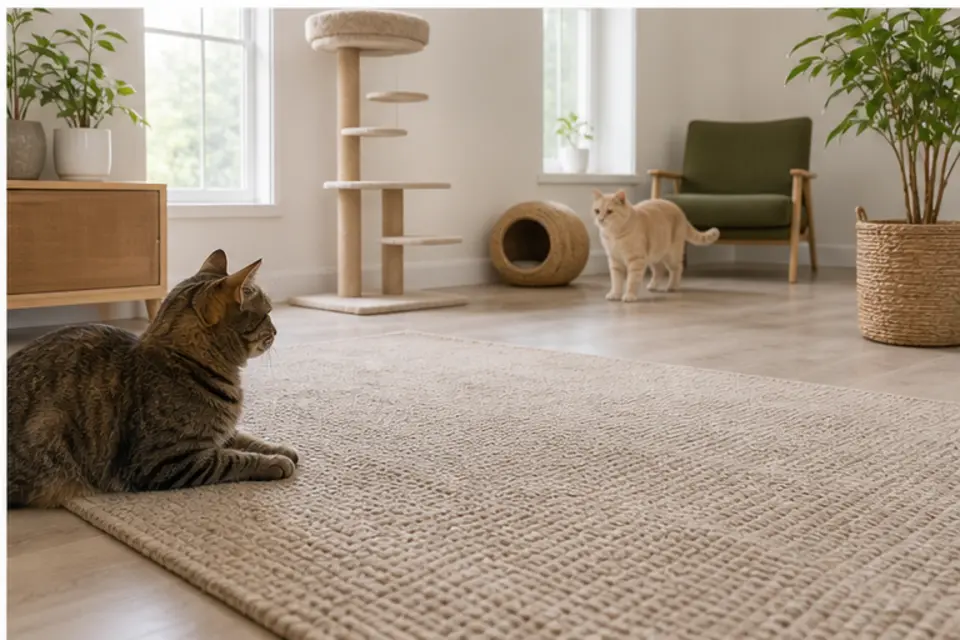
Use scent, space, and slow steps for calmer first meetings.
Look at the setup and the stress level before assuming the cat is being difficult. Better access and calmer routines usually teach more than pressure.
The household goal
Read new cat introductions as information about the room, route, timing, and stress level. Cats rarely change behavior for no reason, so look at access, noise, hiding places, other pets, and whether pain could be part of the pattern.
Fix access before attitude
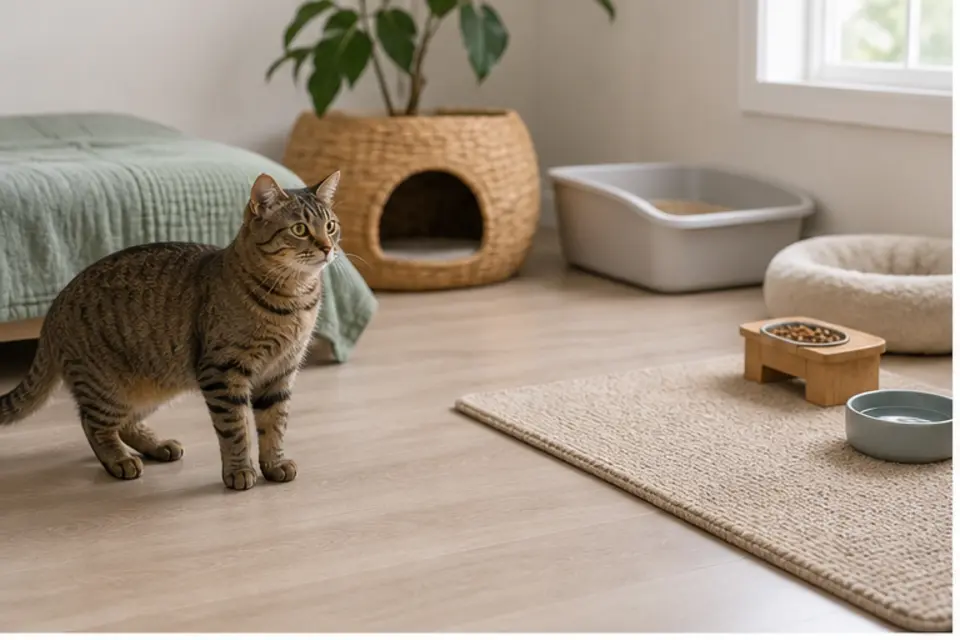
Make the calmer room path easier to choose. Lower stress by opening a doorway, moving a resource out of a busy hallway, adding vertical space, or giving the cat a retreat where nobody follows.
Give a better option
Change one part of the home setup, then watch several normal days. Write down when the behavior happens: after meals, overnight, near a doorway, around the litter box, or when another pet is nearby.
Keep the pattern predictable
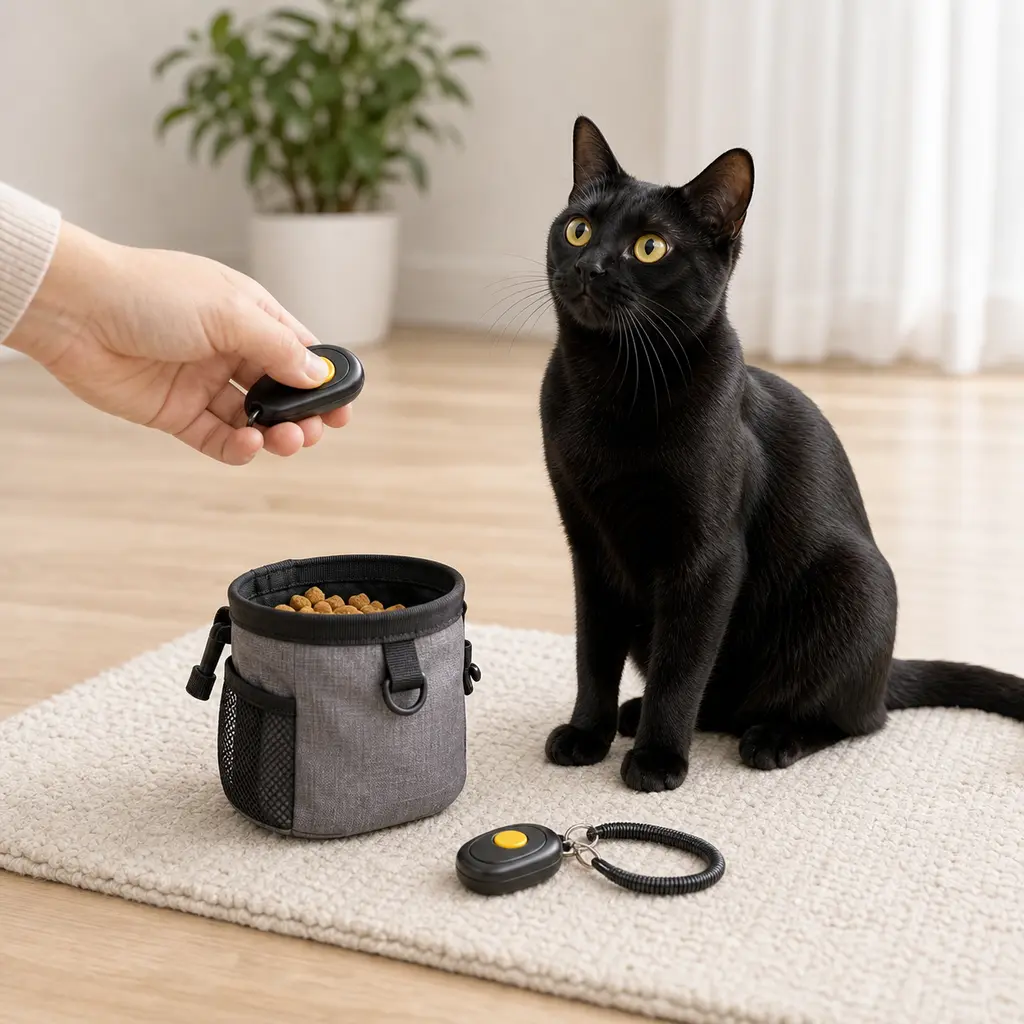
Reward the better pattern when you see it. For new cat introductions, that may mean a treat after a calm choice, a play break before tension builds, or a predictable routine that makes the next good choice obvious.
Watch for pain or fear
Sudden litter changes, hiding under the bed, resource guarding near the bowl, pain signs, appetite shifts, or repeated trips to the box should not be treated like stubbornness. Call your veterinarian, and use a qualified behavior professional when biting, fear, or safety is part of the problem.
Before you decide
Can your cat leave the session without being chased or carried back?
Is the reward something your cat wants today?
Is the room quiet enough for the first few attempts?
Did you stop while the cat still looked interested?
Next best moves
Practice for one or two minutes, then take a break.
Make the next rep easier if the cat hesitates, leaves, or gets grabby.
Use a vet or qualified behavior professional for pain, panic, biting, or sudden behavior changes.
Helpful setup picks
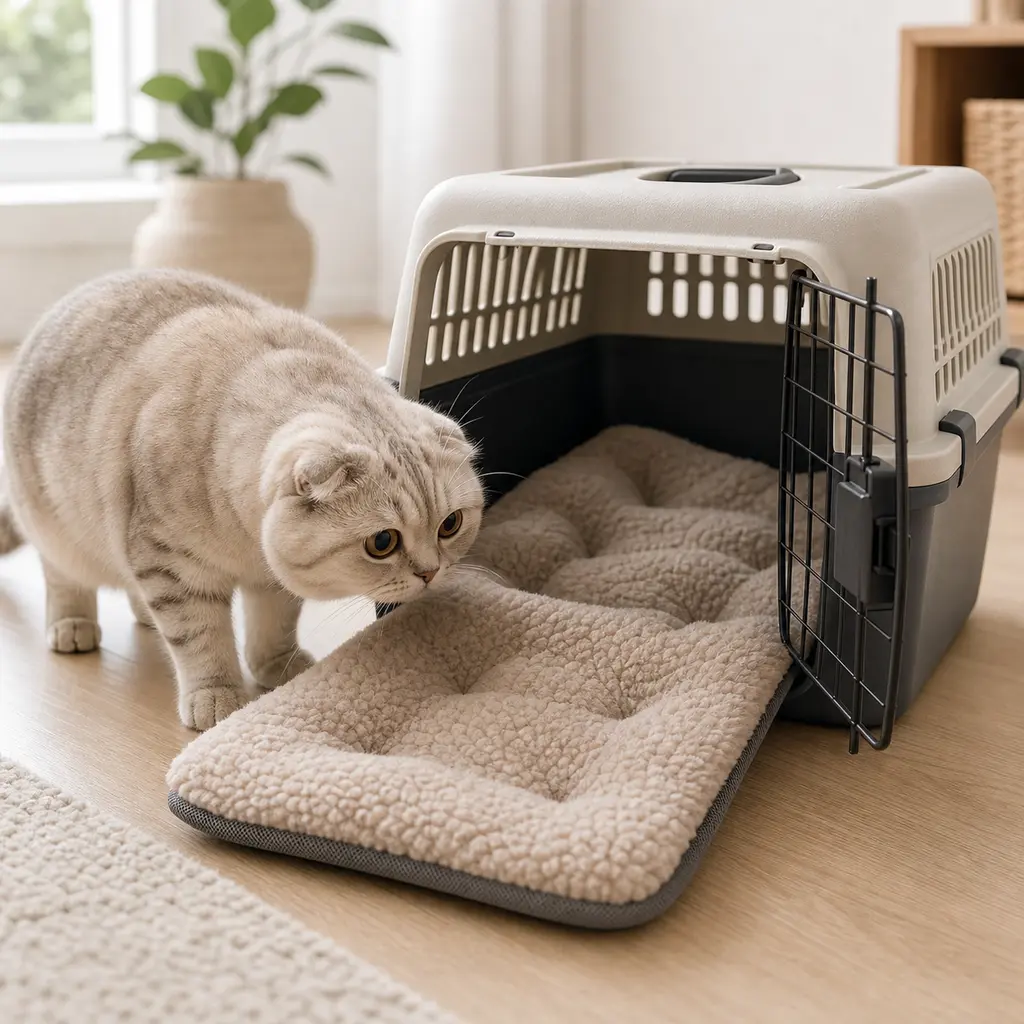
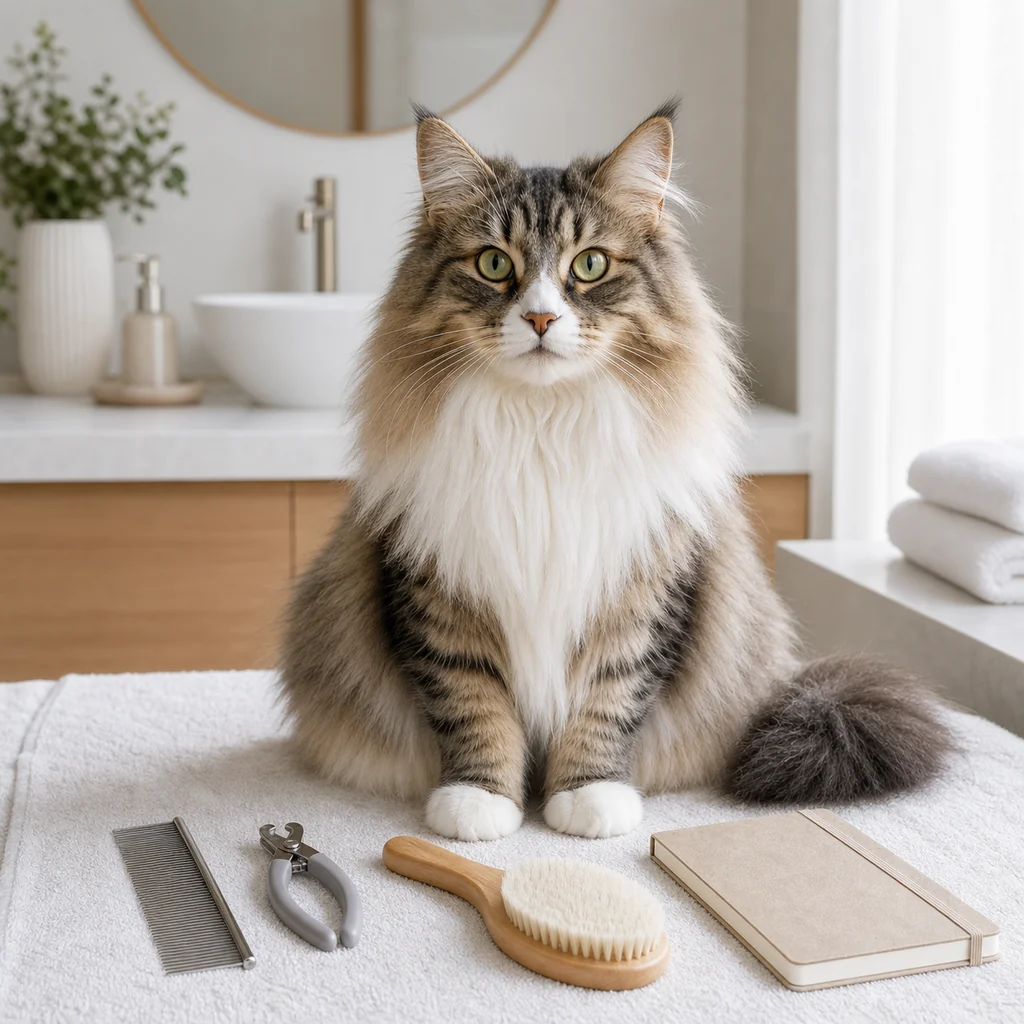
Use the smallest useful setup for new cat introductions: enough to observe, groom, travel, or handle without turning the moment into a fight.
Affiliate links: Furball Cove may earn from qualifying purchases at no extra cost to you.