An overweight cat needs a measured, safe plan, not a sudden crash diet.
Weight loss for cats should feel boring and trackable: measured meals, tiny treats, more movement, and a veterinarian involved when the change is significant. Keep overweight cat food & weight loss boring enough to read: one bowl change, one texture change, and a few normal days before you judge it.
Measure the whole day
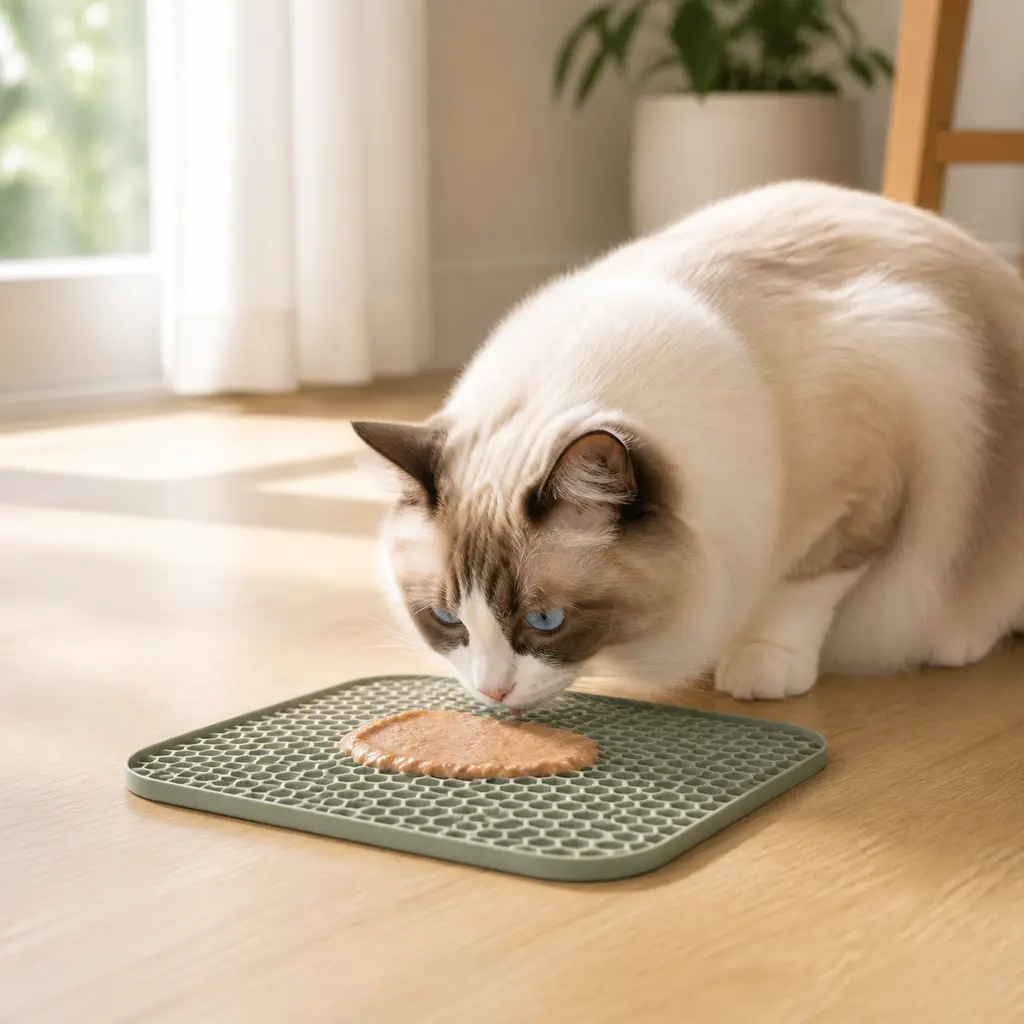
Count meals, grazing, treats, toppers, stolen food, and lick mats. A few extra bites matter more in a cat-sized body than they do in ours. For overweight cat food & weight loss, one clean change at a time is easier to read than three new foods in the same week.
Use enrichment without overfeeding
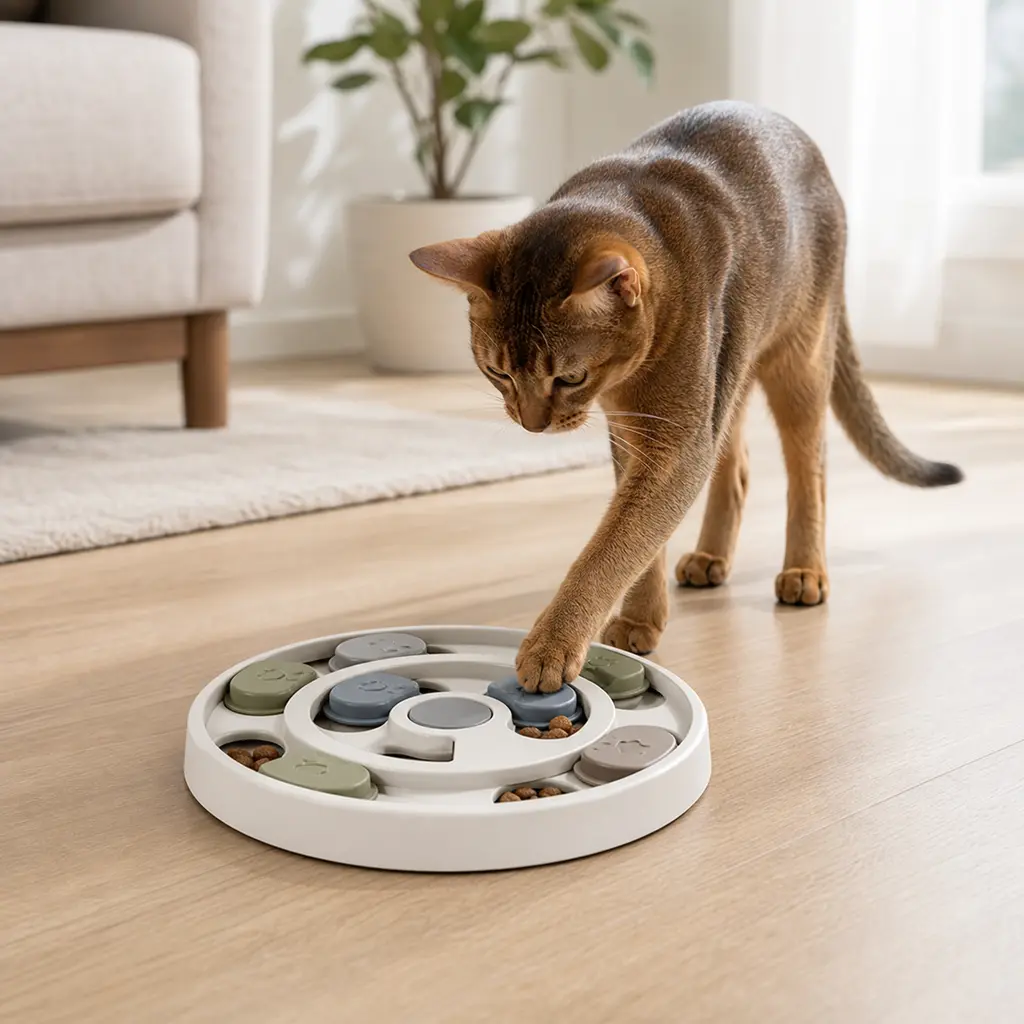
Puzzle feeders and short play sessions can make meals more satisfying and add movement. Keep puzzles easy enough that your cat actually eats the planned food. Keep overweight cat food & weight loss simple enough that you can still notice water interest, stool, energy, and leftovers.
Check shape by hand
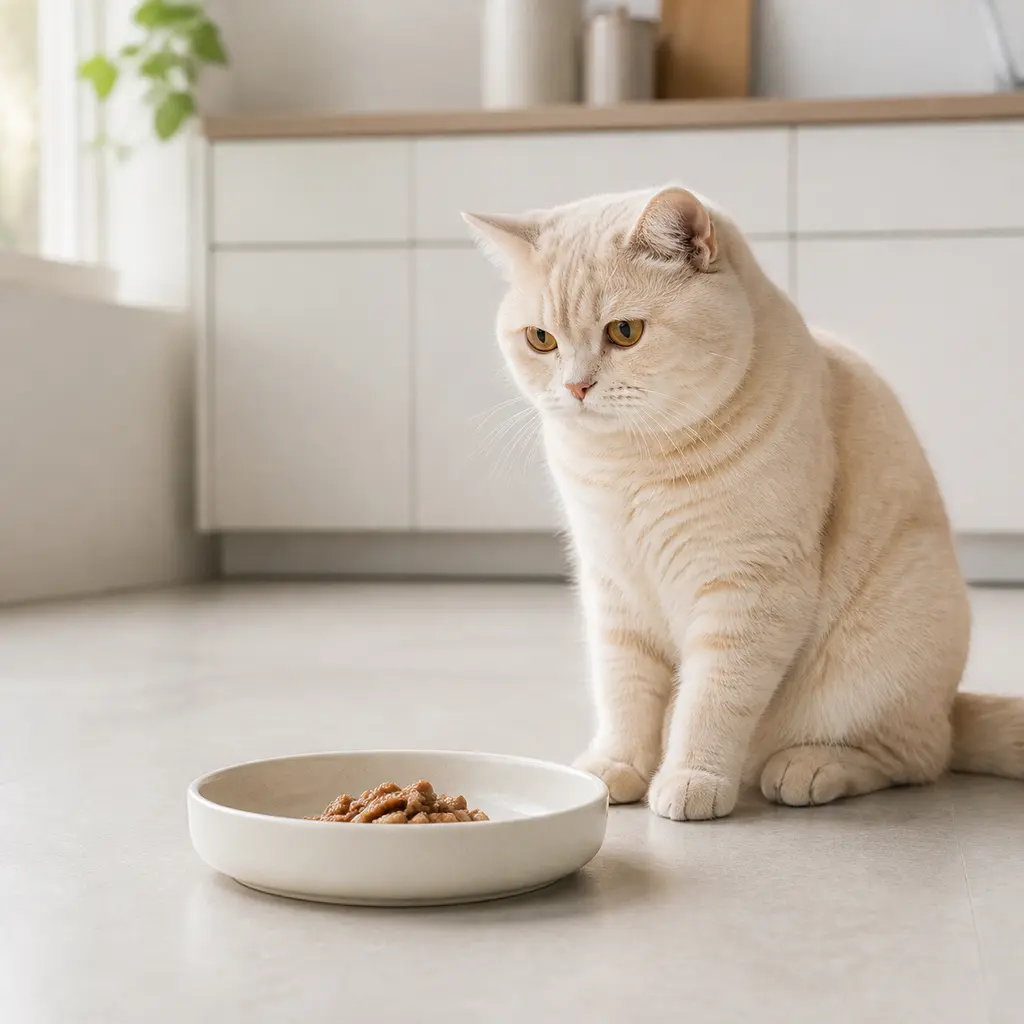
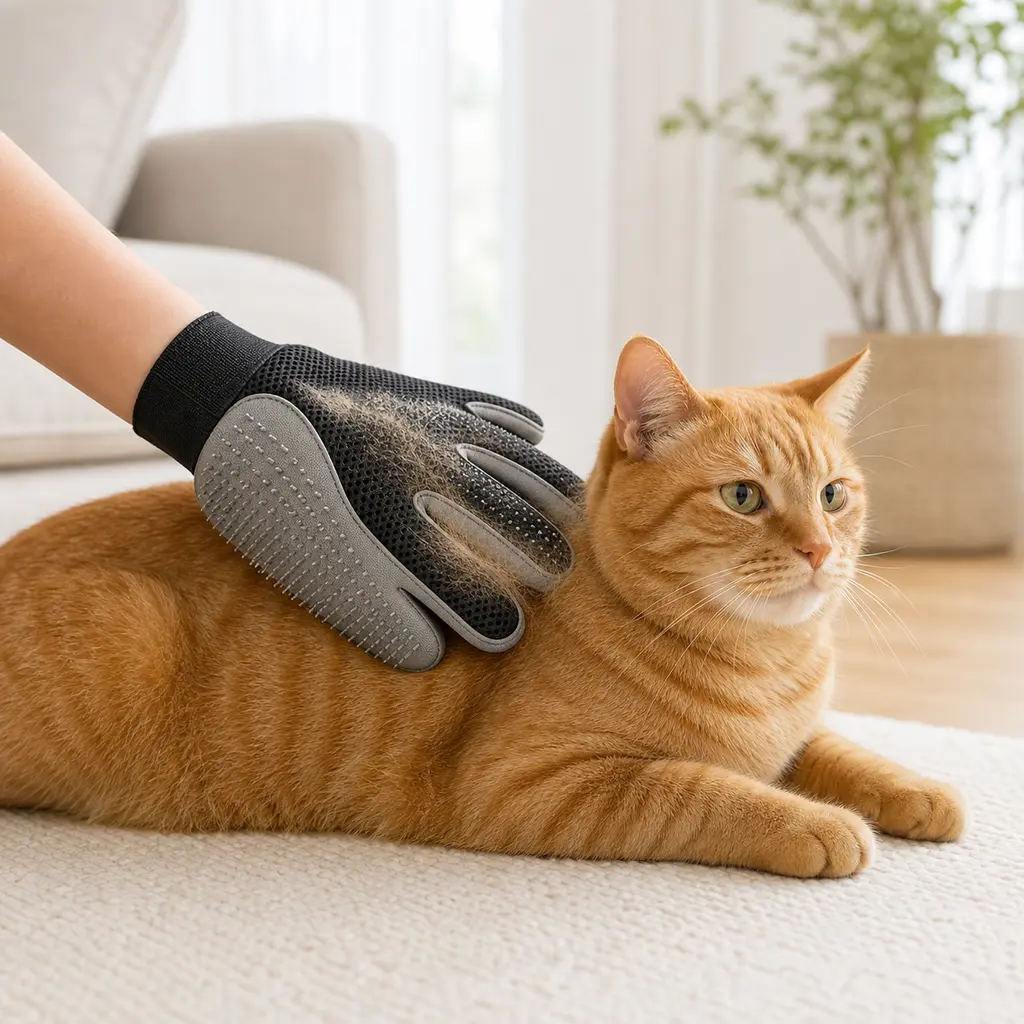
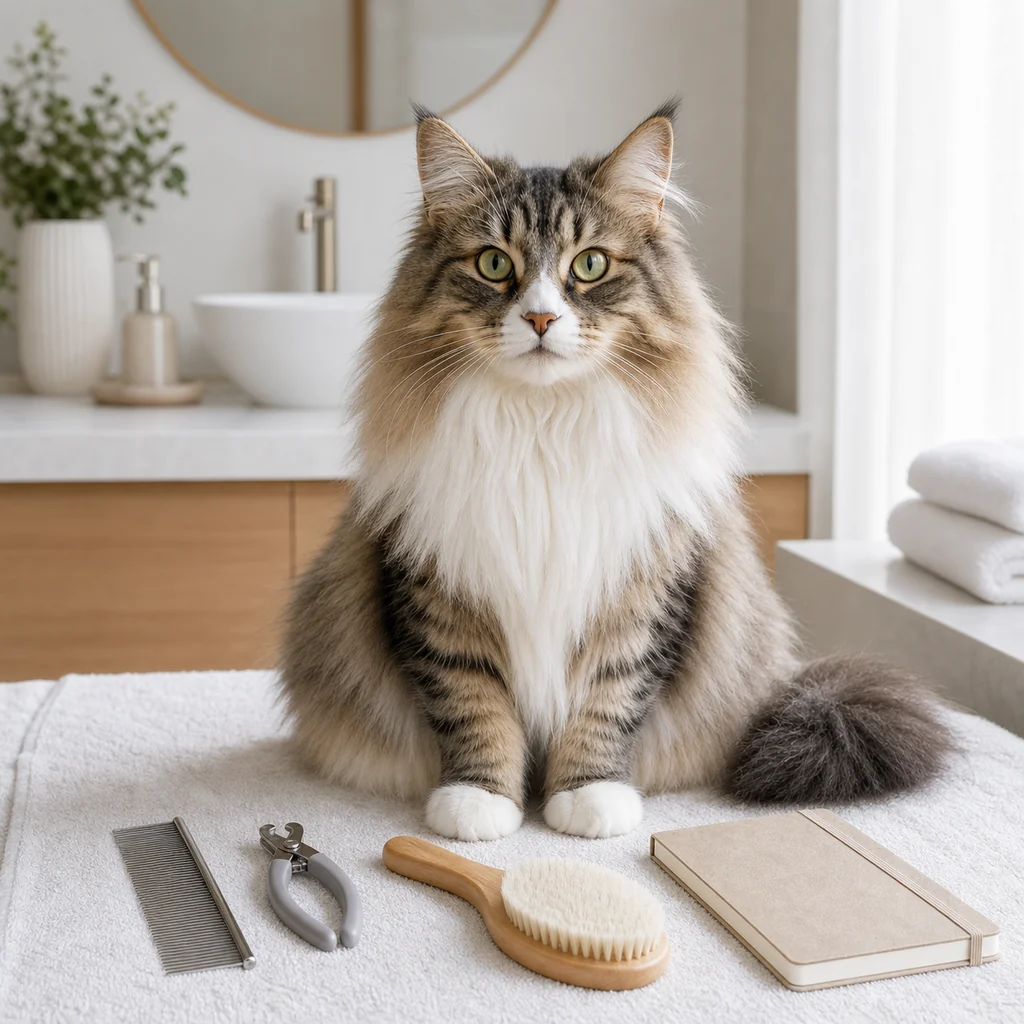
Fluffy cats can hide weight changes. Gentle rib and waist checks, regular weigh-ins when possible, and vet visits make progress less mysterious. After overweight cat food & weight loss, watch one ordinary meal and one ordinary litter-box visit before deciding the change helped.
Keep the pace safe
Cats should not be crash-dieted. Ask your vet for a target weight and calorie plan, especially if your cat is obese, senior, diabetic, not eating well, or has another medical concern.
Before you decide
Are all calories counted?
Is the food measured the same way daily?
Is weight loss gradual and vet-guided?
Is your cat still eating reliably?
Next best moves
Write down every treat for three days.
Use a puzzle feeder for one measured meal.
Ask your vet for a safe target and pace.
Helpful cat setup picks
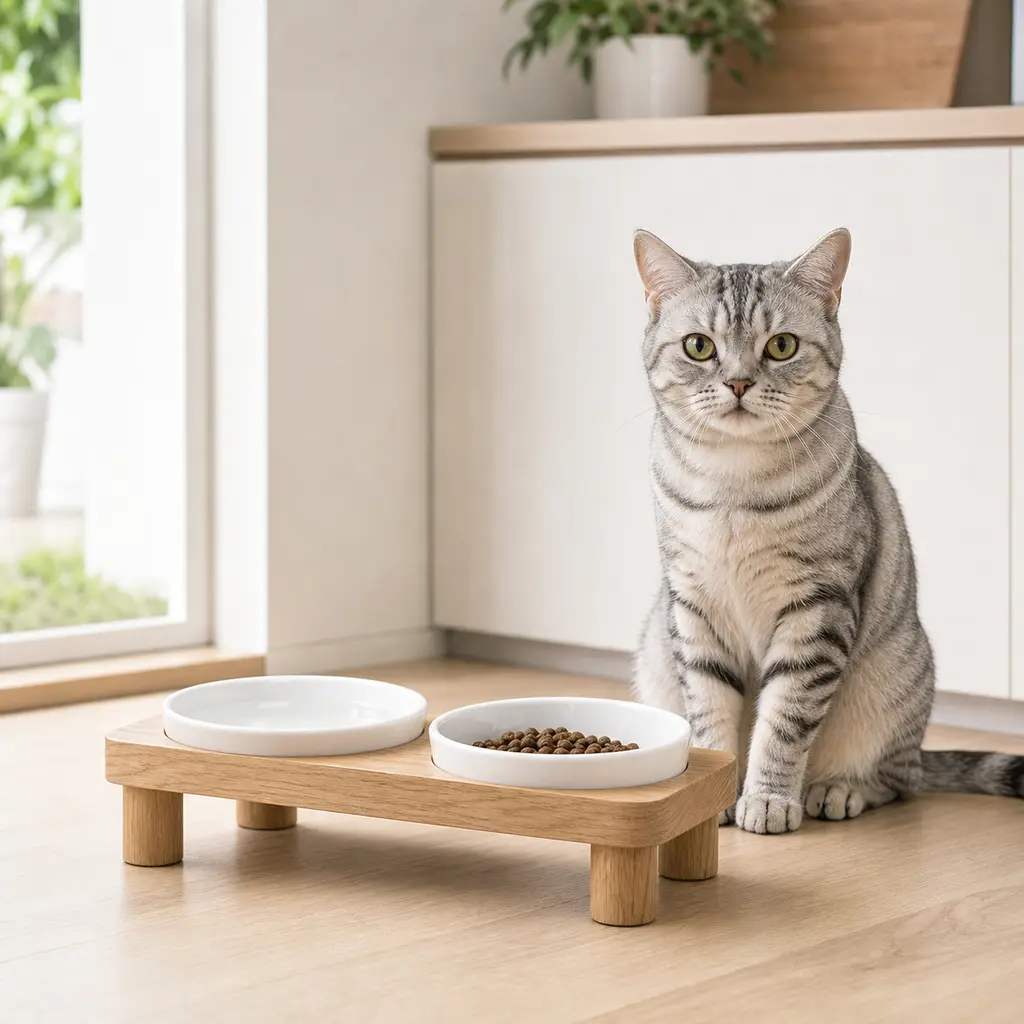
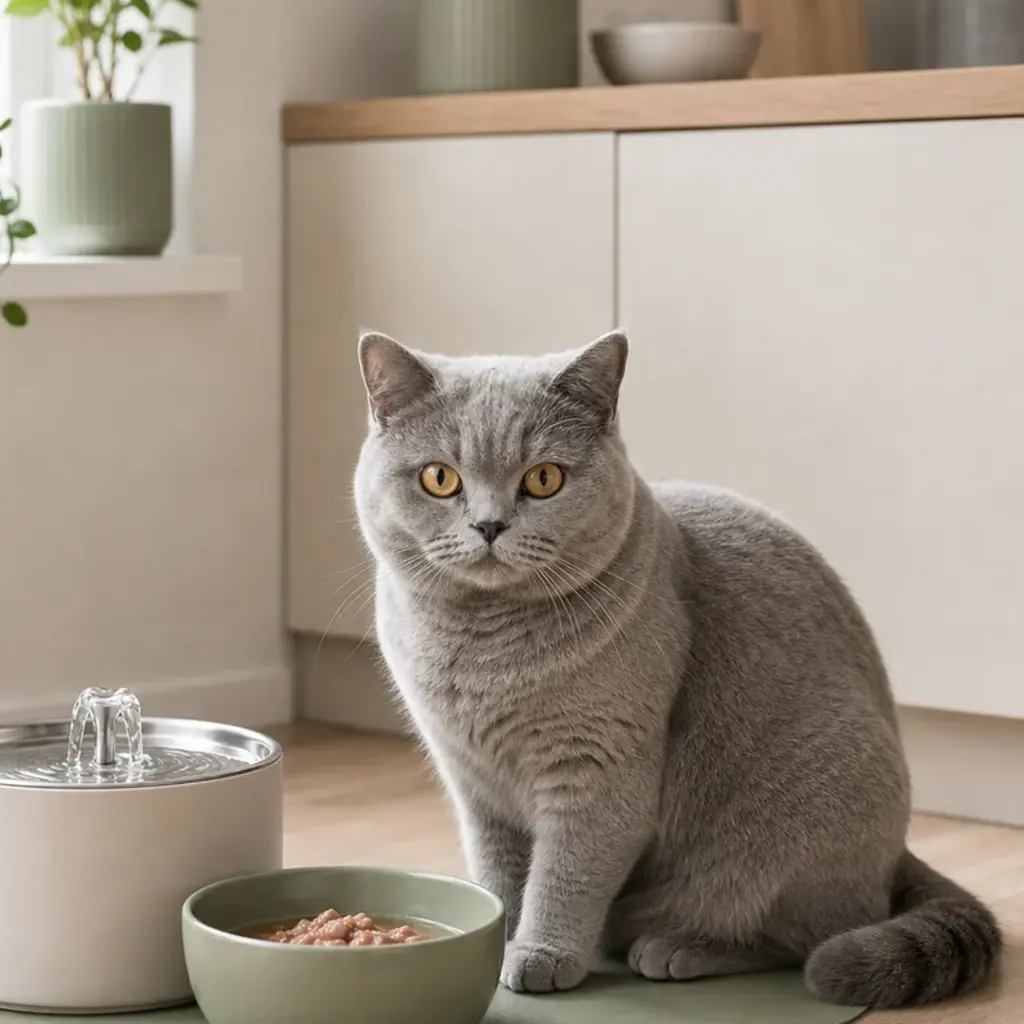
Use gear for overweight cat food & weight loss when it makes portions, water, texture, or cleanup easier to repeat.
Affiliate links: Furball Cove may earn from qualifying purchases at no extra cost to you.
What should I watch after changing overweight cat food & weight loss?
For overweight cat food & weight loss, look at the next few normal meals: appetite, texture preference, water interest, stool, and whether the bowl is easier to finish.
When is overweight cat food & weight loss a vet question?
Call your veterinarian if overweight cat food & weight loss comes with appetite loss, repeated vomiting, diarrhea, weight loss, straining, pain, or a sudden behavior change.