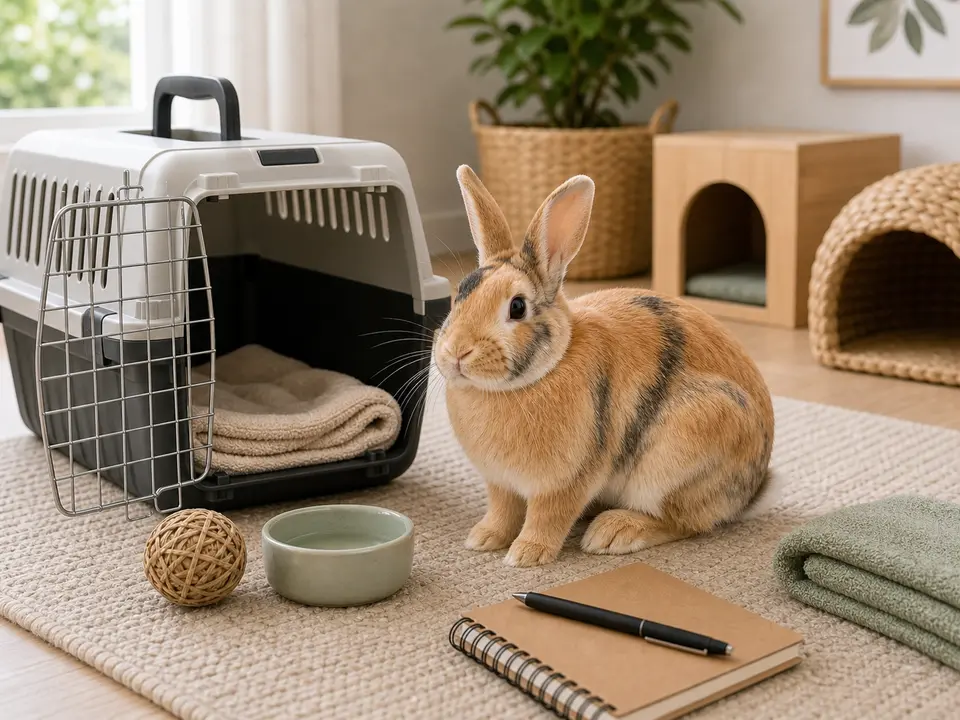
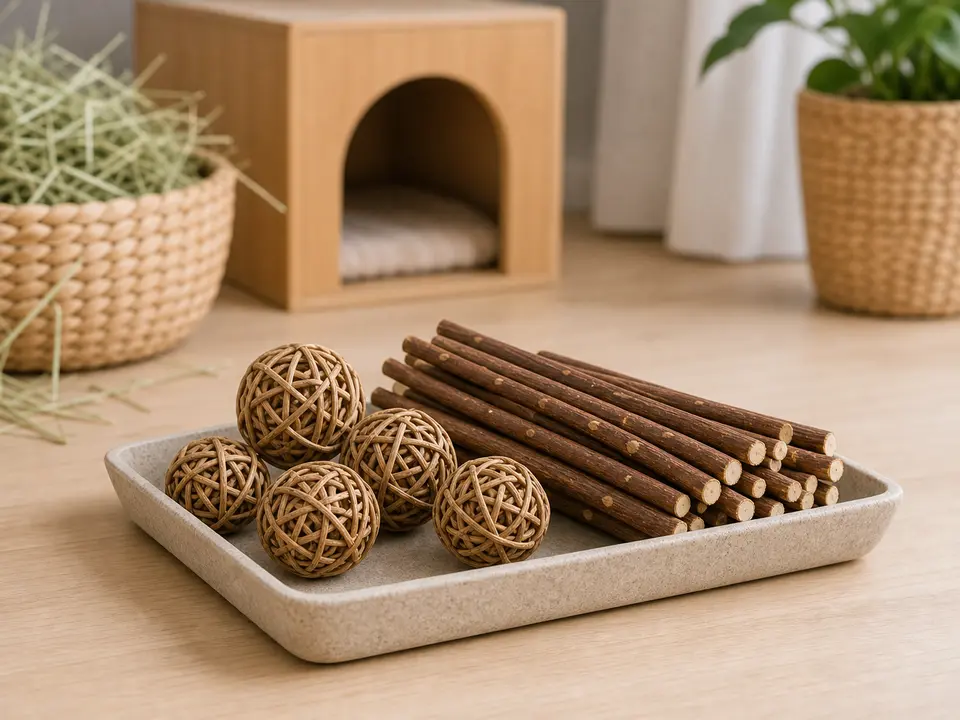
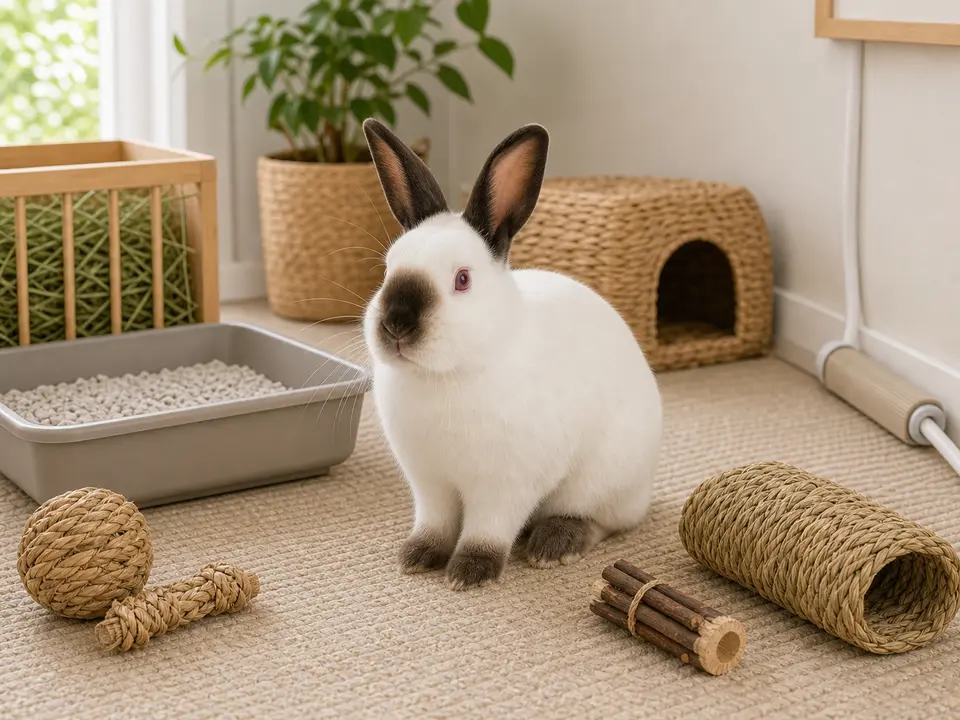
Safe rabbit chew toys are plain, chewable textures your rabbit can actually use: untreated willow, apple sticks from a trusted source, seagrass mats, cardboard, hay-stuffed toys, and simple digging options. Skip sharp, painted, scented, glued, or tiny pieces that could splinter or be swallowed.
Safe chew toys should match normal rabbit work: chewing, shredding, tugging, digging, and foraging. The best options are simple textures you can inspect and replace before they get sharp or dirty.
Block the target behind safe rabbit chew toys
Safe rabbit chew toys are plain, chewable textures your rabbit can actually use: untreated willow, apple sticks from a trusted source, seagrass mats, cardboard, hay-stuffed toys, and simple digging options. Skip sharp, painted, scented, glued, or tiny pieces that could splinter or be swallowed. Start by blocking the texture your rabbit keeps choosing. Cover the dangerous or expensive target first so the room becomes less tempting, then add an allowed chewing option close enough that your rabbit does not have to search for a better job.
The fix should happen before the next unsupervised floor session, not after the corner has become a favorite project. Prevention is calmer than constant interruption.
Match the texture behind safe rabbit chew toys
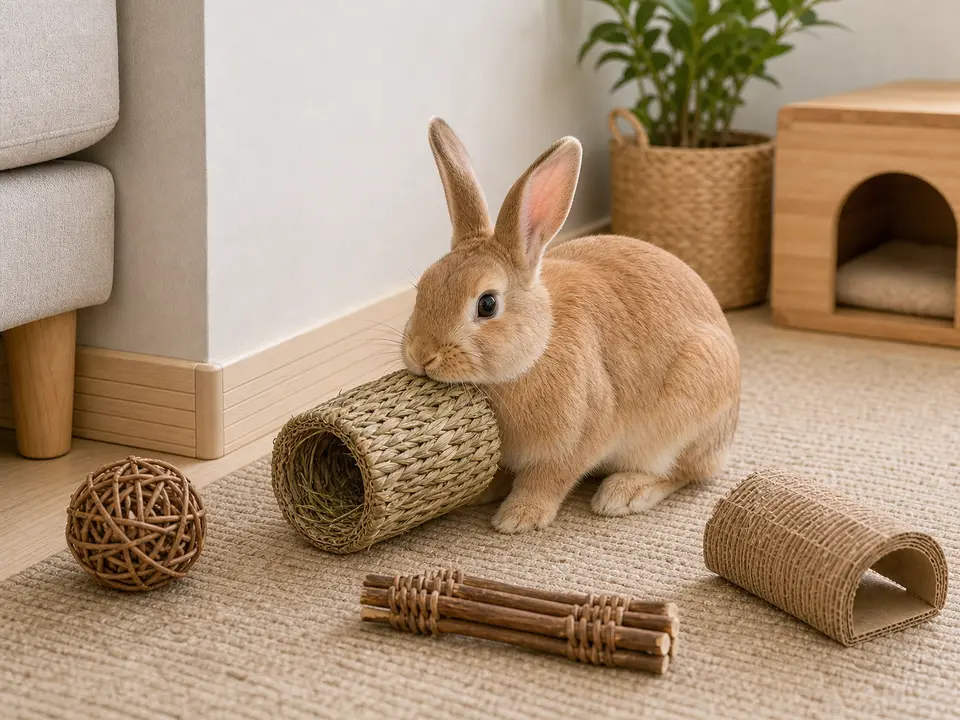
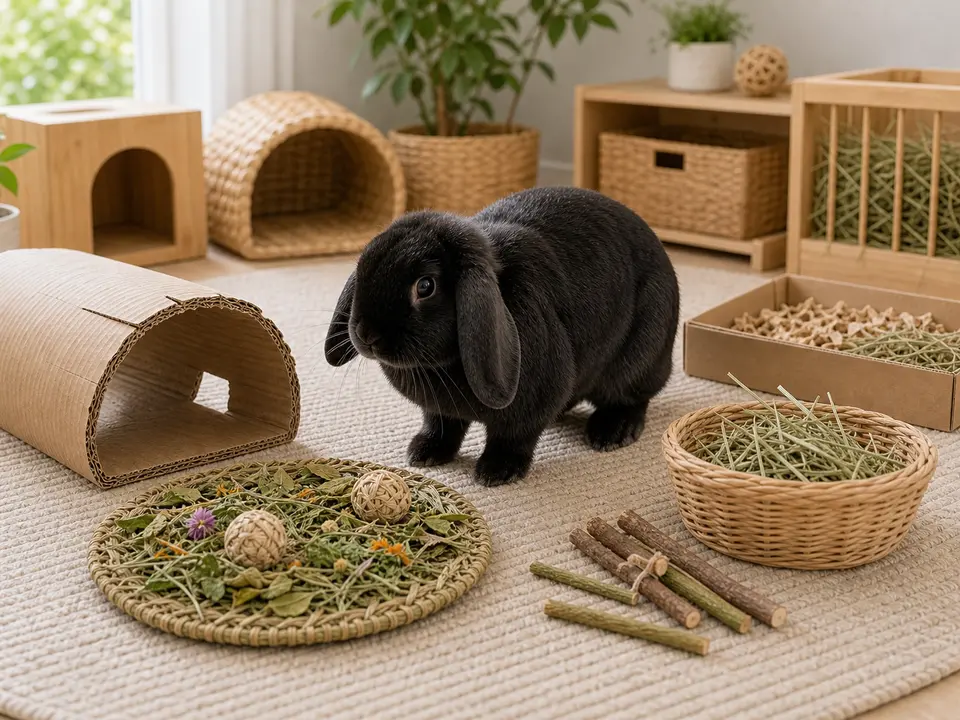
At home, chewing preferences are specific. A rabbit who loves rug edges may not care about a hard wood block; a rabbit working on cardboard may want something shreddable. Use the problem spot as a clue, then offer willow, seagrass, cardboard, hay-stuffed toys, or a dig box with a similar feel.
Offer two or three textures instead of a mountain of toys. Watching which one gets used tells you more than buying another random chew bundle.
Change the room rhythm around safe rabbit chew toys
Chewing can spike around breakfast, closed-pen frustration, boredom, or the same evening sound that makes your rabbit restless. Add hay, a hideout, floor time, and safe chew work before the problem window if you can. The goal is not a perfectly obedient rabbit; it is a room where normal rabbit behavior has safe outlets.
If the behavior shows up at the same time each day, plan enrichment before that window. A hay refresh, dig box, or safe chew can redirect energy without turning it into a battle.
Make the safe rabbit chew toys fix livable
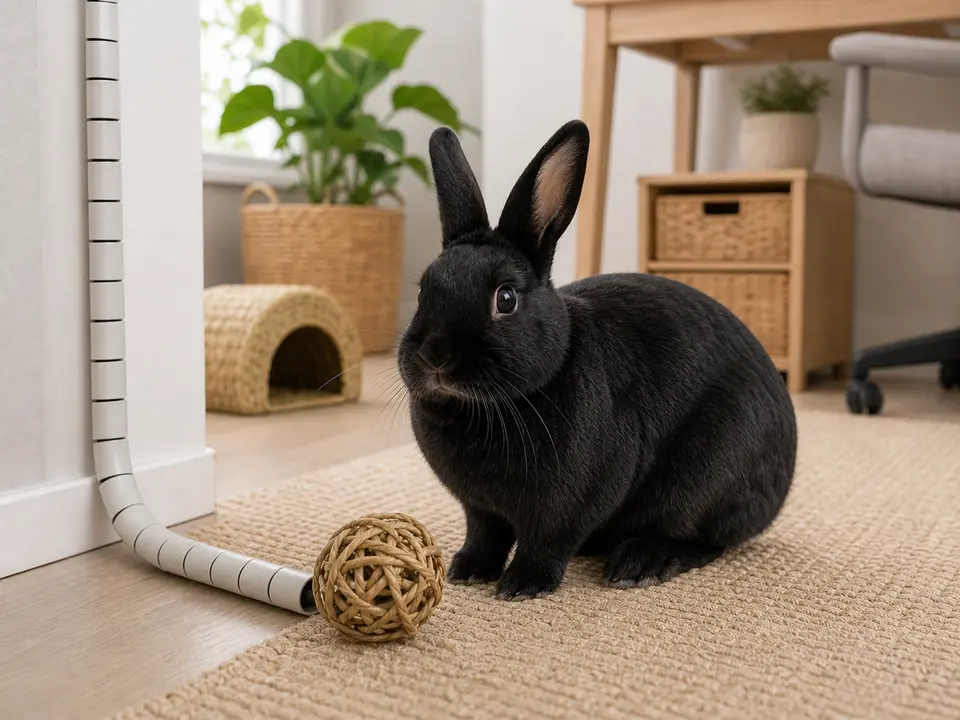
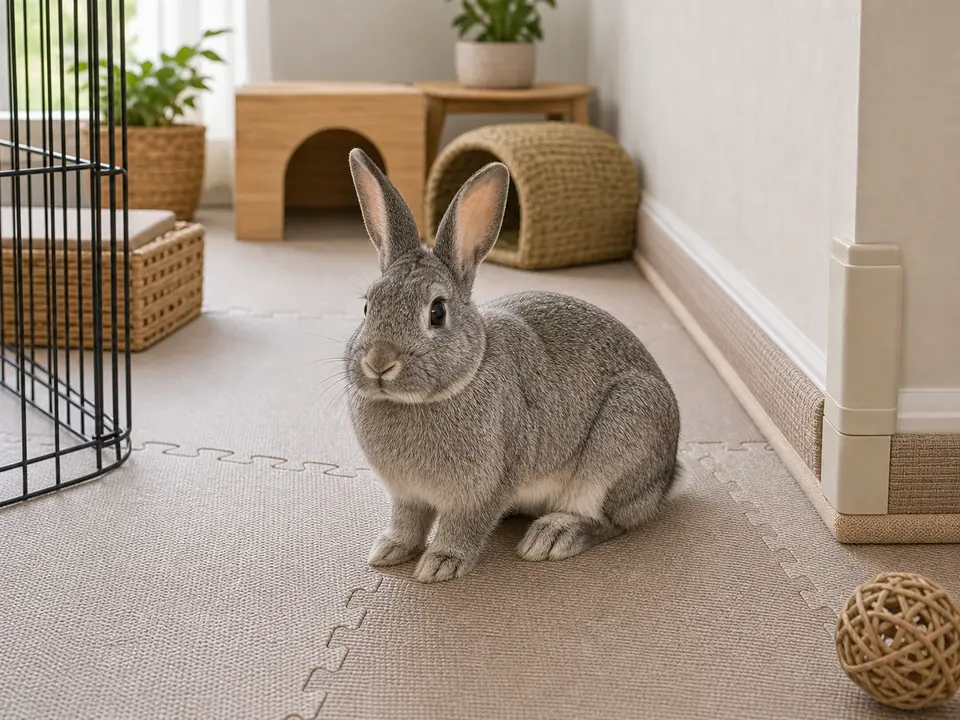
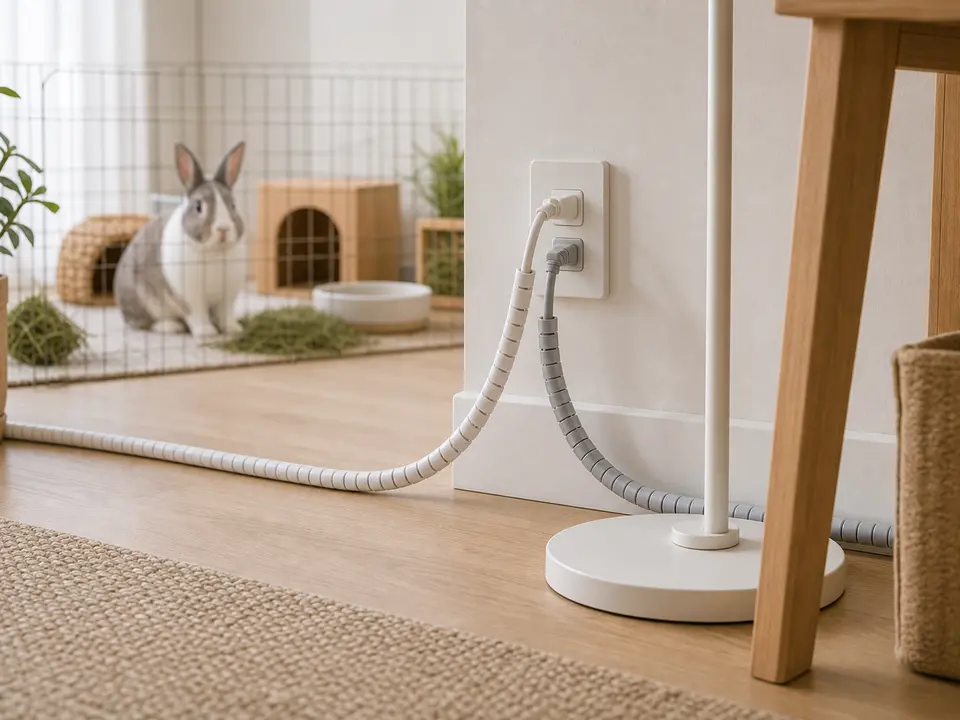
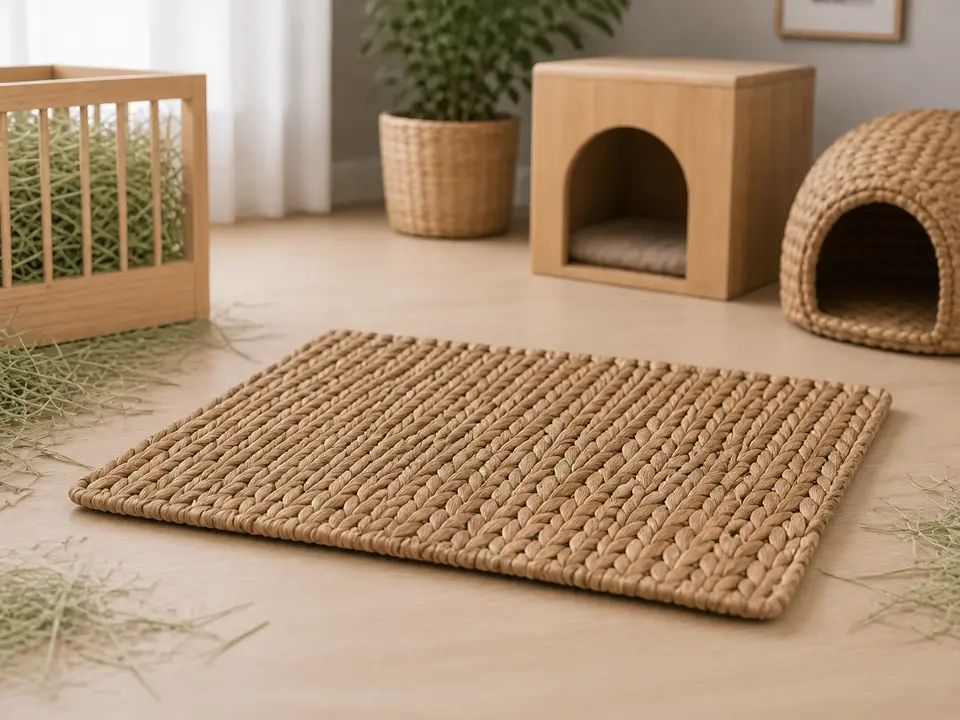
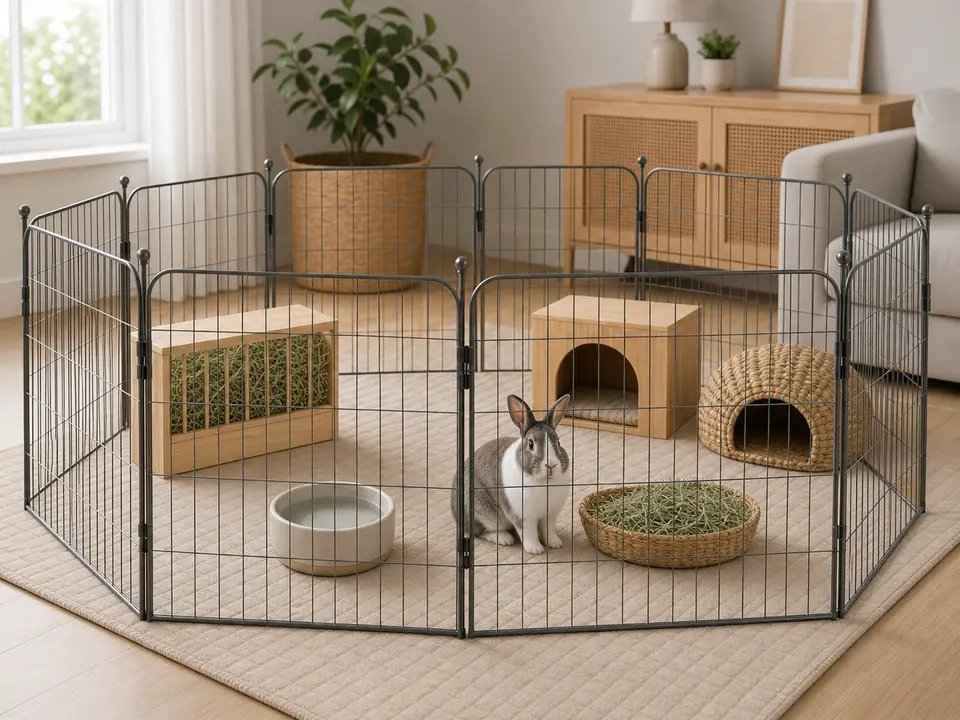
Good rabbit-proofing should not make the home feel like a construction zone. Use cord covers, pen panels, washable flooring mats, furniture guards, or a low barrier that blends into the setup. If the solution is ugly or hard to reset, you probably will not keep it in place.
A clean-looking flooring barrier is easier to live with and easier to keep consistent. Rabbit-proofing that annoys the humans usually gets removed, and then the rabbit learns the old target again.
When safe rabbit chew toys turns risky
Chewed cords, toxic plants, sharp plastic, swallowed fabric, or splintery materials are not cute mischief. Move those hazards out of reach and replace them with safer work. If you think your rabbit swallowed something unsafe or suddenly stops eating or pooping, call a rabbit-savvy vet.
This is a warm warning, not a lecture. Rabbits explore with their teeth, so the home has to remove the things teeth should never reach.
Before you decide
What exact spot gets chewed?
Is the risky item blocked first?
Is there a safe chew with a similar texture nearby?
Is boredom, breakfast timing, or pen frustration part of it?
Next best moves
Block cords and rented-home edges first.
Offer safe chewing close to the problem spot.
Rotate textures instead of buying random toys.
Chew-safe setup helpers
These are practical pieces for the routine, not clutter to buy all at once.
Affiliate links: Furball Cove may earn from qualifying purchases at no extra cost to you.
Safe rabbit chew toys are plain, chewable textures your rabbit can actually use: untreated willow, apple sticks from a trusted source, seagrass mats, cardboard, hay-stuffed toys, and simple digging options. Skip sharp, painted, scented, glued, or tiny pieces that could splinter or be swallowed.
Do rabbits chew because they are being bad?
No. Chewing is normal rabbit behavior. The job is to protect unsafe targets and give safer textures that satisfy the same need.
What should I block first?
Block cords, toxic plants, rug edges, baseboards, and furniture corners that your rabbit already targets. Redirect after the risk is out of reach.