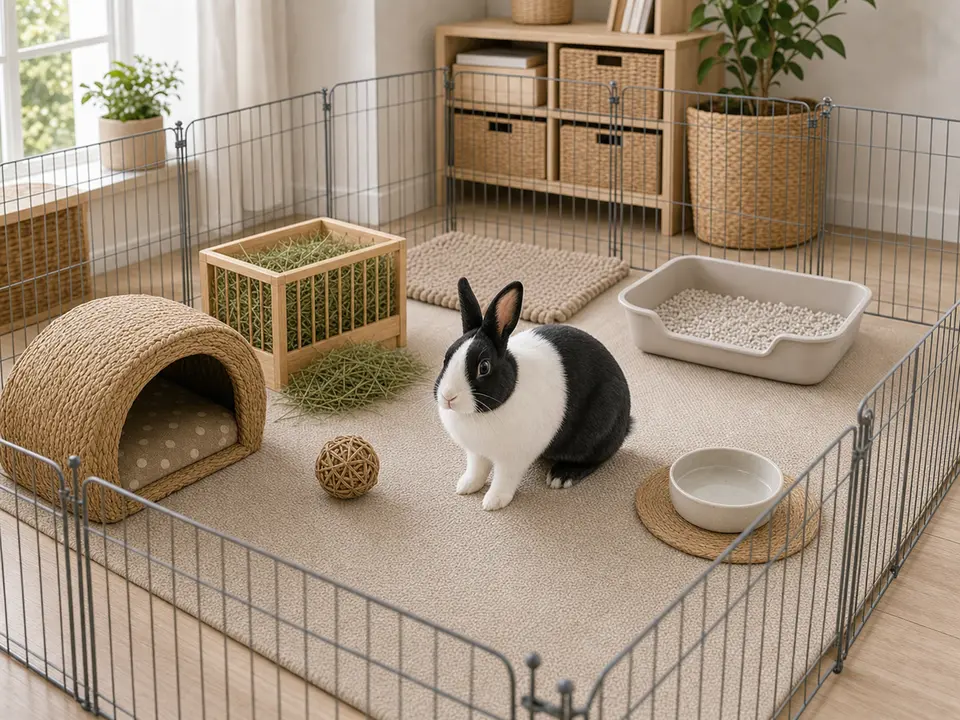
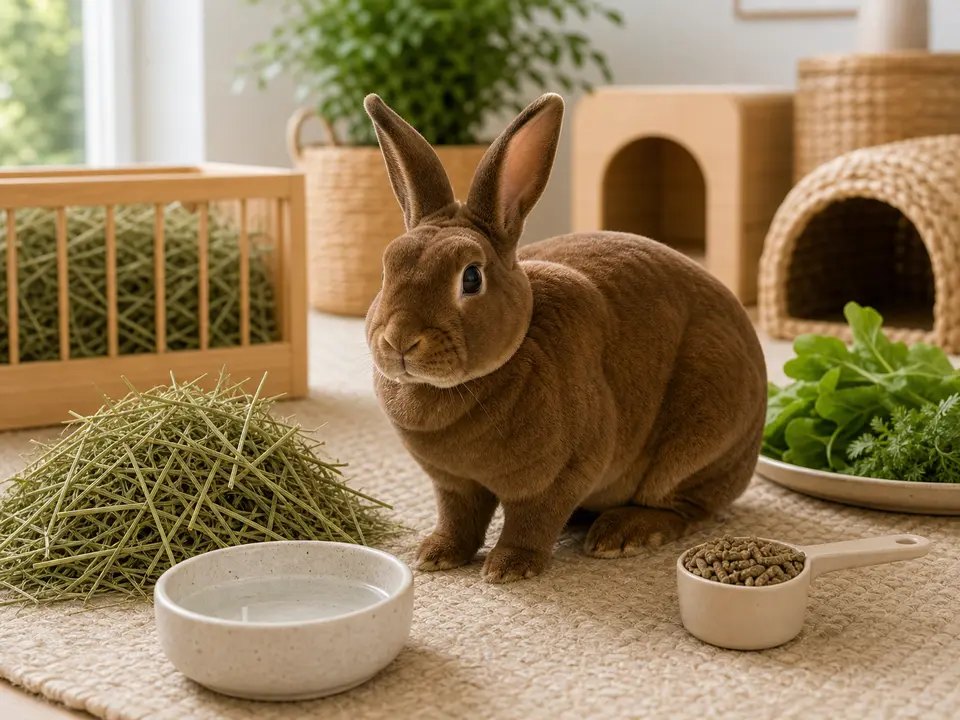
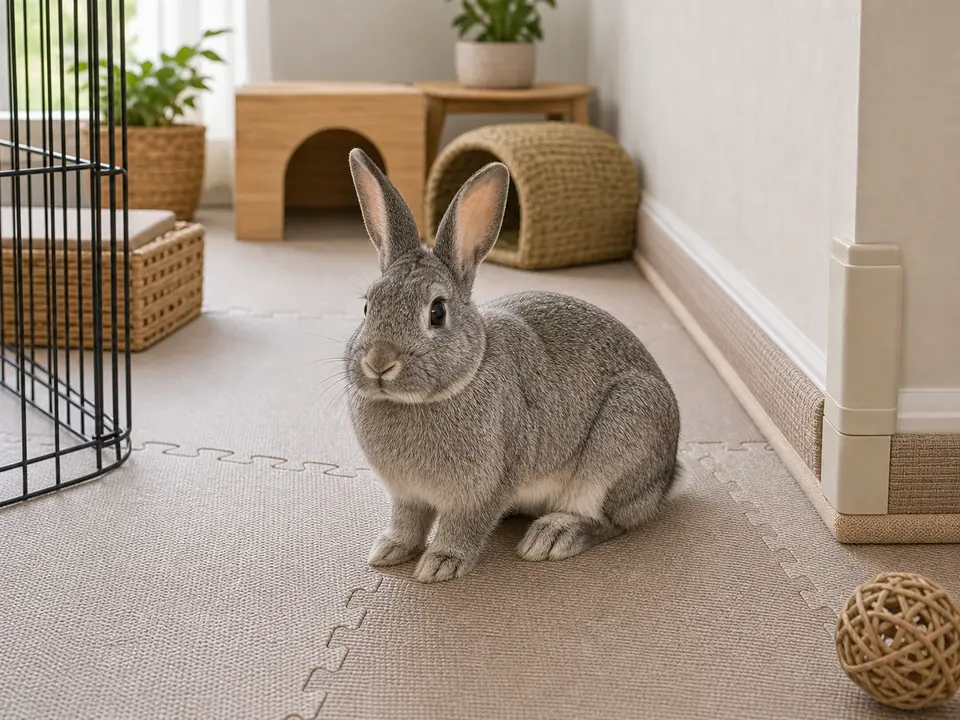
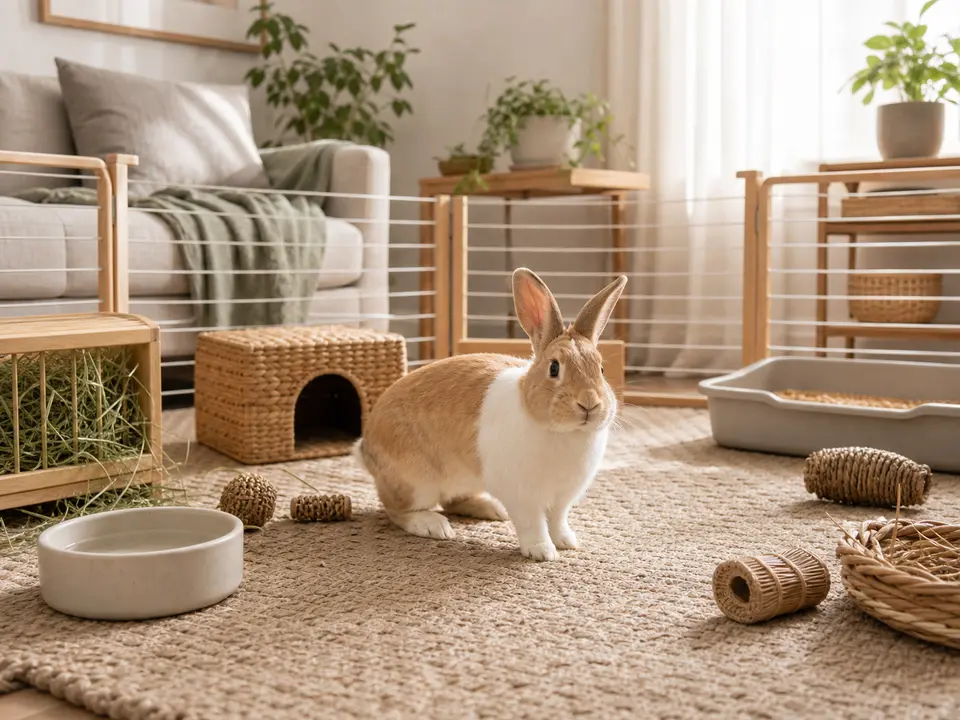
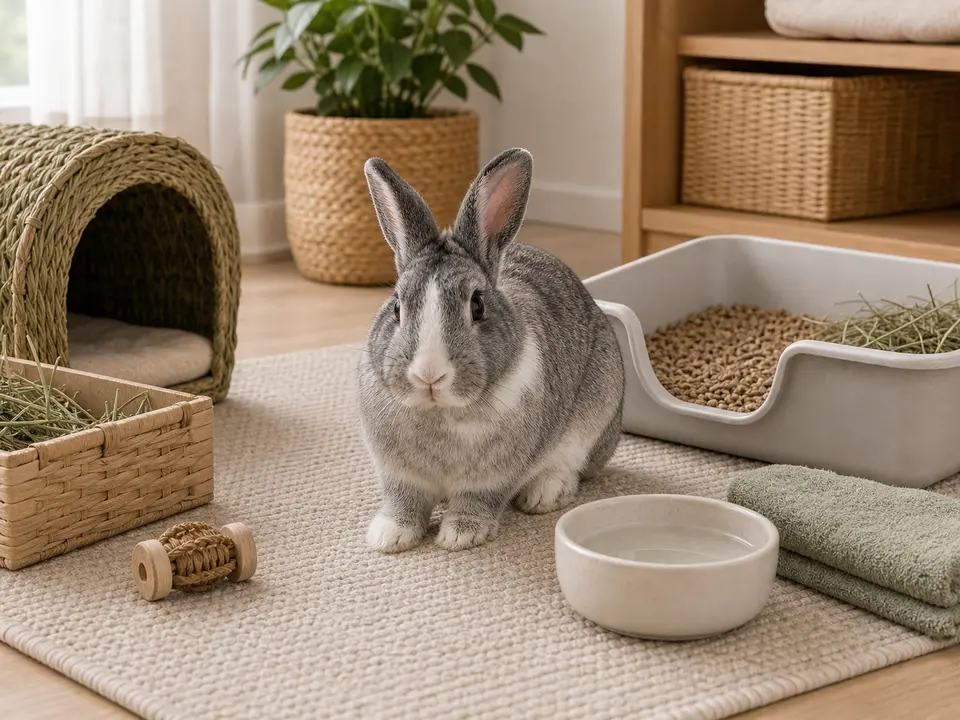
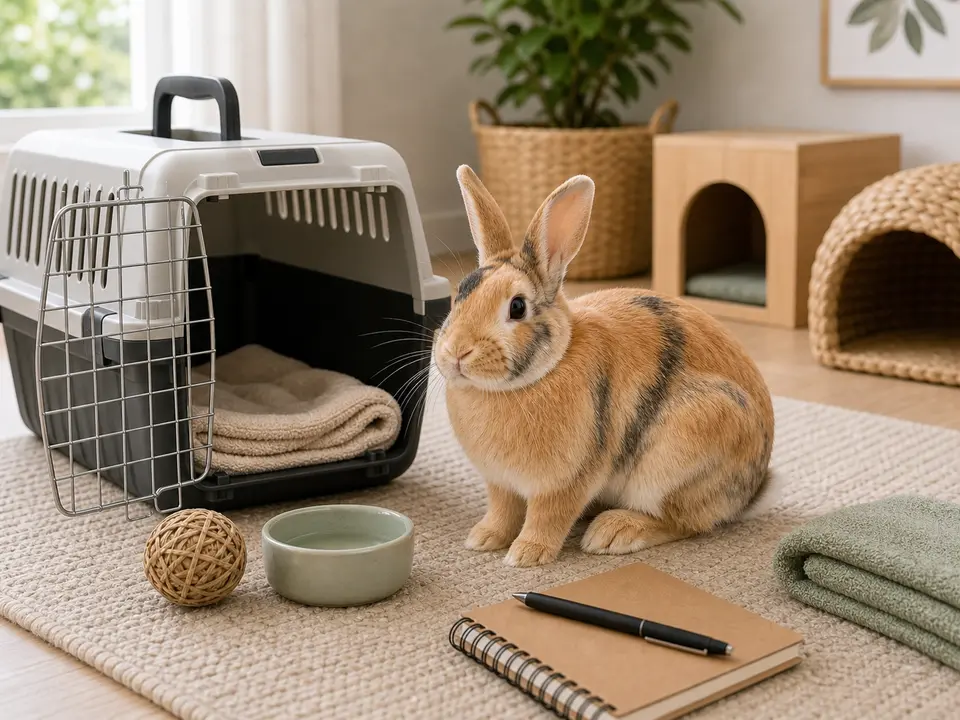
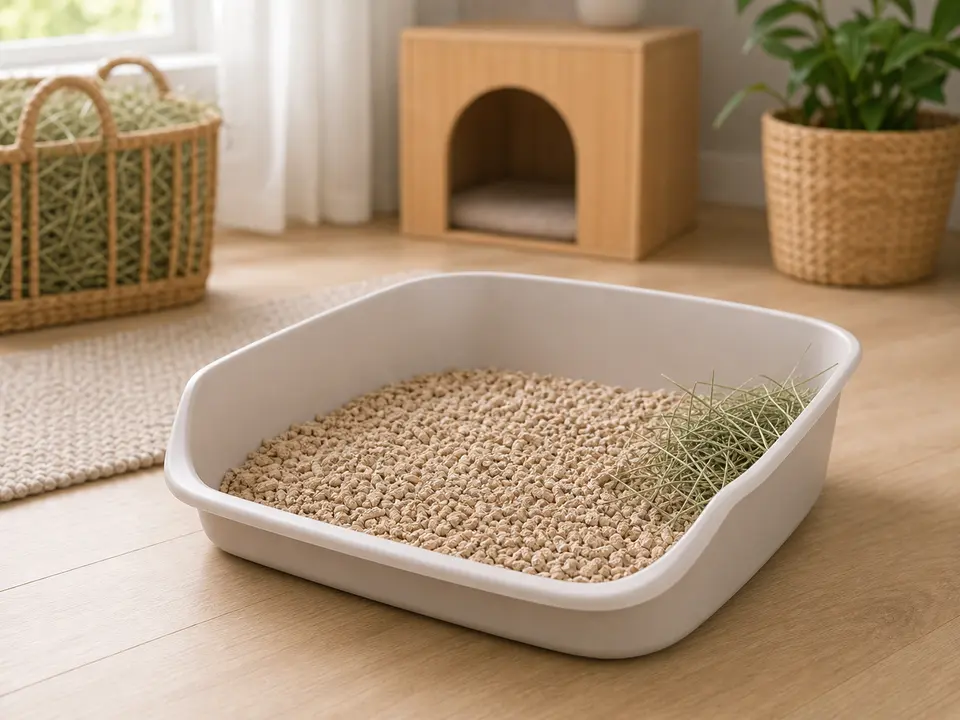
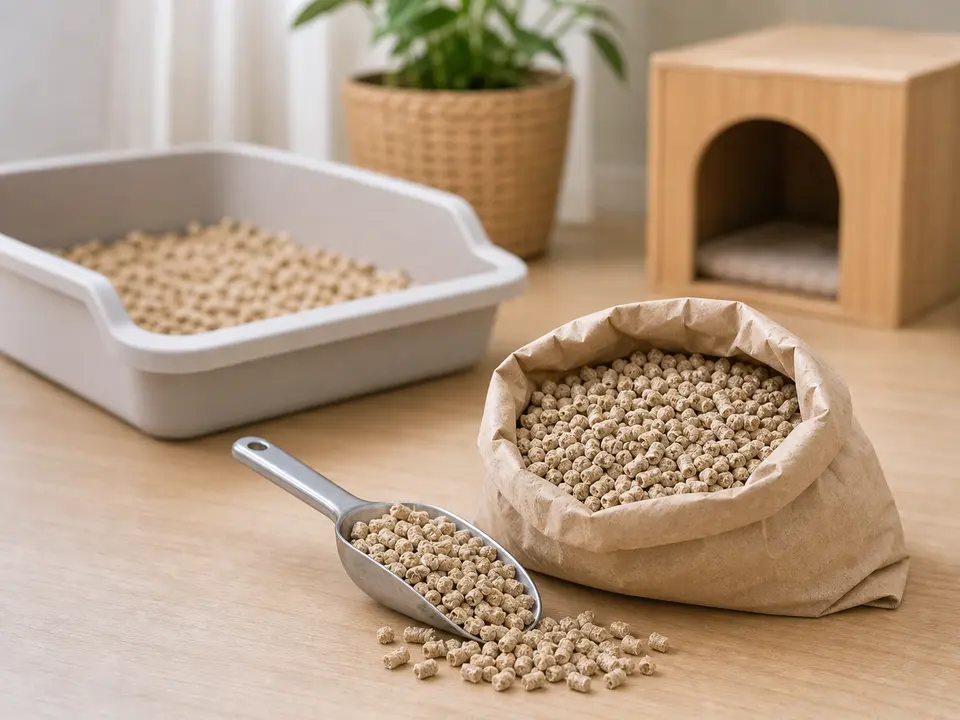
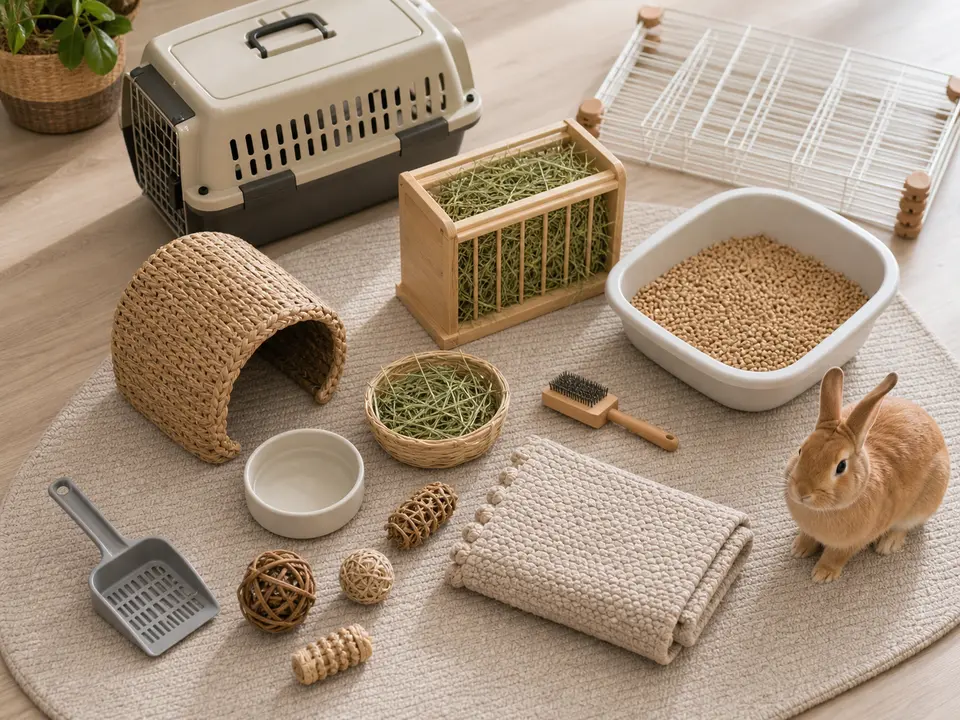
Rabbit litter should usually be a shallow, absorbent layer that covers the bottom of the box and soaks up urine without turning the box into deep bedding. Use more in the wet corner if needed, but keep the box easy to step into, clean, and paired with hay where your rabbit already likes to sit.
Litter problems usually make more sense when you look at the box, hay placement, flooring, cleaning rhythm, and recent household changes together. This page turns the question into a setup check you can actually use.
Use a shallow absorbent layer
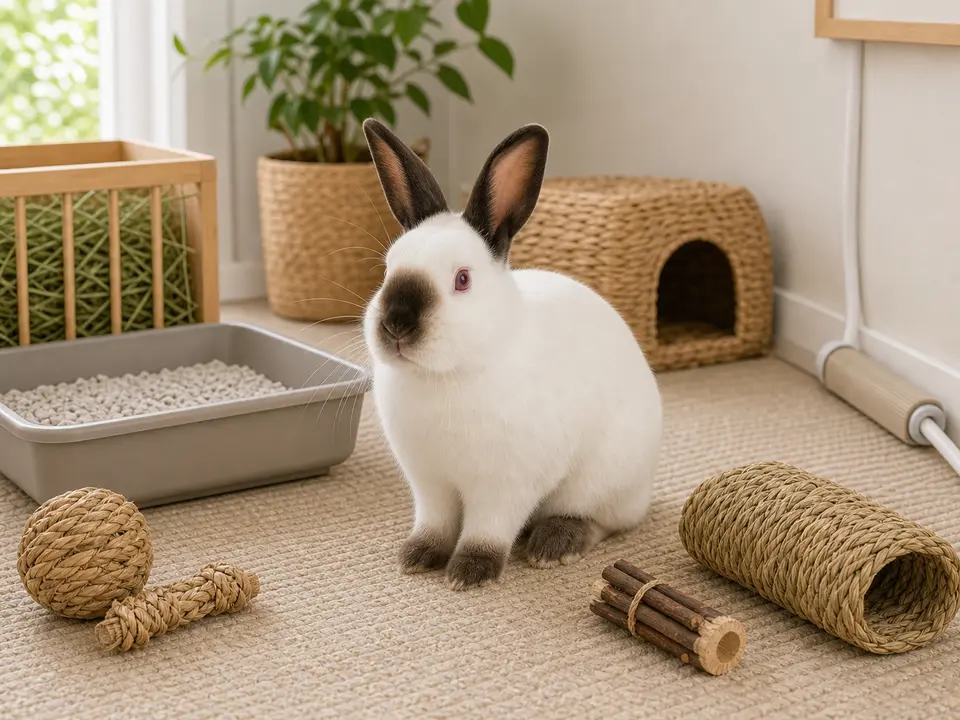
Most rabbit boxes do better with enough paper-based litter to cover the bottom and absorb urine, not a deep fluffy bed. A shallow even layer keeps the box stable, easier to step into, and easier to clean before damp spots spread.
If one corner gets wet fastest, add a little more there instead of filling the whole box like a burrow.
Keep hay easy to reach
Many rabbits eat hay while using the box, so depth is only part of the answer. Put hay at one end, in a low rack, or in a tidy pile where your rabbit can eat without sitting in a soaked corner.
If hay gets buried, damp, or ignored, the setup needs adjusting.
Watch digging and kicking
A rabbit who kicks litter out every day may need a larger box, a higher back, a different placement, or a litter layer that is not piled so high. The goal is absorbency without giving the feet a loose pile to launch across the room.
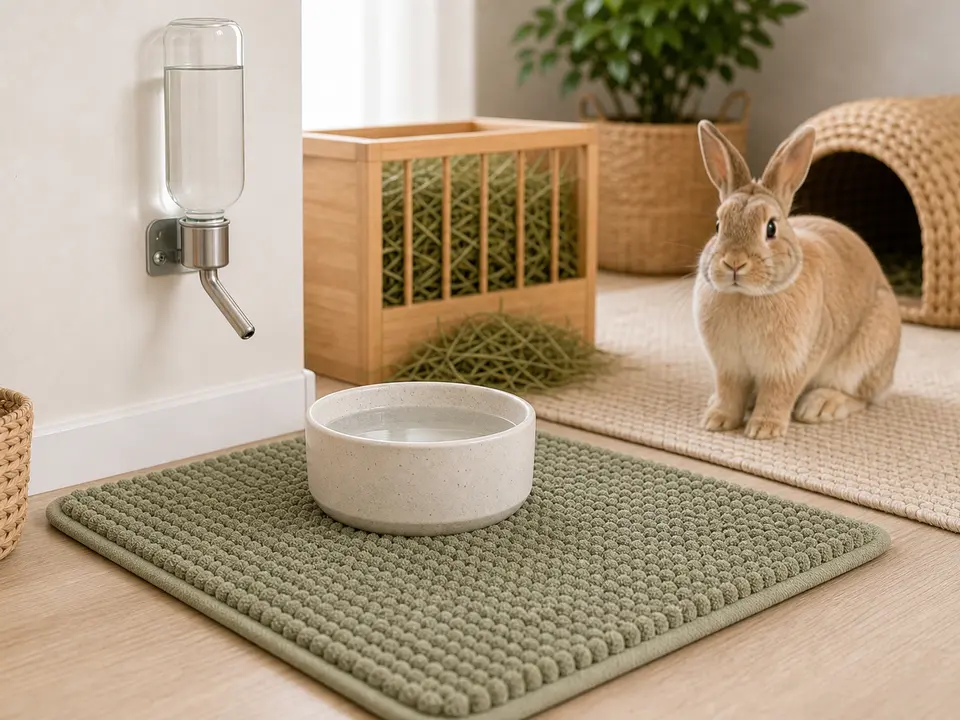
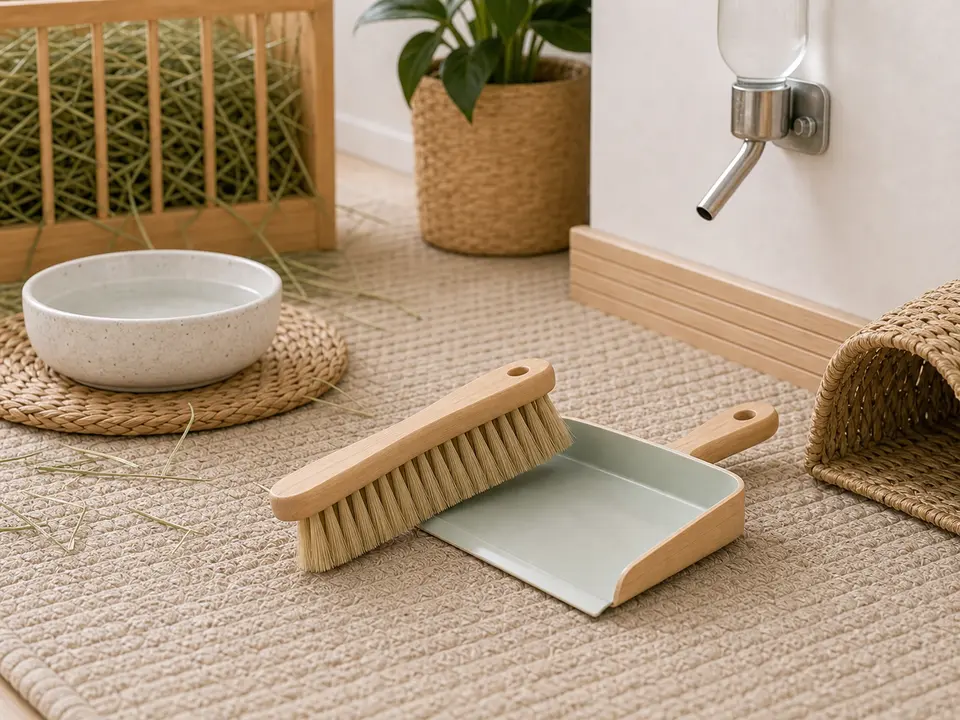
A mat under the box can catch stray pieces without making cleanup feel endless.
Clean before the depth stops helping
More litter is not a substitute for regular cleaning. If the box smells sharp, the wet corner spreads, or your rabbit avoids stepping in, reset it sooner. Clean, shallow, and predictable usually beats deep and neglected.
A good depth is the depth you can maintain every day.
Adjust for seniors and small rabbits
Small rabbits and stiff senior rabbits may struggle with deep, shifting litter or a high box edge. Keep the entrance easy, the floor grippy, and the litter layer steady enough that paws do not sink or slide.
Comfort matters as much as absorbency.
Notice when it is not a litter-depth problem
If your rabbit suddenly pees outside the box, strains, has wet fur, stops eating, produces fewer poops, or seems painful, do not keep changing litter depth and hoping. That pattern deserves a rabbit-savvy vet conversation.
The box can tell you when the issue has moved beyond housekeeping.
Before you decide
Is the box large enough to turn around in?
Is hay near or in the box?
Did the location, litter, cleaning smell, or routine change?
Could pain or urine discomfort be involved?
Next best moves
Make the box bigger before blaming the rabbit.
Place hay where the rabbit naturally spends time.
Clean enough for comfort without making the box smell unfamiliar.
Litter tools that make the habit easier
These are practical pieces for the routine, not clutter to buy all at once.
Affiliate links: Furball Cove may earn from qualifying purchases at no extra cost to you.
Rabbit litter should usually be a shallow, absorbent layer that covers the bottom of the box and soaks up urine without turning the box into deep bedding. Use more in the wet corner if needed, but keep the box easy to step into, clean, and paired with hay where your rabbit already likes to sit.
What is the first setup change to try?
Try the simplest likely fix: a larger box, lower edge, hay at one end, a second box, or moving the box to the repeat accident spot.
When could this be health-related?
Sudden misses, urine changes, straining, wet fur, pain signs, or appetite changes are reasons to ask a rabbit-savvy vet.