How do I keep greens fresh for a rabbit without overbuying
Keep rabbit greens fresh by buying smaller amounts, washing and drying only what you need, storing them dry in a breathable container, and keeping a short list of greens your rabbit actually tolerates.
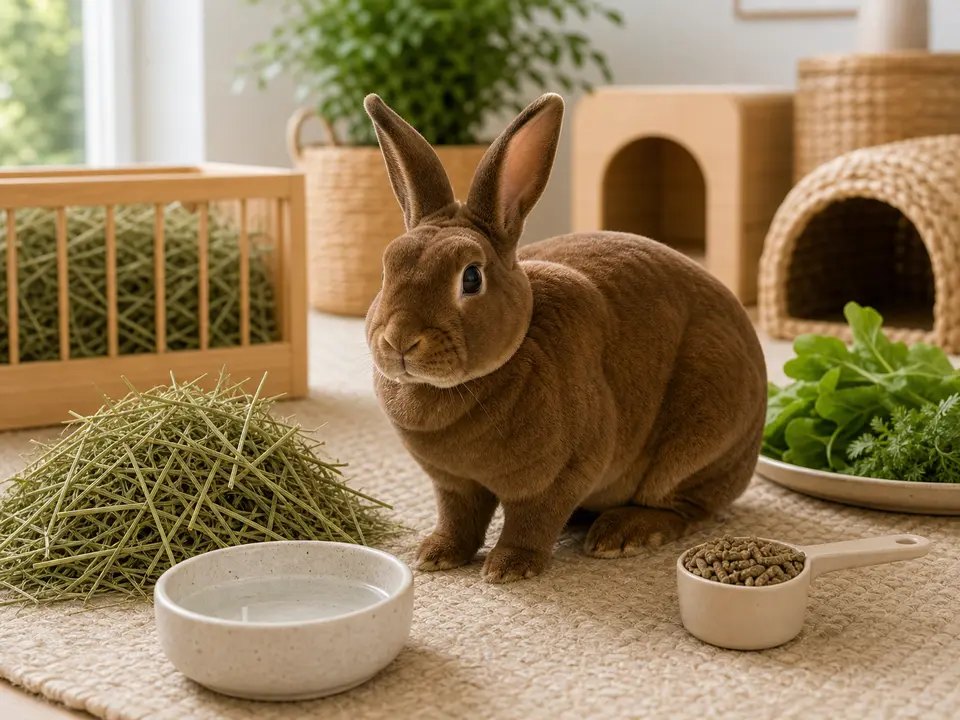
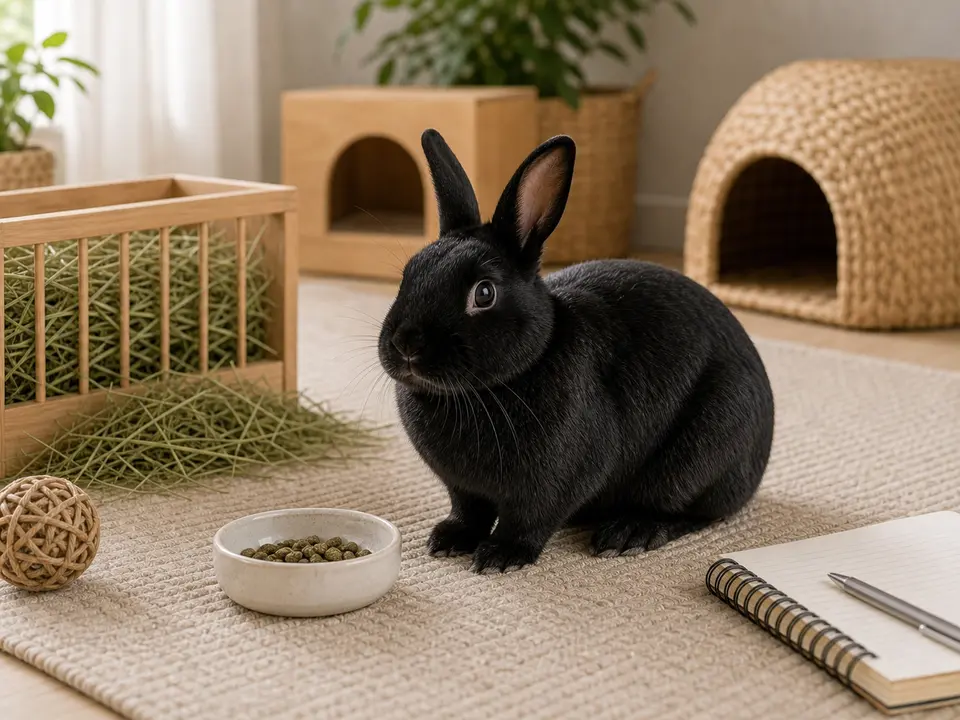
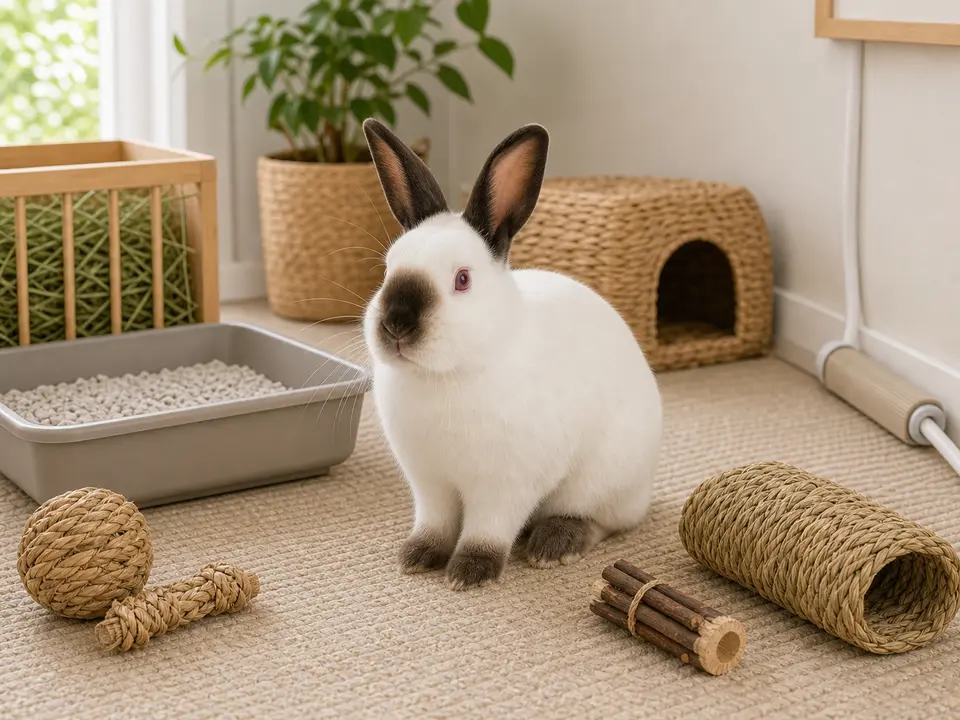
Food questions are easiest when you picture the whole feeding corner, not just one bowl. Start with the specific food choice, then watch hay interest, water, appetite, and litter-box output as the routine changes.
Fresh greens: Buy for the next few days
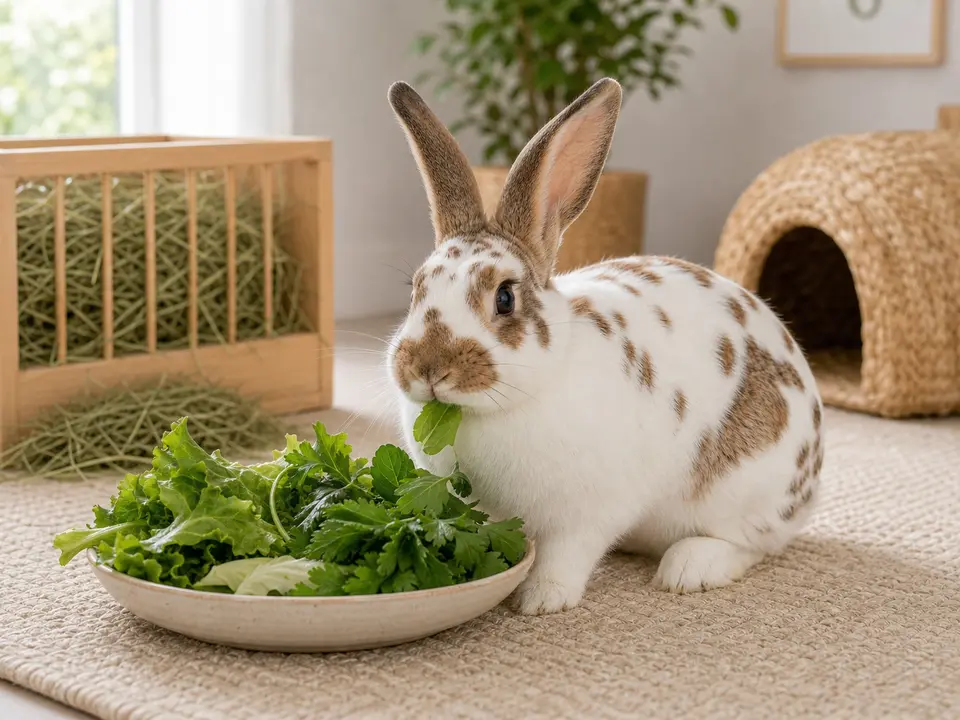
Keep rabbit greens fresh by buying smaller amounts, washing and drying only what you need, storing them dry in a breathable container, and keeping a short list of greens your rabbit actually tolerates. Fresh greens are more useful when you can finish them while they still smell clean and crisp.
Buy a small rotation your rabbit already handles well, then add variety gradually instead of filling the fridge with experiments.
Use that as the baseline for fresh greens: if tomorrow's hay, water, appetite, and litter box still look normal, the routine is moving in the right direction. Do not judge the idea only by the first excited meal; the next normal morning matters more.
Fresh greens: Store greens dry enough
Rinse when needed, dry gently, and store greens so they are not sitting wet in the bag.
A towel-lined container or breathable produce bag can keep leaves fresher than a sealed wet bundle.
Keep this part visible in the room. A rabbit's real answer shows up in what they choose when nobody is nudging them toward the bowl. If you have to keep rescuing the setup, the placement or portion probably needs to become simpler.
Fresh greens: Keep hay first
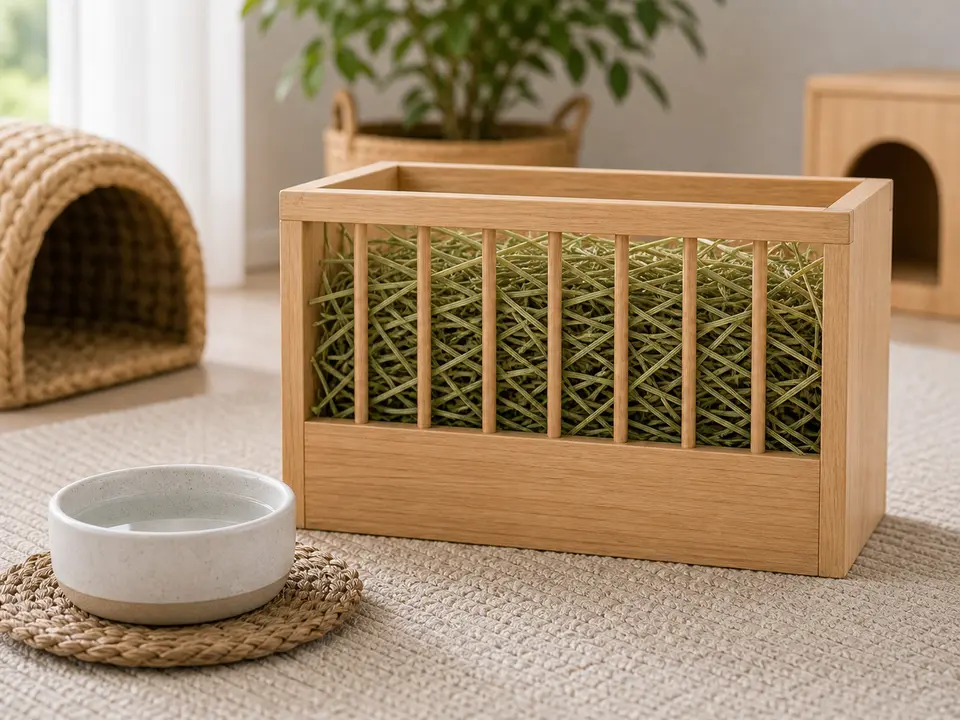
Greens should add freshness, not replace long hay chewing. Offer hay where it is easy before the greens bowl becomes the most exciting part of dinner.
If hay interest fades, make greens smaller and refresh the hay setup.
Make one small note if you are adjusting fresh greens: amount offered, where it sat, and whether hay was eaten afterward. That tiny record keeps you from changing the scoop, placement, and timing all at once.
Fresh greens: Rotate slowly
A short yes-list is better than a huge mix you cannot track. Introduce one new green at a time on an ordinary day.
That way, if poop or appetite changes, you know which leaf deserves a pause.
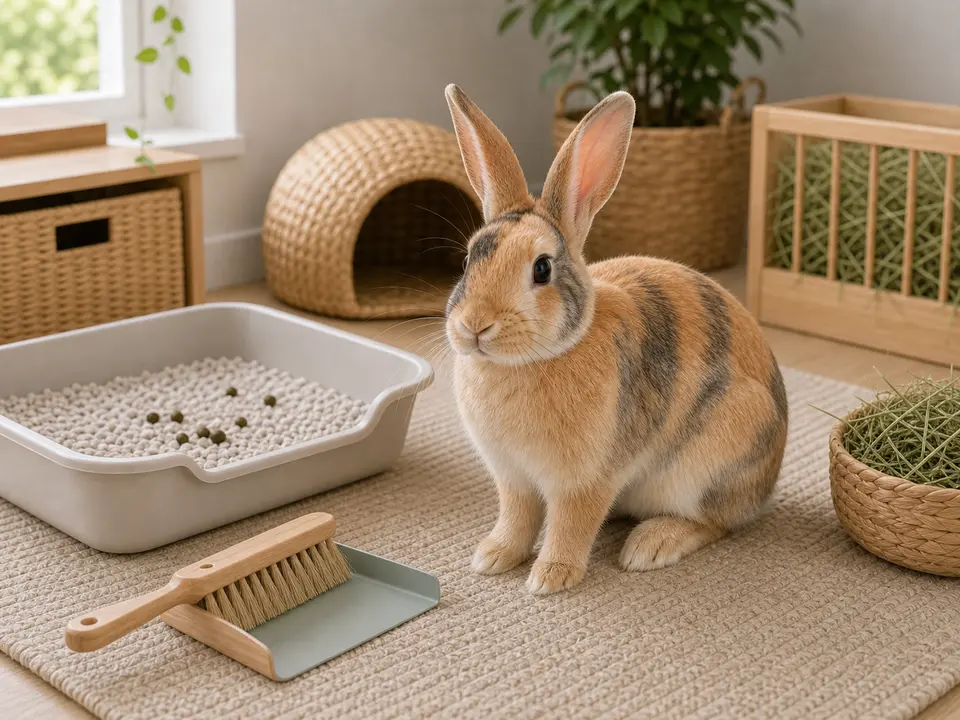
The litter box is not glamorous, but it is honest. Normal round poops make the food decision easier to trust. Check it before you forget the meal, because the next handful of hay and the next few poops tell the truth.
Fresh greens: Throw out tired greens
Slimy, sour, wilted, or questionable greens do not belong in the bowl just because you paid for them.
Use the food your rabbit can eat comfortably, and let the shopping list get smaller before it gets more ambitious.
If this makes the day harder to repeat, simplify. Rabbit feeding should feel calm enough for an ordinary weekday. The best routine is not the most elaborate one; it is the one you can repeat without crowding out hay.
Before you decide
Is hay available and being eaten?
Did only one food change at a time?
Are poops normal after the change?
Is water easy to reach and clean?
Next best moves
Keep hay visible and easy.
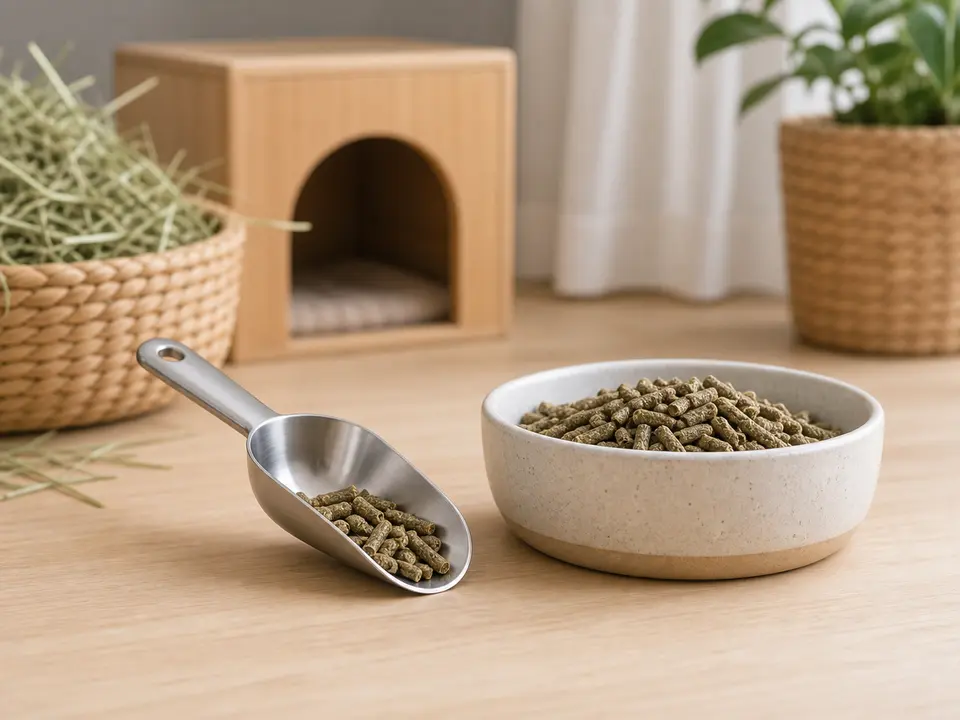
Change greens, pellets, or treats slowly.
Use food changes as enrichment without crowding out hay.
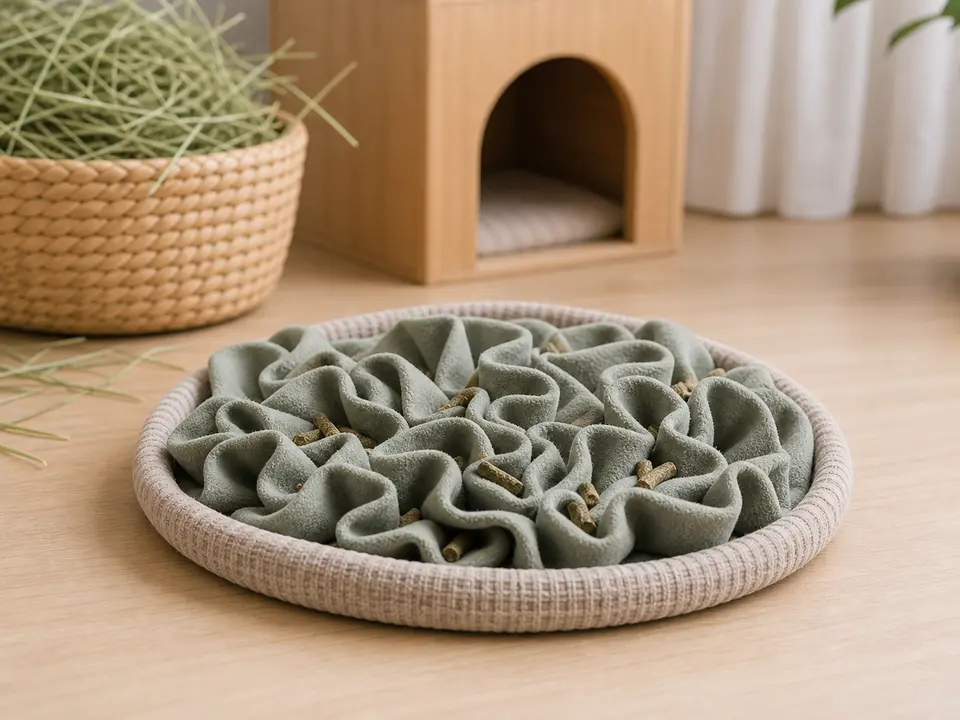
Feeding tools that keep hay in charge
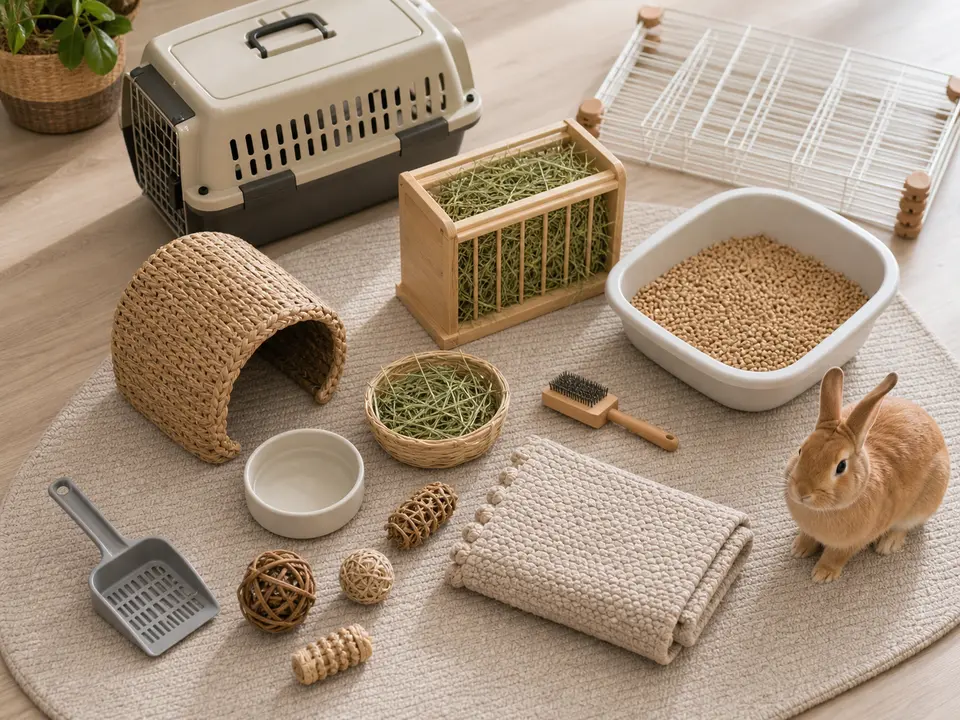
These are practical pieces for the routine, not clutter to buy all at once.
Affiliate links: Furball Cove may earn from qualifying purchases at no extra cost to you.
How do I keep greens fresh for a rabbit without overbuying?
Keep rabbit greens fresh by buying smaller amounts, washing and drying only what you need, storing them dry in a breathable container, and keeping a short list of greens your rabbit actually tolerates.
How fast should I change the routine?
Change one food detail at a time and keep hay steady. That makes appetite and poop changes easier to understand.
What if my rabbit stops eating?
Do not treat that like ordinary pickiness. If your rabbit stops eating or pooping, call a rabbit-savvy vet promptly.