How do I organize rabbit supplies in one small cabinet
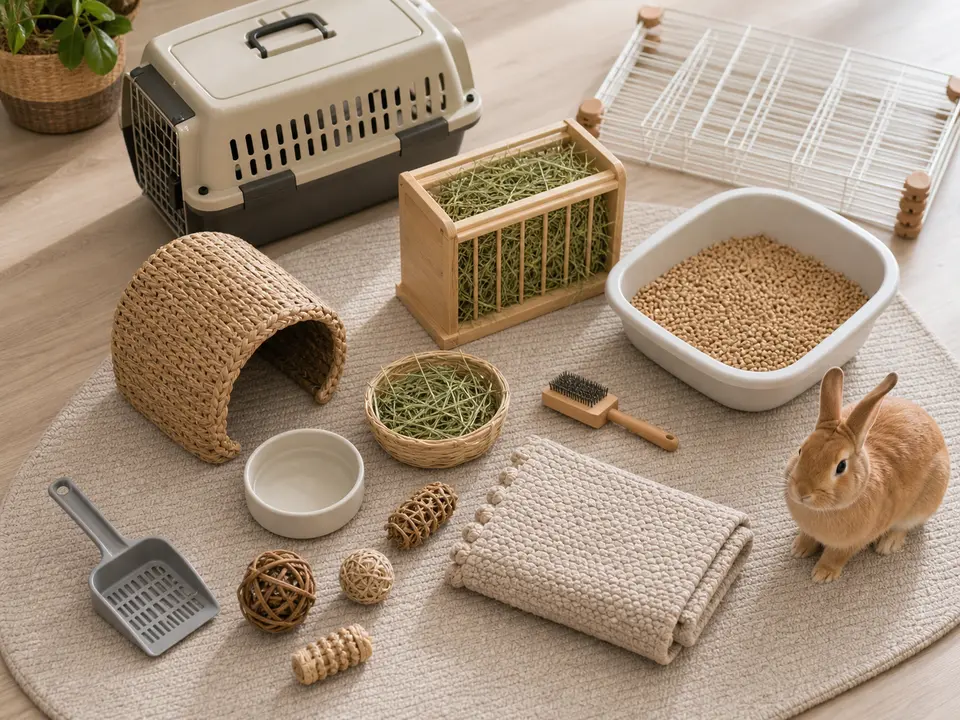
Organize rabbit supplies in one small cabinet by grouping daily items first: litter tools, hay bags, pellets, grooming tools, spare mats, cleaning cloths, and carrier supplies. Keep the pieces you use every day easiest to reach.
Rabbit supplies should earn their space in the daily routine. The best choice is the one that makes hay, litter, traction, chewing, transport, hiding, water, or cleanup easier tomorrow.
Put daily supplies in front
Organize rabbit supplies in one small cabinet by grouping daily items first: litter tools, hay bags, pellets, grooming tools, spare mats, cleaning cloths, and carrier supplies. Keep the pieces you use every day easiest to reach. The front of the cabinet should hold what you touch every day: litter tools, cleaning cloths, pellet scoop if used, grooming basics, and the small items that reset the room.
If the daily pieces are easy to reach, the rabbit area stays cleaner with less effort.
Keep this front row shallow. If you have to move three things to reach the dustpan or scoop, the cabinet will slow down the routine.
Separate food from cleaning
Keep pellets, treats, medication notes, and hay-related tools away from cleaning bottles, dirty towels, and used litter tools.
Simple bins or shelves prevent cross-contamination and make it easier for someone else in the home to help without guessing.
Use solid containers for food and open, washable containers for tools. That separation keeps smells, dust, and mistakes easier to control.
Make spares visible
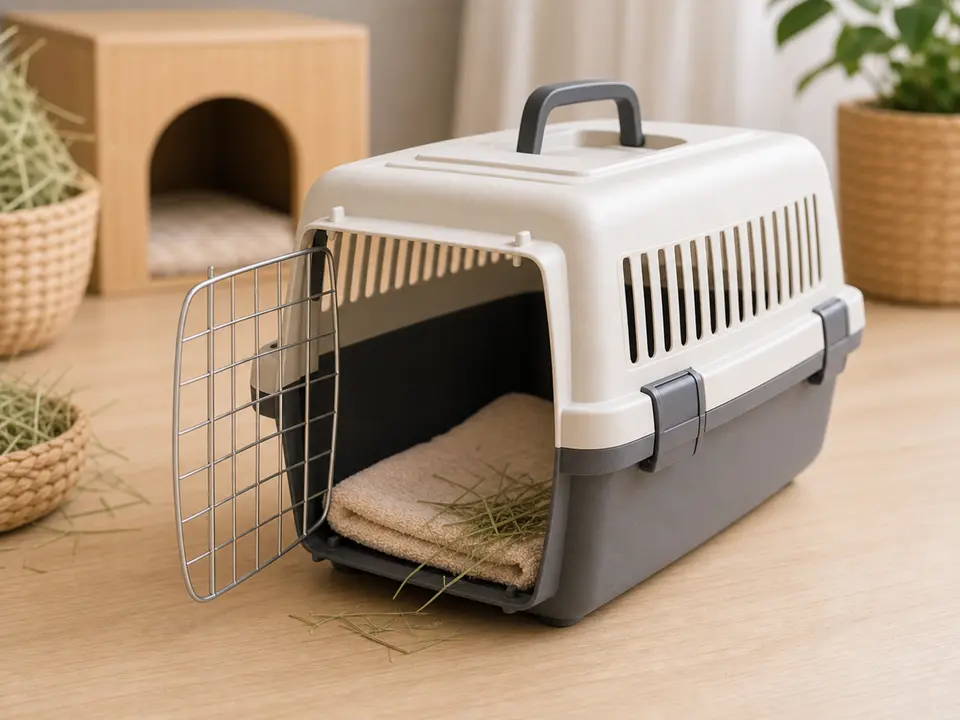
Spare mats, towels, carrier liners, and bags should not disappear behind seasonal clutter. These are the backups you need when a bowl spills, a carrier gets damp, or the litter edge spreads.
Store them folded and ready so replacing a dirty piece takes seconds.
Label the spare stack by job if more than one person helps: carrier, litter edge, floor mat, travel, or grooming. Clear labels beat a perfect cabinet no one understands.
Keep vet and travel notes together
Use one folder, pouch, or labeled envelope for vet contacts, medication notes if relevant, adoption records, and appetite or poop notes you may need to bring to an appointment.
The cabinet should make stressful days easier, not only make the shelf look tidy.
Keep the note pouch near the carrier or emergency bag section. When you are worried, you should not have to remember which drawer holds the important paper.
Keep hay and litter realistic
Hay and litter may need larger storage than a small cabinet can give. Keep bulk storage dry and contained, then use the cabinet for the tools and smaller refill portions.
A good system is practical, chew-safe, and easy to repeat on a tired weekday.
If bulk storage sheds dust or spills, move it out of the small cabinet before it buries the daily tools. The cabinet should handle access, not warehouse everything.
Before you decide
What changed recently?
Can your rabbit choose a quiet retreat?
Are hay, water, litter, and footing easy?
Is this normal for your individual rabbit?
Next best moves
Make one small change.
Watch what your rabbit chooses next.
Keep the setup calm enough to repeat tomorrow.
Helpful rabbit supplies
These are practical pieces for the routine, not clutter to buy all at once.
Affiliate links: Furball Cove may earn from qualifying purchases at no extra cost to you.
How do I organize rabbit supplies in one small cabinet?
Organize rabbit supplies in one small cabinet by grouping daily items first: litter tools, hay bags, pellets, grooming tools, spare mats, cleaning cloths, and carrier supplies. Keep the pieces you use every day easiest to reach.
What should I change first?
Choose one small setup change that makes the daily routine easier: closer hay, better traction, a calmer hideout, a larger box, or a shorter handling session.
When should I get extra help?
If your rabbit stops eating or pooping, seems painful, breathes strangely, or changes suddenly, call a rabbit-savvy vet. For bonding or handling problems, an experienced rabbit rescue can also help.