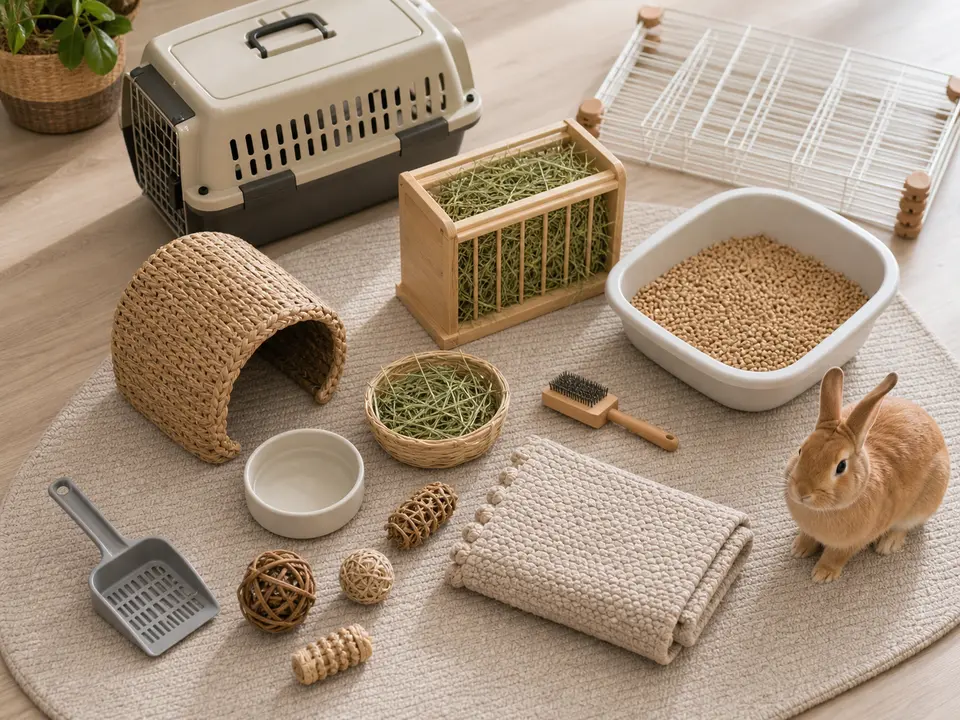
Pet a rabbit by staying low, starting at the forehead or cheeks if the rabbit invites contact, and stopping when they move away. Avoid chasing the body with your hand or reaching into a hideout.
Trust grows faster when the rabbit gets a vote. For petting your rabbit, start with floor-level time, calm hands, tiny rewards, and sessions that end before anyone feels chased or trapped.
Let the rabbit choose the pace
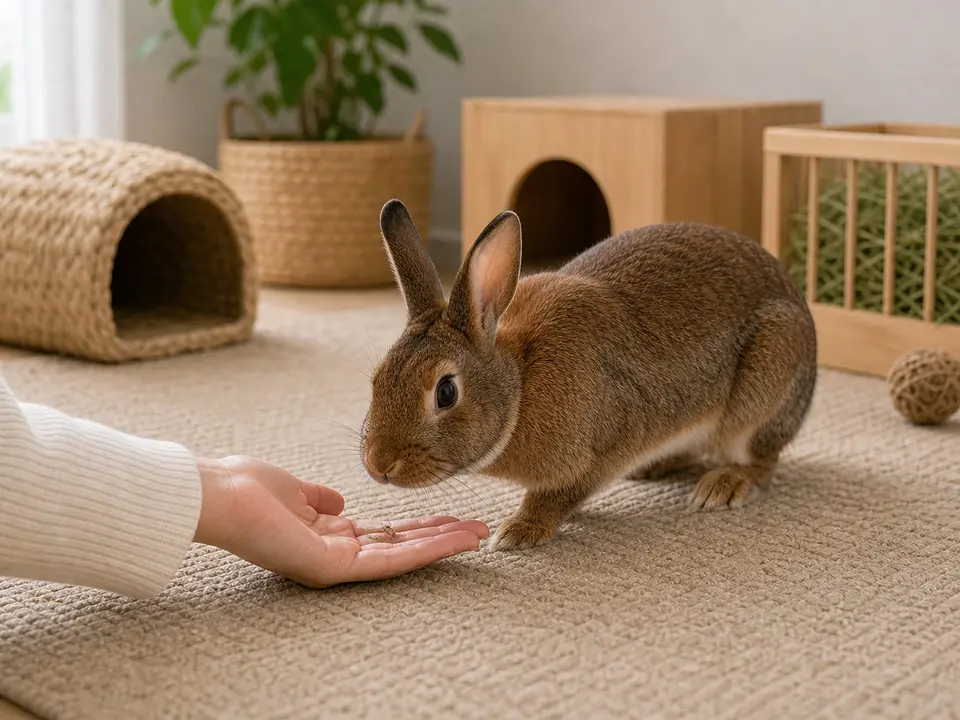
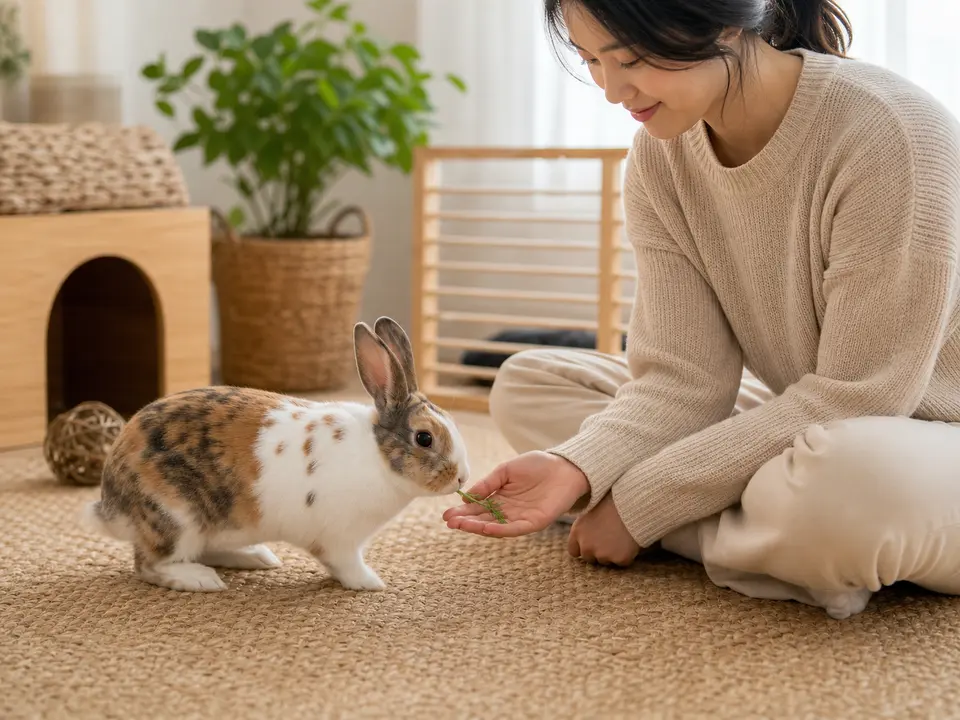
Pet a rabbit by staying low, starting at the forehead or cheeks if the rabbit invites contact, and stopping when they move away. Avoid chasing the body with your hand or reaching into a hideout. Start low to the floor and let your rabbit decide whether to come closer.
If they lean in, settle, or stay relaxed, try a short stroke on the forehead or cheeks. If they move away, let that be the end of the answer for today.
The best progress is usually quiet: a rabbit who approaches sooner, leaves more calmly, or settles near you without needing to be handled.
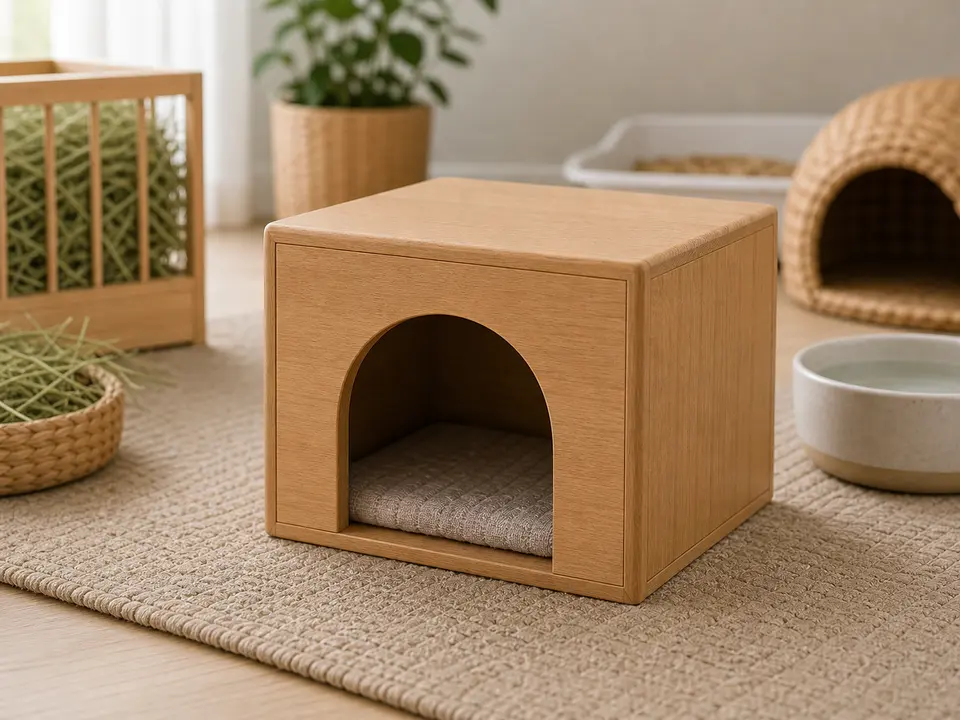
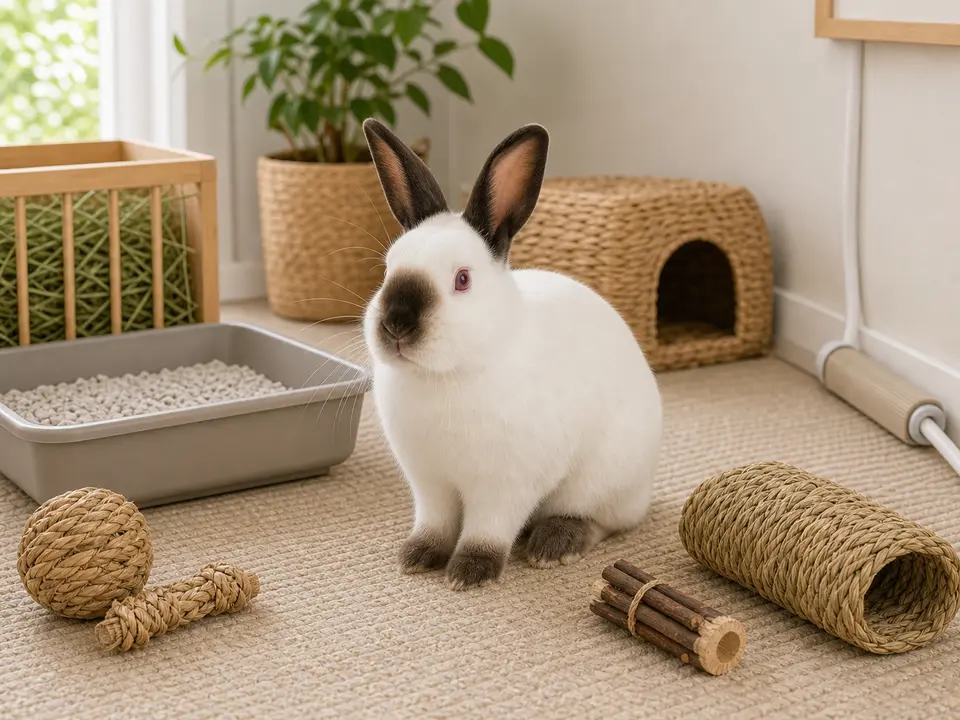
Keep the hideout available
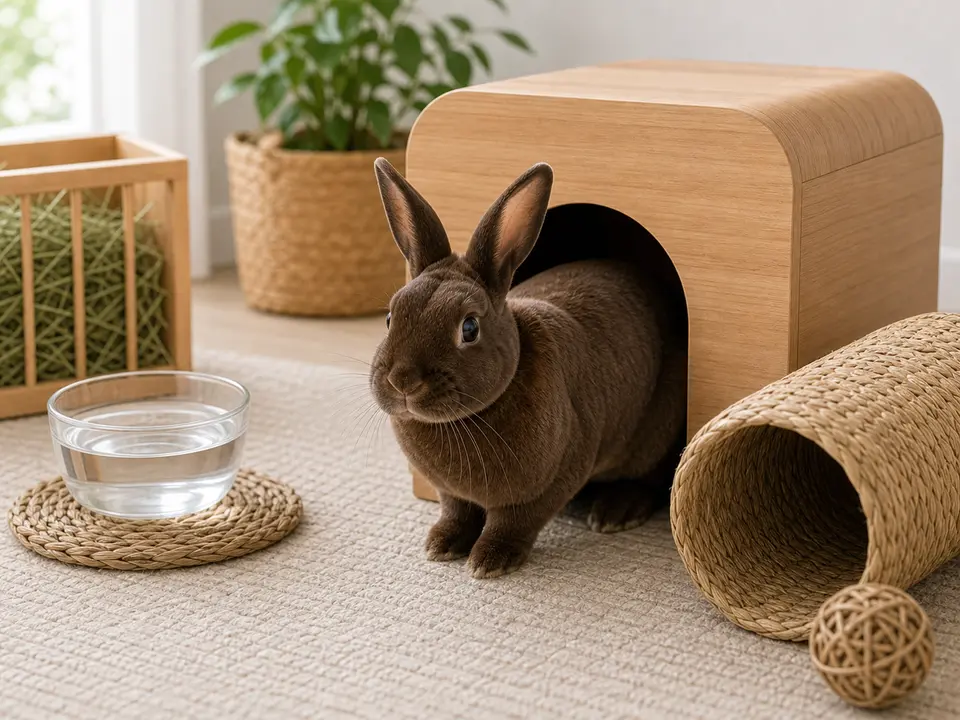
Do not reach into a hideout to prove you are friendly. A rabbit who can retreat without being followed is more likely to come back out with real curiosity.
Settle nearby, keep your hands still, and let the safe place stay safe.
Keep the routine predictable enough that your hands, voice, treats, and exits feel familiar instead of surprising.
Use tiny rewards, not pressure
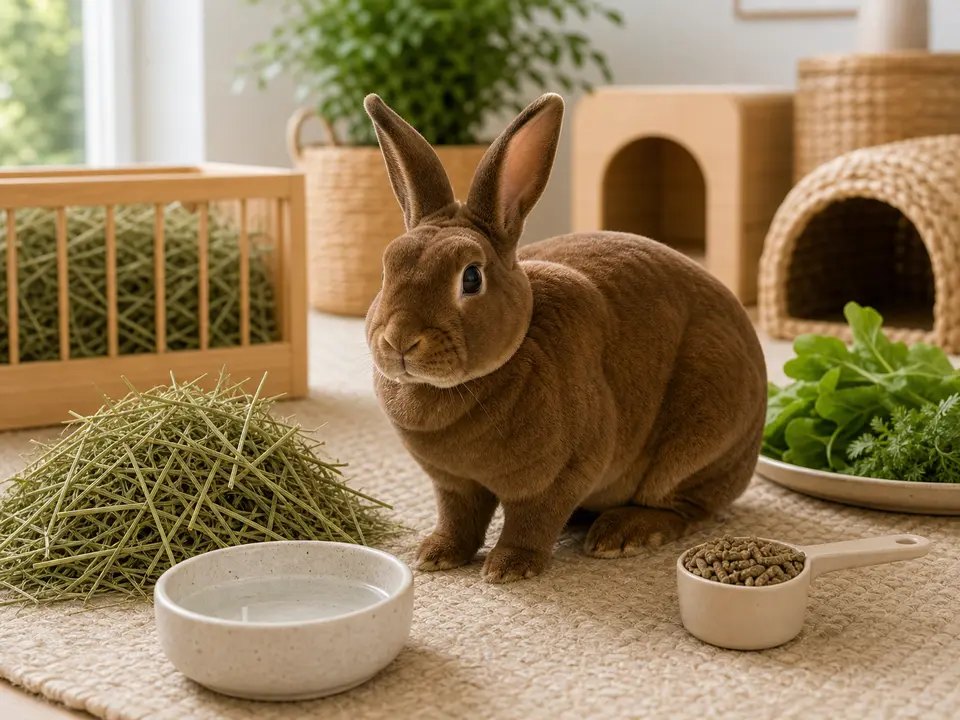
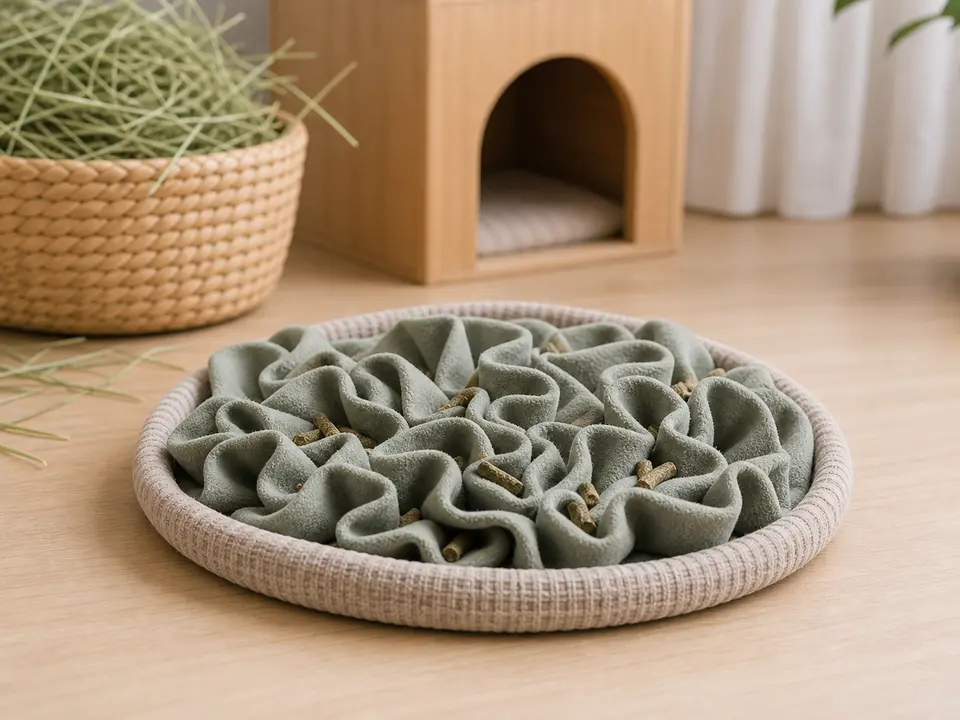
A small piece of the normal food routine can help your rabbit connect hands with calm things, but the treat should not become a bribe for being grabbed.
Offer it near your knee, wait for a relaxed approach, and stop while the moment still feels easy.
Choice matters here. A rabbit who can leave safely is more likely to come back with curiosity instead of guarded tolerance.
Separate petting from necessary care
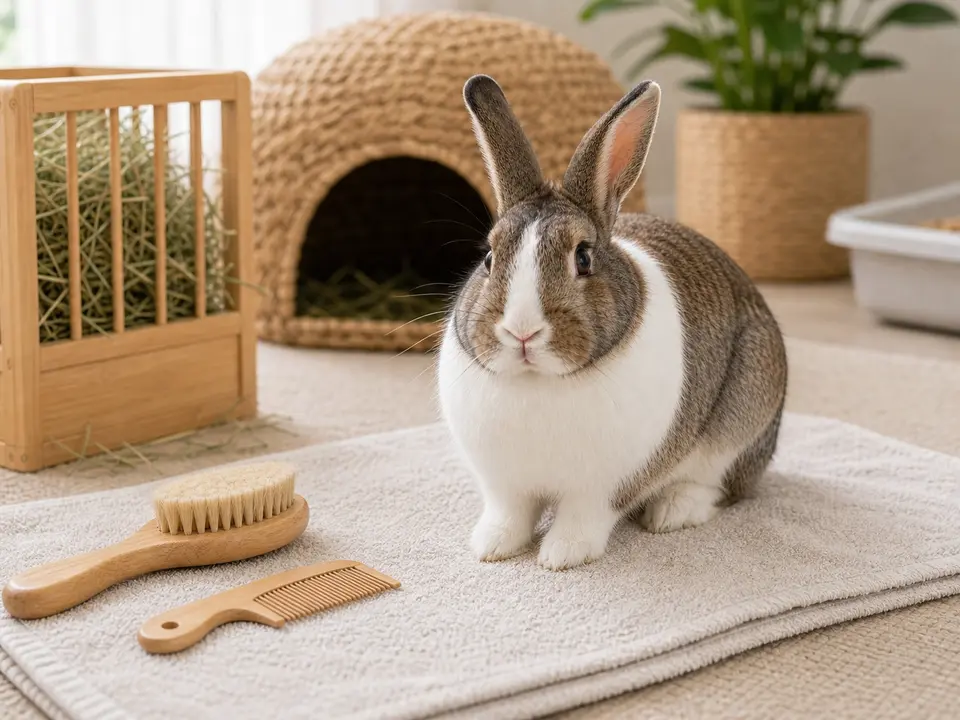
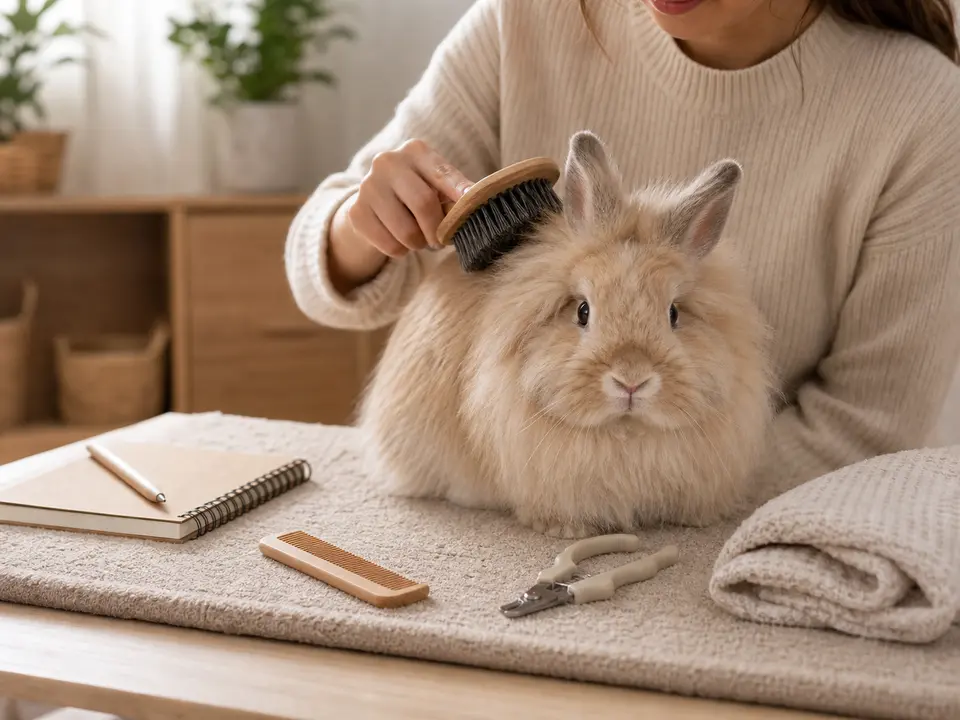
Grooming, nail checks, carriers, and health checks sometimes require touch, but those are different from casual affection.
Practice care skills in tiny rewarded steps so petting does not start to feel like a warning that something harder is coming.
Separating care practice from casual affection keeps trust cleaner, especially for rabbits who already worry about being picked up.
Stop before trust gets smaller
Boxing, lunging, freezing, hiding longer afterward, or avoiding your hands more than before all mean the next session should be easier.
The goal is a rabbit who chooses contact again later, not a rabbit who tolerates one longer session because they ran out of options.
If trust is shrinking after each attempt, make the next step smaller and ask a rabbit-savvy helper before the pattern hardens.
Before you decide
What changed recently?
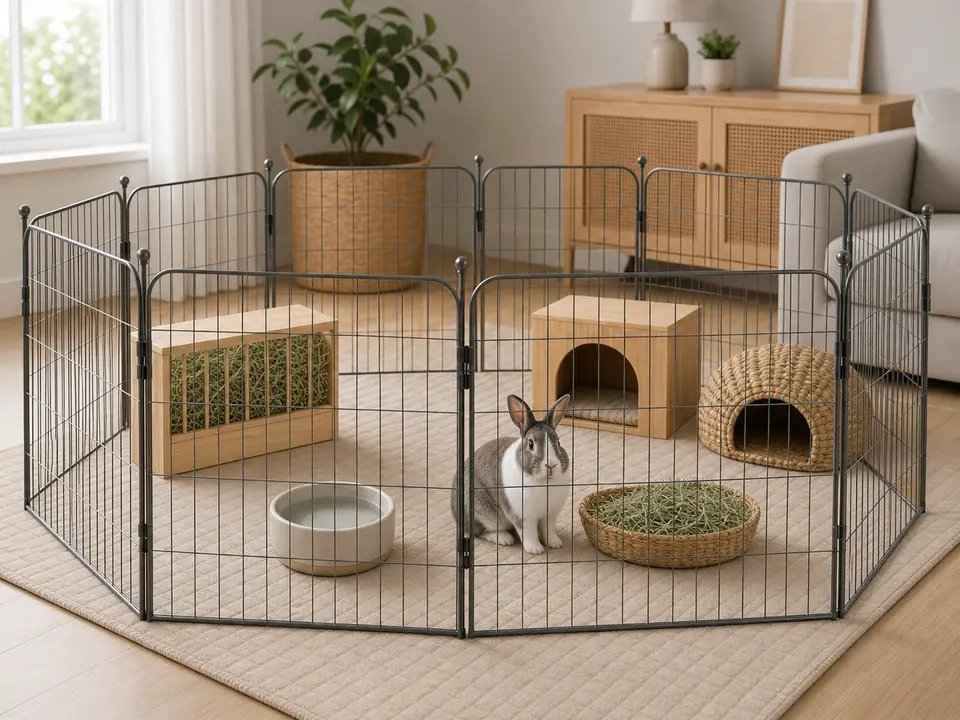
Can your rabbit choose a quiet retreat?
Are hay, water, litter, and footing easy?
Is this normal for your individual rabbit?
Next best moves
Make one small change.
Watch what your rabbit chooses next.
Keep the setup calm enough to repeat tomorrow.
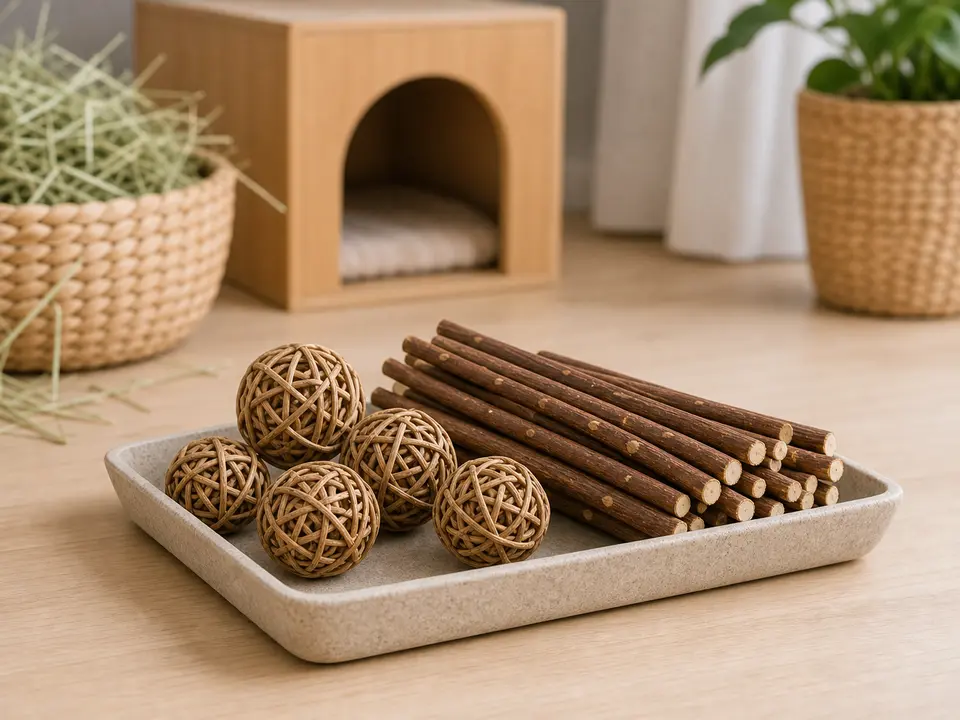
Quiet tools for trust-building
The best tools add choice, retreat space, and calm repetition instead of forcing contact.
Affiliate links: Furball Cove may earn from qualifying purchases at no extra cost to you.
Pet a rabbit by staying low, starting at the forehead or cheeks if the rabbit invites contact, and stopping when they move away. Avoid chasing the body with your hand or reaching into a hideout.
How do I know if I moved too fast?
If your rabbit hides longer, avoids your hands, boxes, grunts, thumps repeatedly, or will not come back for food, make the next interaction shorter, lower, and easier to leave.
Should I pick my rabbit up to fix this?
Usually no. Most trust and behavior work starts better on the floor. Save picking up for necessary care, and practice it in tiny reward-based steps.