How do I set up a rabbit pen for a studio apartment
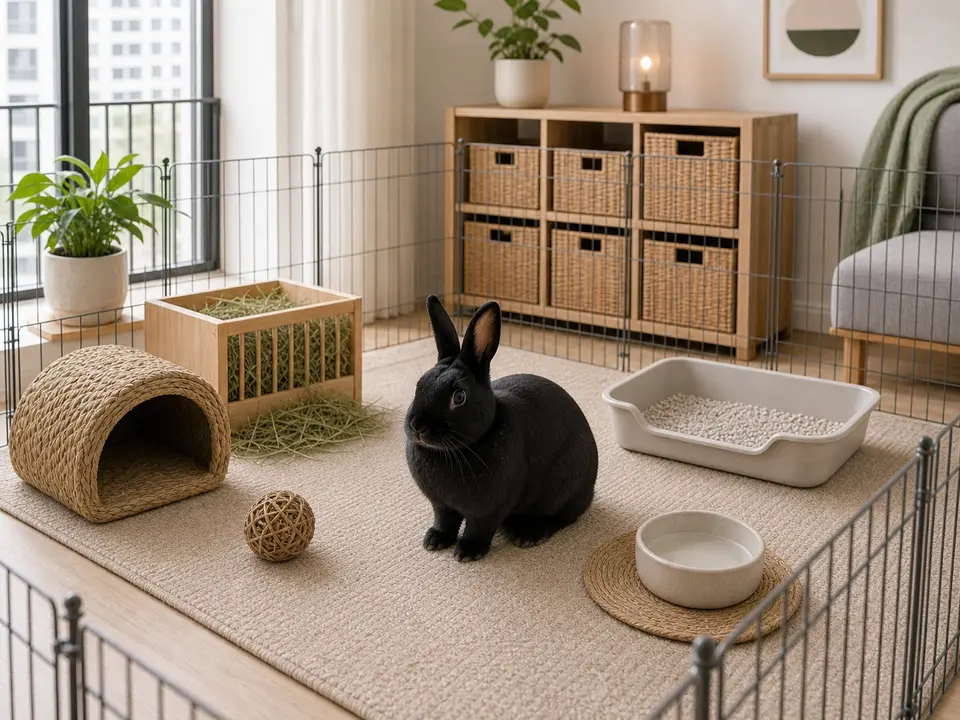
Set up a rabbit pen in a studio by making one clean home base against a quiet wall, with hay and litter together, water away from kicked litter, grippy flooring underfoot, a hideout, and cord protection before floor time expands.
Rabbit supplies should earn their space in the daily routine. The best choice is the one that makes hay, litter, traction, chewing, transport, hiding, water, or cleanup easier tomorrow.
Start with one quiet wall
Set up a rabbit pen in a studio by making one clean home base against a quiet wall, with hay and litter together, water away from kicked litter, grippy flooring underfoot, a hideout, and cord protection before floor time expands. In a studio, the pen should feel like one calm home base, not a fence dropped into the busiest walking path.
Choose a wall where your rabbit can rest without being stepped over, bumped by chairs, or startled every time someone crosses the room.
Before buying, picture this item after real hay dust, fur, water drips, litter scatter, and a rabbit testing the edges. The best supply still makes sense after a week of normal use, not just on the day it arrives.
Put hay and litter together
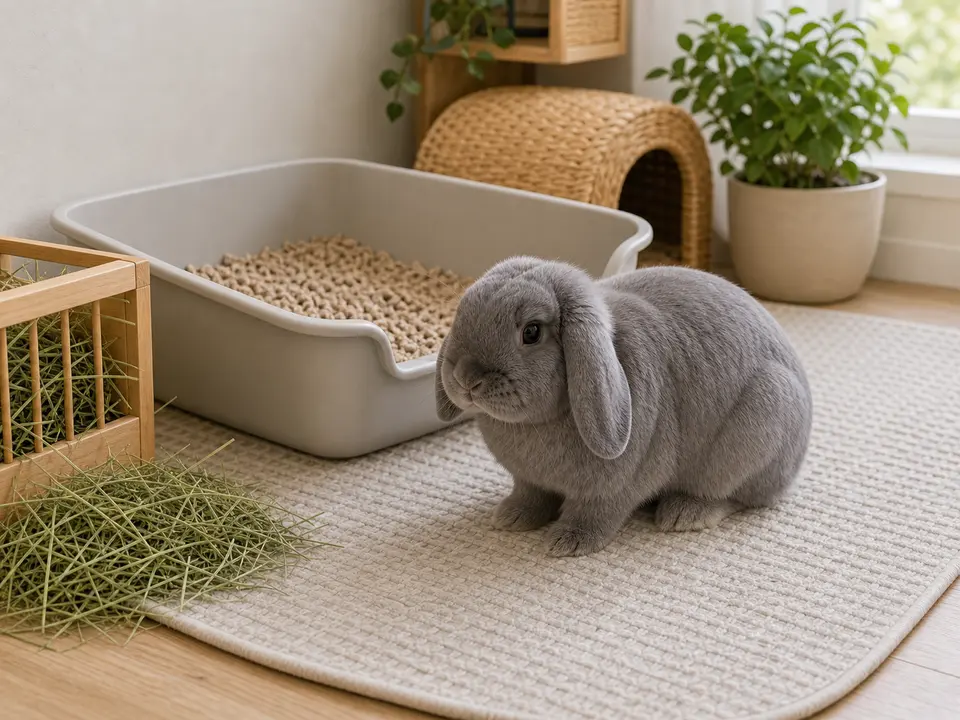
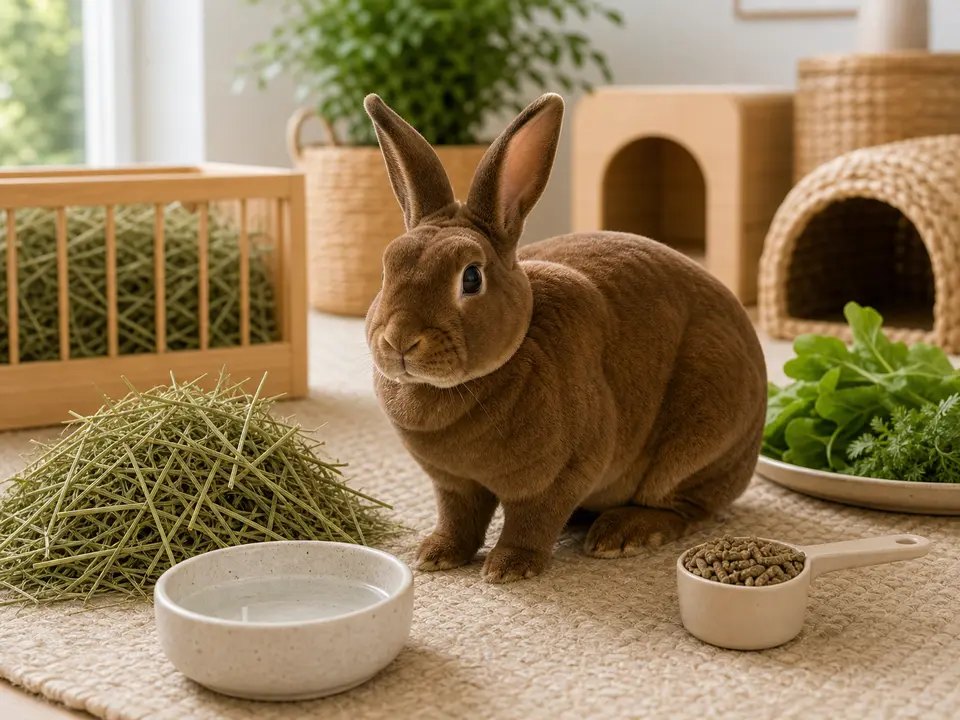
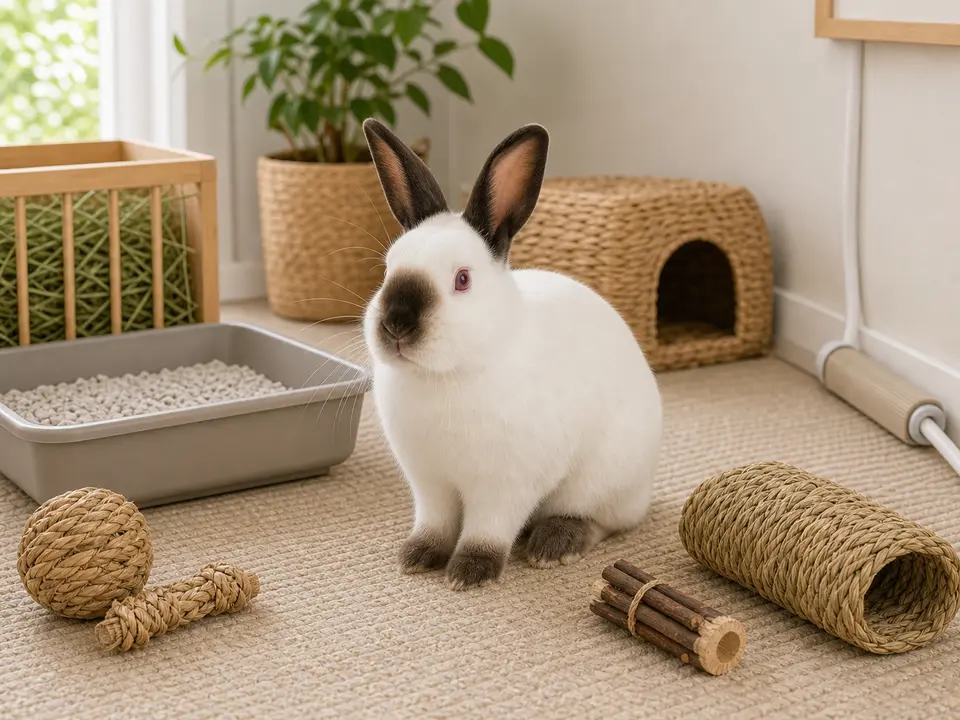
Many rabbits eat hay while using the litter box, so build that station first. Use a roomy box, safe litter, and hay placed low enough that eating does not require stretching.
This keeps the mess concentrated and makes the daily reset easier in a small home.
Fit and placement matter as much as the product. A simple piece in the right spot often works better than a clever piece that crowds movement, blocks a path, or makes cleanup harder.
Keep water clean but close
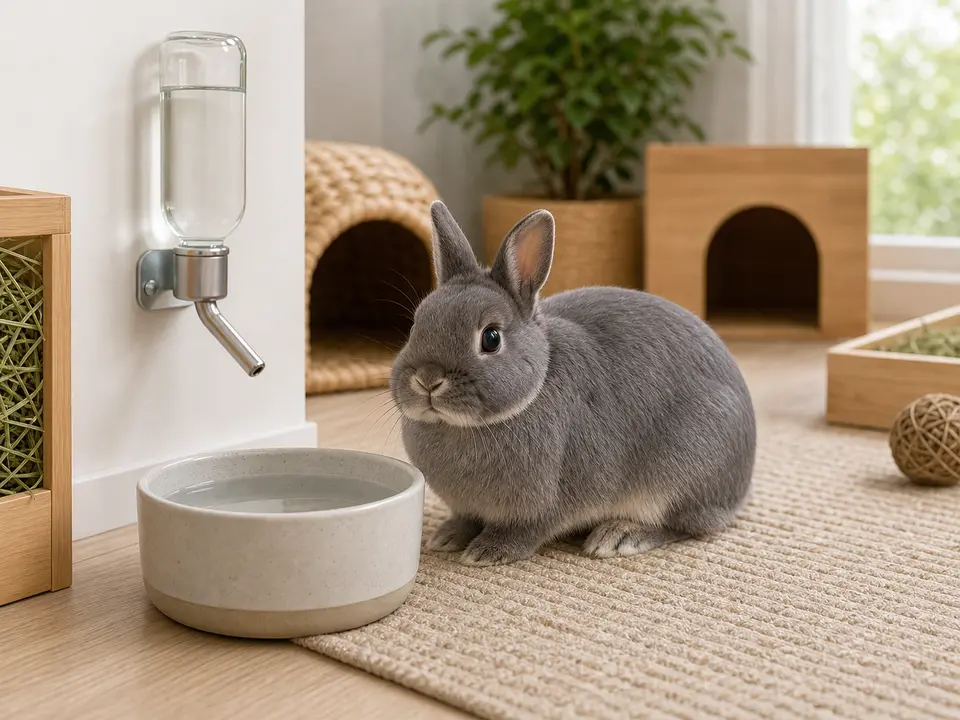
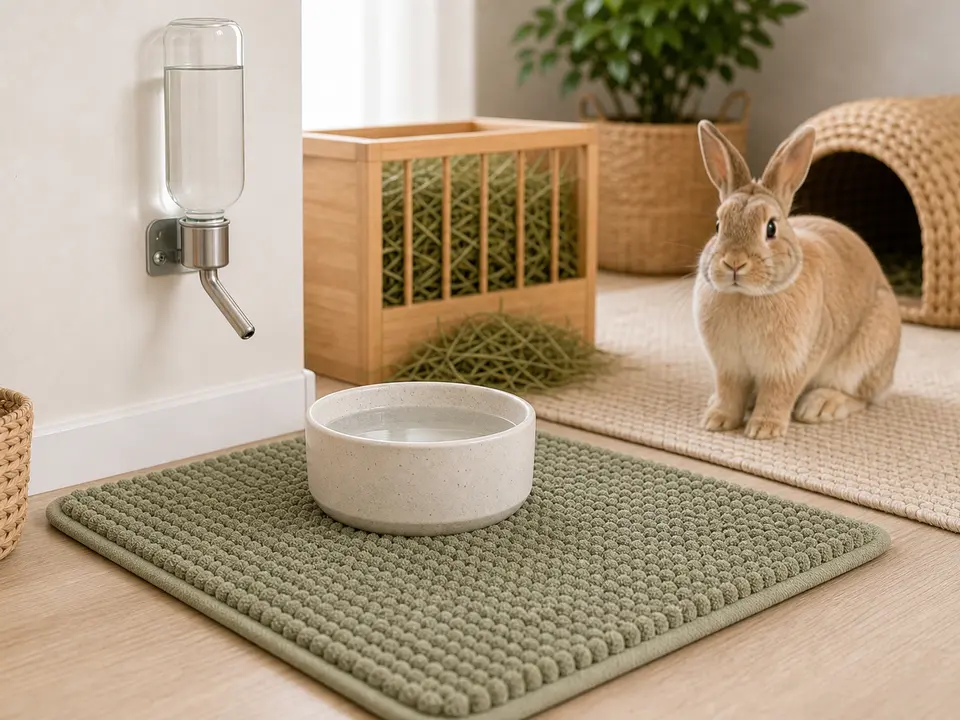
Place a heavy bowl near the normal routine, but not directly under the hay drop or in the kicked-litter zone.
If the bowl fills with hay every few hours, move it a little rather than accepting dirty water as part of apartment life.
Watch your rabbit's answer once the item is in the room. Drinking, hopping, resting, chewing safer things, and easier cleanup are better signals than the product photo or the packaging promise.
Cover the whole footpath
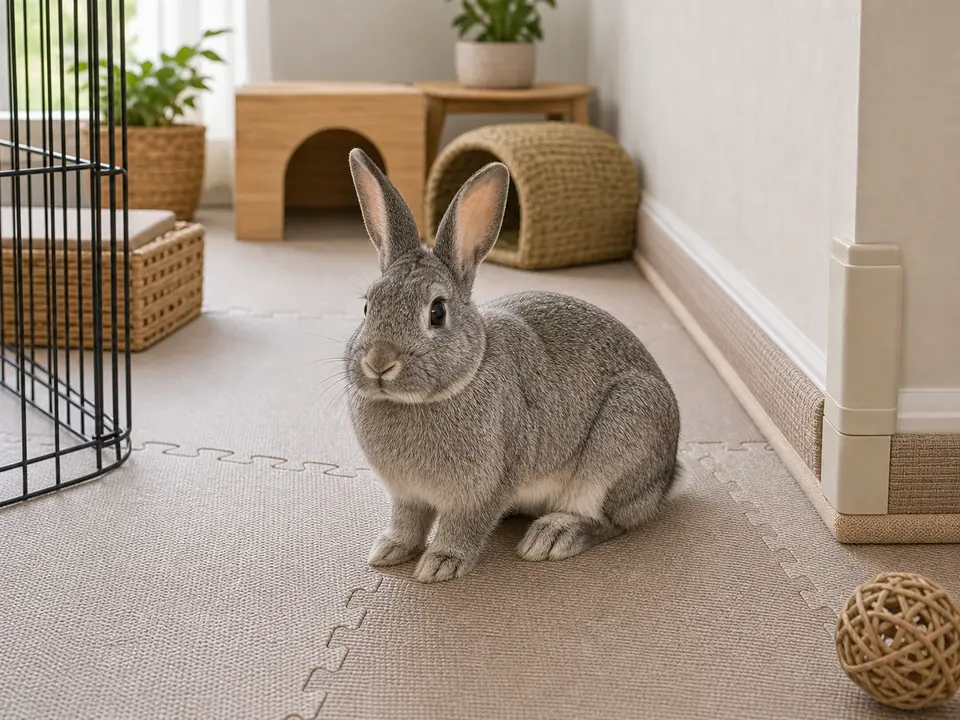
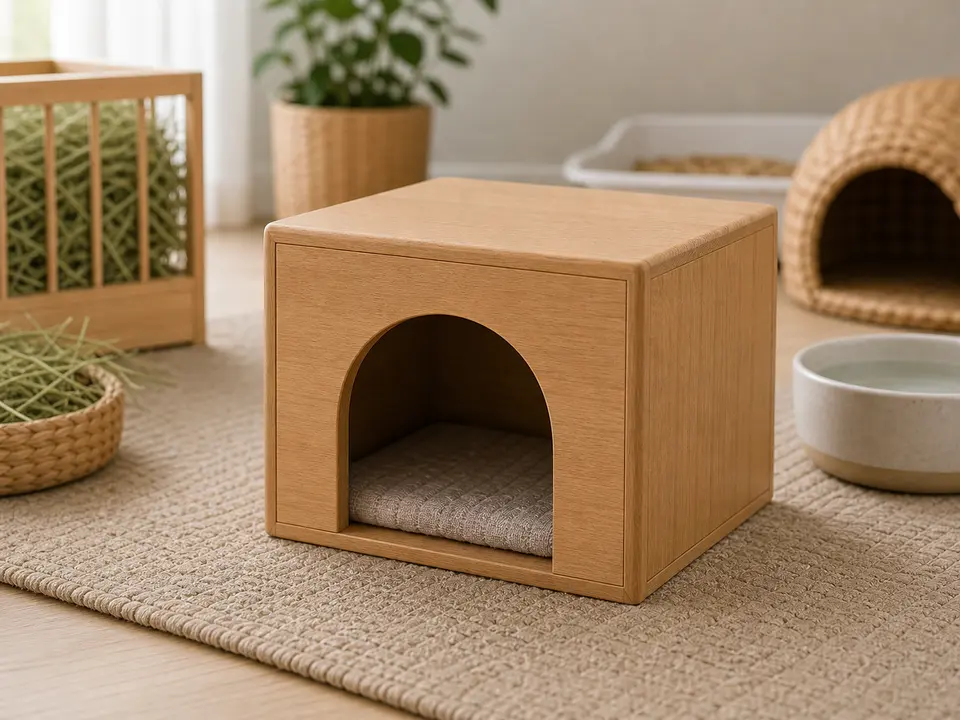
A studio pen usually has less room for a rabbit to choose a better route, so traction matters. Use washable rugs or mats under the paths from rest spot to hay, water, litter, and hideout.
Leave enough open floor for hopping instead of filling every inch with objects.
Keep the setup calm enough to repeat on a tired weekday. Premium rabbit care usually looks simple: fewer pieces, better placement, and no surprise hazards at floor level or cleanup time.
Protect cords before freedom grows
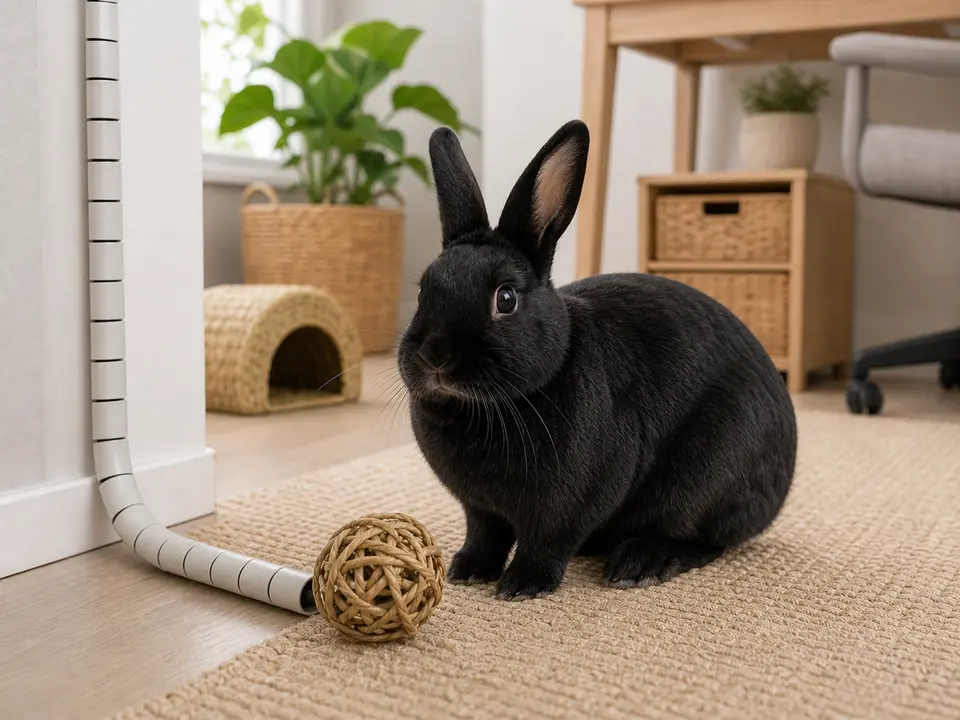
Studio apartments often put desks, chargers, lamps, and media cords close to the rabbit area. Cover or block cords before expanding floor time.
A clean cord sleeve, pen panel, or furniture gap blocker is easier to live with than constant interruption once chewing has become interesting.
If the item creates stress, mess, or avoidance, change the setup quickly. Supplies should make the easy behavior obvious rather than giving your rabbit another problem to solve each day.
Before you decide
What changed recently?
Can your rabbit choose a quiet retreat?
Are hay, water, litter, and footing easy?
Is this normal for your individual rabbit?
Next best moves
Make one small change.
Watch what your rabbit chooses next.
Keep the setup calm enough to repeat tomorrow.
Helpful rabbit supplies
These are practical pieces for the routine, not clutter to buy all at once.
Affiliate links: Furball Cove may earn from qualifying purchases at no extra cost to you.
How do I set up a rabbit pen for a studio apartment?
Set up a rabbit pen in a studio by making one clean home base against a quiet wall, with hay and litter together, water away from kicked litter, grippy flooring underfoot, a hideout, and cord protection before floor time expands.
What should I change first?
Choose one small setup change that makes the daily routine easier: closer hay, better traction, a calmer hideout, a larger box, or a shorter handling session.
When should I get extra help?
If your rabbit stops eating or pooping, seems painful, breathes strangely, or changes suddenly, call a rabbit-savvy vet. For bonding or handling problems, an experienced rabbit rescue can also help.