Trim rabbit nails alone only if you can keep the rabbit low, supported, and calm. Do one or two nails at a time, use good light, and ask a rabbit-savvy vet, rescue, or groomer to show you a safer hold if the setup feels unstable.
Keep trimming rabbit nails when you live alone short, steady, and easy to repeat. Set up the surface, tool, light, and exit plan before you start so care feels like a calm routine instead of a chase.
Set up trimming rabbit nails when you live alone before touching a paw
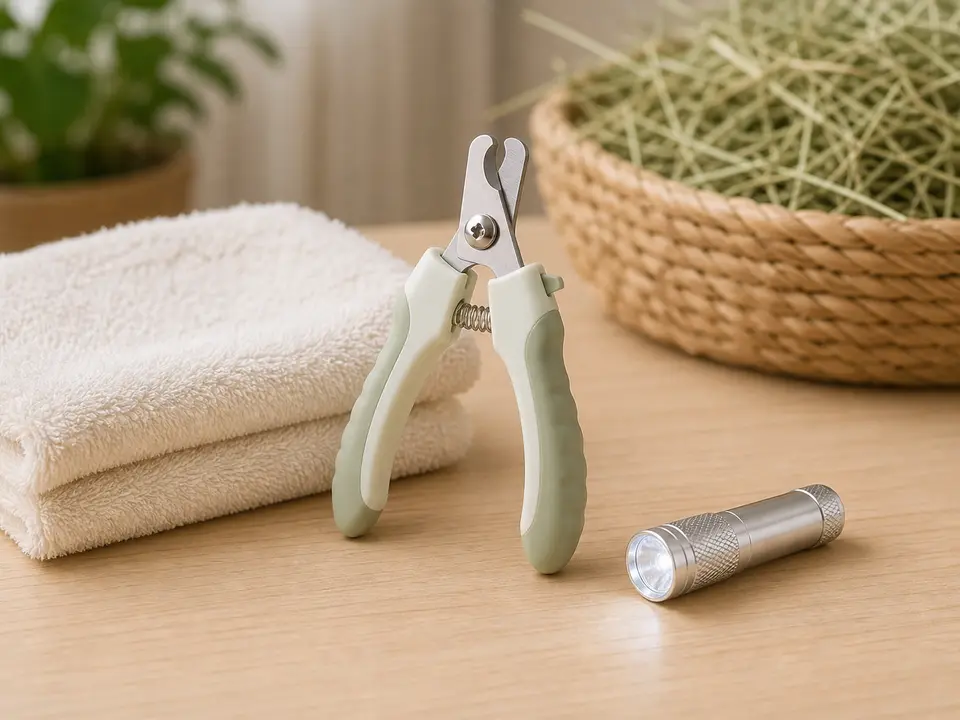
Trim rabbit nails alone only if you can keep the rabbit low, supported, and calm. Do one or two nails at a time, use good light, and ask a rabbit-savvy vet, rescue, or groomer to show you a safer hold if the setup feels unstable. Put the clippers, good light, towel, and treats within reach first. A rabbit who waits while you search for supplies is more likely to wiggle before the nail trim even starts. Keep the nail-trim setup simple: sharp small clippers, bright light, treats, and a stopping point before your rabbit starts to panic. Calm repetition matters more than finishing every foot at once.
For trimming rabbit nails when you live alone: work low with full body support
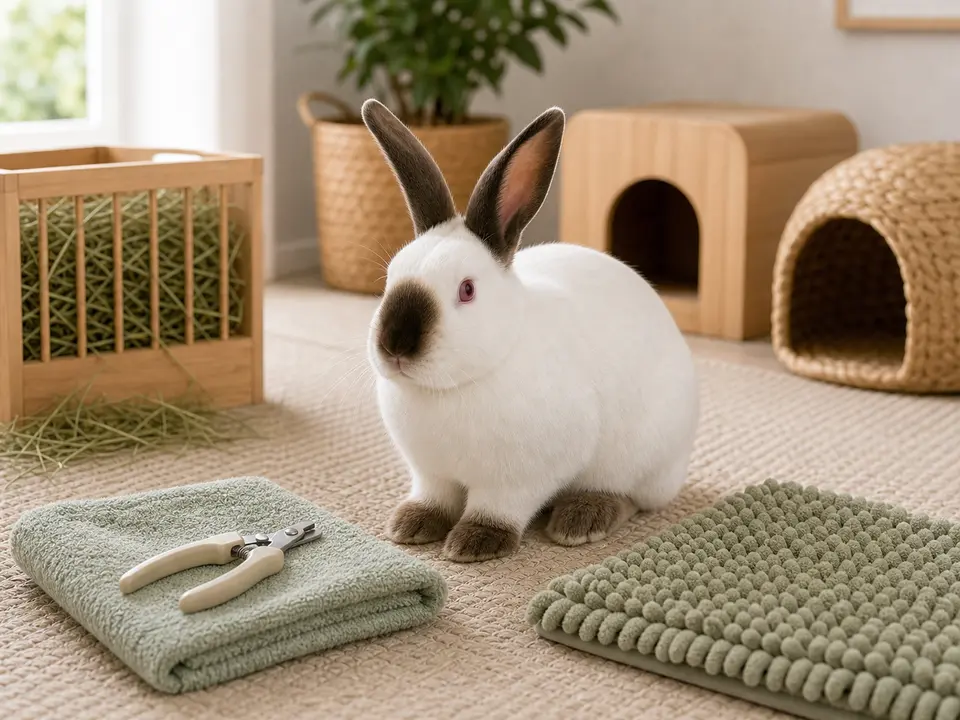
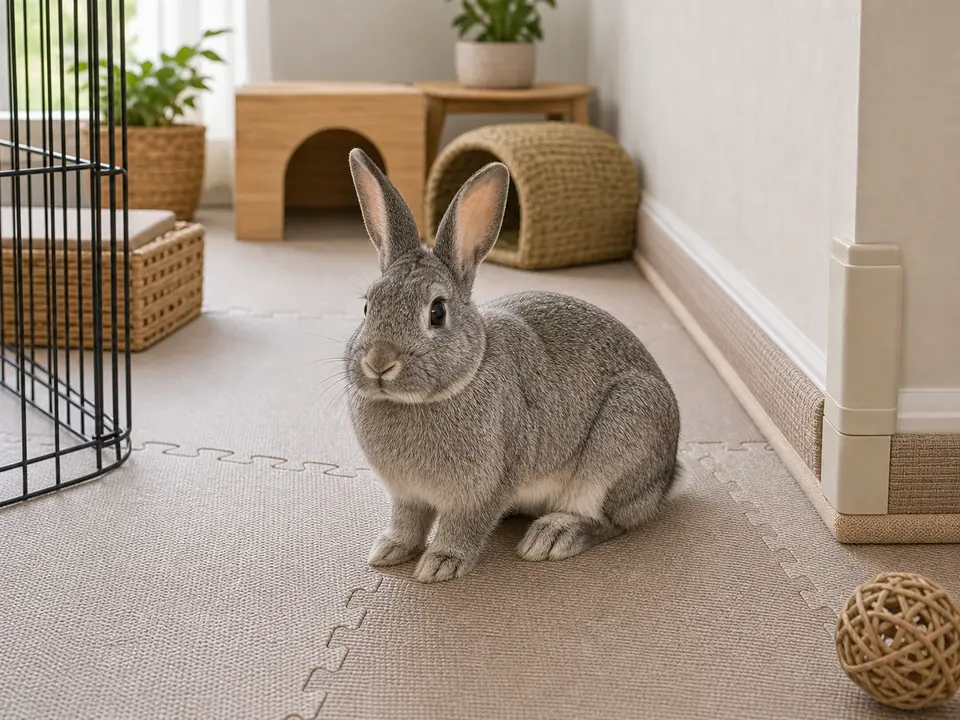
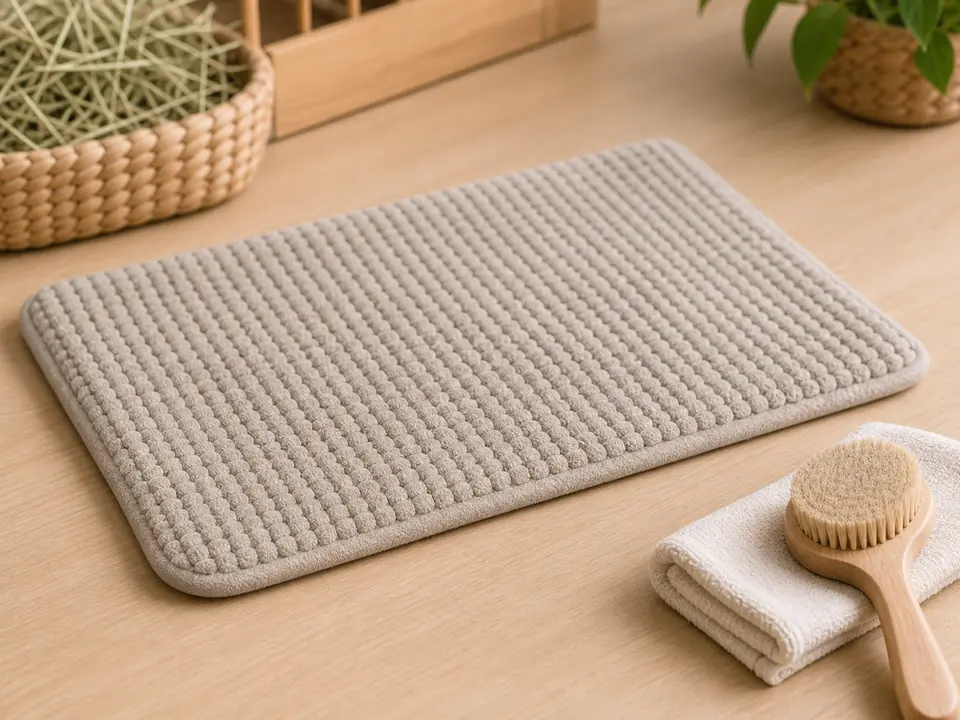
Use low non-slip flooring and support your rabbit's body instead of stretching one foot away from the rest of them. The goal is a steady paw check, not proving you can finish every nail in one sitting. Use real floor traction, not a slippery counter or table; a washable mat or rug gives your rabbit steadier paws and a calmer escape plan.
For trimming rabbit nails when you live alone: trim tiny amounts
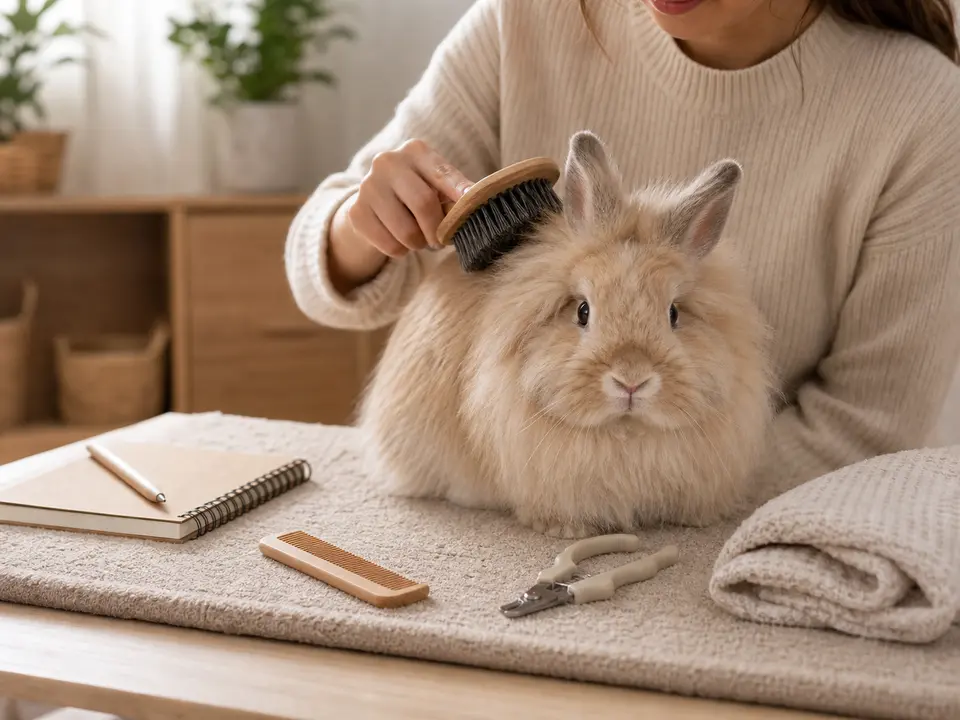
For dark nails, overgrown nails, or a rabbit who worries quickly, take a tiny tip and stop sooner than you think. One calm nail today can be better training than one forced full trim. Treat trimming rabbit nails when you live alone as both grooming and health observation: coat, fur, skin, nails, teeth, movement, and comfort can all give you useful clues.
For trimming rabbit nails when you live alone: watch feet after the trim
Nail care connects to movement. If nails catch on fabric, change the foot angle, or make a stiff rabbit slip, shorter and more frequent checks may be kinder than waiting for a big trim day. Keep trimming rabbit nails when you live alone tied to a real daily rabbit routine so the advice stays practical at home.
For trimming rabbit nails when you live alone: get a hands-on lesson if trims turn tense
A rabbit-savvy vet, rescue, or experienced groomer can show you where to clip and how to hold without panic. That help is often the fastest path to calmer home trims. Use a rabbit-savvy vet when pain, appetite, poop, skin, teeth, or movement changes join the grooming problem; those clues matter more than a perfect-looking coat.
Before you decide
What changed recently?
Can your rabbit choose a quiet retreat?
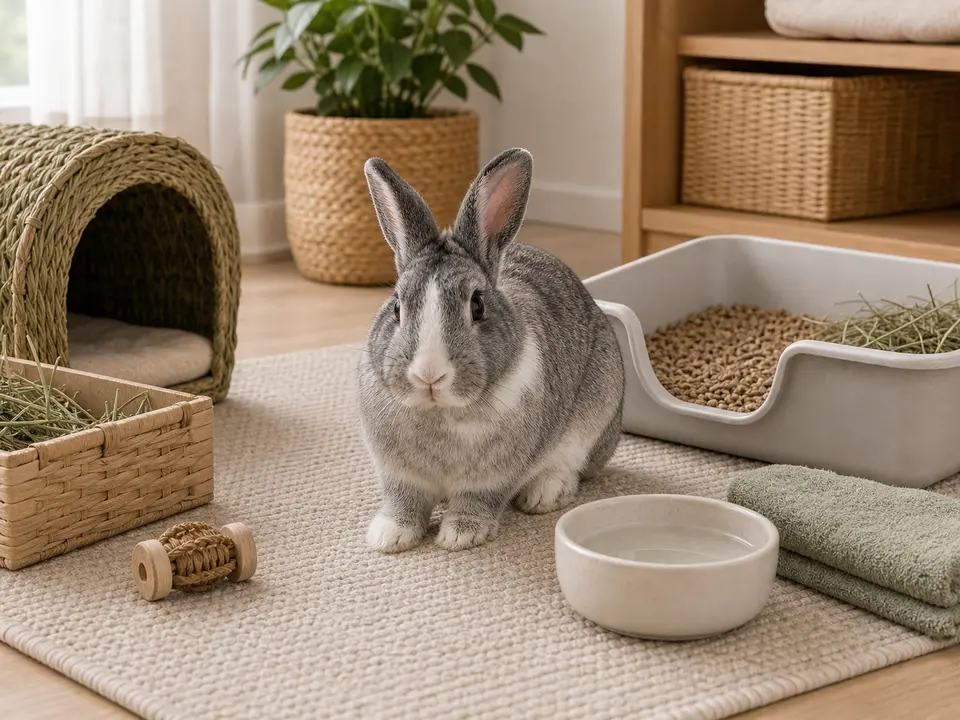
Are hay, water, litter, and footing easy?
Is this normal for your individual rabbit?
Next best moves
Make one small change.
Watch what your rabbit chooses next.
Keep the setup calm enough to repeat tomorrow.
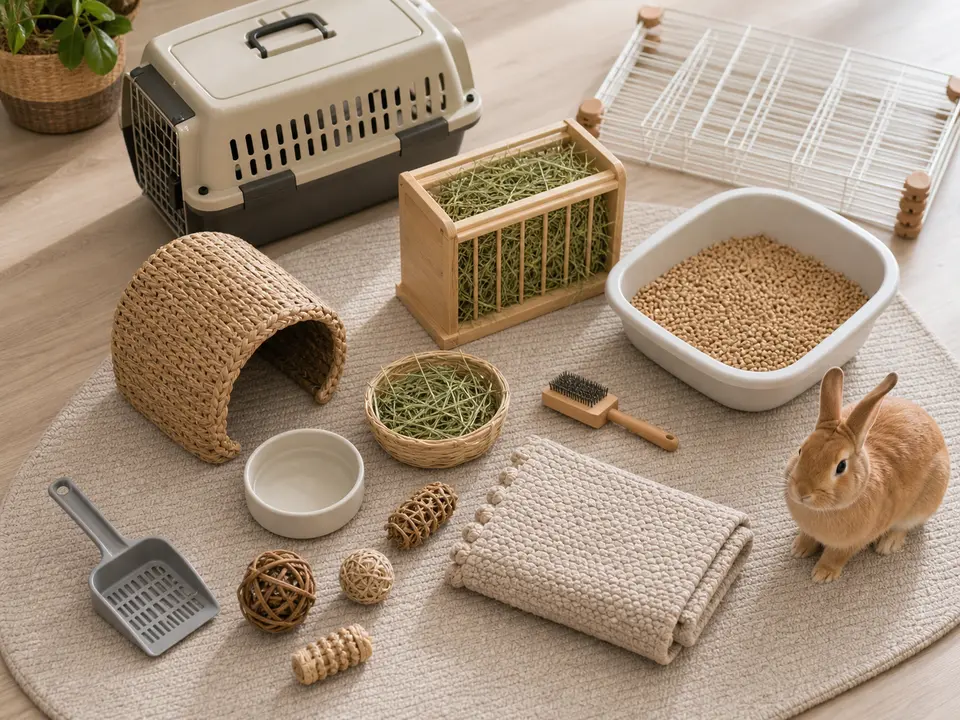
Grooming tools that stay useful
These are practical pieces for the routine, not clutter to buy all at once.
Affiliate links: Furball Cove may earn from qualifying purchases at no extra cost to you.
Trim rabbit nails alone only if you can keep the rabbit low, supported, and calm. Do one or two nails at a time, use good light, and ask a rabbit-savvy vet, rescue, or groomer to show you a safer hold if the setup feels unstable.
What should I change first?
Choose one small setup change that makes the daily routine easier: closer hay, better traction, a calmer hideout, a larger box, or a shorter handling session.
When should I get extra help?
If your rabbit stops eating or pooping, seems painful, breathes strangely, or changes suddenly, call a rabbit-savvy vet. For bonding or handling problems, an experienced rabbit rescue can also help.