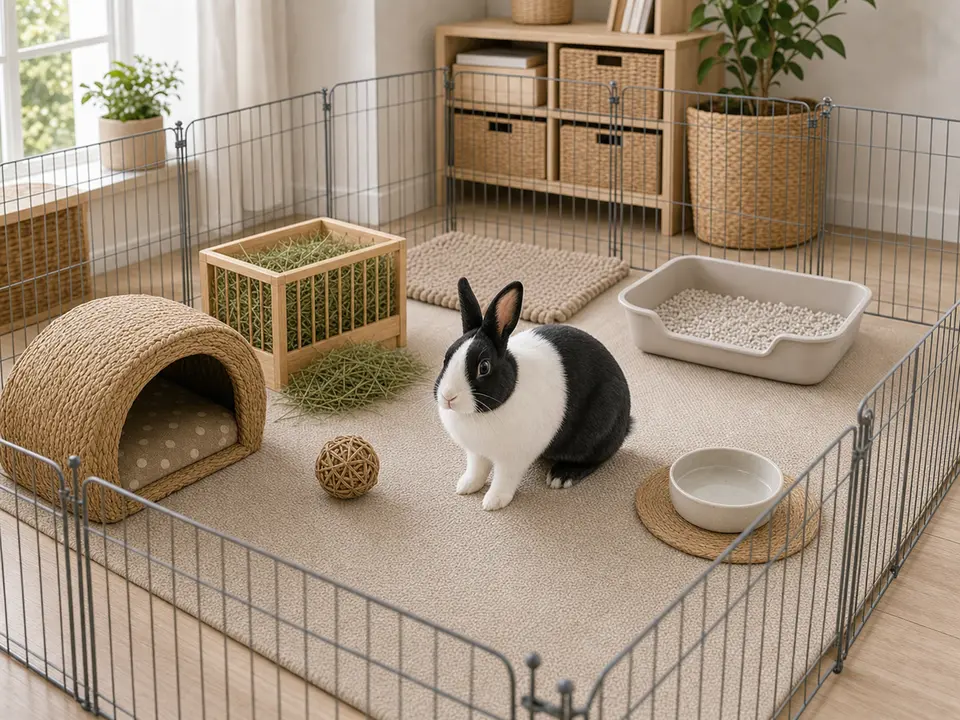
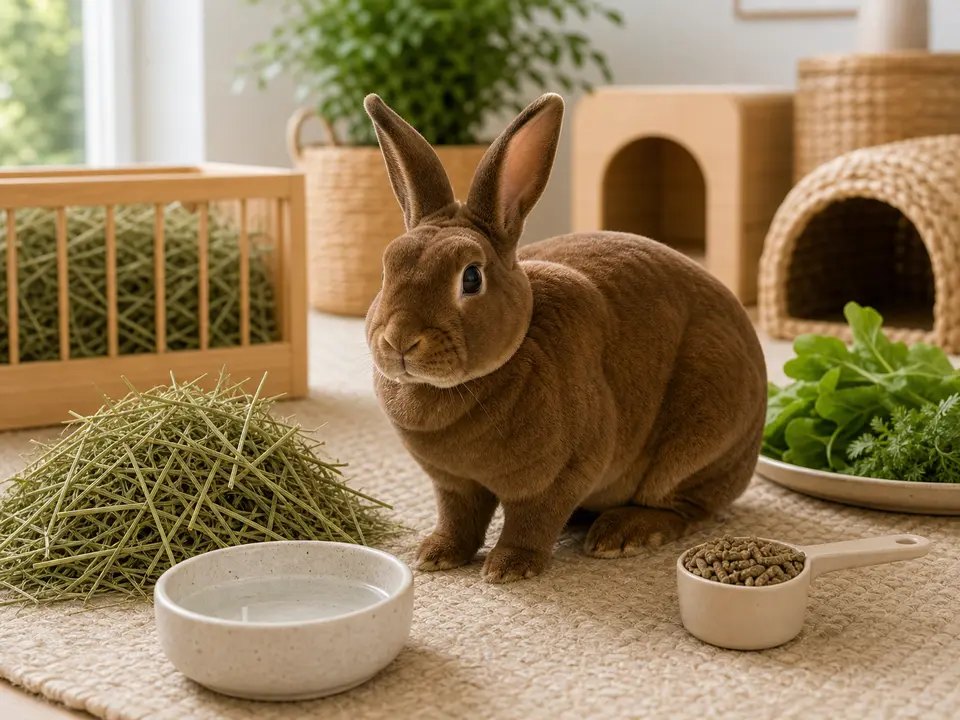
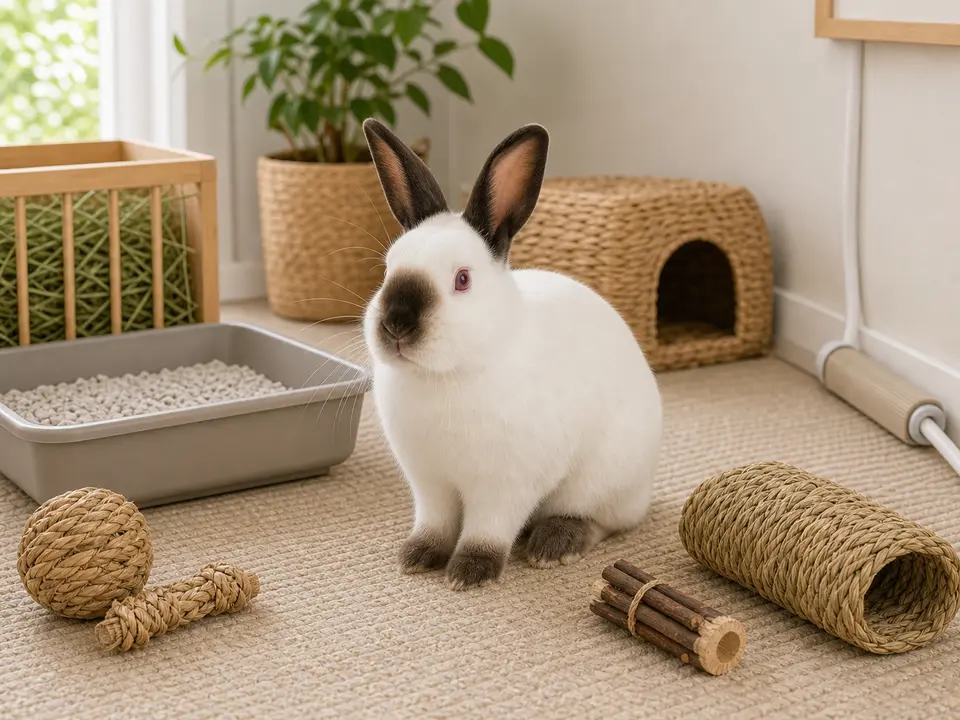
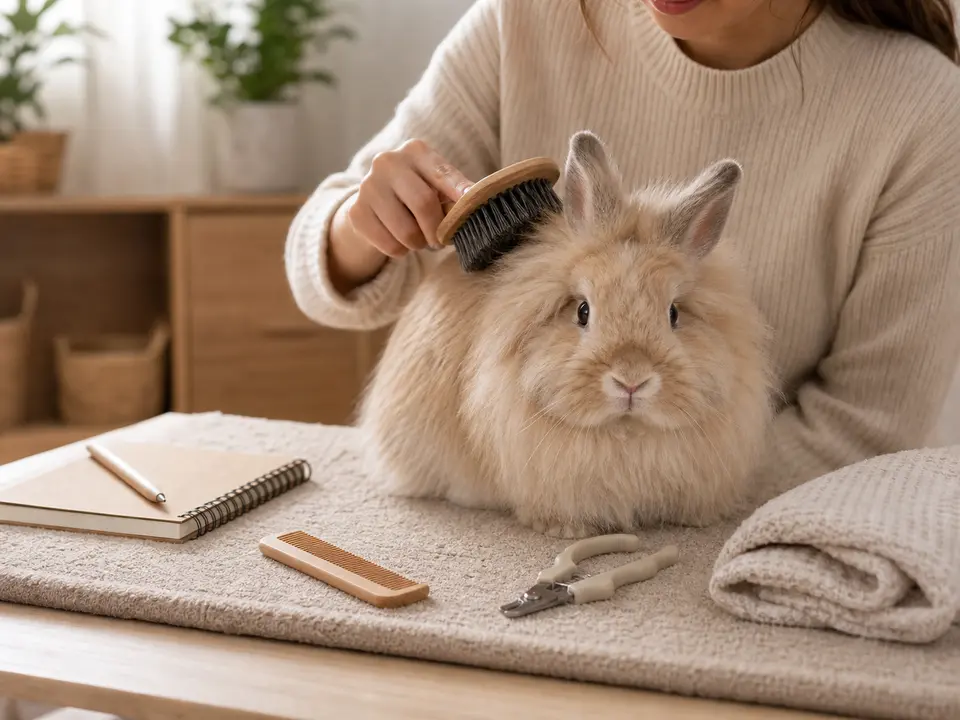
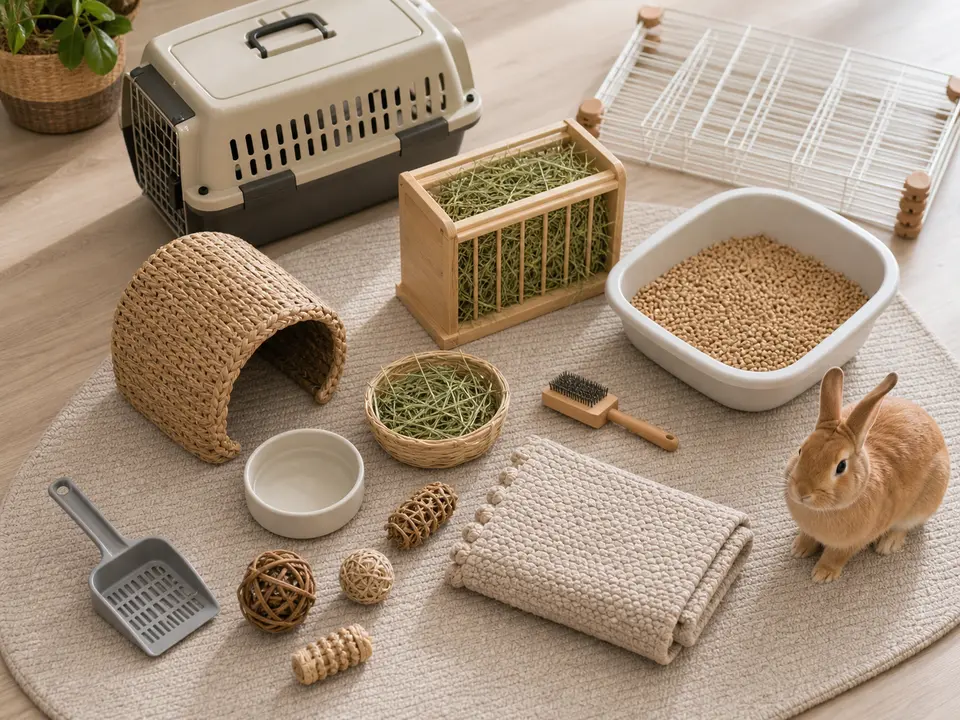
A calm rabbit bonding session looks almost boring: neutral space, relaxed pauses, brief sniffing, eating nearby, soft body language, and humans ready to separate before chasing or biting takes over.
Rabbit-to-rabbit bonding is a compatibility process, not a trust exercise with a person. Plan separate home bases, use neutral territory, supervise every meeting, and judge progress by whether both rabbits can eat, rest, and move without pressure.
Look for relaxed bodies in neutral space
A calm rabbit bonding session looks almost boring: neutral space, relaxed pauses, brief sniffing, eating nearby, soft body language, and humans ready to separate before chasing or biting takes over. A useful session looks quieter than most people expect: the rabbits can sniff, pause, eat, or ignore each other without either rabbit being trapped.
Judge the session by body language and recovery, not by whether grooming happened. Loose posture and the ability to disengage are meaningful progress.
Allow quiet ignoring and gentle curiosity
Neutral space removes some territorial pressure. Keep the area simple, grippy, supervised, and easy to reach if the rabbits need to be separated.
Avoid a favorite pen, litter corner, or hideout belonging to one rabbit. The room should not begin with one rabbit feeling that an intruder has arrived.
Interrupt mounting and chasing before escalation
Calm curiosity, side-by-side eating, relaxed sitting, and brief mounting that can be redirected are different from hard chasing, tight circling, boxing, biting, or fur flying.
Stop when tension keeps rising instead of waiting for a fight to prove the session went too long.
End while both rabbits can settle
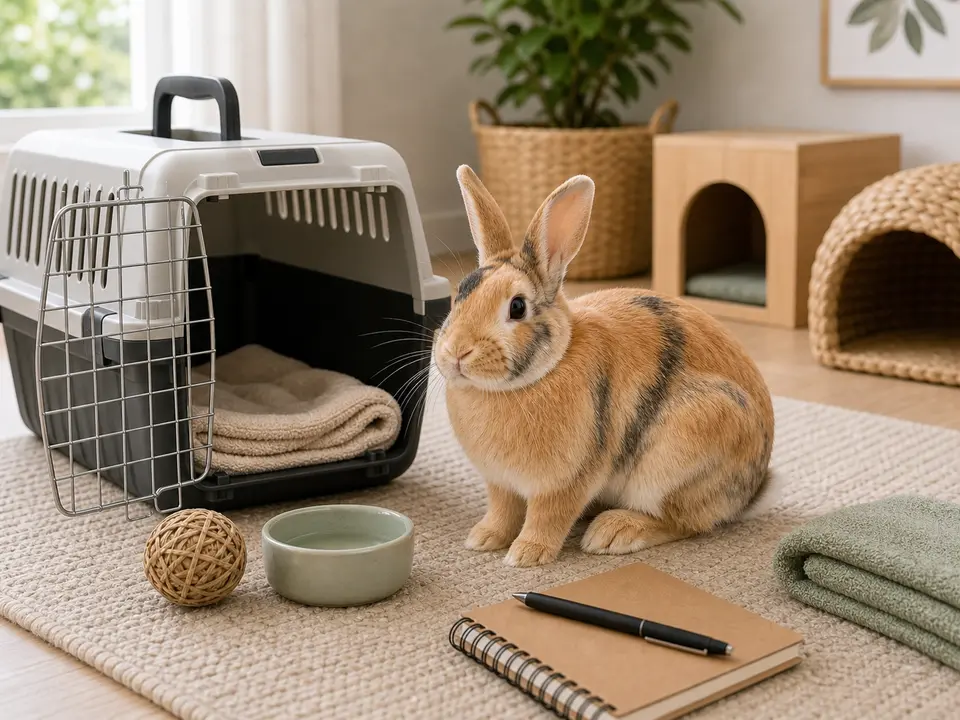
Use a barrier, board, towel, or another prepared method to separate fighting rabbits; do not put bare hands between biting animals. Return each rabbit to a secure individual space with hay, water, litter, and time to settle.
After a rough moment, make the next meeting shorter and easier. Repeating the same stressful setup usually rehearses the problem.
Record progress across several sessions
Bonding can take days, weeks, or longer. Move toward shared housing only after repeated calm sessions in which both rabbits can eat, rest, move, and use resources without guarding or pursuit.
Ask an experienced rabbit rescue for help when sessions repeatedly stall or escalate. Keep the rabbits separately housed until the bond is genuinely stable.
Before you decide
What changed recently?
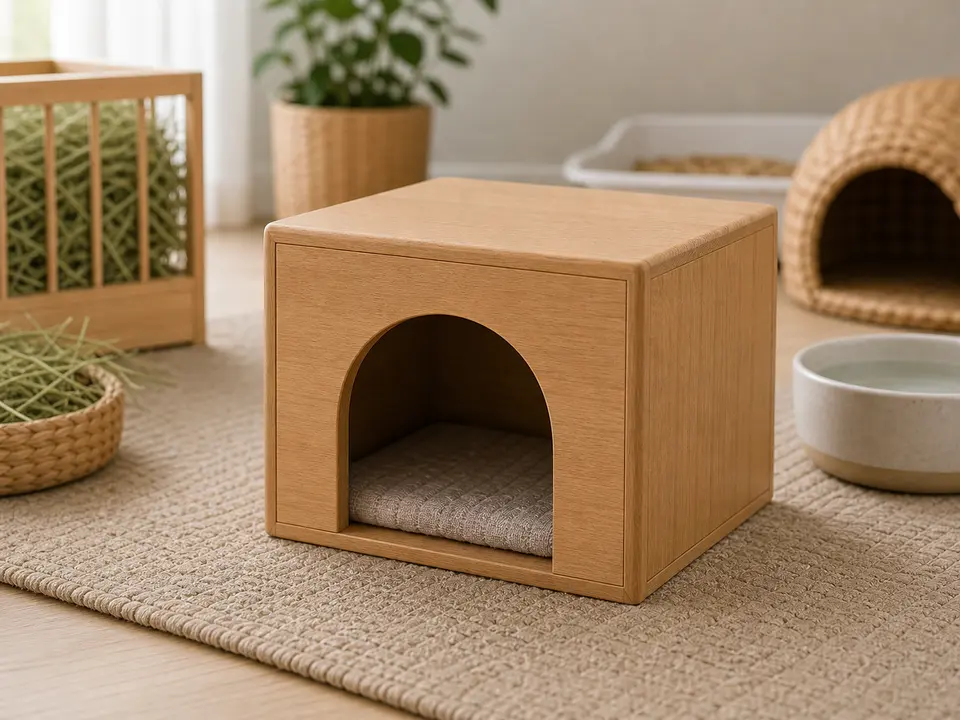
Can your rabbit choose a quiet retreat?
Are hay, water, litter, and footing easy?
Is this normal for your individual rabbit?
Next best moves
Make one small change.
Watch what your rabbit chooses next.
Keep the setup calm enough to repeat tomorrow.
Quiet tools for trust-building
The best tools add choice, retreat space, and calm repetition instead of forcing contact.
Affiliate links: Furball Cove may earn from qualifying purchases at no extra cost to you.
What does a calm rabbit bonding session look like?
A calm rabbit bonding session looks almost boring: neutral space, relaxed pauses, brief sniffing, eating nearby, soft body language, and humans ready to separate before chasing or biting takes over.
How do I know if I moved too fast?
If your rabbit hides longer, avoids your hands, boxes, grunts, thumps repeatedly, or will not come back for food, make the next interaction shorter, lower, and easier to leave.
Should I pick my rabbit up to fix this?
Usually no. Most trust and behavior work starts better on the floor. Save picking up for necessary care, and practice it in tiny reward-based steps.