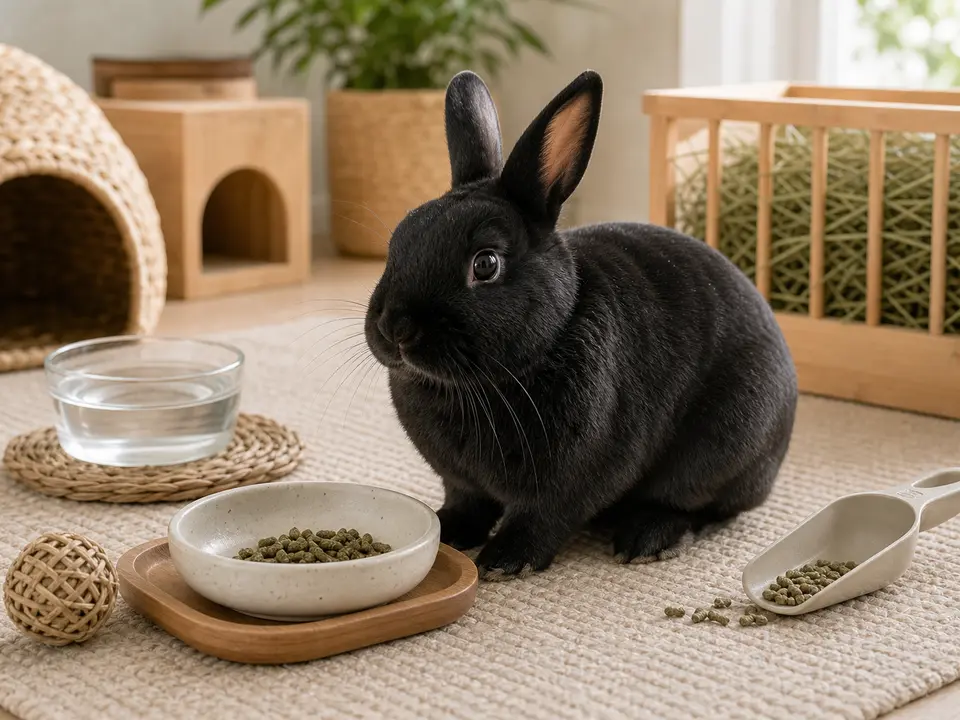
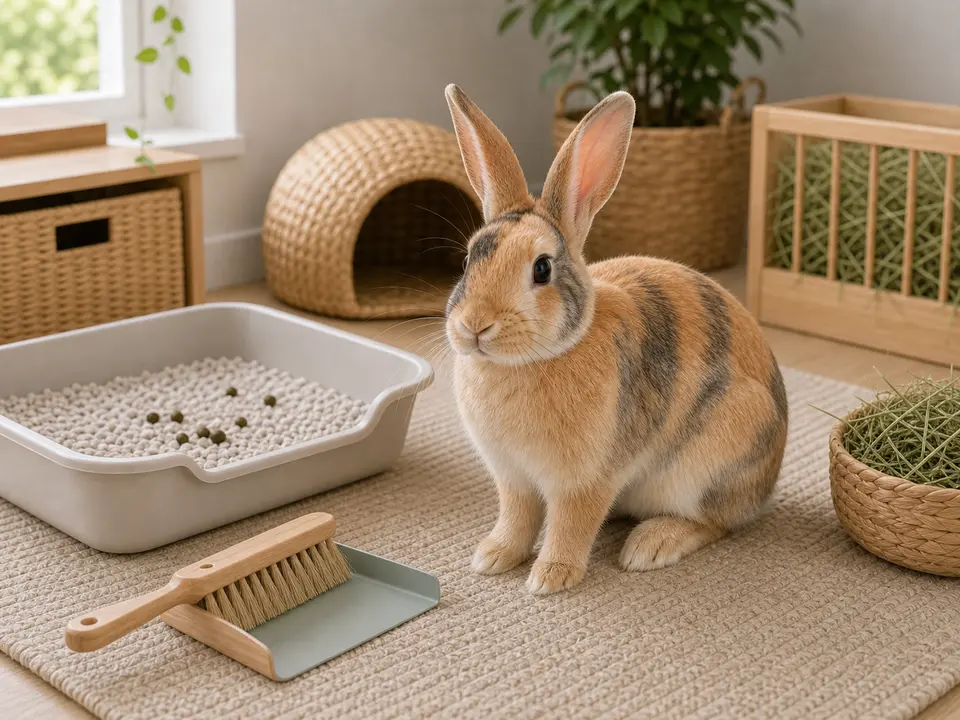
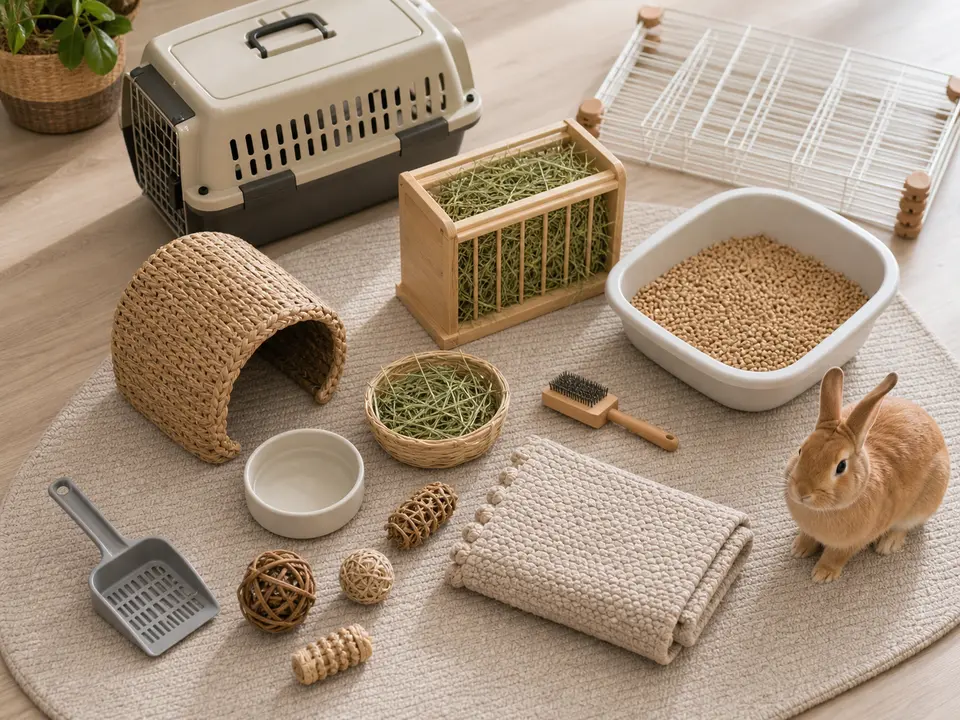
A rabbit dumping the food bowl may be bored, impatient, rearranging the space, or working with a bowl that is too light. Try a heavier bowl, scatter measured pellets, and keep hay available so the bowl is not the whole event.
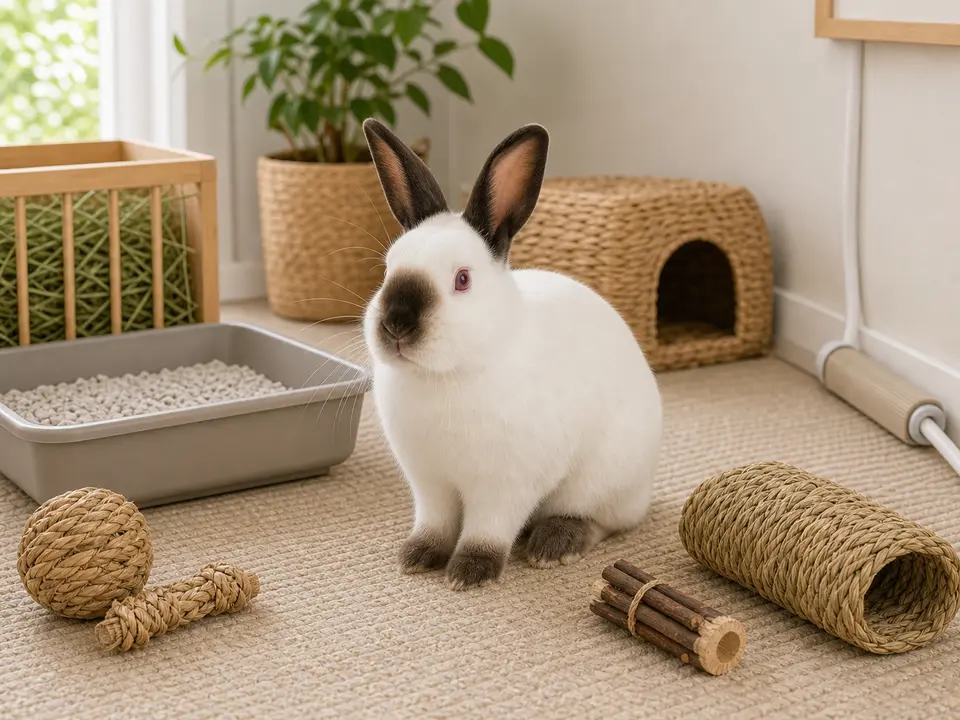
Food questions are easiest when you picture the whole feeding corner, not just one bowl. Start with the specific food choice, then watch hay interest, water, appetite, and litter-box output as the routine changes.
Food bowl dumping: Separate hunger from routine drama
A rabbit dumping the food bowl may be bored, impatient, rearranging the space, or working with a bowl that is too light. Try a heavier bowl, scatter measured pellets, and keep hay available so the bowl is not the whole event. Many rabbits get excited about pellet time because the sound, bowl, and timing all predict something good.
Refresh hay first, keep the pellet serving measured, and watch whether the begging settles when the morning routine becomes more predictable.
Use that as the baseline for the food bowl routine: if tomorrow's hay, water, appetite, and litter box still look normal, the routine is moving in the right direction. Do not judge the idea only by the first excited meal; the next normal morning matters more.
Food bowl dumping: Use a heavier bowl if needed
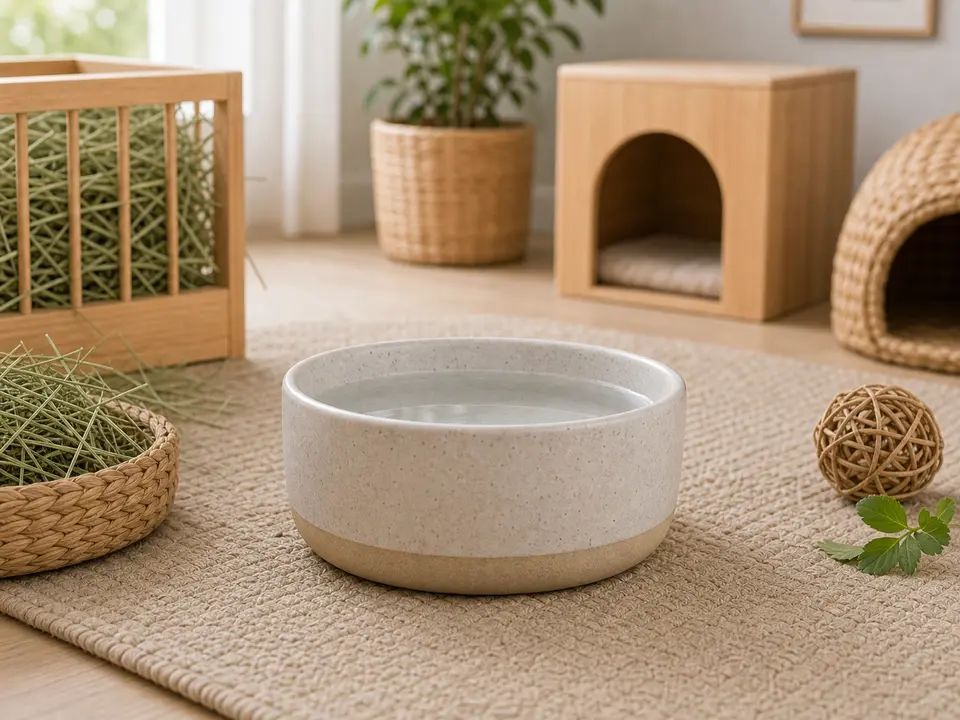
If your rabbit flips a light bowl, try a wide, heavy ceramic dish or scatter the measured pellets instead.
Do not make the bowl so deep that eating becomes awkward. Stable and easy beats decorative.
Keep this part visible in the room. A rabbit's real answer shows up in what they choose when nobody is nudging them toward the bowl. If you have to keep rescuing the setup, the placement or portion probably needs to become simpler.
Food bowl dumping: Make pellets slower without adding more
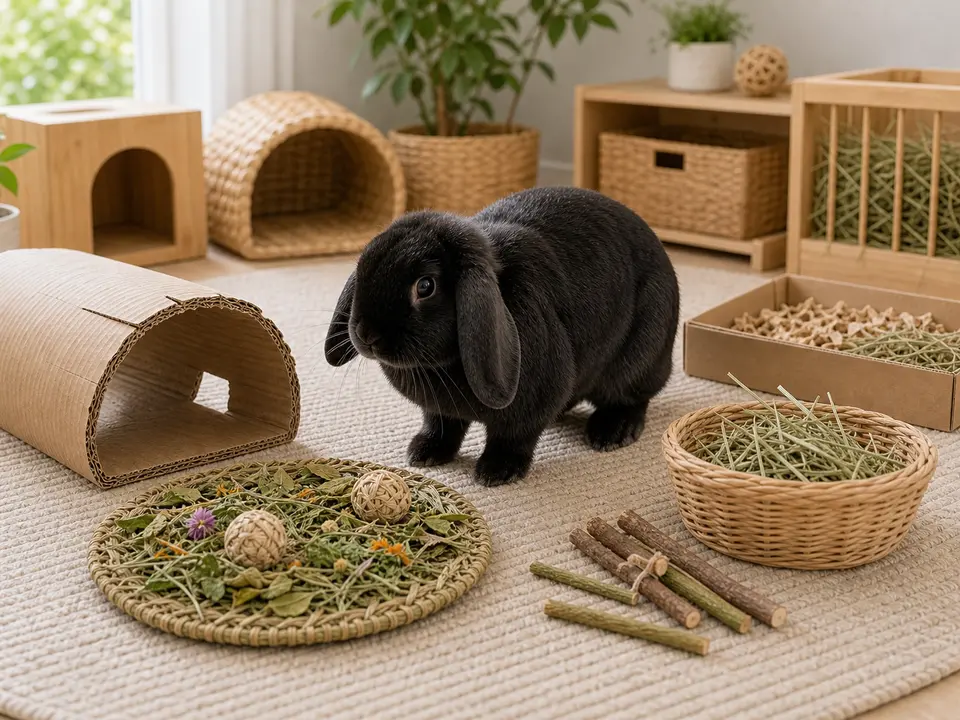
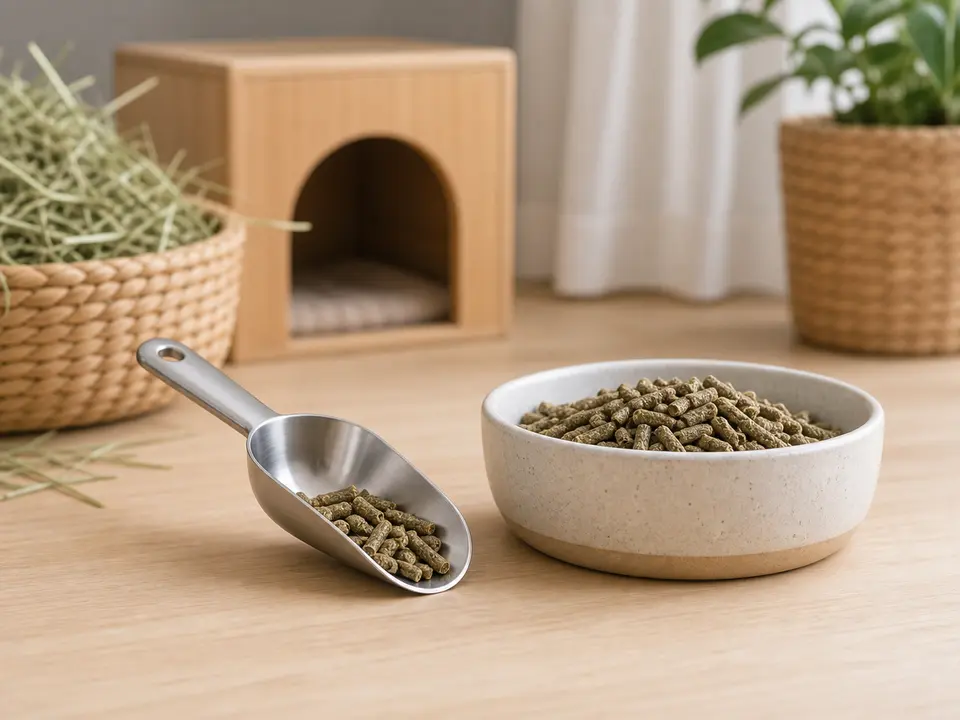
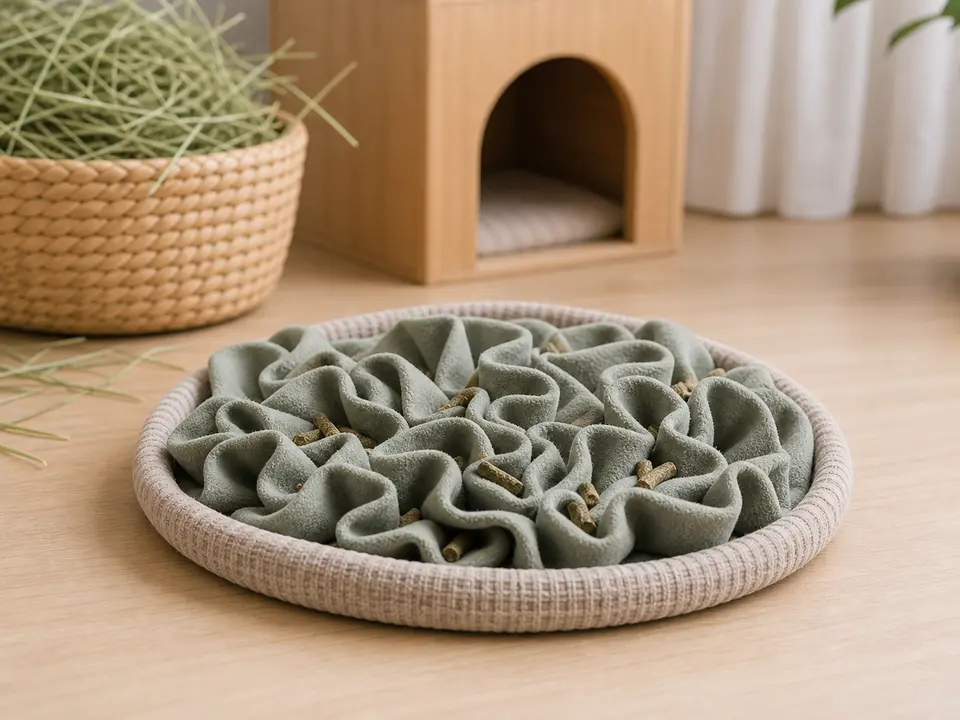
A small scatter, forage mat, or two feeding spots can make the serving last longer without increasing the amount.
That extra searching time can make breakfast feel more satisfying while hay stays the main food.
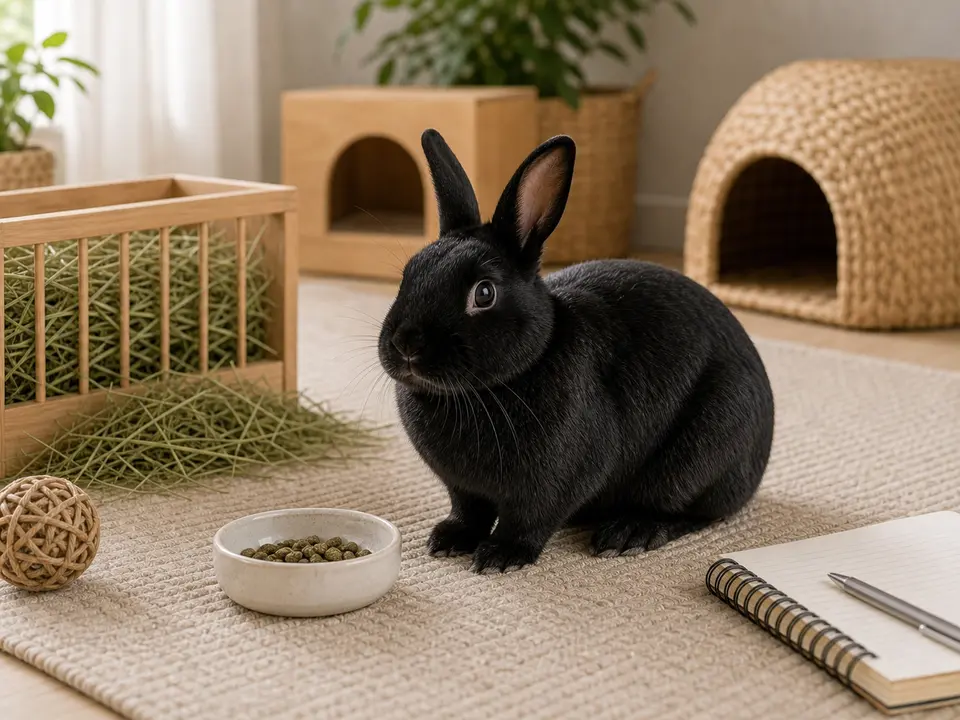
Make one small note if you are adjusting the food bowl routine: amount offered, where it sat, and whether hay was eaten afterward. That tiny record keeps you from changing the scoop, placement, and timing all at once.
Food bowl dumping: Keep hay in the same scene
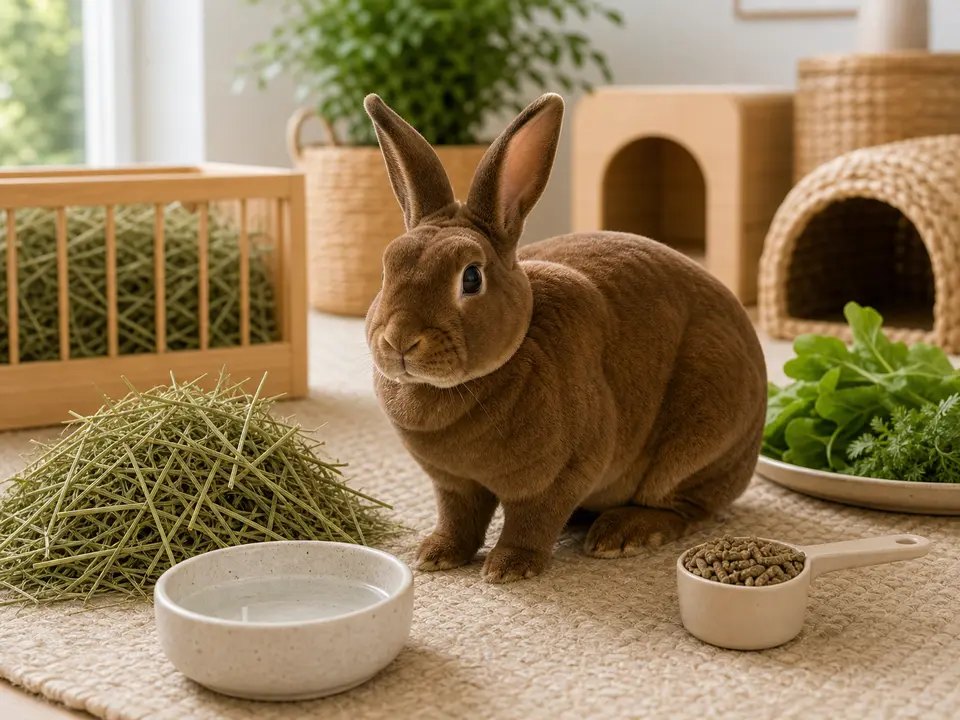
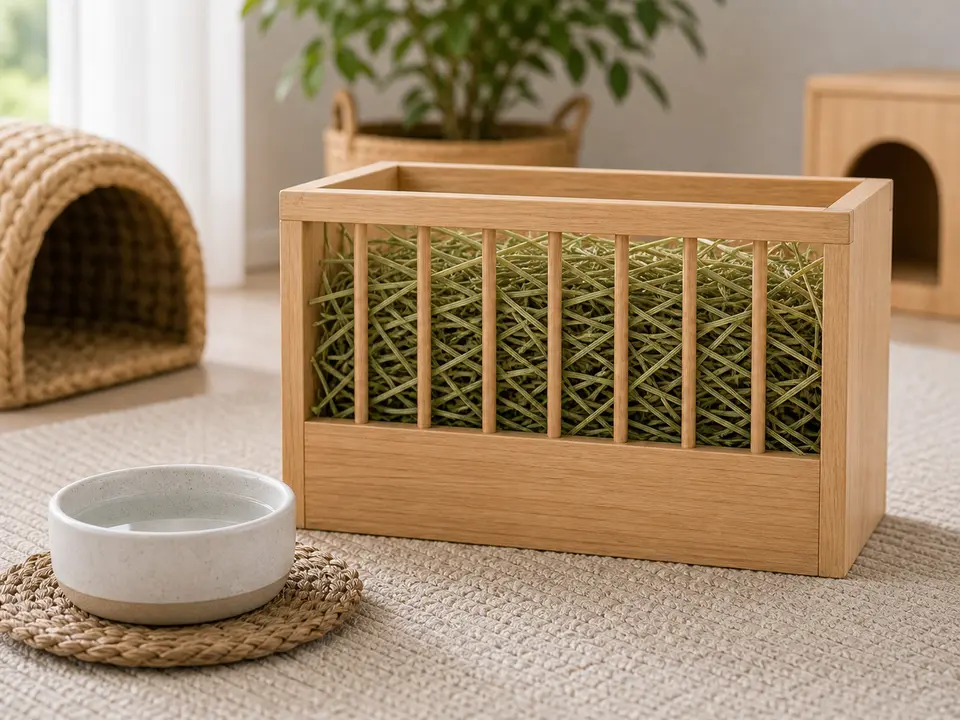
Put fresh hay close enough that your rabbit can move from pellets to normal chewing without crossing the room.
If pellets are the only interesting thing in the area, the bowl becomes the whole event.
The litter box is not glamorous, but it is honest. Normal round poops make the food decision easier to trust. Check it before you forget the meal, because the next handful of hay and the next few poops tell the truth.
Food bowl dumping: Watch leftovers and litter
Leftover pellets, smaller poops, sudden quietness, or a rabbit who seems uncomfortable are not routine drama.
When appetite or poop changes, simplify the food routine and call a rabbit-savvy vet if normal eating does not return quickly.
If this makes the day harder to repeat, simplify. Rabbit feeding should feel calm enough for an ordinary weekday. The best routine is not the most elaborate one; it is the one you can repeat without crowding out hay.
Before you decide
Is hay available and being eaten?
Did only one food change at a time?
Are poops normal after the change?
Is water easy to reach and clean?
Next best moves
Keep hay visible and easy.
Change greens, pellets, or treats slowly.
Use food changes as enrichment without crowding out hay.
Feeding tools that keep hay in charge
These are practical pieces for the routine, not clutter to buy all at once.
Affiliate links: Furball Cove may earn from qualifying purchases at no extra cost to you.
A rabbit dumping the food bowl may be bored, impatient, rearranging the space, or working with a bowl that is too light. Try a heavier bowl, scatter measured pellets, and keep hay available so the bowl is not the whole event.
How fast should I change the routine?
Change one food detail at a time and keep hay steady. That makes appetite and poop changes easier to understand.
What if my rabbit stops eating?
Do not treat that like ordinary pickiness. If your rabbit stops eating or pooping, call a rabbit-savvy vet promptly.