Why Does My Rabbit Thump? Alarm, Annoyance, or Pain
A rabbit usually thumps because something feels alarming, surprising, irritating, or unsafe. Read what happened just before it and what your rabbit does next; repeated thumping with appetite, poop, posture, or breathing changes can also signal pain or illness.
One loud thump can fill a quiet house. Before you label it anger or fear, look at the room from floor level: sounds, movement, scent, footing, other pets, and whether your rabbit has an easy way to retreat.
Start with the moment before the thump
Pause and reconstruct the few seconds before the sound. Check the doorway, hallway, window, pen, and floor. Your rabbit may have noticed footsteps, a dog outside, a new box, a reaching hand, or a slippery patch that you barely registered.
Watch where your rabbit looks afterward. Ears and eyes aimed at a doorway, window, person, or pet often point toward the trigger more clearly than the thump itself.
Read the rest of the body
A rabbit who thumps once and returns to hay is telling a different story from one who freezes, hides, breathes quickly, or keeps striking the floor. Read the ears, eyes, muscles, tail, breathing, and movement together instead of translating one sound in isolation.
Recovery matters too. Notice whether your rabbit stretches out again, resumes grooming, explores, or stays tense long after the trigger has gone.
Lower the pressure and leave an exit
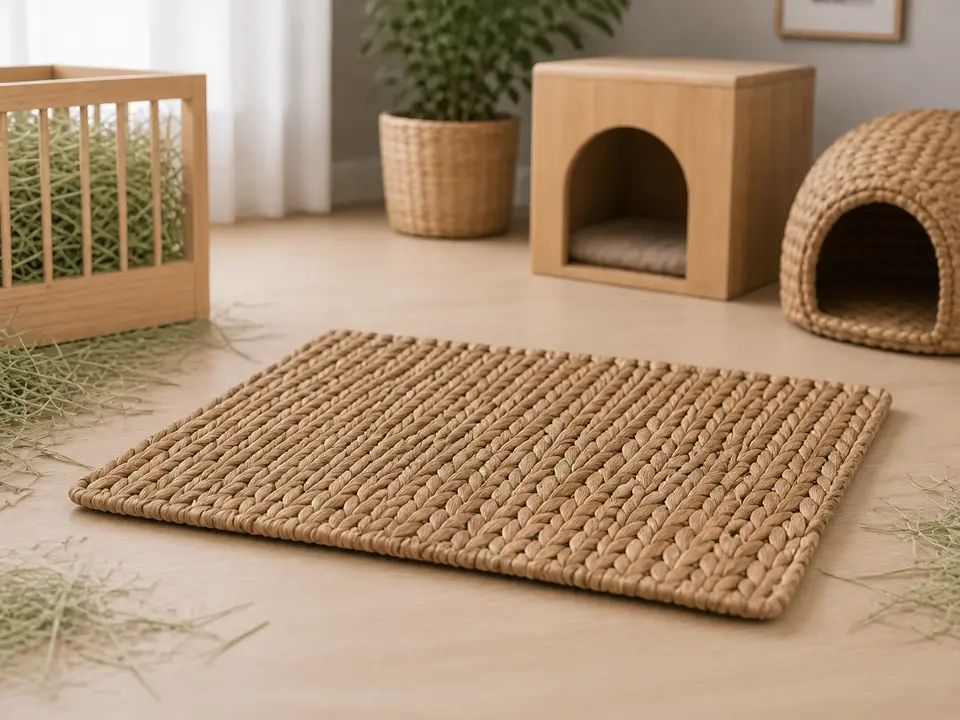
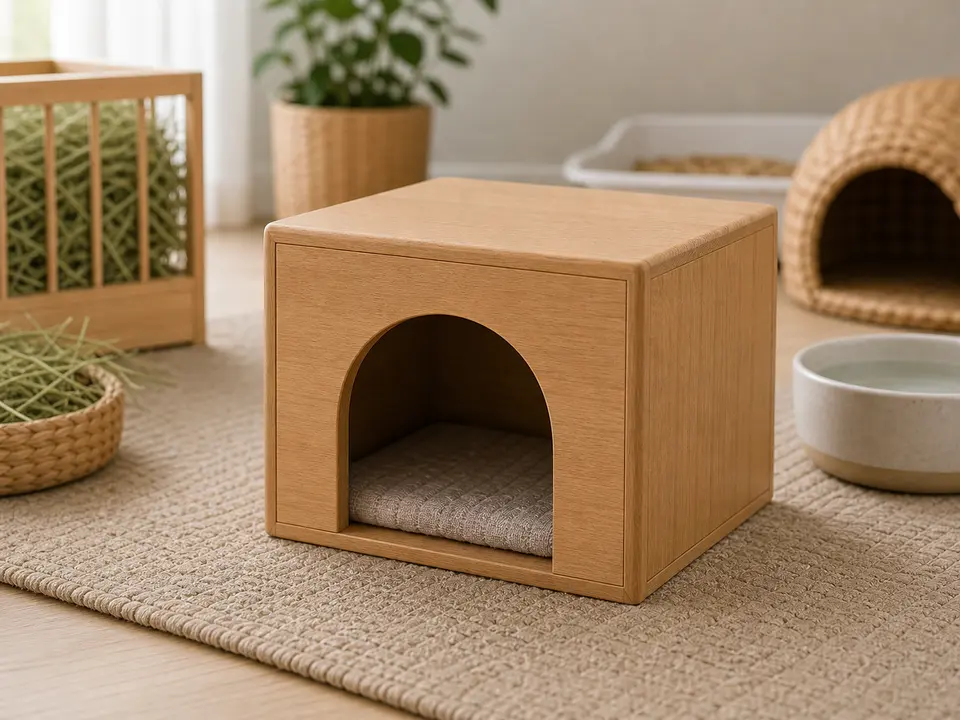
If the thump followed reaching into the pen or moving a litter box, stop and give your rabbit two steps of space. Keep the hideout open, steady the slippery mat, and wait for your rabbit to choose the next move.
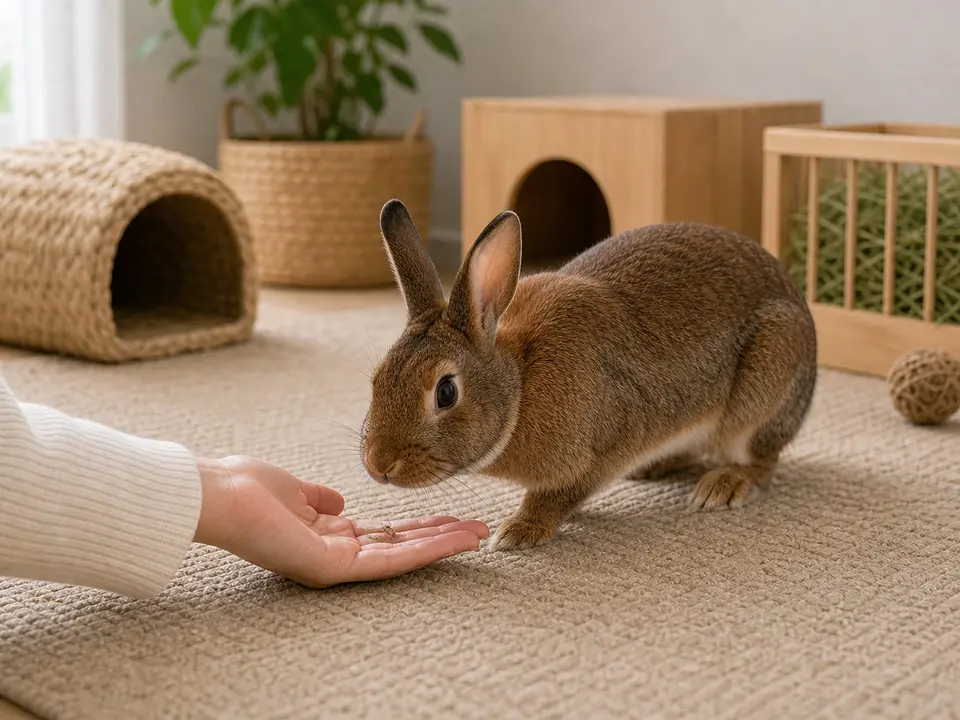
Do not pick up a worried rabbit to prove the room is safe. Quiet distance and a dependable retreat give your rabbit a real way to settle, which also makes the next signal easier to interpret.
Track thumps that keep returning
When thumping happens at the same hour or place, write down the pattern for several days. Evening pipes, a neighbor on the stairs, breakfast timing, cleaning sounds, headlights, or another animal passing the room can create a repeatable trigger.
Match the fix to what your rabbit keeps noticing. Close the curtain against headlights, move the hideout away from the radiator knock, or run a fan before the neighbor reaches the stairs. The next evening, watch whether your rabbit stays with the hay instead of freezing or thumping.
Call when thumping arrives with health changes
Contact a rabbit-savvy veterinarian promptly if the thumping comes with refusing hay, fewer droppings, a hunched posture, tooth grinding, weakness, or balance trouble. Fast or labored breathing and any suspected injury also warrant a prompt call.
Behavior is still body information. You do not need to diagnose the cause before calling; share when the thumping began, what else changed, and any video you can take without disturbing your rabbit.
Before you decide
What changed recently?
Can your rabbit choose a quiet retreat?
Are hay, water, litter, and footing easy?
Is this normal for your individual rabbit?
Next best moves
Make one small change.
Watch what your rabbit chooses next.
Keep the setup calm enough to repeat tomorrow.
Setup pieces that make behavior easier
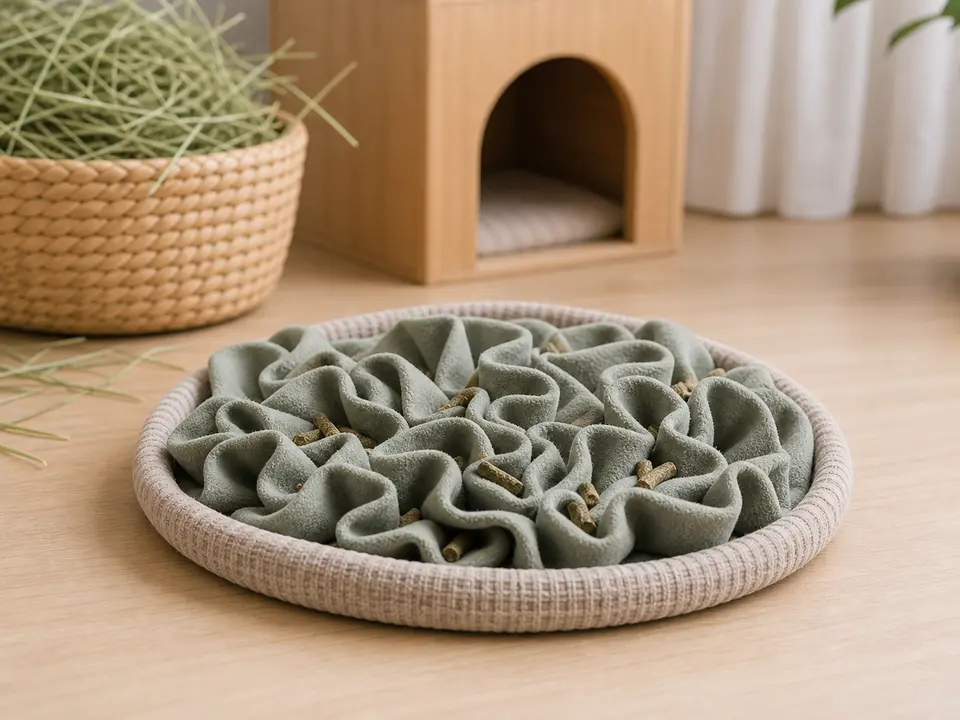
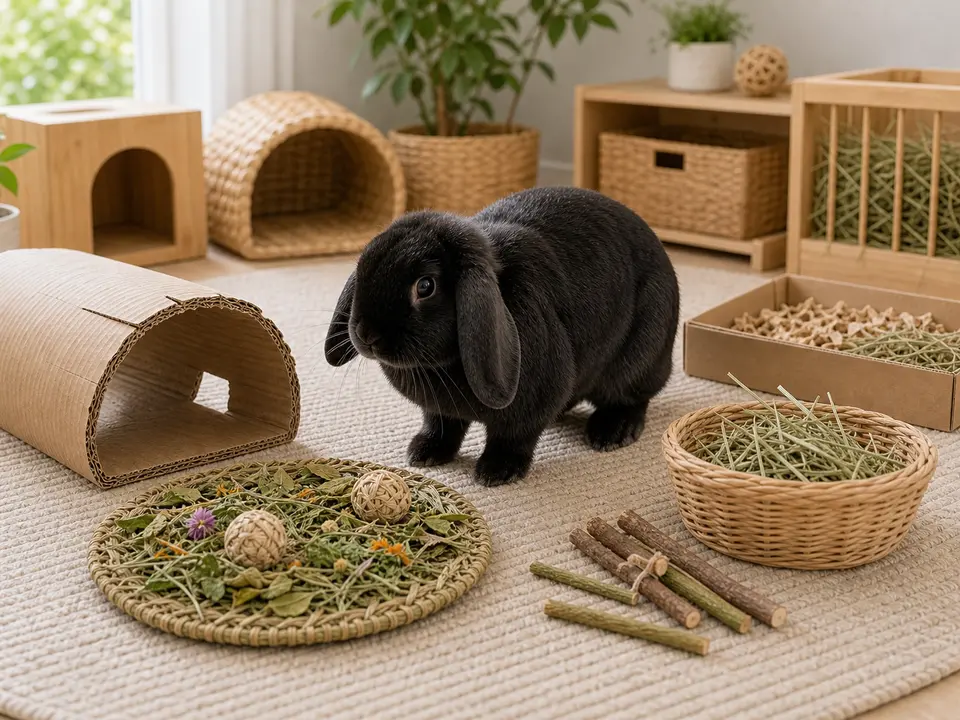
Use supplies to protect the room and give normal rabbit behavior a better job.
Affiliate links: Furball Cove may earn from qualifying purchases at no extra cost to you.
A rabbit usually thumps because something feels alarming, surprising, irritating, or unsafe. Read what happened just before it and what your rabbit does next; repeated thumping with appetite, poop, posture, or breathing changes can also signal pain or illness.
How do I know if I moved too fast?
If your rabbit hides longer, avoids your hands, boxes, grunts, thumps repeatedly, or will not come back for food, make the next interaction shorter, lower, and easier to leave.
Should I pick my rabbit up to fix this?
Usually no. Most trust and behavior work starts better on the floor. Save picking up for necessary care, and practice it in tiny reward-based steps.