Updated
Puppy recall distractions
Recall Around Calm Dogs
Start far enough from other dogs that your puppy can still eat, turn, and hear you.
The first goal is not a close pass. It is a puppy who notices a calm dog, stays loose, and can come back before the greeting pressure gets too big.
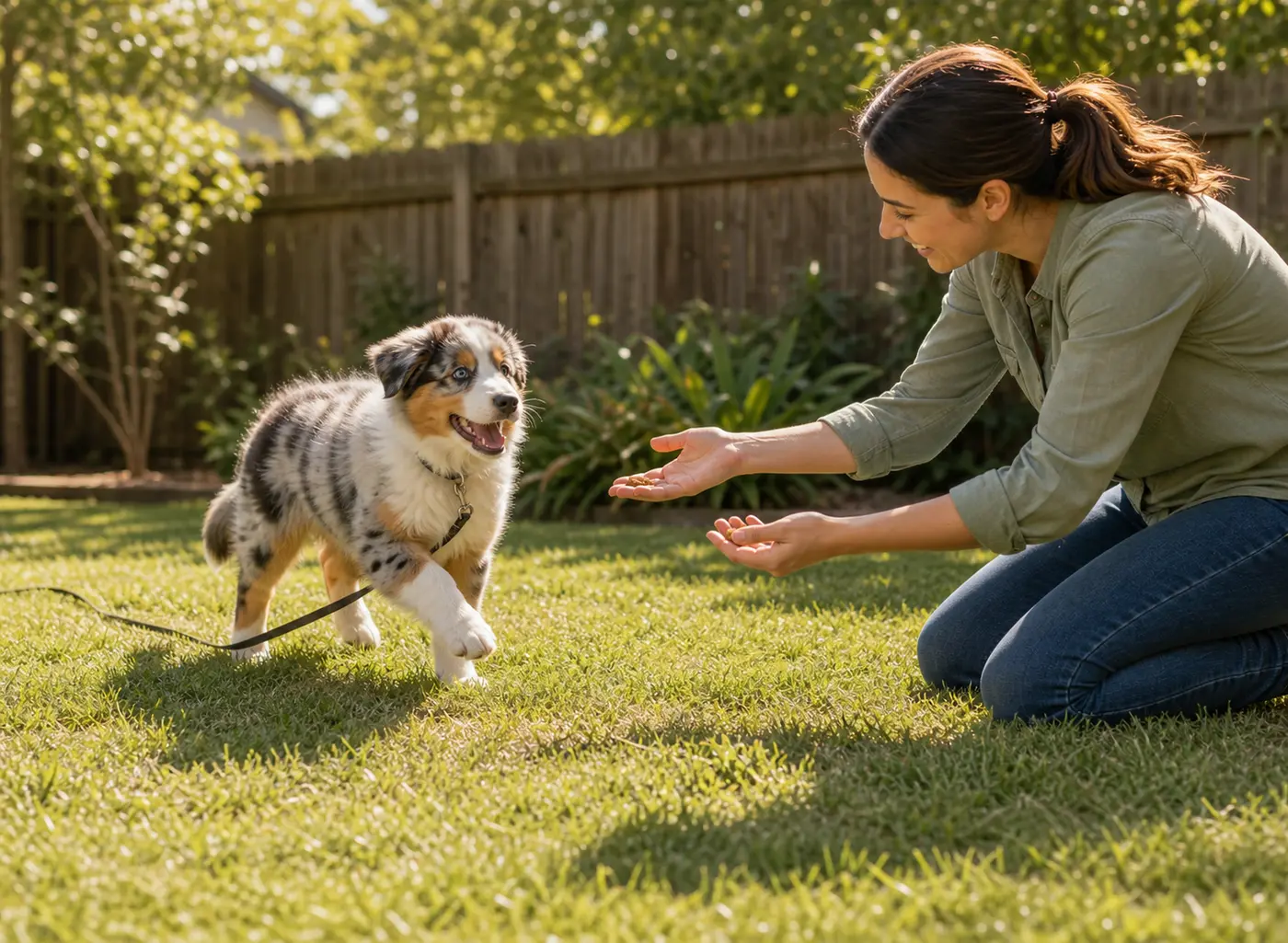
Other dogs can make recall feel completely different. Your puppy may know the cue in the kitchen and still lose their brain when a dog appears across the park.
Use distance as part of the lesson. If your puppy can sniff, eat, glance back, and move with you, the dog is far enough away for useful practice.
Great for
- Puppies who can already come back in easy spaces.
- Dogs who notice calm dogs but can still eat and turn away.
- Owners practicing in parks, training fields, sidewalks, or quiet trail edges.
Wait a bit if
- A dog who lunges, barks hard, hides, growls, or cannot recover around dogs without professional help.
- Off-leash practice near unfamiliar dogs, roads, wildlife, or open gates.
- Using recall to drag your puppy into greetings they are not ready for.
Build the recall
Choose a boring dog at a big distance
Start where your puppy can notice the dog and still take food. Across a field may be the right starting point.
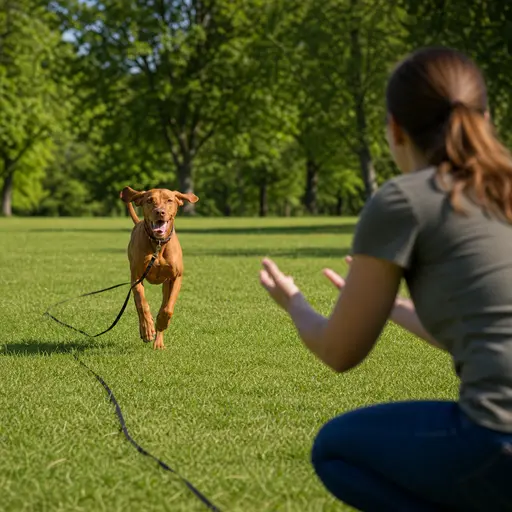
Use a long line before freedom
Let your puppy move naturally while you keep a safety backup. Do not gamble on off-leash choices during distraction practice.
Reward the first look back
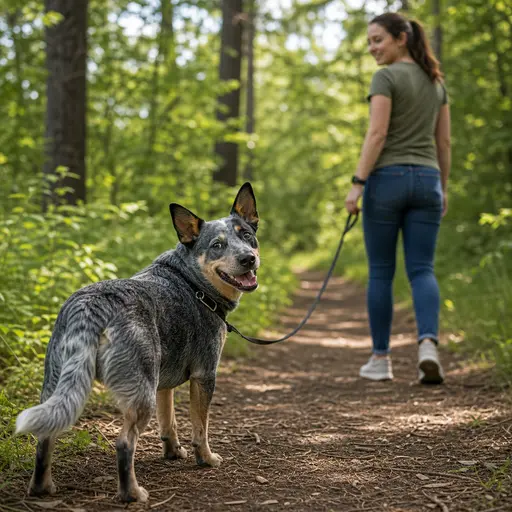
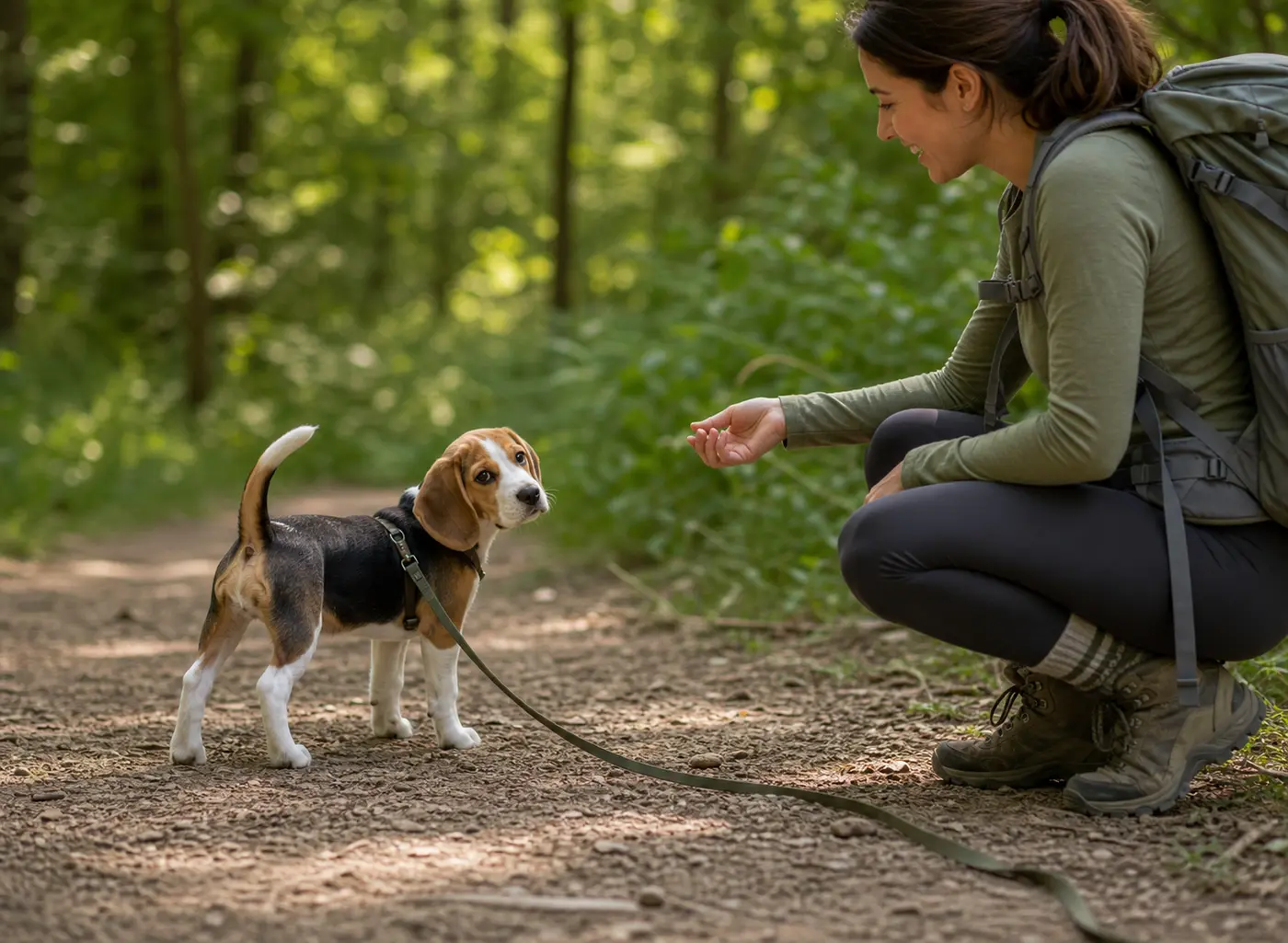
Pay voluntary glances, soft turns, and coming toward you before you call. Those check-ins are the foundation.
Call only when success is likely
If your puppy is locked in on the dog, move farther away or make happy movement first. Save the cue for moments they can answer.
Release to sniff or walk on
After a good return, send your puppy back to sniffing or moving with you when it is safe. Recall should not always end the outing.
Stop before staring builds
End the session while your puppy is still loose. If staring, pulling, or barking starts, add distance next time.
Little things that help
Distance is training
Moving farther away is not failure. It is how you keep your puppy under threshold enough to learn.
Use calm dogs first
A still, neutral dog at a distance is easier than a barking dog, fast dog, or dog rushing the fence.
Get help for big feelings
If dog distractions bring fear, lunging, or repeated barking, work with a qualified reward-based trainer.
Helpful little extras
Affiliate links: Furball Cove may earn from qualifying purchases at no extra cost to you.
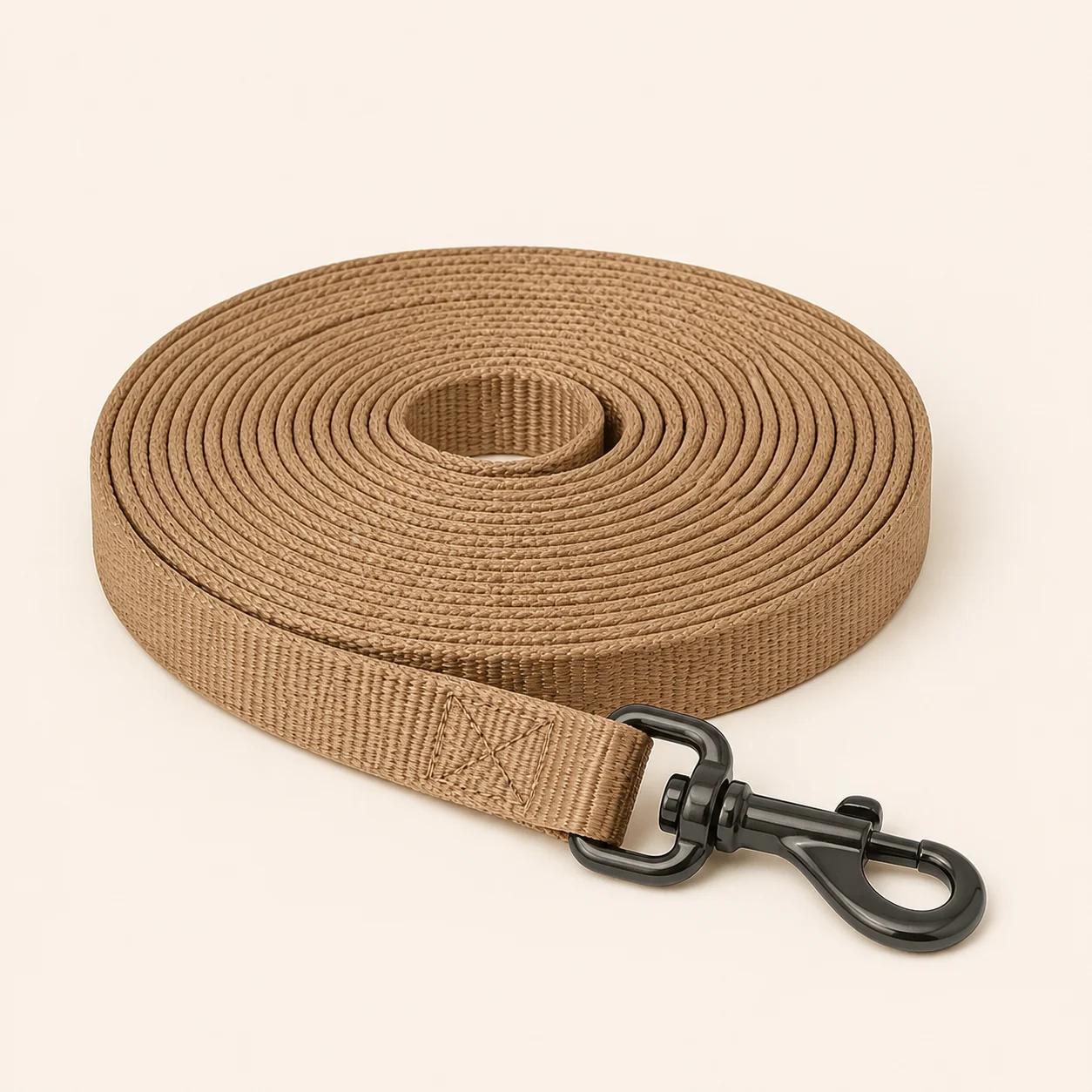
Long training line
A long line lets your dog practice recall with real movement while you still have a safety backup.
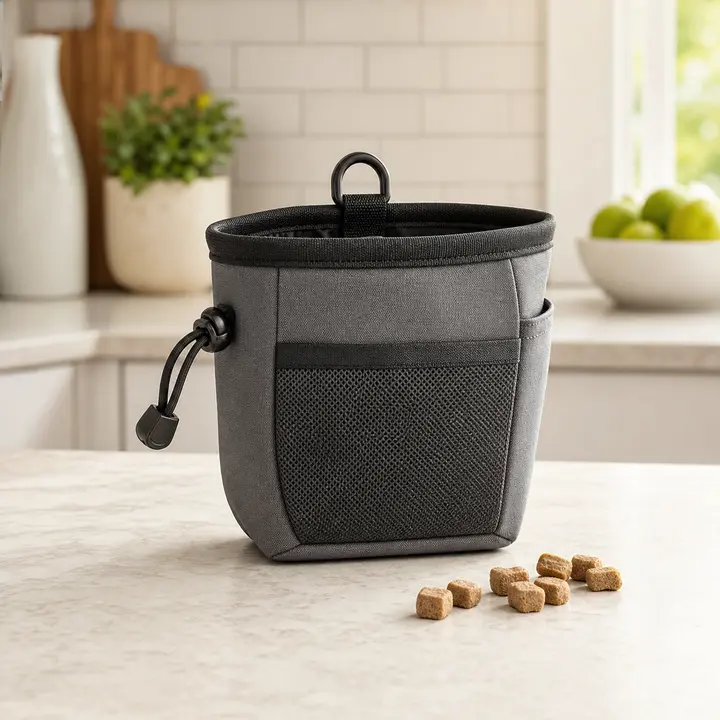
Training treat pouch
Recall rewards need to be ready before your dog turns back, not dug out after the moment is gone.
High-value training treats
Use rewards your dog truly cares about when you are competing with smells, dogs, movement, and open space.
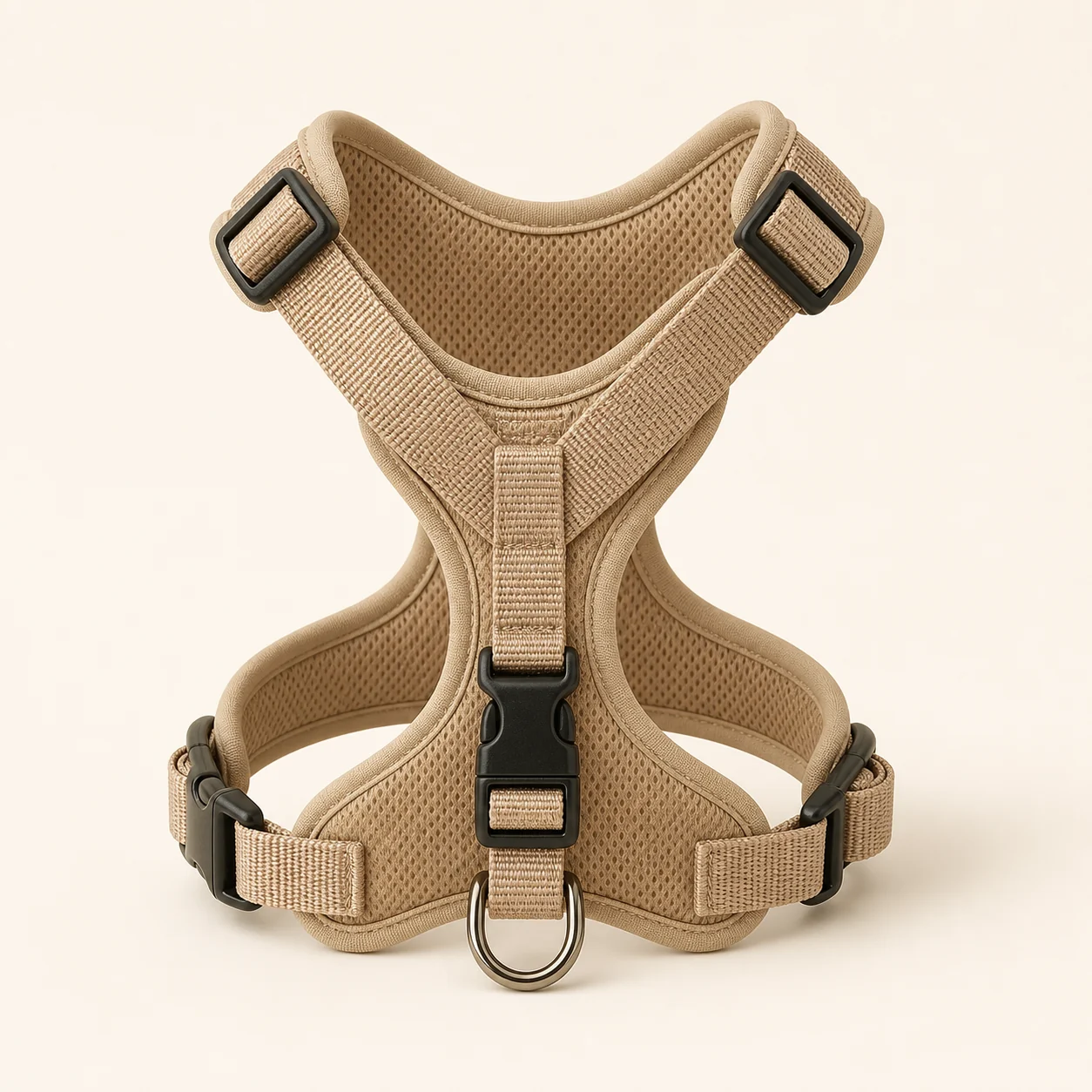
Front-clip harness
A comfortable harness gives you a secure attachment point without putting recall practice on the neck.
Questions people ask
How close should we be to another dog?
Far enough that your puppy can eat, turn, and respond. If they cannot, the distance is too hard for recall practice.
Should I let my puppy greet after coming back?
Sometimes, if both dogs are safe and both handlers agree. Often the better reward is sniffing, praise, food, or moving away calmly.
What if my puppy ignores me around dogs?
Do not repeat the cue. Add distance, use the long line, reward check-ins, and make the next setup easier.