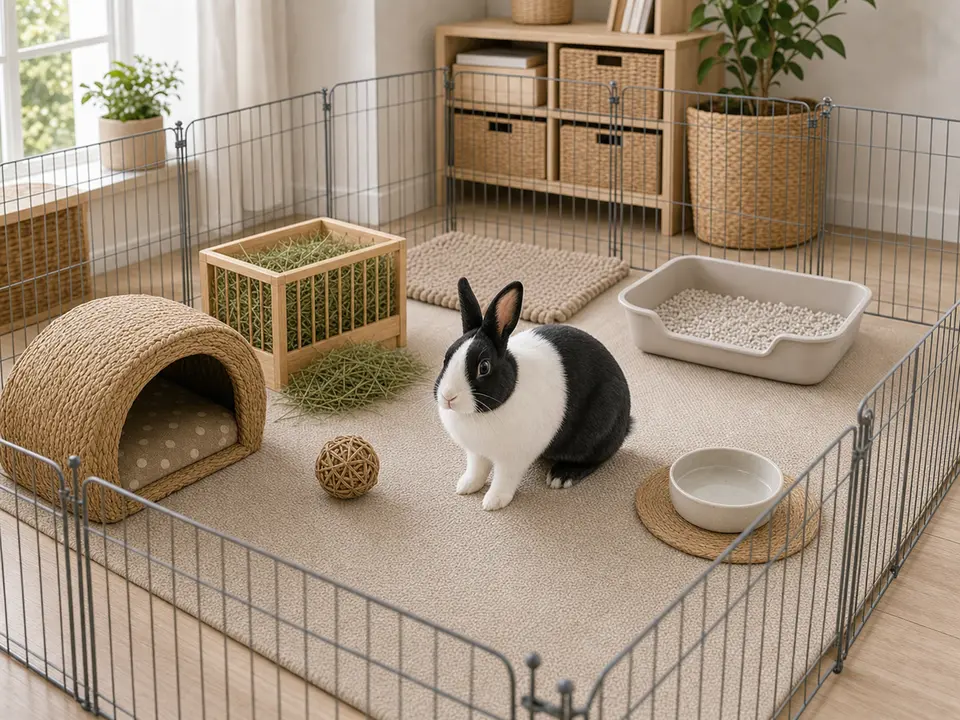
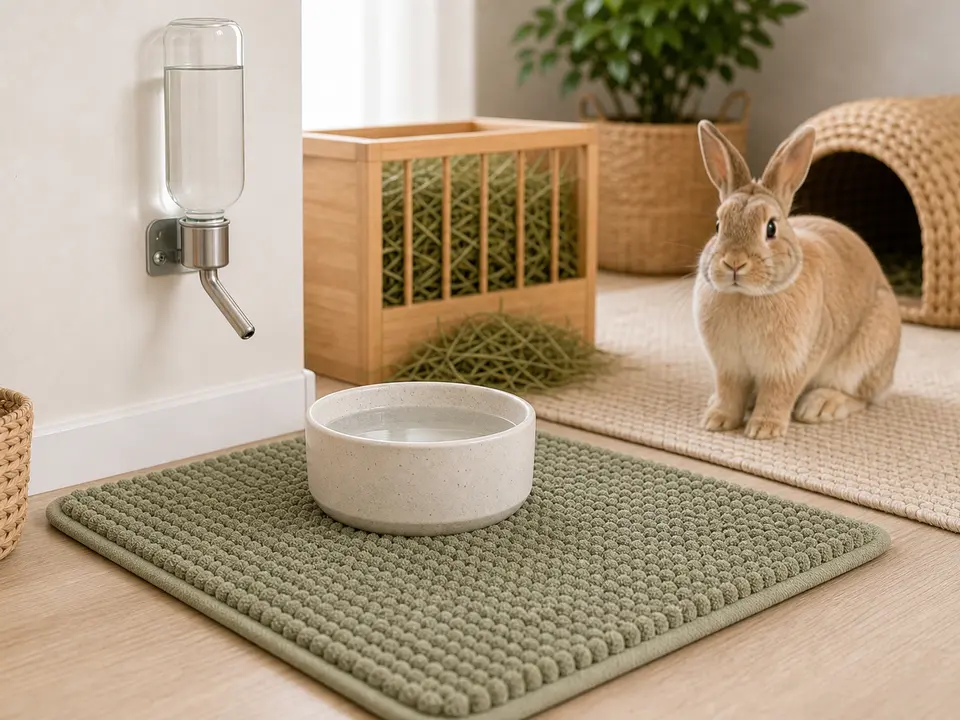
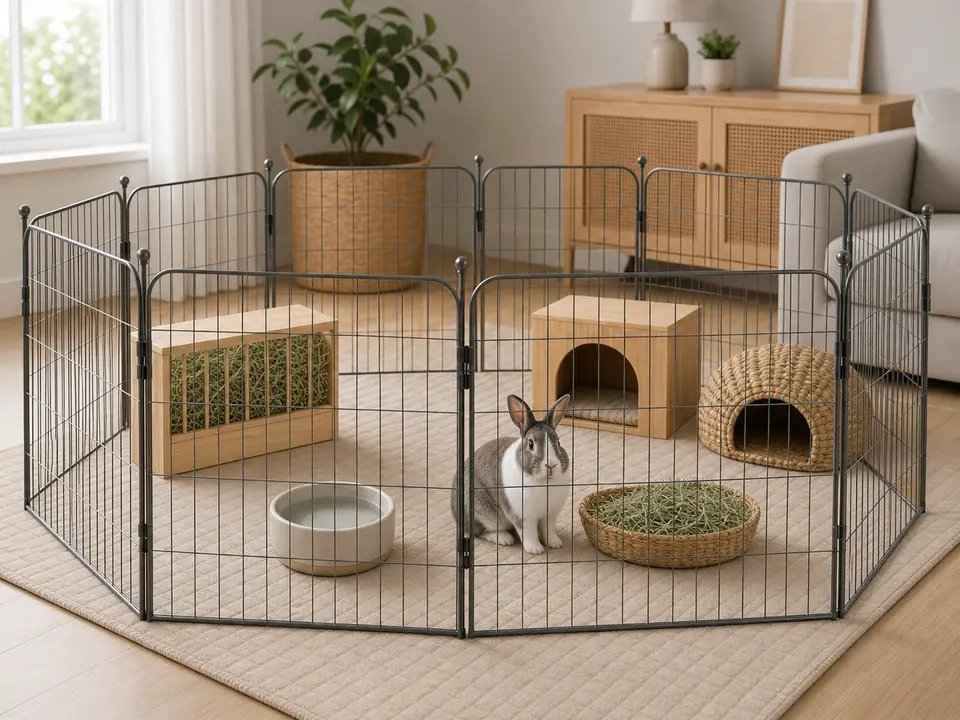
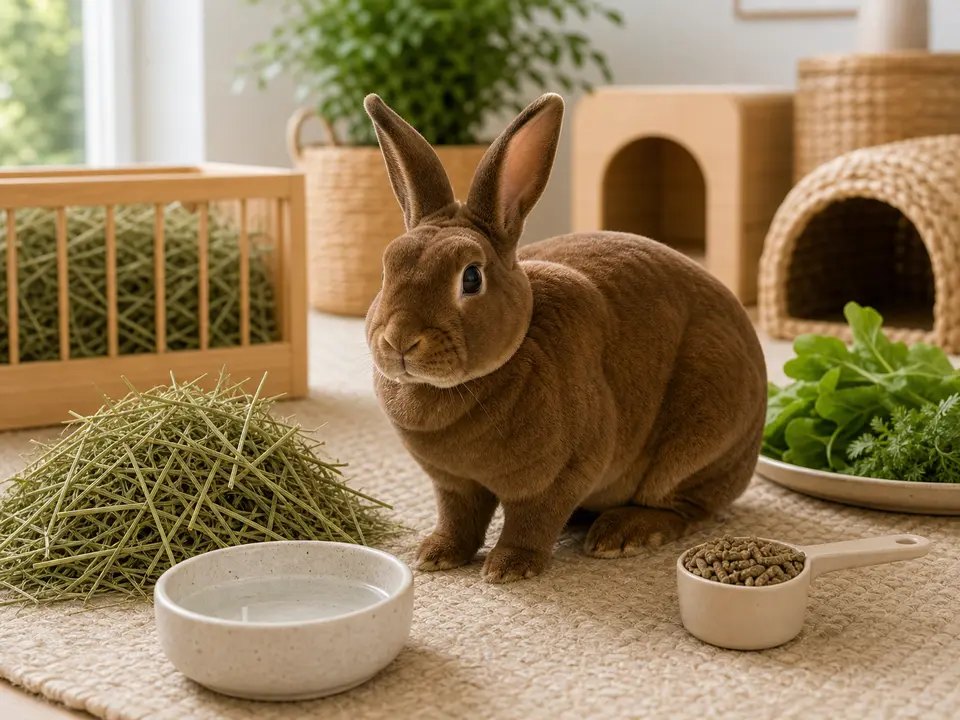
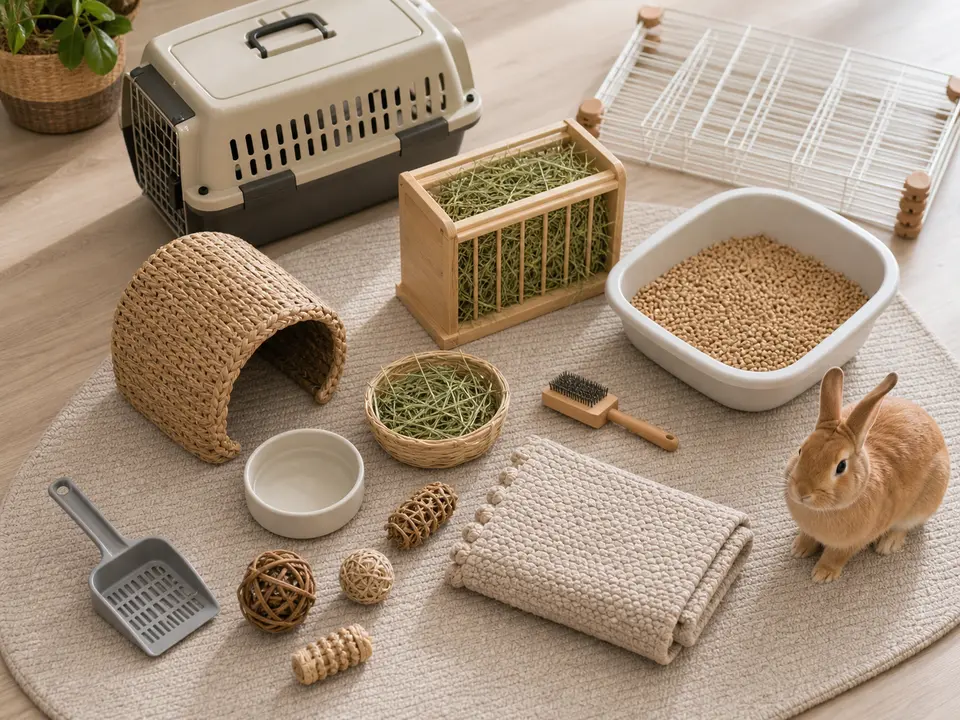
A good rabbit enclosure is roomy, easy to clean, and built like a home base with hay, water, litter, traction, a hideout, and safe chewing. It should support daily floor time, not replace it.
Rabbit supplies should earn their space in the daily routine. The best choice is the one that makes hay, litter, traction, chewing, transport, hiding, water, or cleanup easier tomorrow.
Test traction under the pen
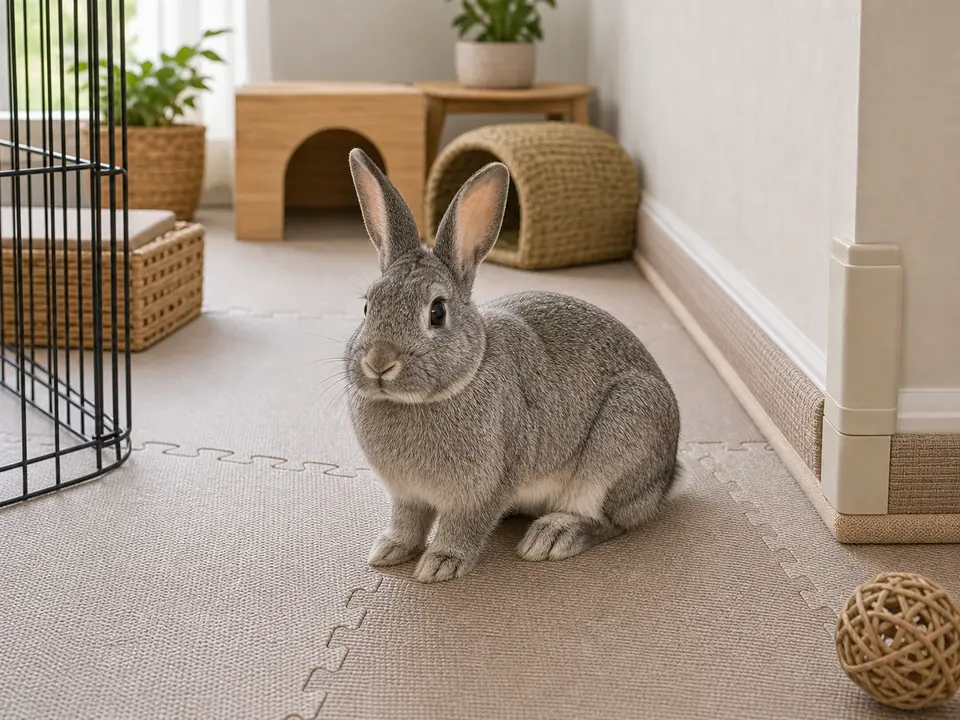
Rabbit flooring should help your rabbit hop, turn, stretch, and stand without sliding. Slick hardwood, tile, or bare plastic can make a rabbit move less because every step feels uncertain.
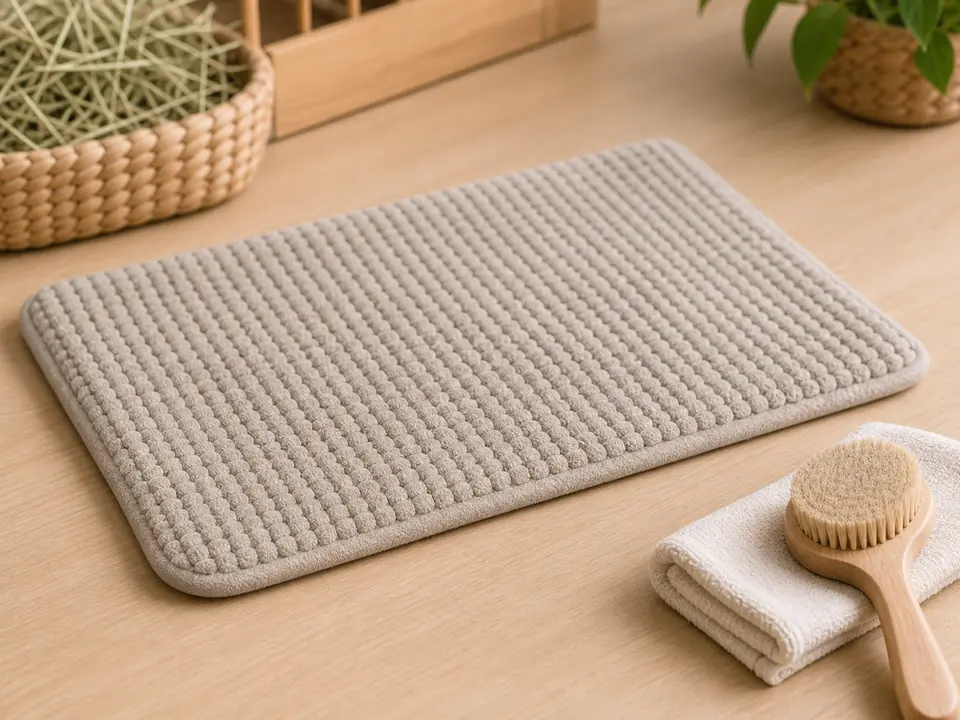
Washable rugs, low-pile mats, fleece over a stable base, or foam-style pen mats can work when they stay flat and do not invite chewing.
Test the surface with your rabbit's actual movement: a turn, a hop, a stretch, and a quick dash. If the feet slide, the floor is asking your rabbit to be cautious.
Protect feet where the mat sits
The best floor is firm enough to support movement and soft enough that feet are not constantly on hard, slippery ground. This matters even more for senior rabbits, large rabbits, and rabbits who spend a lot of time in one favorite area.
Watch how your rabbit moves. Confident hopping, relaxed stretching, and fewer skids tell you more than a product label.
If you see sore-looking feet, hesitant movement, or a rabbit avoiding a hard area, treat the floor as part of the comfort check instead of only a decorating choice.
Plan for mat-edge chewing
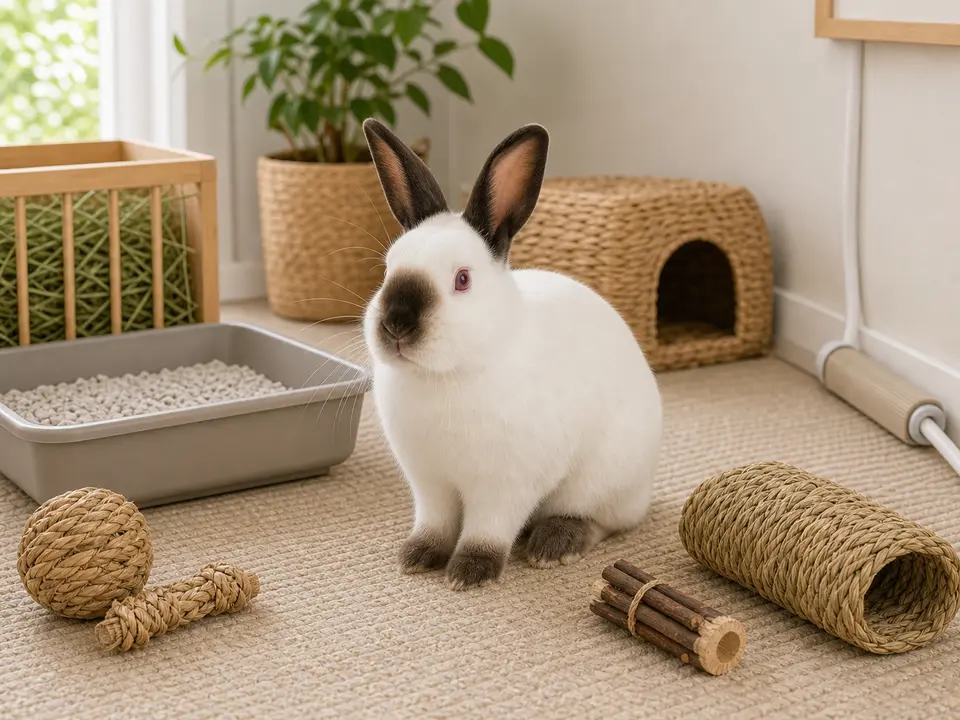
Some rabbits test rug corners, foam edges, and seams with their teeth. Tuck edges under pen panels, use heavier mats where needed, and remove anything your rabbit is pulling apart or swallowing.
A floor that looks perfect but becomes a chew project is not safer than a plain setup you can actually supervise and maintain.
Put legal chew textures close to the problem edge so the room offers a better answer before your rabbit starts working on the mat again.
Make pen cleanup realistic
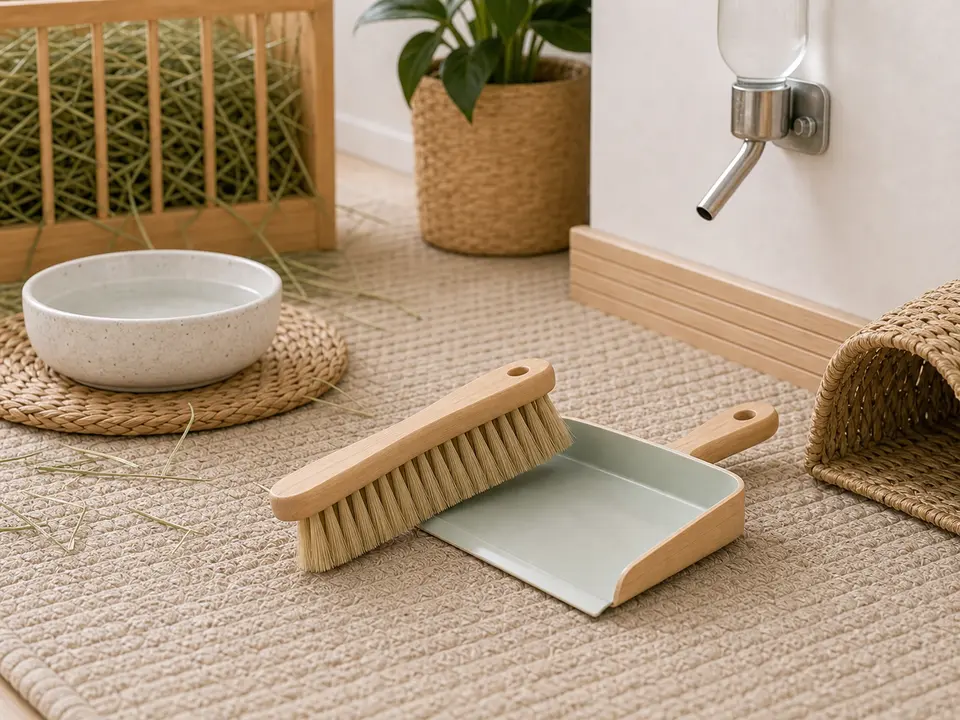
Hay dust, fur, water drips, and litter scatter are normal. Choose flooring you can shake out, vacuum, wash, or wipe without rebuilding the entire room every time.
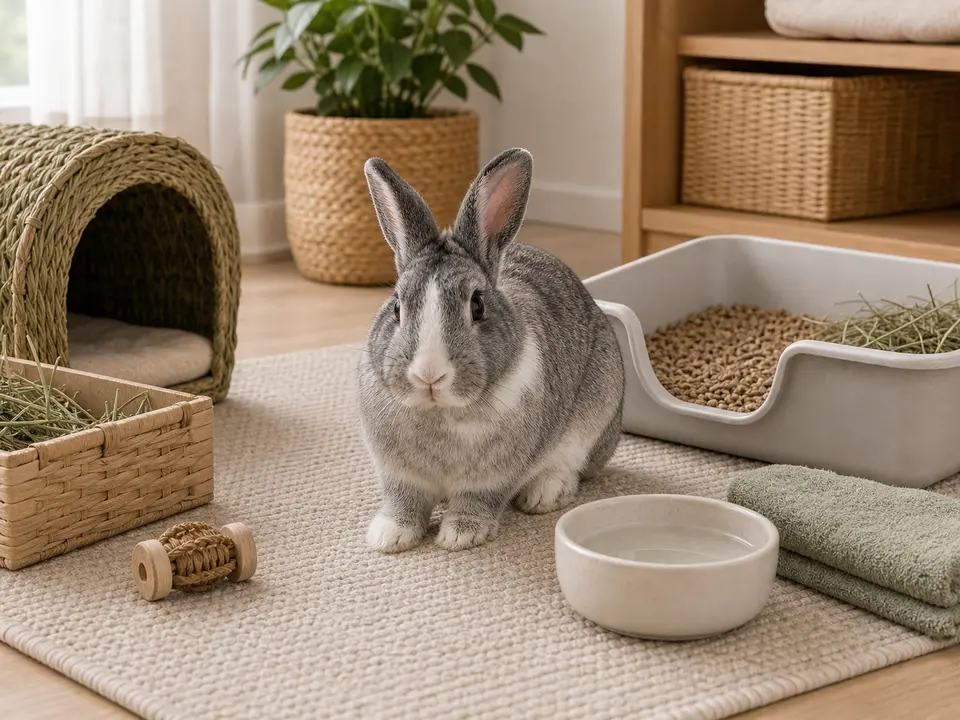
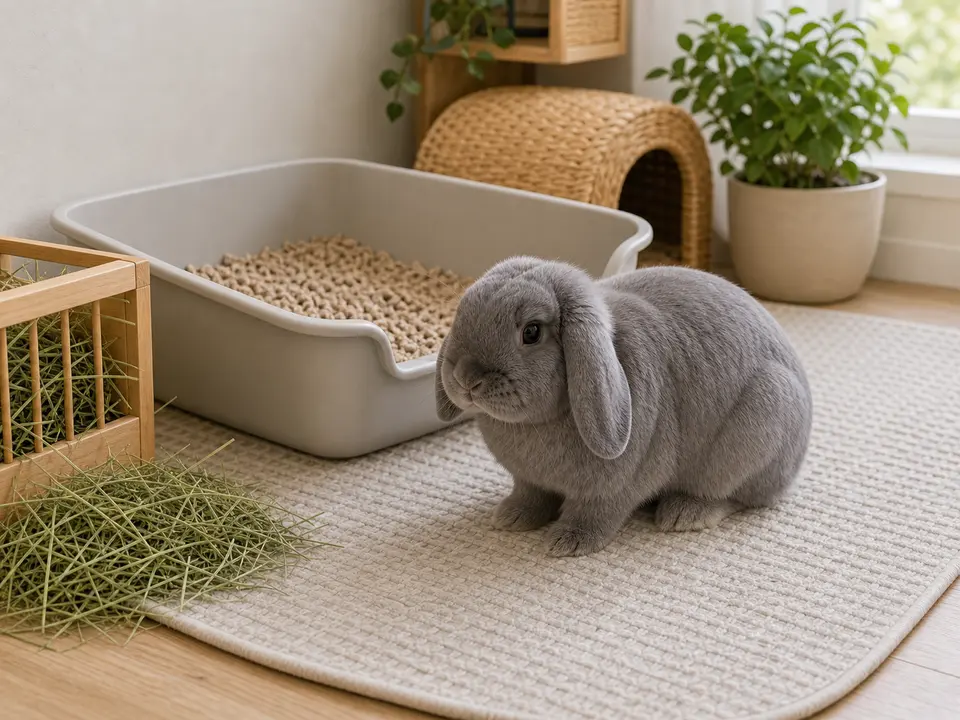
For litter areas, a washable mat under and around the box can catch the messy edge while keeping the main hopping area more comfortable.
If cleanup is so annoying that you delay it, the material is wrong for that spot. Rabbit flooring has to work on tired weekdays, not just on setup day.
Use zones beyond the pen mat
Many rabbit rooms work best with zones: grippy paths for movement, a washable litter area, a softer rest spot, and protected edges where chewing happens. You do not need the same surface everywhere.
Build around the way your rabbit actually uses the room, then adjust the spots that cause slipping, chewing, or cleanup headaches.
Leave enough open floor for hopping. A premium rabbit room should feel simple, roomy, and easy to reset, not packed with mats and objects from wall to wall.
Before you decide
What changed recently?
Can your rabbit choose a quiet retreat?
Are hay, water, litter, and footing easy?
Is this normal for your individual rabbit?
Next best moves
Make one small change.
Watch what your rabbit chooses next.
Keep the setup calm enough to repeat tomorrow.
Helpful rabbit supplies
These are practical pieces for the routine, not clutter to buy all at once.
Affiliate links: Furball Cove may earn from qualifying purchases at no extra cost to you.
A good rabbit enclosure is roomy, easy to clean, and built like a home base with hay, water, litter, traction, a hideout, and safe chewing. It should support daily floor time, not replace it.
What should I change first?
Choose one small setup change that makes the daily routine easier: closer hay, better traction, a calmer hideout, a larger box, or a shorter handling session.
When should I get extra help?
If your rabbit stops eating or pooping, seems painful, breathes strangely, or changes suddenly, call a rabbit-savvy vet. For bonding or handling problems, an experienced rabbit rescue can also help.