Can I rearrange a new rabbit's room after adoption
Avoid rearranging a new rabbit's room during the first few days unless something is unsafe. Keep hay, water, litter, and the hideout predictable, then make one small change at a time once eating and litter habits look steady.
New rabbits do best when the first room feels predictable and quiet. This guide keeps the answer grounded in the room your rabbit actually uses: hay, water, litter, hideouts, safe chewing, quiet handling, and enough patience for trust to build.
Start rearrange a new rabbit room after adoption in one predictable room
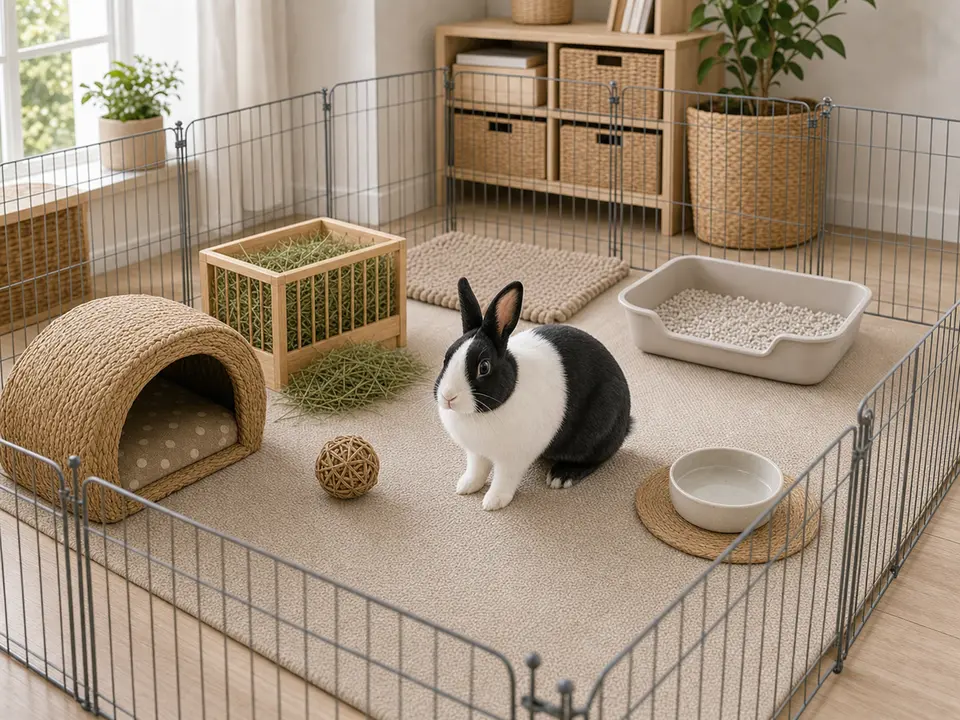
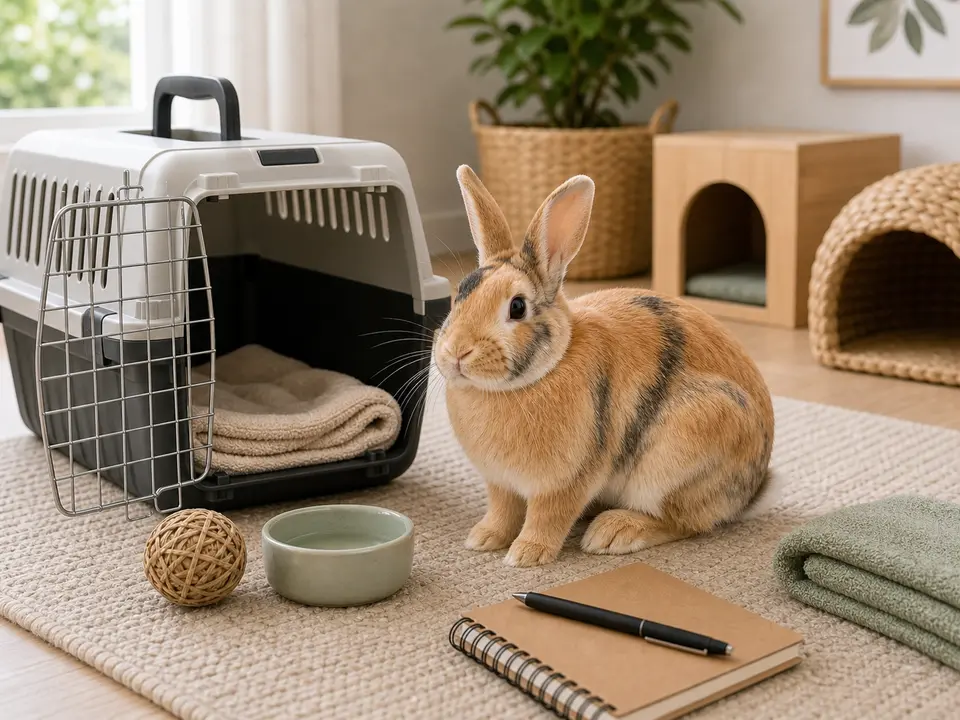
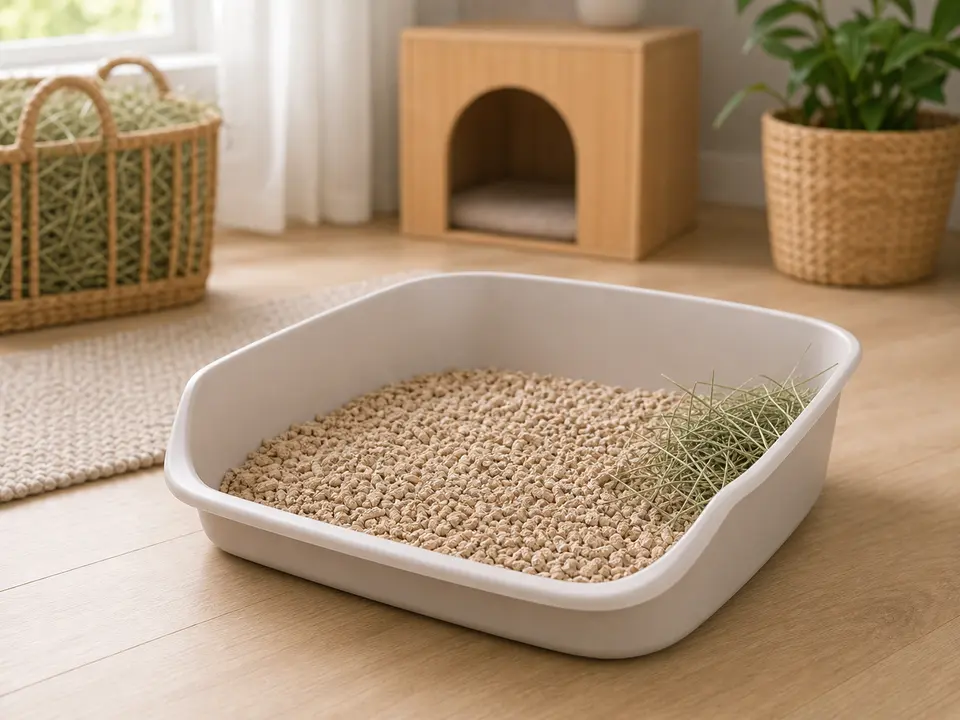
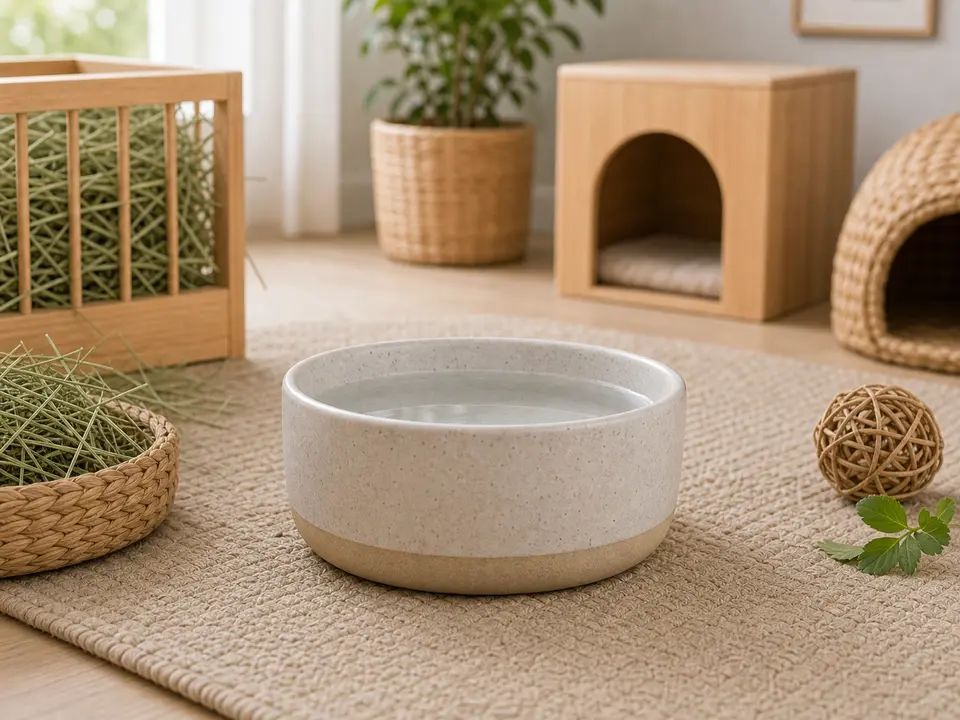
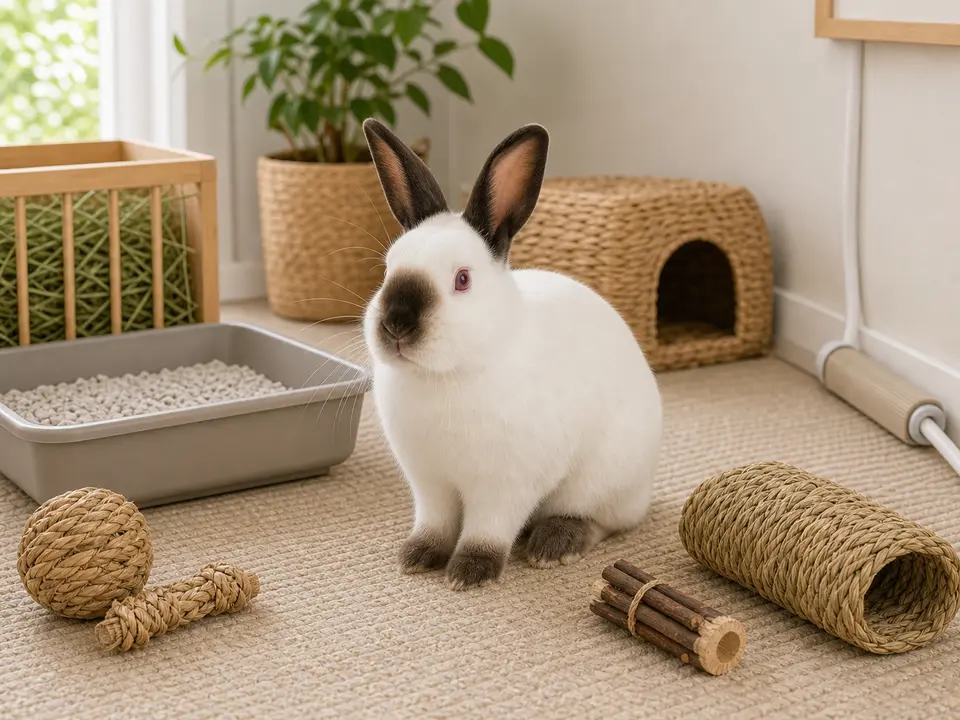
Avoid rearranging a new rabbit's room during the first few days unless something is unsafe. Keep hay, water, litter, and the hideout predictable, then make one small change at a time once eating and litter habits look steady. Start by making one room predictable. Hay, water, litter, hideout, safe flooring, and a chew option should be easy to find without your rabbit crossing a busy space or being handled every few minutes.
A first setup should make good choices obvious. Your rabbit should not have to search for hay, guess where the box is, or cross a slick floor to feel safe in the first calm room. Keep the first version simple enough that a tired owner can reset it the same way tomorrow morning.
Count quiet progress with rearrange a new rabbit room after adoption
A new rabbit may explore at night, freeze when you enter, or act curious and cautious in the same hour. That does not mean you are failing. Sit low, move slowly, and let normal care happen on schedule so the room starts to feel readable.
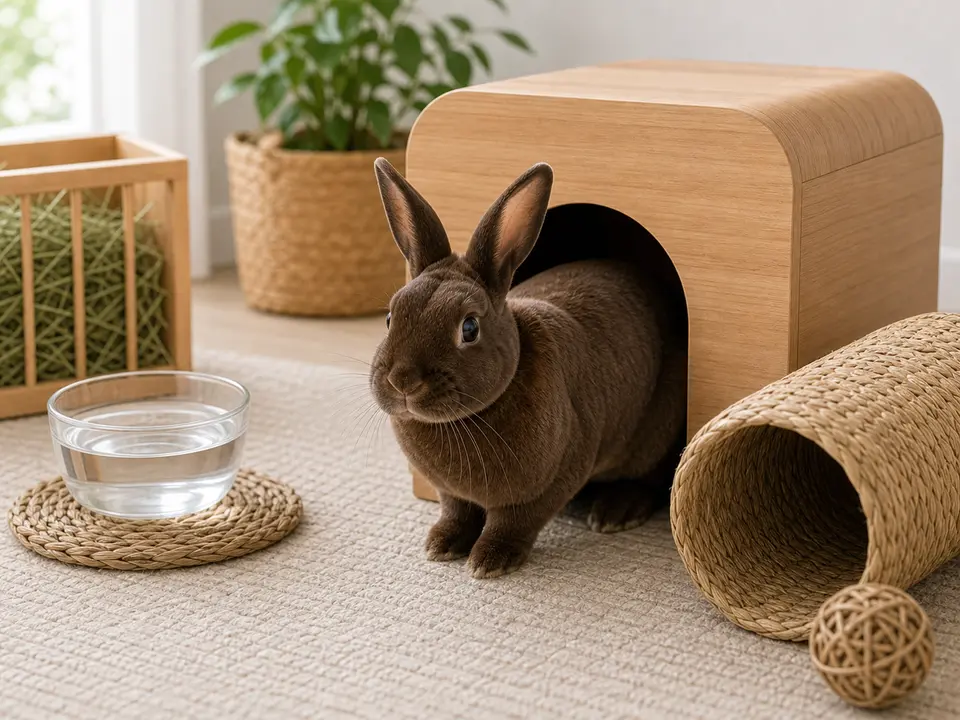
Quiet progress is still progress. Eating hay, using the box, stretching near the hideout, or approaching and leaving again all count as useful early confidence, even when cuddling comes much later. Watch for relaxed ordinary moments, not just dramatic breakthroughs, because new rabbits often trust in small increments.
Prepare the room before rearrange a new rabbit room after adoption grows
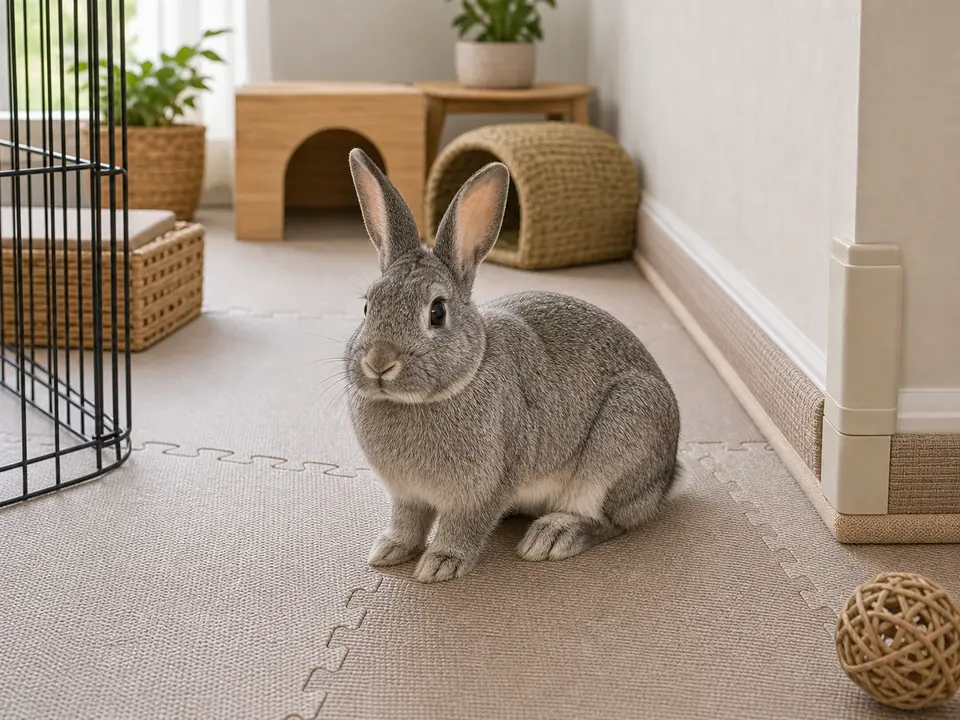
Before expanding access, check cords, plants, rug edges, baseboards, tight gaps, and slippery floors. Free-roam time feels much better when you are not constantly jumping up to stop danger. Rabbit-proof first, then make freedom bigger.
A safe room lets you relax too. When cords, plants, gaps, and slippery spots are handled first, you can watch your rabbit instead of constantly interrupting them or grabbing at problems. The safer the room is, the more your rabbit can explore without hearing constant corrections from across the floor.
Let daily chores support rearrange a new rabbit room after adoption
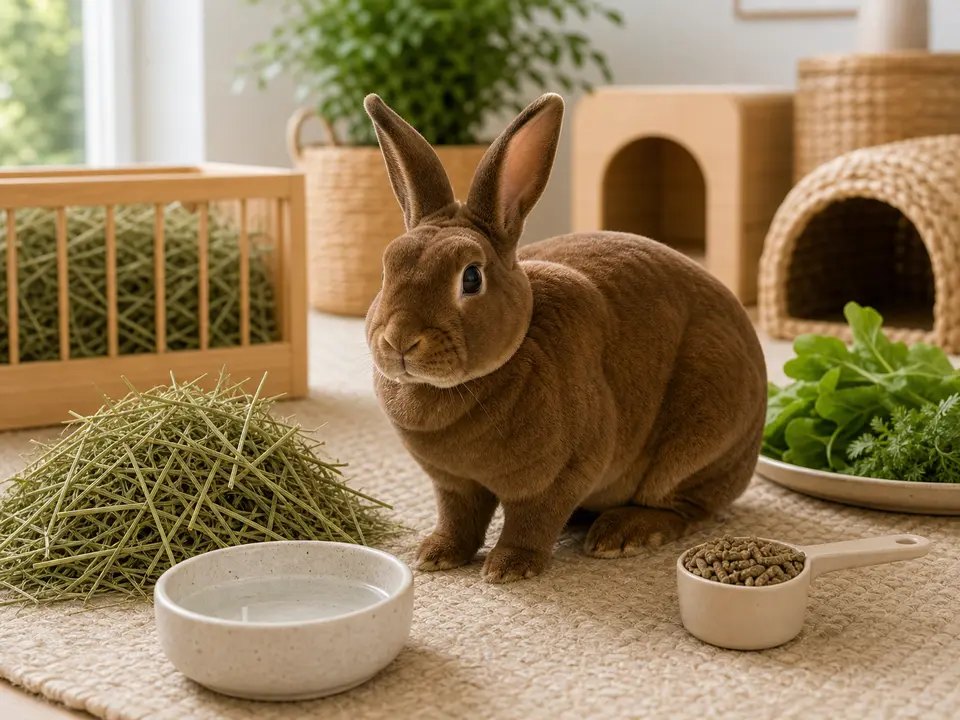
Daily chores are bonding chances when they are calm. Refill hay, refresh water, scoop litter, and place greens without chasing or grabbing. Your rabbit learns a lot from hands that arrive, do something useful, and leave without turning every visit into a capture.
Those small chores become the rhythm your rabbit learns. Predictable care is one of the kindest ways to say that this new place is steady, gentle, and worth exploring. That rhythm matters more than a perfect photo of the setup, especially during the first confusing week.
Get help if rearrange a new rabbit room after adoption stops normal care
Adjustment can be quiet, but a new rabbit still needs to eat, poop, drink, and move normally. If your rabbit stops eating, stops pooping, seems weak, breathes strangely, or looks painful, call a rabbit-savvy vet rather than assuming it is just first-week nerves.
Most first-week concerns can be handled gently, but eating and pooping are not optional. Keep the tone calm while still taking those basics seriously from the first night. If those basics stay normal, you can usually slow down, observe, and let confidence build without rushing the relationship.
Before you decide
What changed recently?
Can your rabbit choose a quiet retreat?
Are hay, water, litter, and footing easy?
Is this normal for your individual rabbit?
Next best moves
Make one small change.
Watch what your rabbit chooses next.
Keep the setup calm enough to repeat tomorrow.
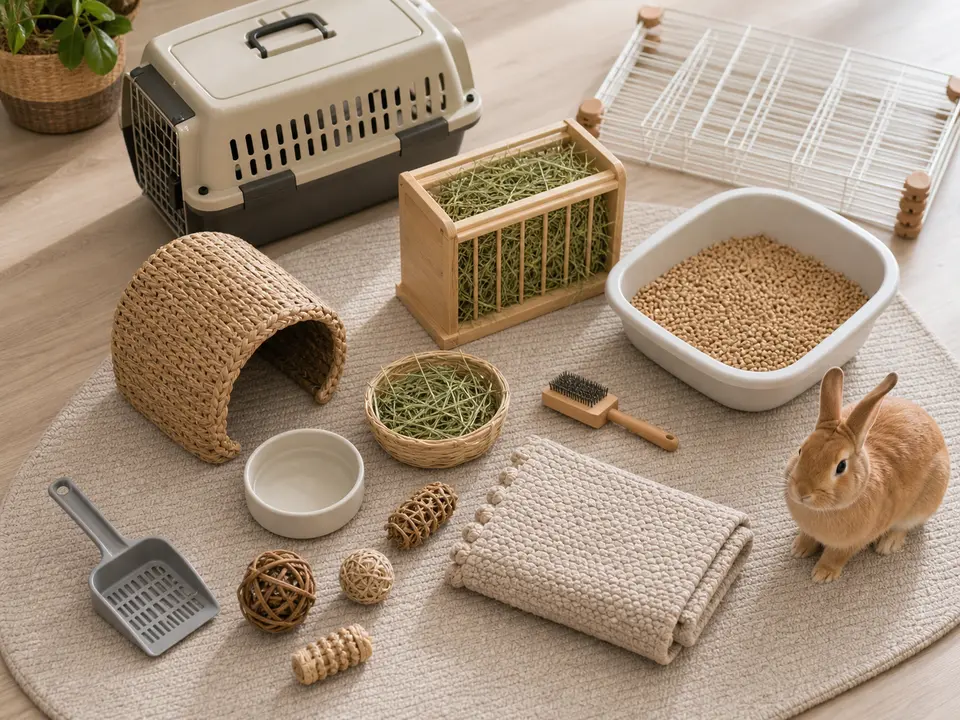
First setup pieces that earn their space
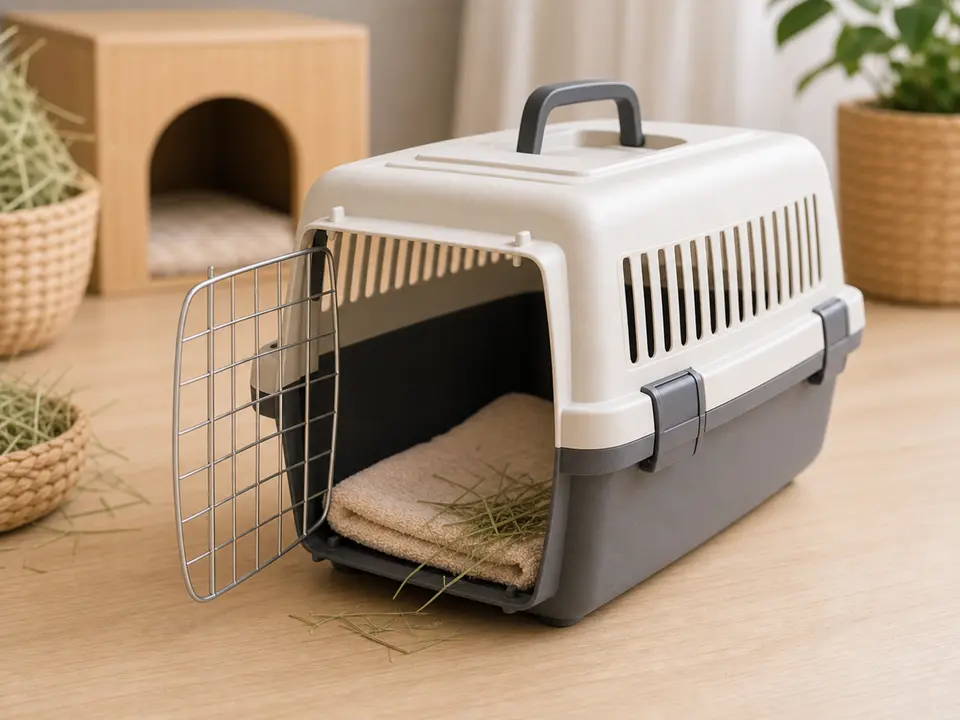
Start with the pieces that make the first room calm before buying cute extras.
Affiliate links: Furball Cove may earn from qualifying purchases at no extra cost to you.
Can I rearrange a new rabbit's room after adoption?
Avoid rearranging a new rabbit's room during the first few days unless something is unsafe. Keep hay, water, litter, and the hideout predictable, then make one small change at a time once eating and litter habits look steady.
What should I change first?
Choose one small setup change that makes the daily routine easier: closer hay, better traction, a calmer hideout, a larger box, or a shorter handling session.
When should I get extra help?
If your rabbit stops eating or pooping, seems painful, breathes strangely, or changes suddenly, call a rabbit-savvy vet. For bonding or handling problems, an experienced rabbit rescue can also help.