Should I use a water bowl, bottle, or both for a rabbit
Use a heavy water bowl as the main source for most rabbits, and add a bottle only as a backup if it helps during travel or messy phases. Check both daily because a bottle can clog and a bowl can get hay or litter in it.
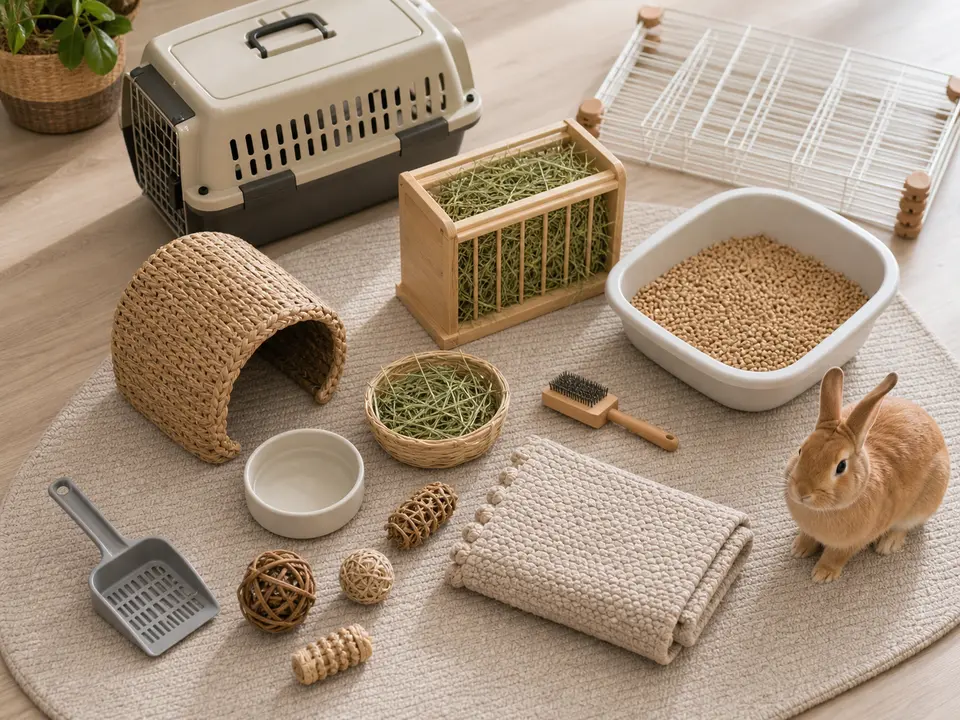
Rabbit supplies should earn their space in the daily routine. The best choice is the one that makes hay, litter, traction, chewing, transport, hiding, water, or cleanup easier tomorrow.
Use a heavy bowl as the main source
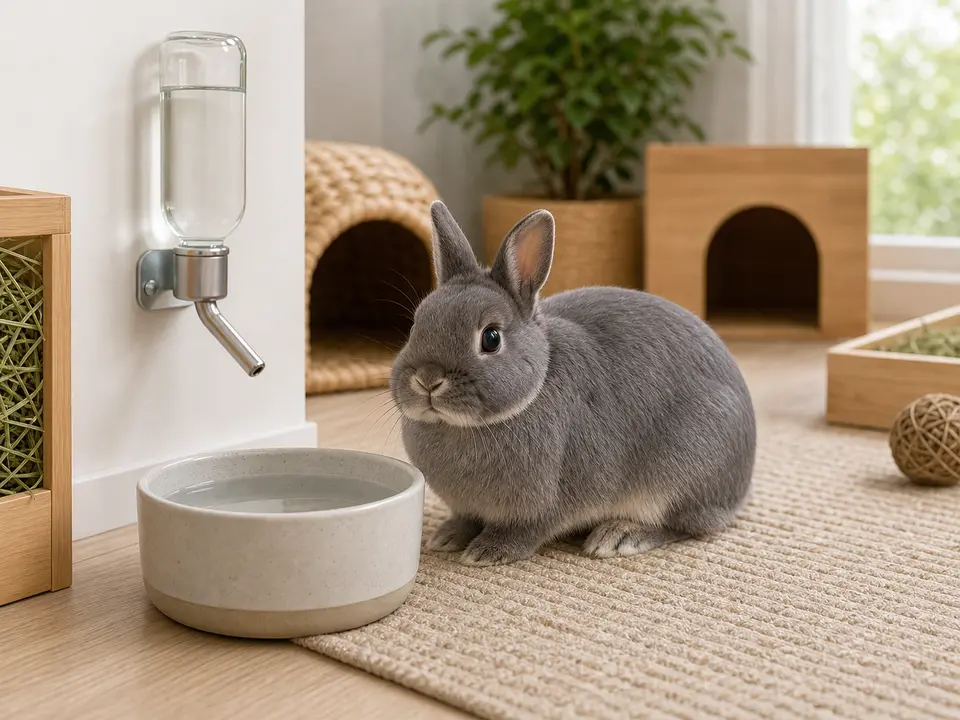
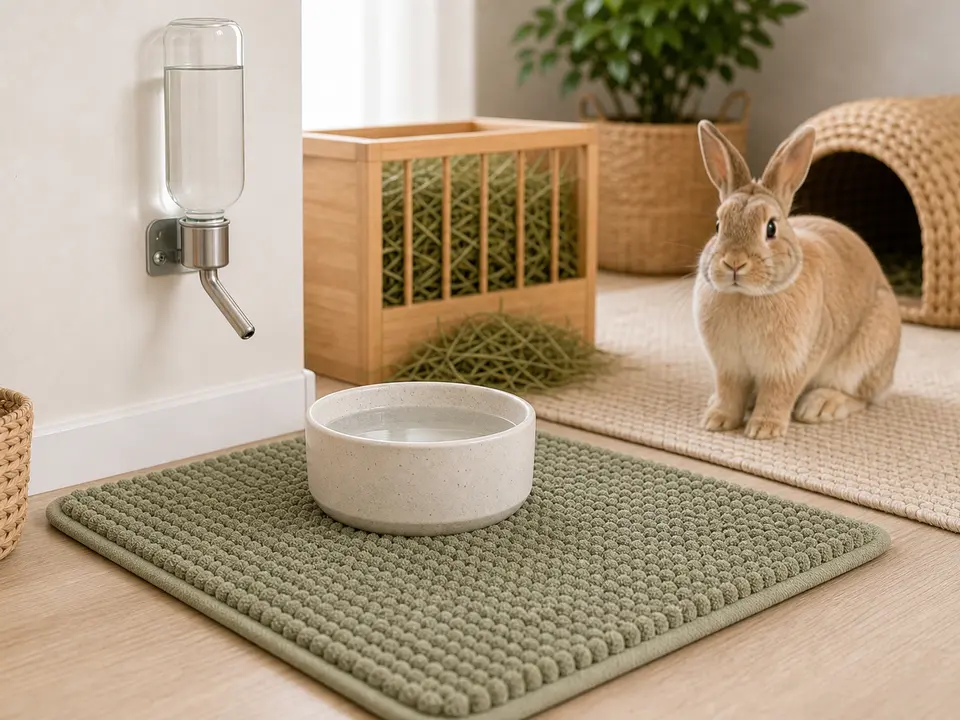
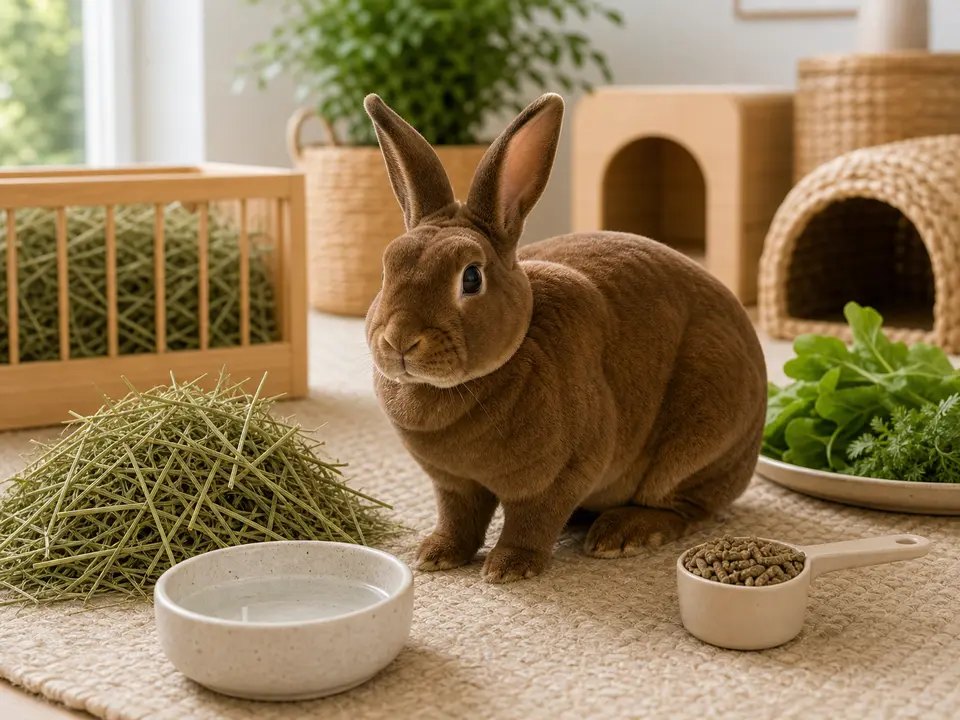
Use a heavy water bowl as the main source for most rabbits, and add a bottle only as a backup if it helps during travel or messy phases. Check both daily because a bottle can clog and a bowl can get hay or litter in it. A low, heavy ceramic bowl is usually the best starting point because many rabbits drink more comfortably from an open surface than from a sipper tube.
Choose a bowl wide enough for normal drinking and heavy enough that nosing, hopping, or rearranging does not tip it constantly.
Wash and refill it at least daily so you know what normal drinking and normal mess look like. That baseline matters when appetite or poop changes.
Keep a bottle only as backup if it helps
A bottle can be useful for travel, messy phases, or backup water, but it should not be the only source unless your rabbit reliably uses it and you check it daily.
Bottles can clog or drip, so the water level alone does not prove your rabbit is drinking well.
If you use a backup bottle, tap and test it every day. A backup that silently stops working is worse than no backup because it creates false confidence.
Place water outside the dirty edge
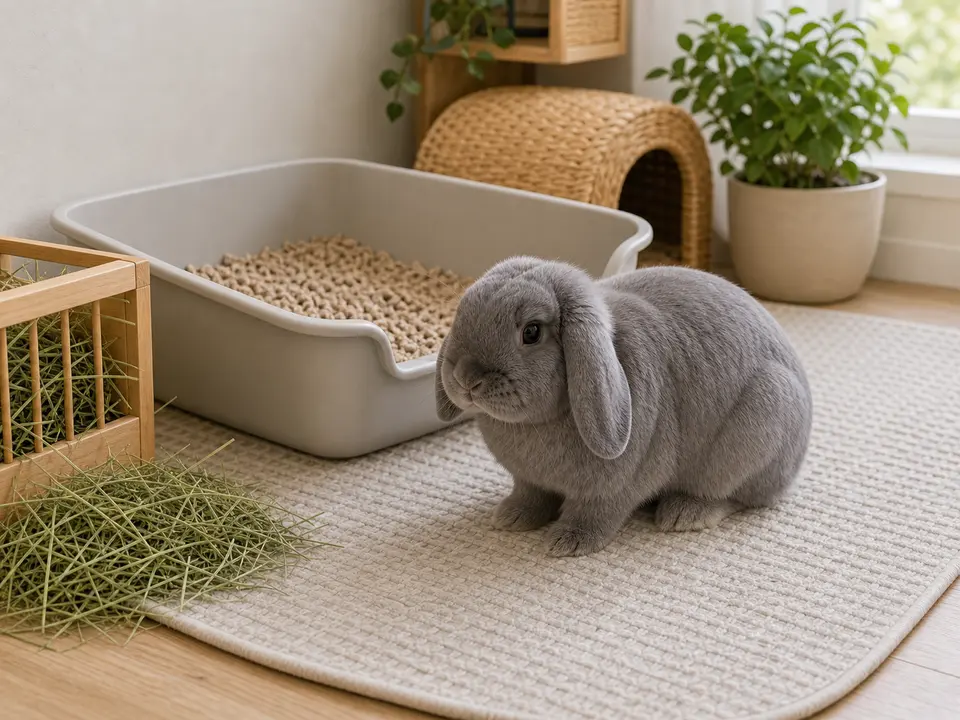
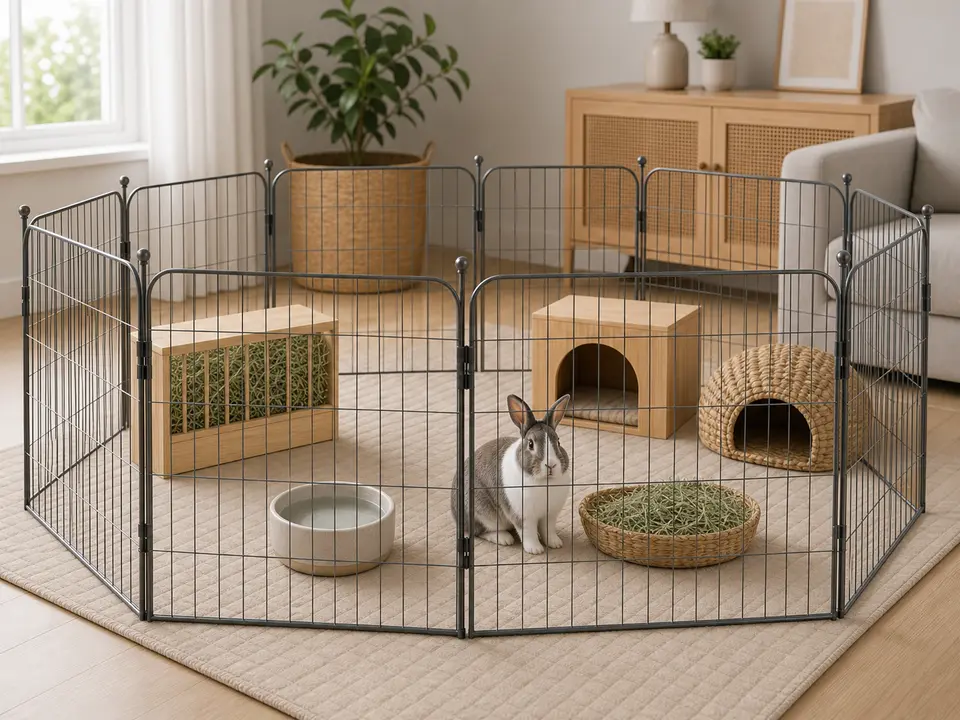
Keep water near hay and the normal routine, but not where hay, litter, or kicked bedding lands in it all day.
A washable mat under the bowl can catch drips and keep the bowl from skating across slick flooring.
Move the bowl by inches before changing containers. Small placement changes often solve dirty water without making drinking less convenient.
Watch drinking and cleanup together
The right setup is the one your rabbit uses and you can keep clean. If the bowl fills with hay every few hours, move it slightly; if the bottle is ignored, do not pretend it is backup.
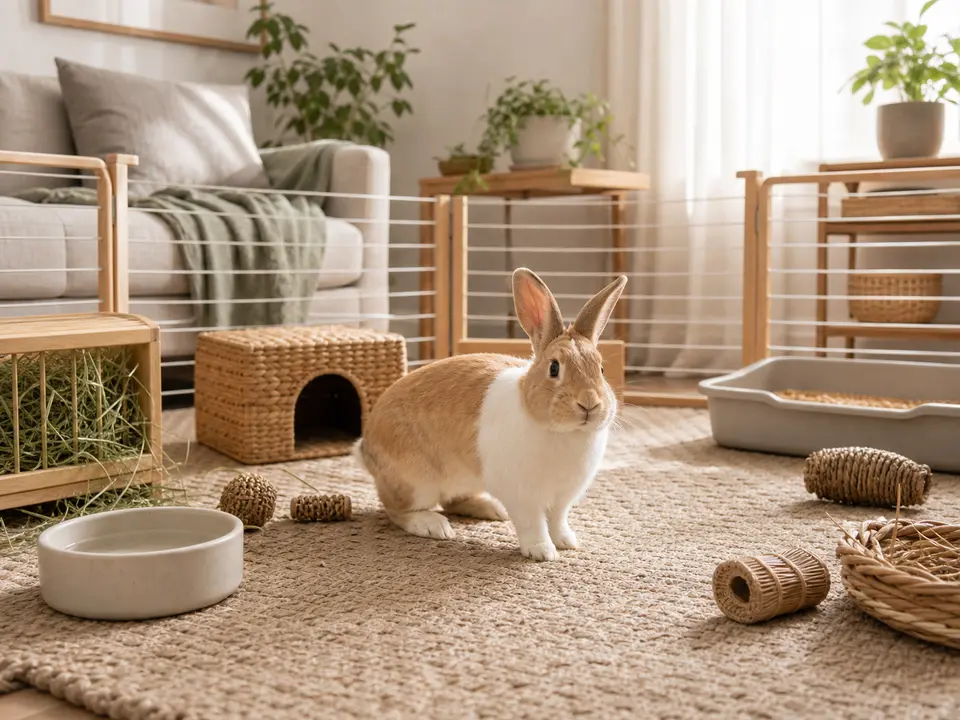
Normal drinking should fit the ordinary room, not depend on constant rescue.
Notice what a normal refill looks like for your rabbit. A sudden change in drinking, especially with appetite or poop changes, is useful information.
Treat low drinking as information
If your rabbit suddenly drinks much less, drinks much more, stops eating, produces fewer poops, or seems painful, do not solve it only by changing containers.
Make water easy right away and call a rabbit-savvy vet when appetite, poop, or behavior changes with the drinking pattern.
Container changes can help access, but they cannot diagnose dehydration, dental pain, kidney issues, heat stress, or gut slowdown. Treat the pattern seriously.
Before you decide
What changed recently?
Can your rabbit choose a quiet retreat?
Are hay, water, litter, and footing easy?
Is this normal for your individual rabbit?
Next best moves
Make one small change.
Watch what your rabbit chooses next.
Keep the setup calm enough to repeat tomorrow.
Helpful rabbit supplies
These are practical pieces for the routine, not clutter to buy all at once.
Affiliate links: Furball Cove may earn from qualifying purchases at no extra cost to you.
Should I use a water bowl, bottle, or both for a rabbit?
Use a heavy water bowl as the main source for most rabbits, and add a bottle only as a backup if it helps during travel or messy phases. Check both daily because a bottle can clog and a bowl can get hay or litter in it.
What should I change first?
Choose one small setup change that makes the daily routine easier: closer hay, better traction, a calmer hideout, a larger box, or a shorter handling session.
When should I get extra help?
If your rabbit stops eating or pooping, seems painful, breathes strangely, or changes suddenly, call a rabbit-savvy vet. For bonding or handling problems, an experienced rabbit rescue can also help.