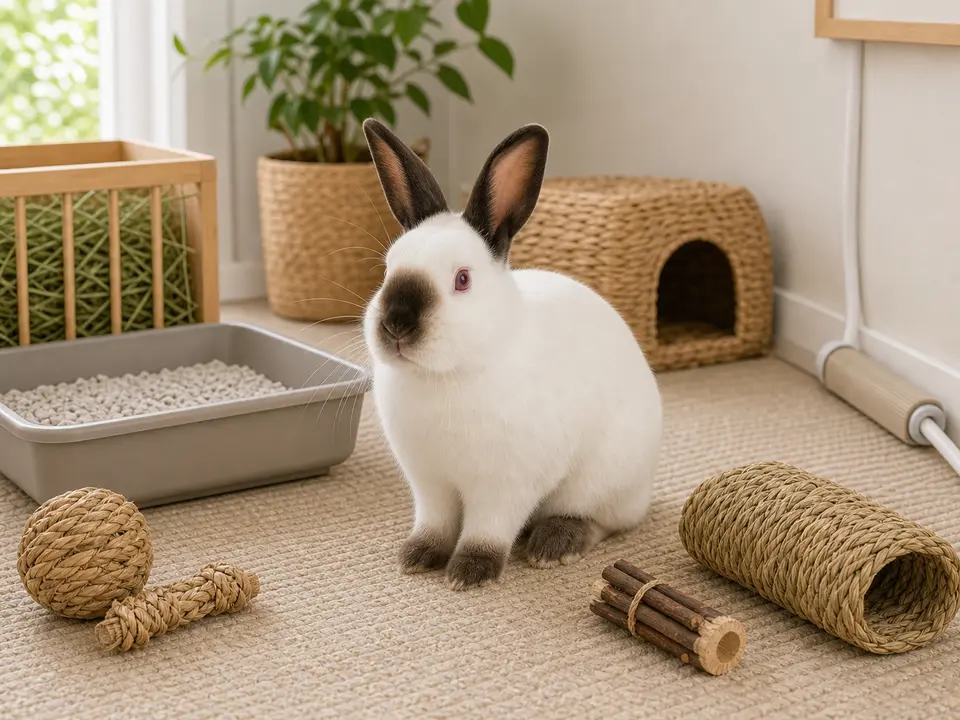
Make shedding so much smaller and easier to repeat. A few calm strokes, one nail, or one tiny coat check is often better than pushing through a long session that makes your rabbit avoid the next one.
Keep shedding so much short, steady, and easy to repeat. Set up the surface, tool, light, and exit plan before you start so care feels like a calm routine instead of a chase.
Expect shedding so much to come in waves
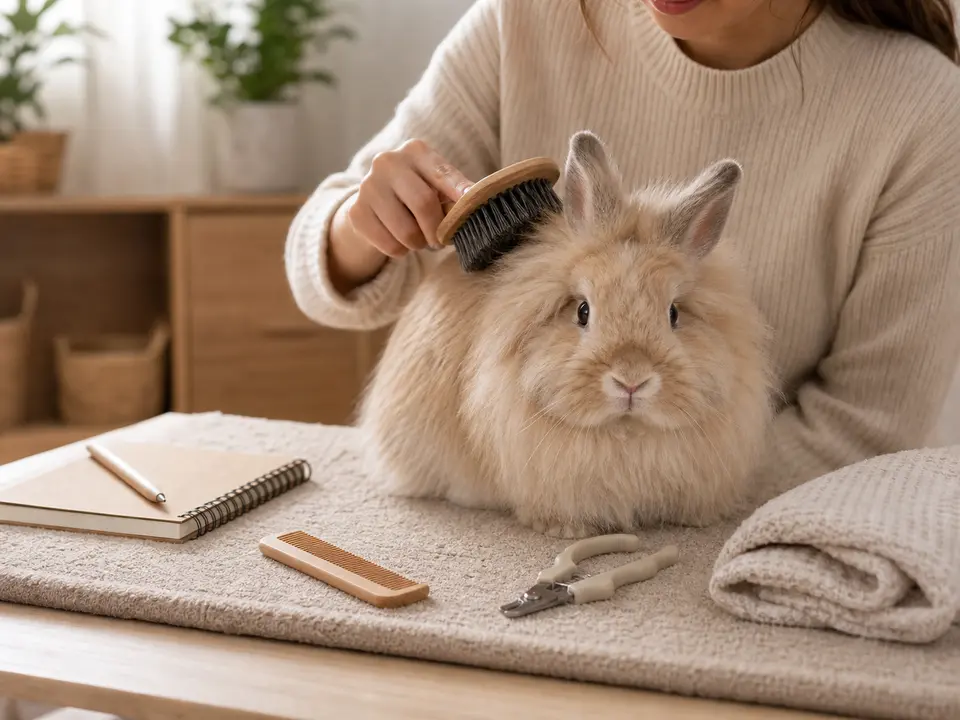
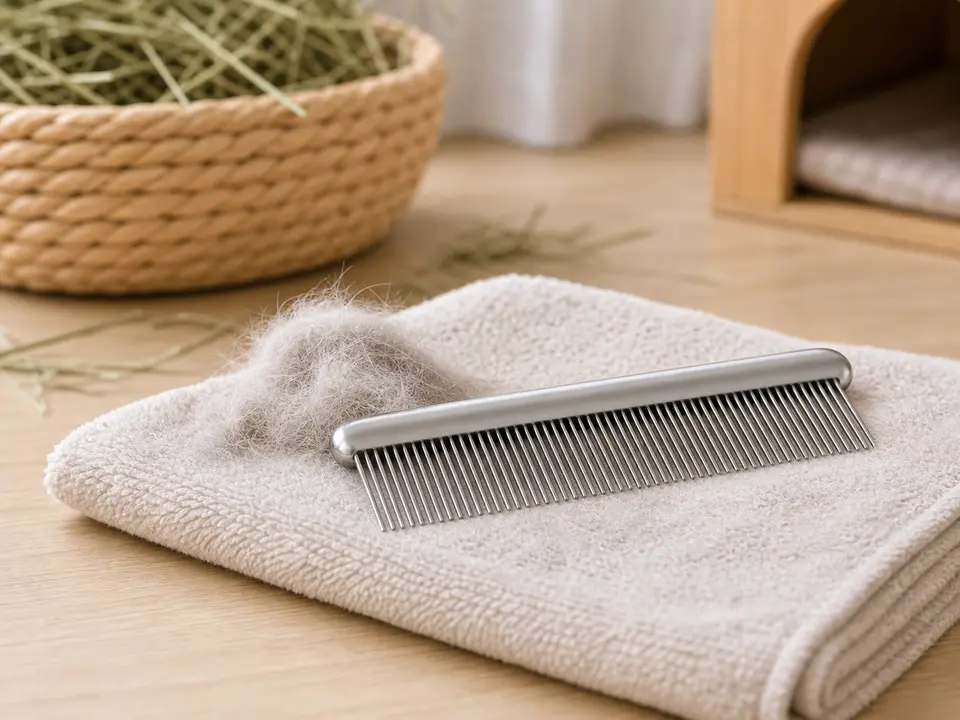
Make shedding so much smaller and easier to repeat. A few calm strokes, one nail, or one tiny coat check is often better than pushing through a long session that makes your rabbit avoid the next one. Some rabbits shed lightly; others release fur in visible clumps. The goal is to lift loose fur before your rabbit swallows too much during grooming. Keep the brush, comb, and coat check close to normal daily grooming so shedding so much feels familiar instead of like a surprise appointment. Use the same quiet spot when you can, because repetition helps you notice what changed.
For shedding so much: brush before the coat packs down
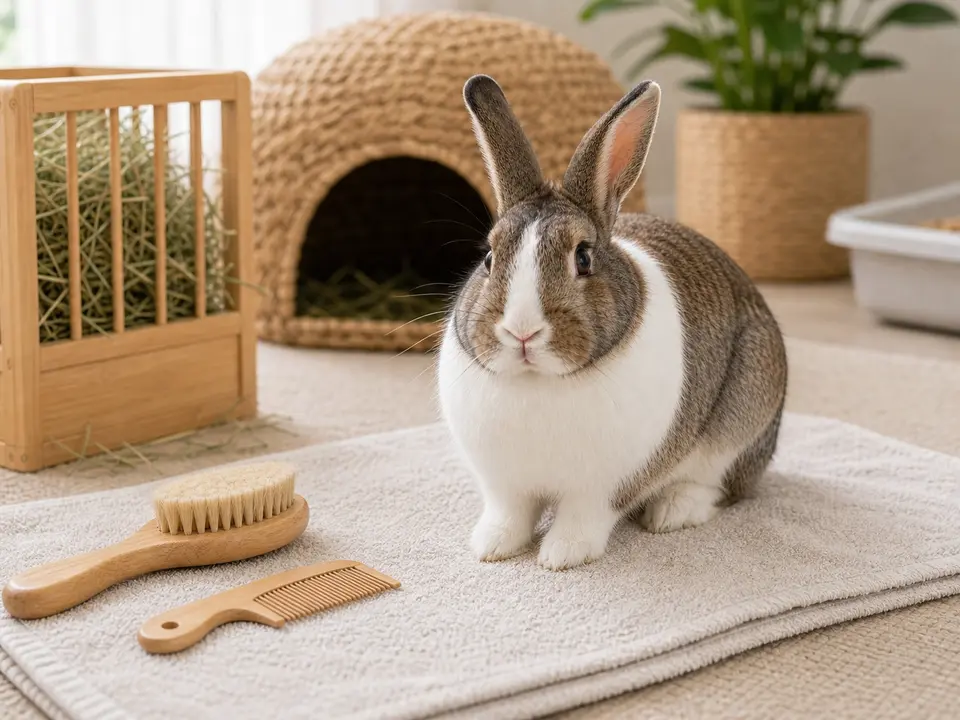
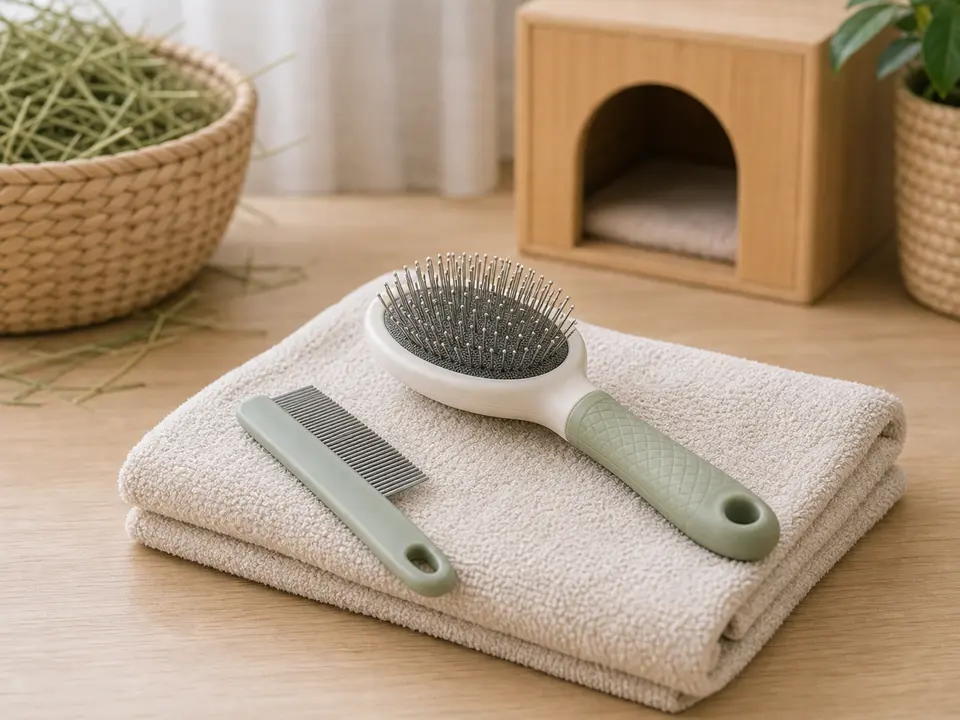
Use short frequent sessions during a heavy molt. A soft brush, grooming glove, or gentle comb can help, but the tool should glide rather than scrape or pull. Treat shedding so much as both grooming and health observation: coat, fur, skin, nails, teeth, movement, and comfort can all give you useful clues.
For shedding so much: keep hay and water obvious
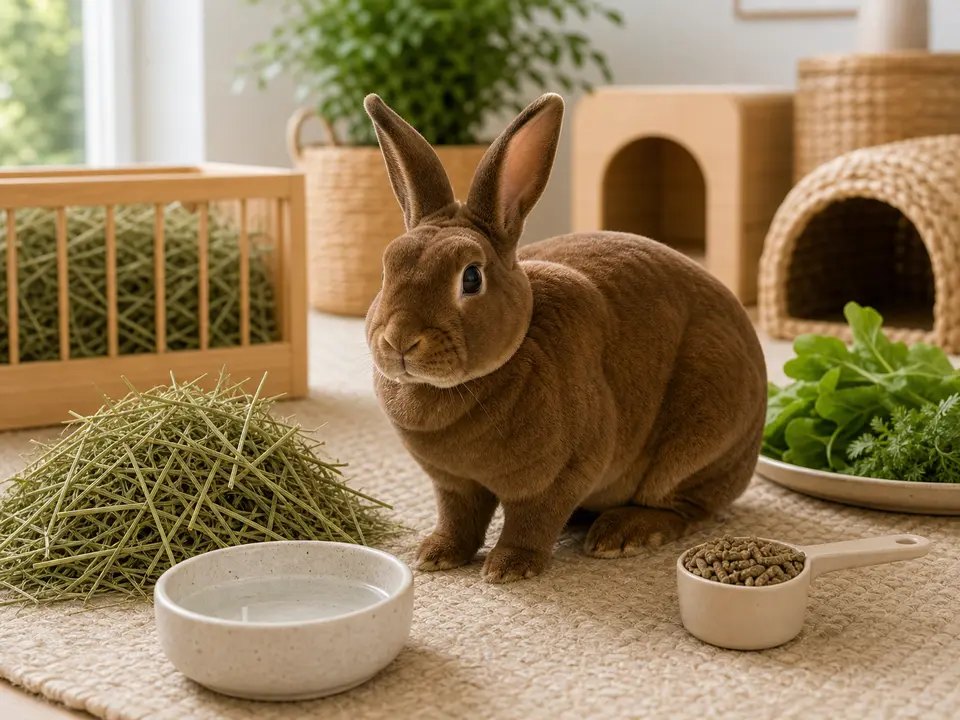
Molting is still a whole-routine check. Watch hay interest, water, appetite, poop size, and energy so a coat issue does not hide an eating or gut slowdown. Hay is part of the grooming picture because steady chewing, appetite, water, and poop tell you whether your rabbit feels normal.
For shedding so much: clean the room in small passes
Loose fur collects around litter edges, rugs, hideouts, and hay corners. A daily sweep or lint roller pass can make the room easier to breathe in without turning cleaning into a stressful event. Put the plan back into the daily routine: hay, water, litter, rest spots, and normal movement should still look steady after grooming.
For shedding so much: call for help if shedding pairs with illness signs
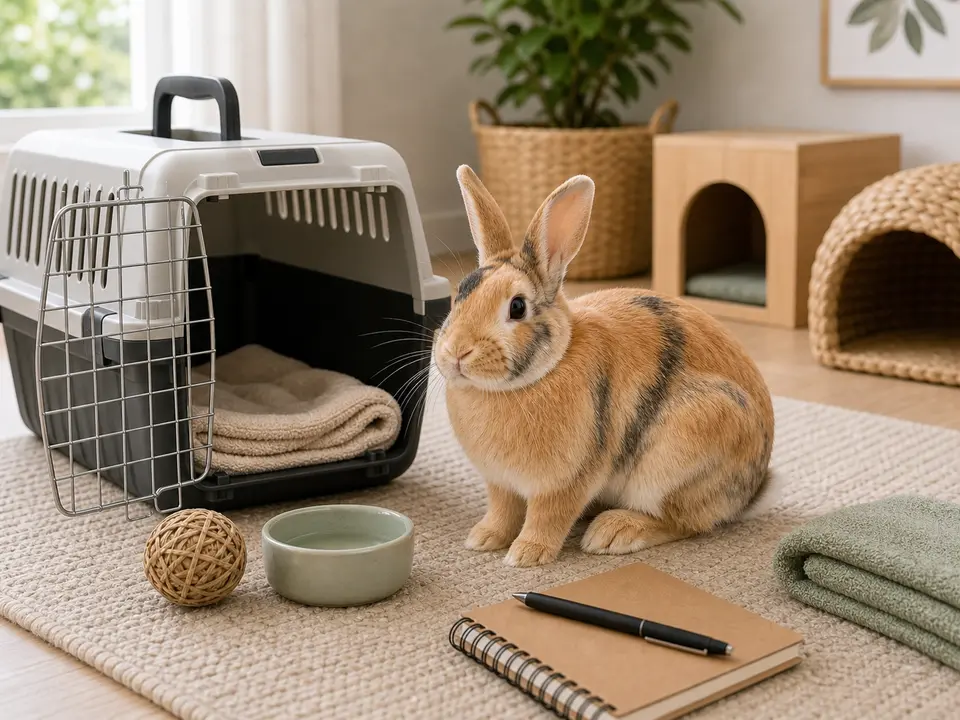
Heavy shedding alone can be normal. Heavy shedding with not eating, smaller poops, hiding, weakness, or pain signs deserves a rabbit-savvy vet call. Use a rabbit-savvy vet when pain, appetite, poop, skin, teeth, or movement changes join the grooming problem; those clues matter more than a perfect-looking coat.
Before you decide
What changed recently?
Can your rabbit choose a quiet retreat?
Are hay, water, litter, and footing easy?
Is this normal for your individual rabbit?
Next best moves
Make one small change.
Watch what your rabbit chooses next.
Keep the setup calm enough to repeat tomorrow.
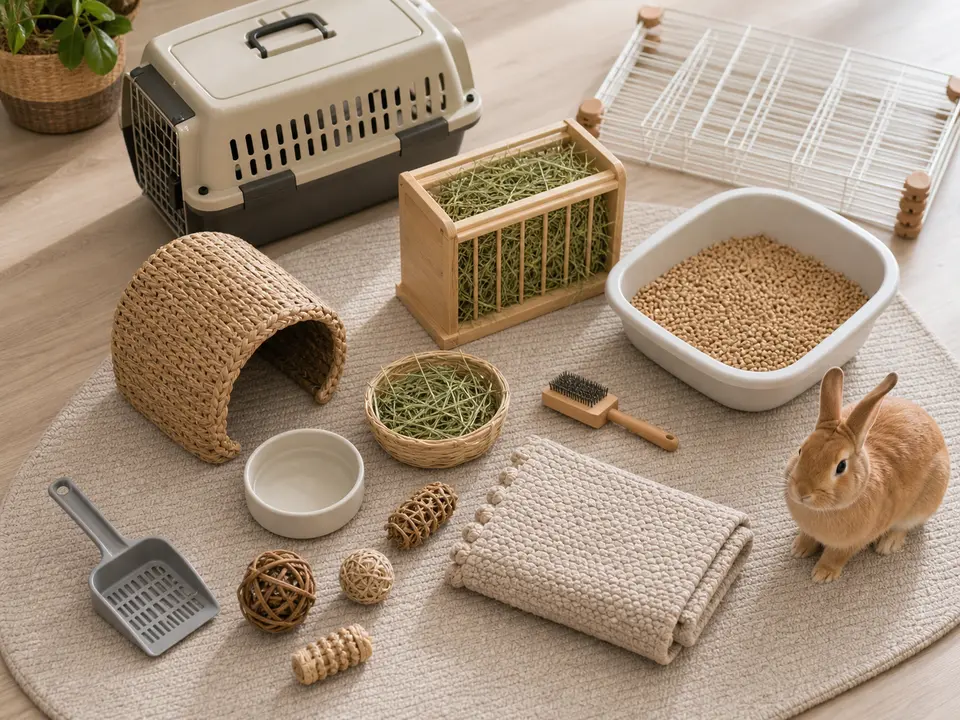
Grooming tools that stay useful
These are practical pieces for the routine, not clutter to buy all at once.
Affiliate links: Furball Cove may earn from qualifying purchases at no extra cost to you.
Make shedding so much smaller and easier to repeat. A few calm strokes, one nail, or one tiny coat check is often better than pushing through a long session that makes your rabbit avoid the next one.
What should I change first?
Choose one small setup change that makes the daily routine easier: closer hay, better traction, a calmer hideout, a larger box, or a shorter handling session.
When should I get extra help?
If your rabbit stops eating or pooping, seems painful, breathes strangely, or changes suddenly, call a rabbit-savvy vet. For bonding or handling problems, an experienced rabbit rescue can also help.