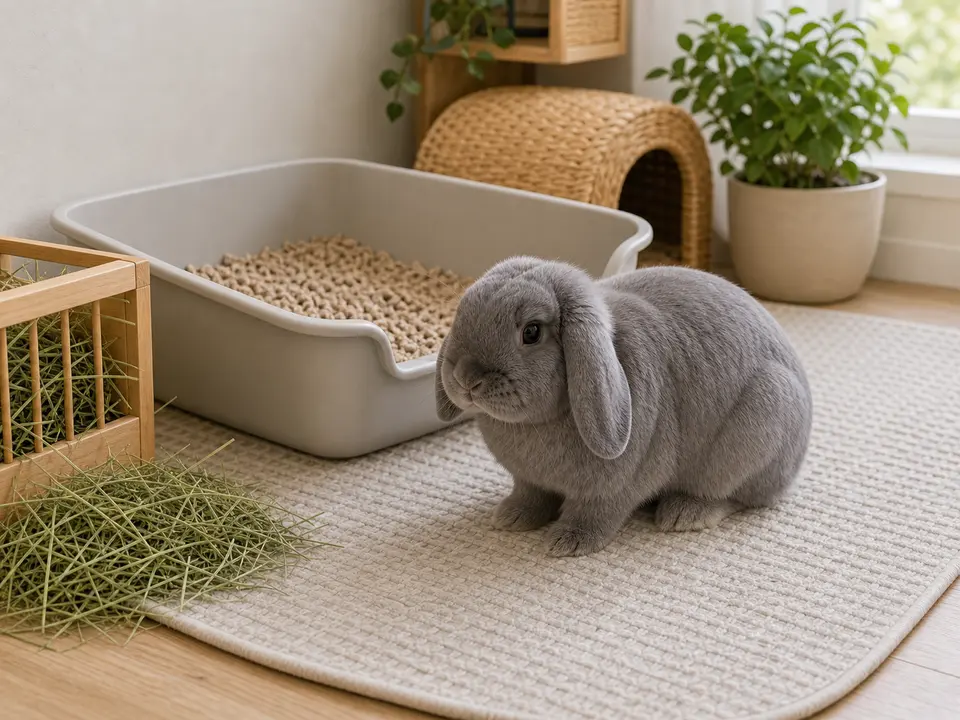
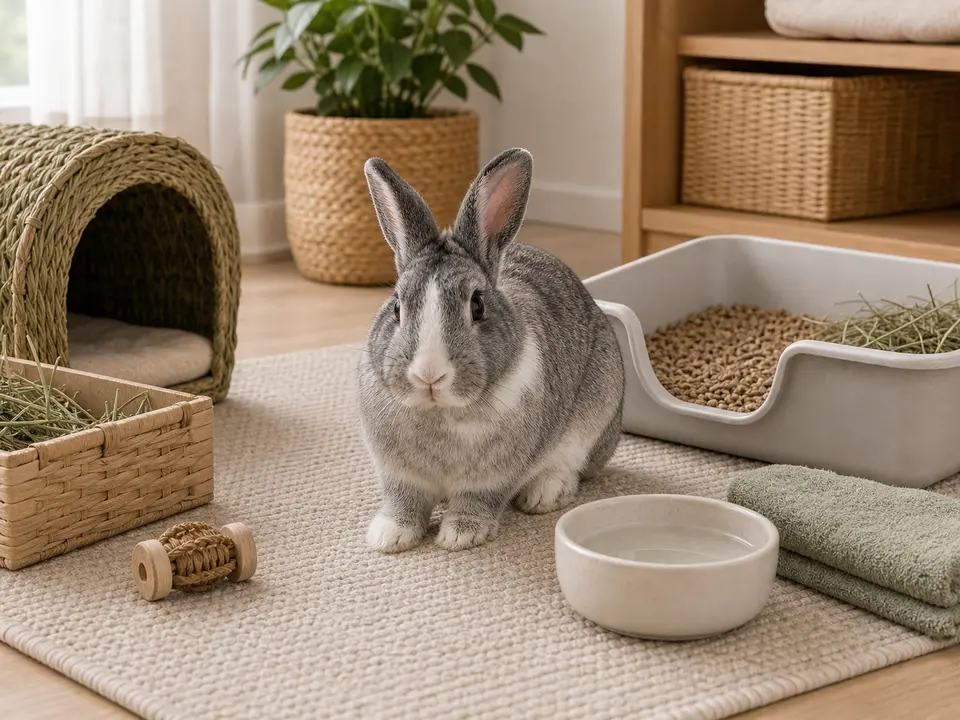
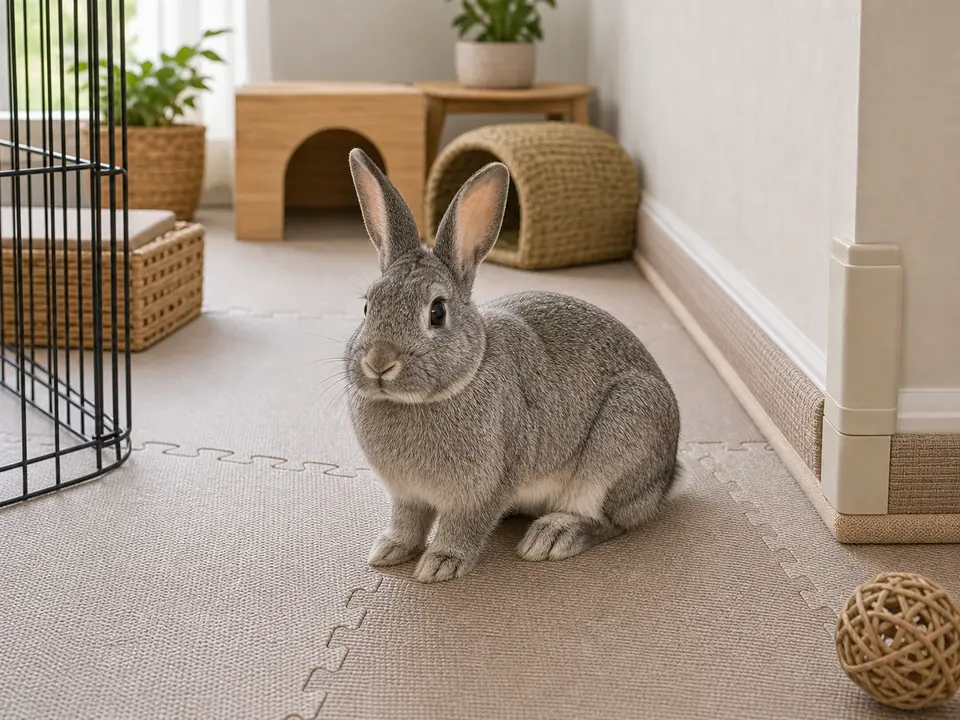
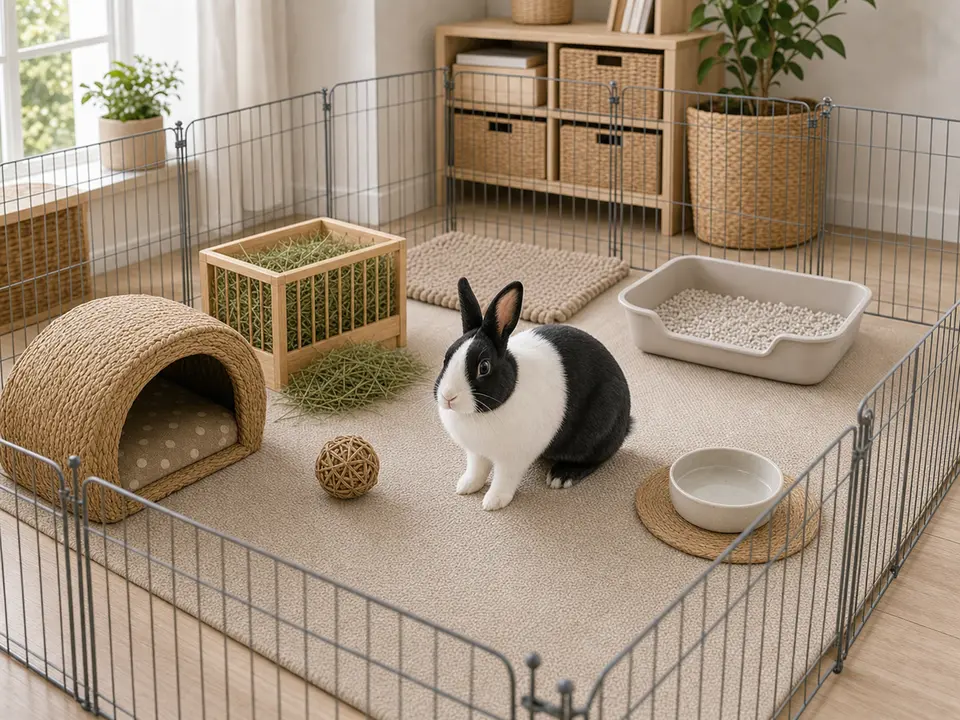
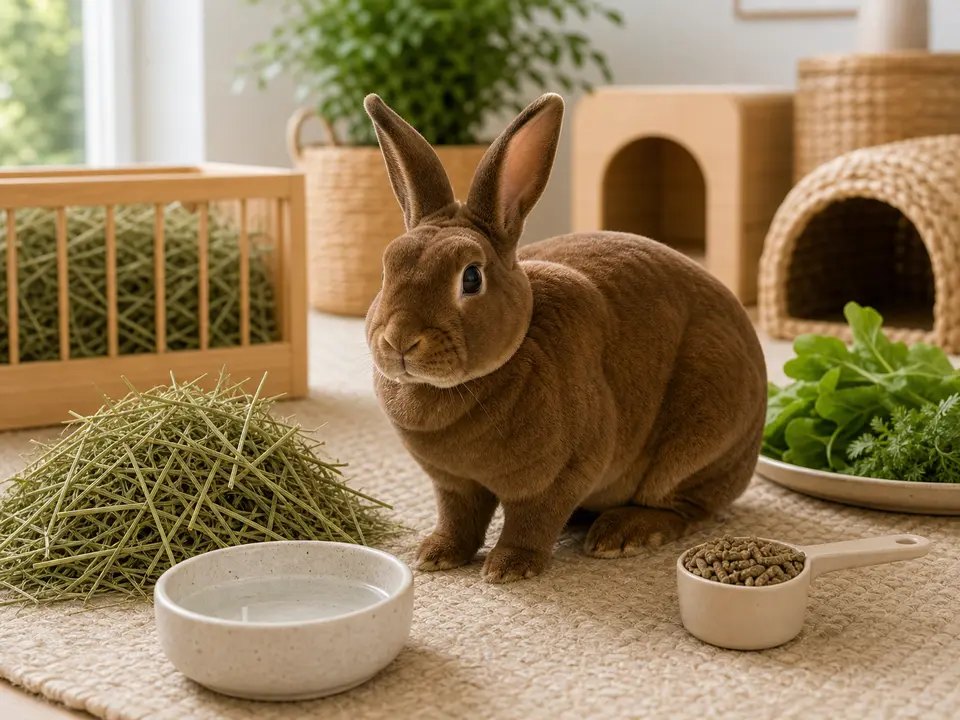
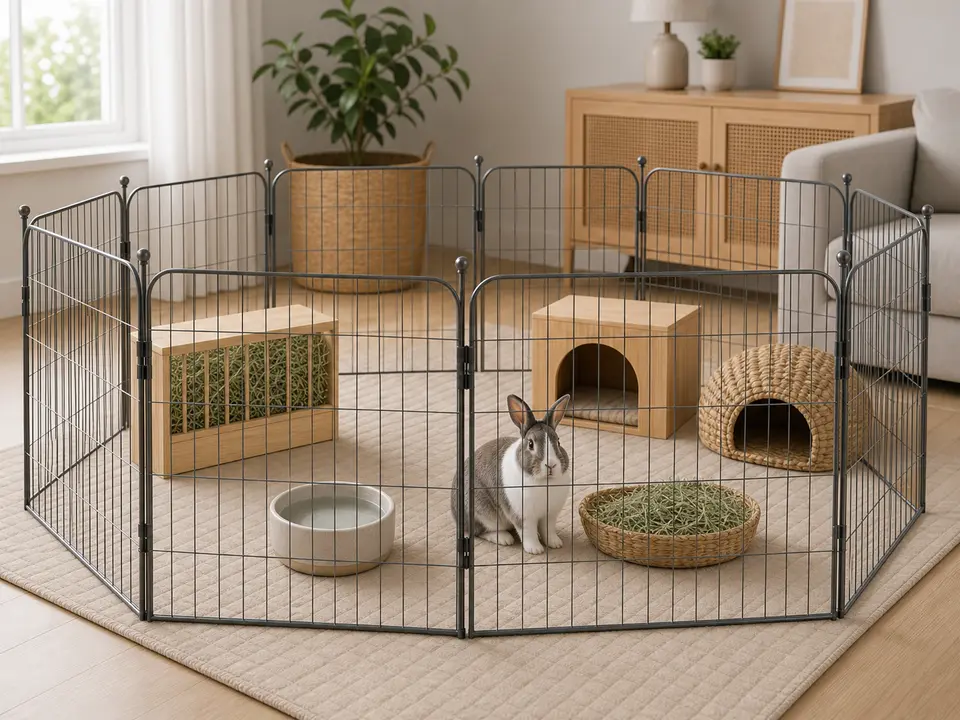
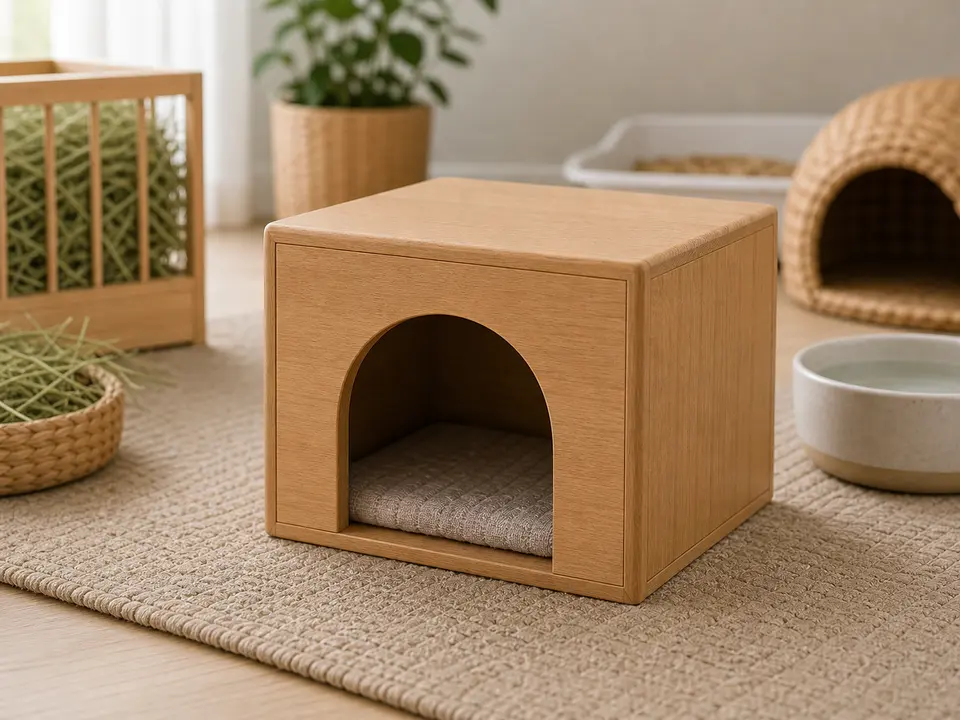
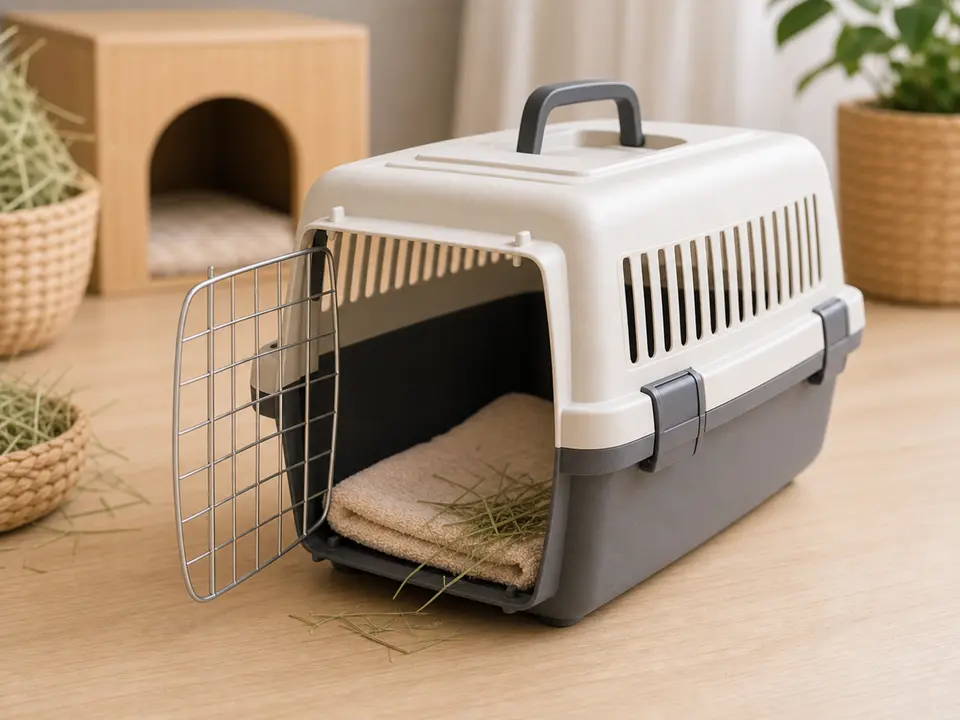
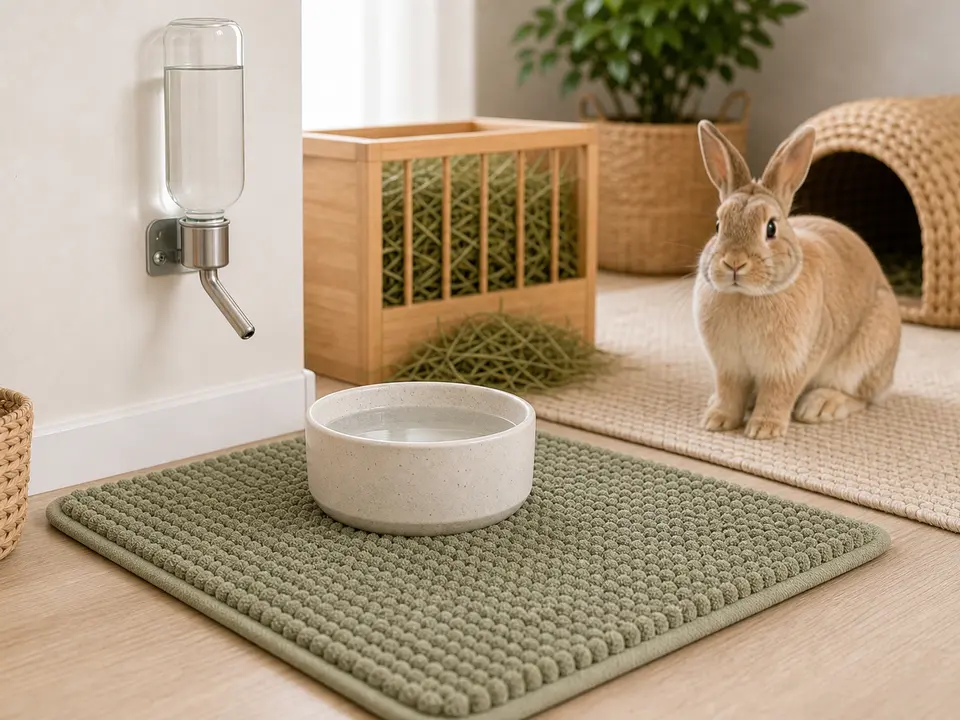
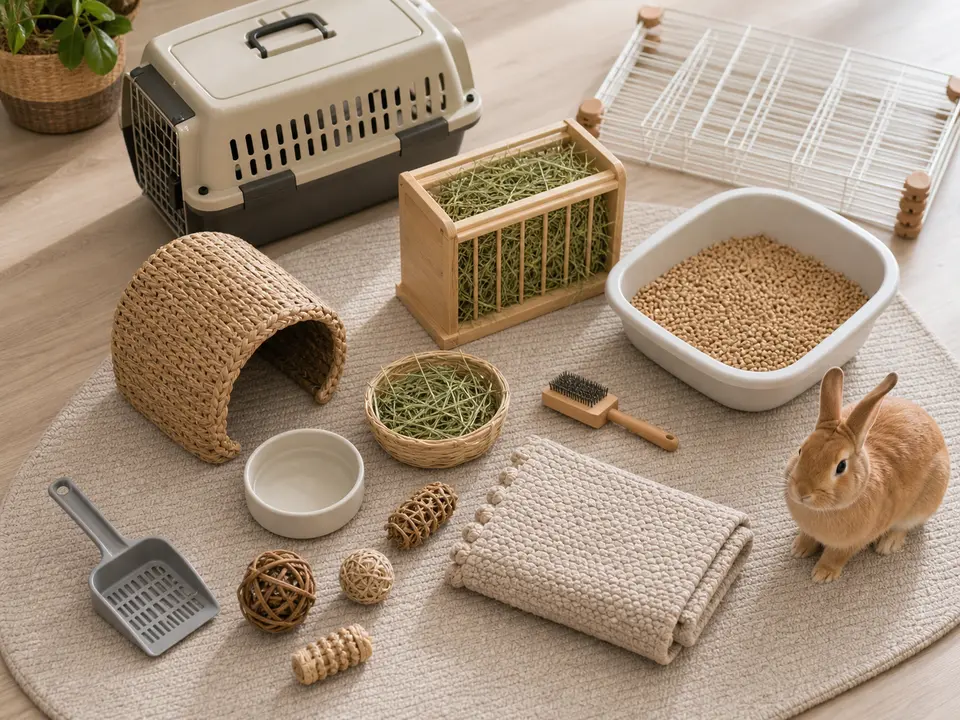
Choose supplies by daily use, not product photos. The right item makes hay access, litter cleanup, traction, chewing, hiding, carrier practice, or cleaning easier to repeat.
Rabbit supplies should earn their space in the daily routine. The best choice is the one that makes hay, litter, traction, chewing, transport, hiding, water, or cleanup easier tomorrow.
Buy larger than the shelf photo suggests
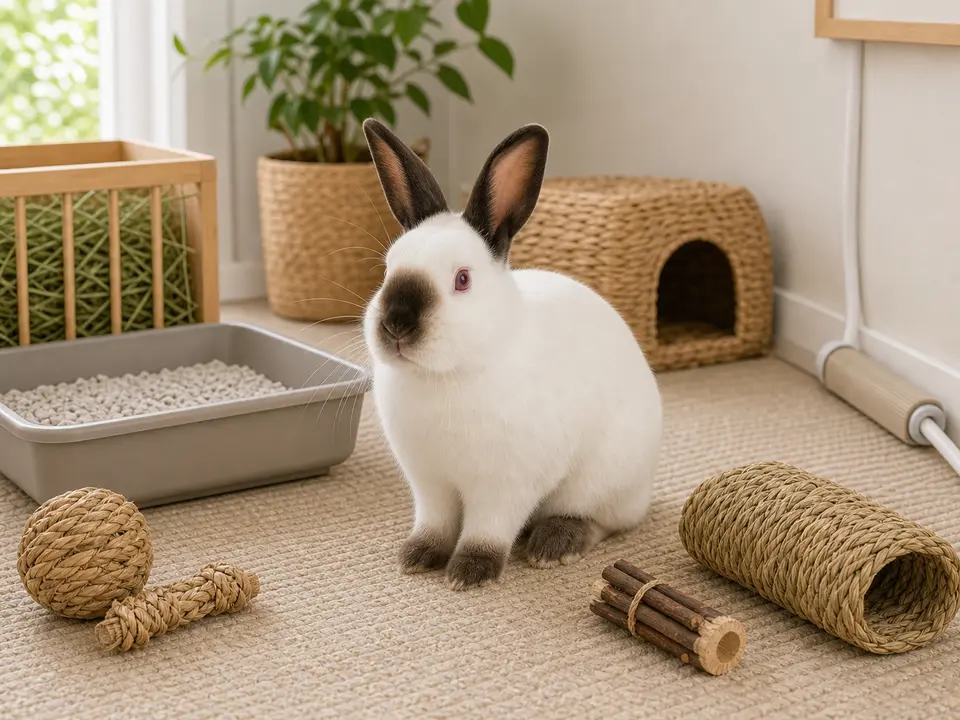
Choose supplies by daily use, not product photos. The right item makes hay access, litter cleanup, traction, chewing, hiding, carrier practice, or cleaning easier to repeat. A good rabbit litter box has enough room for the rabbit to sit fully inside, turn around, eat hay, and keep the back end inside the edge.
Too-small boxes create misses even when the rabbit understands the habit. Size is often the first fix.
Many rabbits do better with a cat-sized box or low storage bin than a tiny corner tray. The box should fit the rabbit's bathroom posture, not the shelf label.
Match the entry to the rabbit
Young, agile rabbits may handle a taller edge, while seniors, stiff rabbits, small rabbits, or rabbits recovering from stress may need a lower entry.
If the entry is high, add traction around it and watch whether your rabbit hesitates before stepping in.
The entry should be easy enough that your rabbit uses the box when tired, startled, or half asleep. A box that only works on energetic days is not reliable.
Use a higher back for edge misses
If pee goes over the edge, try a larger box with a higher back and an easy entrance rather than a tiny covered tray.
A washable mat around the box can catch scatter, but the box itself still needs to fit the way your rabbit sits.
A higher back should solve overspray without trapping the rabbit inside. Keep the entrance obvious and watch for hesitation after the change.
Choose easy-clean materials
Smooth plastic with simple corners is easier to reset than fussy shapes, cloth edges, or boxes with grooves that trap damp litter.
A box that cleans quickly is more likely to stay clean, and a clean box is easier for the rabbit to keep using.
Avoid designs you cannot dump, wipe, and dry without a long scrub. Litter habits improve when the box is easy enough to maintain consistently.
Place hay where the habit happens
Many rabbits use the box better when hay is at one end or just above the box. Put the hay where eating and bathroom habits can work together.
If misses start suddenly, or you see straining, wet fur, pain, appetite loss, or fewer poops, treat it as more than a shopping problem and call a rabbit-savvy vet.
Move hay slowly and watch the result. If the box gets cleaner and your rabbit keeps eating hay comfortably, the placement is helping.
Before you decide
What changed recently?
Can your rabbit choose a quiet retreat?
Are hay, water, litter, and footing easy?
Is this normal for your individual rabbit?
Next best moves
Make one small change.
Watch what your rabbit chooses next.
Keep the setup calm enough to repeat tomorrow.
Helpful rabbit supplies
These are practical pieces for the routine, not clutter to buy all at once.
Affiliate links: Furball Cove may earn from qualifying purchases at no extra cost to you.
Choose supplies by daily use, not product photos. The right item makes hay access, litter cleanup, traction, chewing, hiding, carrier practice, or cleaning easier to repeat.
What should I change first?
Choose one small setup change that makes the daily routine easier: closer hay, better traction, a calmer hideout, a larger box, or a shorter handling session.
When should I get extra help?
If your rabbit stops eating or pooping, seems painful, breathes strangely, or changes suddenly, call a rabbit-savvy vet. For bonding or handling problems, an experienced rabbit rescue can also help.