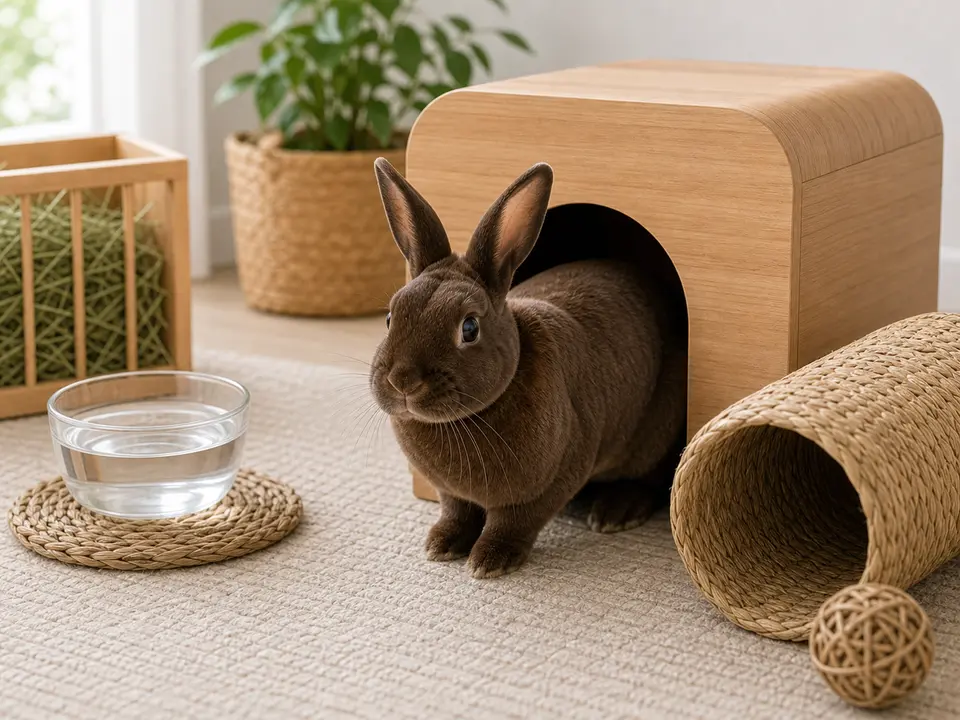
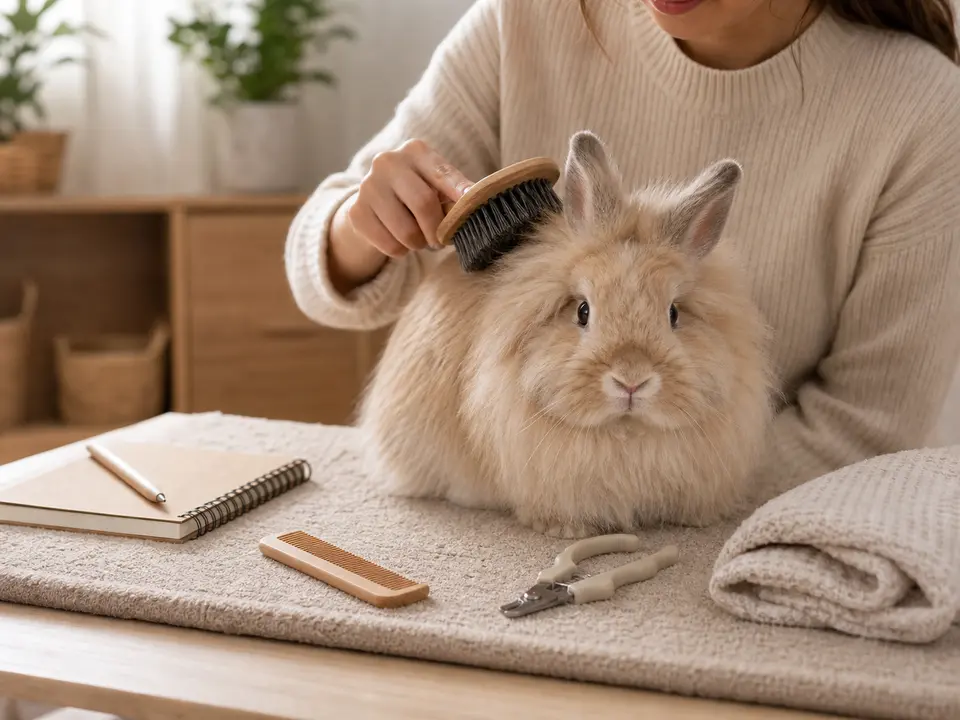
A new rabbit may take a few days to a few weeks to settle, and shy rabbits can take longer. Eating hay, using the litter box, exploring at night, stretching near the hideout, and choosing to approach are all better signs than instant cuddling.
New rabbits do best when the first room feels predictable and quiet. This guide keeps the answer grounded in the room your rabbit actually uses: hay, water, litter, hideouts, safe chewing, quiet handling, and enough patience for trust to build.
Think days to weeks, not one perfect night
Some rabbits start eating and exploring within a day or two. Others need a few weeks before they move around confidently while people are awake. A shy rabbit, rescue rabbit, or rabbit from a noisy transition may need longer.
Settling in is not measured by cuddling. It is measured by normal eating, normal poops, safe exploring, and the rabbit choosing more relaxed moments over time.
That timeline should feel flexible, not vague. Look for steady ordinary progress: a cleaner plate of hay, a used litter box, less freezing when you enter, and more time spent resting outside the hideout.
Keep the first room boring in a good way
Hay, water, litter, hideout, traction, and safe chews should stay easy to find. A predictable room helps the rabbit learn where everything is before you add more freedom.
Resist the urge to redesign every day. One calm setup repeated well is more helpful than constant improvements that make the room feel new again.
If you must change something for safety, change that one thing and leave the rest familiar. New rabbits settle faster when the room does not keep surprising them.
Let the hideout do its job
A rabbit who uses the hideout is not failing to bond. The hideout gives them a safe place to watch the room, listen to your routine, and decide when to come out.
Do not pull the rabbit out for reassurance. Trust grows faster when the rabbit learns that hiding does not make hands appear.
Put hay and water close enough that leaving the hideout does not feel like crossing a busy hallway. Small, safe trips build confidence.
Use routine as the introduction
Refill hay, refresh water, scoop litter, and place greens calmly. These chores teach your rabbit that your hands bring predictable care instead of pressure.
Short floor visits are enough at first. Sit nearby, speak softly, and end before your rabbit feels chased or trapped.
The relationship often starts with ordinary care before affection. A rabbit who eats while you tidy nearby is already practicing life with you.
Call the vet for broken basics
A quiet first week is normal only if the essentials are still happening. If your rabbit stops eating, stops pooping, seems weak, breathes strangely, or looks painful, call a rabbit-savvy vet.
If the basics are steady, give the relationship time. A rabbit who settles slowly can still become deeply comfortable in a home that stays patient.
Before you decide
What changed recently?
Can your rabbit choose a quiet retreat?
Are hay, water, litter, and footing easy?
Is this normal for your individual rabbit?
Next best moves
Make one small change.
Watch what your rabbit chooses next.
Keep the setup calm enough to repeat tomorrow.
First setup pieces that earn their space
Start with the pieces that make the first room calm before buying cute extras.
Affiliate links: Furball Cove may earn from qualifying purchases at no extra cost to you.
A new rabbit may take a few days to a few weeks to settle, and shy rabbits can take longer. Eating hay, using the litter box, exploring at night, stretching near the hideout, and choosing to approach are all better signs than instant cuddling.
What should I change first?
Choose one small setup change that makes the daily routine easier: closer hay, better traction, a calmer hideout, a larger box, or a shorter handling session.
When should I get extra help?
If your rabbit stops eating or pooping, seems painful, breathes strangely, or changes suddenly, call a rabbit-savvy vet. For bonding or handling problems, an experienced rabbit rescue can also help.