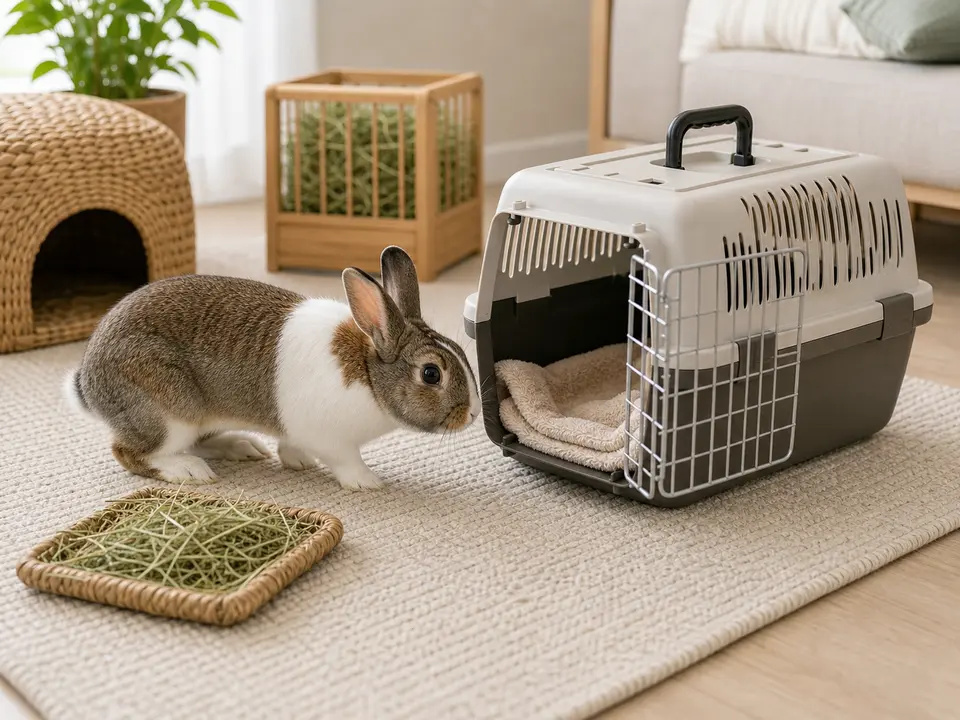
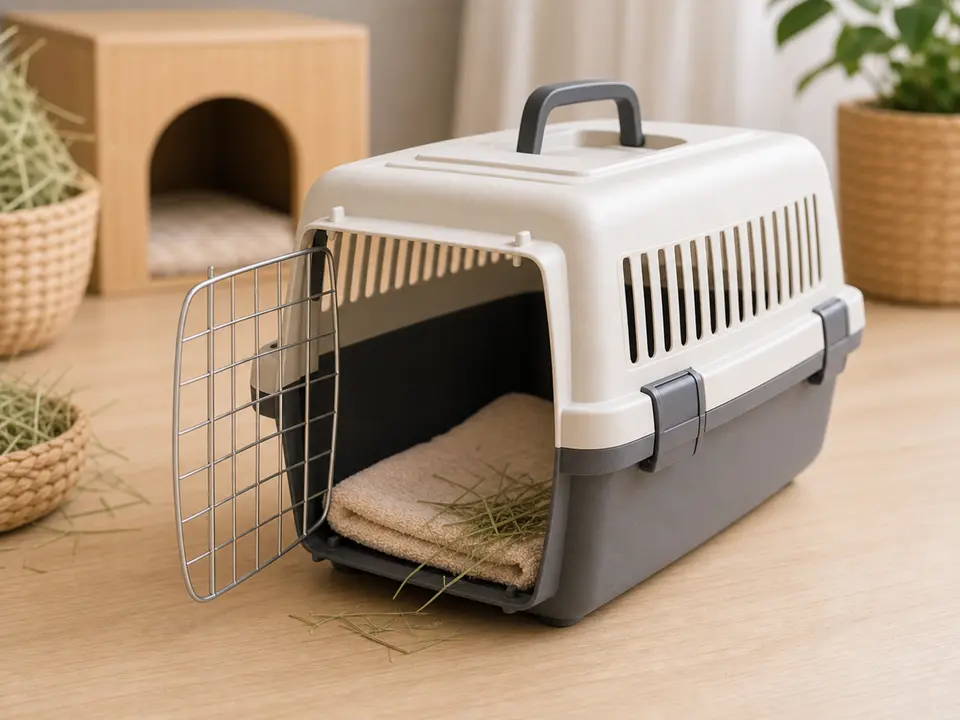
A rabbit carrier is easier to clean when it is hard-sided, smooth inside, lined with a removable towel or washable pad, and simple enough to wipe and dry after hay, fur, urine, or car dust.
Rabbit supplies should earn their space in the daily routine. The best choice is the one that makes hay, litter, traction, chewing, transport, hiding, water, or cleanup easier tomorrow.
Choose a hard-sided shape
A carrier is easier to clean when it is hard-sided, smooth inside, and simple enough to wipe after hay, fur, urine, or car dust. Fabric carriers can look cozy, but many trap smells and are harder to reset after a stressful ride.
Look for a stable base, a secure door, and enough room for a towel without making the carrier so large that your rabbit slides around on turns.
Use a removable liner
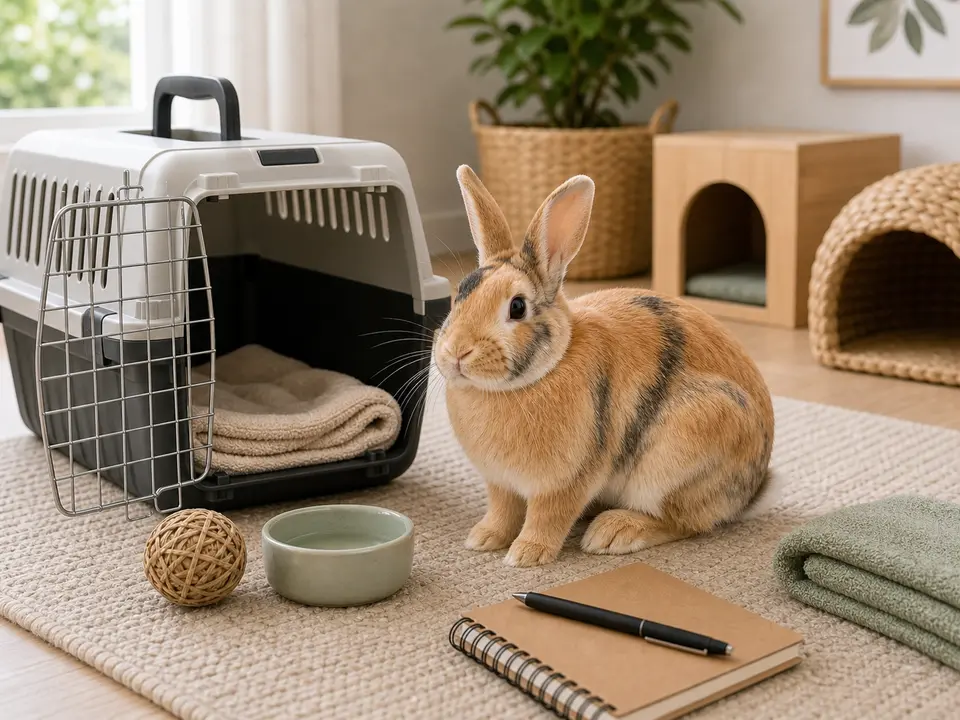
Put a folded towel or washable pad on the floor of the carrier so mess lands on something you can pull out and wash. Skip loose bedding that scatters into corners or sticks to damp spots during travel.
A light-colored towel can also help you notice urine, droppings, or dampness after the trip without turning cleanup into a search.
Keep corners simple
Deep grooves, cloth seams, tiny vents near the floor, and decorative inserts collect hay and dried mess. A plain carrier with rounded edges and good access is usually kinder to the person cleaning it.
If you have to scrub around hardware every time, the carrier is probably too fussy for normal rabbit life.
Pack cleanup for the ride home
For vet trips, keep a spare towel, a small bag, and a few paper towels near the carrier. That lets you swap a damp liner before your rabbit sits in it all the way home.
You do not need a travel kit full of gadgets. A clean backup layer and a carrier you can open calmly solve most ordinary messes.
Clean without leaving a strong smell
After travel, remove the towel, shake out hay, wipe the carrier, rinse any cleaner residue, and let it dry fully before the next practice session. Rabbits notice strong smells, and a carrier that smells strange can make the next trip harder.
The goal is a carrier that returns to neutral quickly: clean, dry, familiar, and ready to sit open in the room again.
Before you decide
What changed recently?
Can your rabbit choose a quiet retreat?
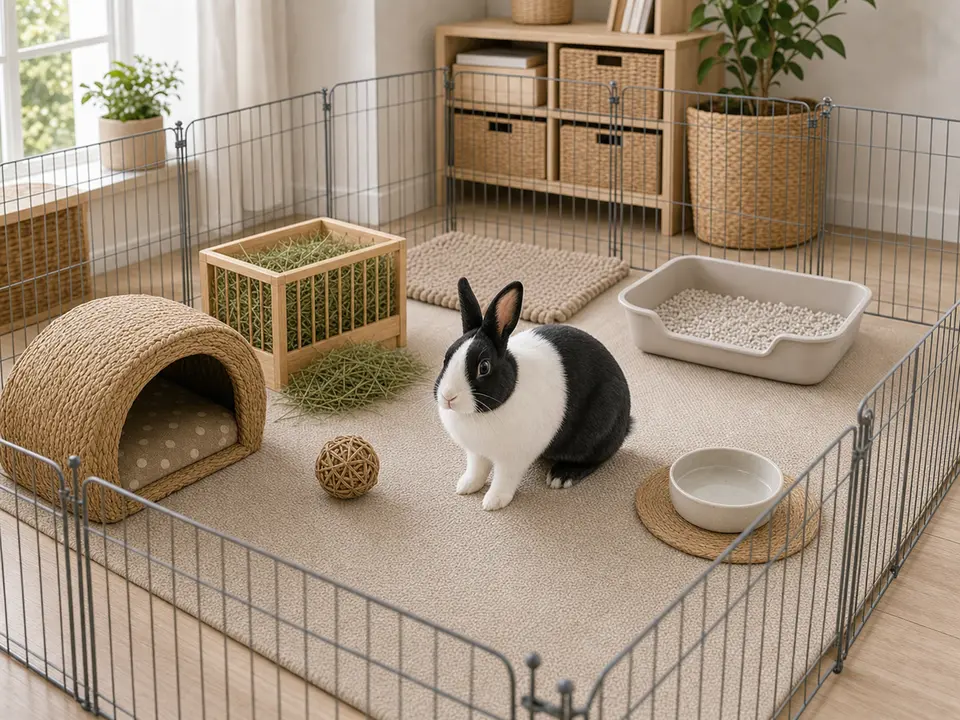
Are hay, water, litter, and footing easy?
Is this normal for your individual rabbit?
Next best moves
Make one small change.
Watch what your rabbit chooses next.
Keep the setup calm enough to repeat tomorrow.
Helpful rabbit supplies
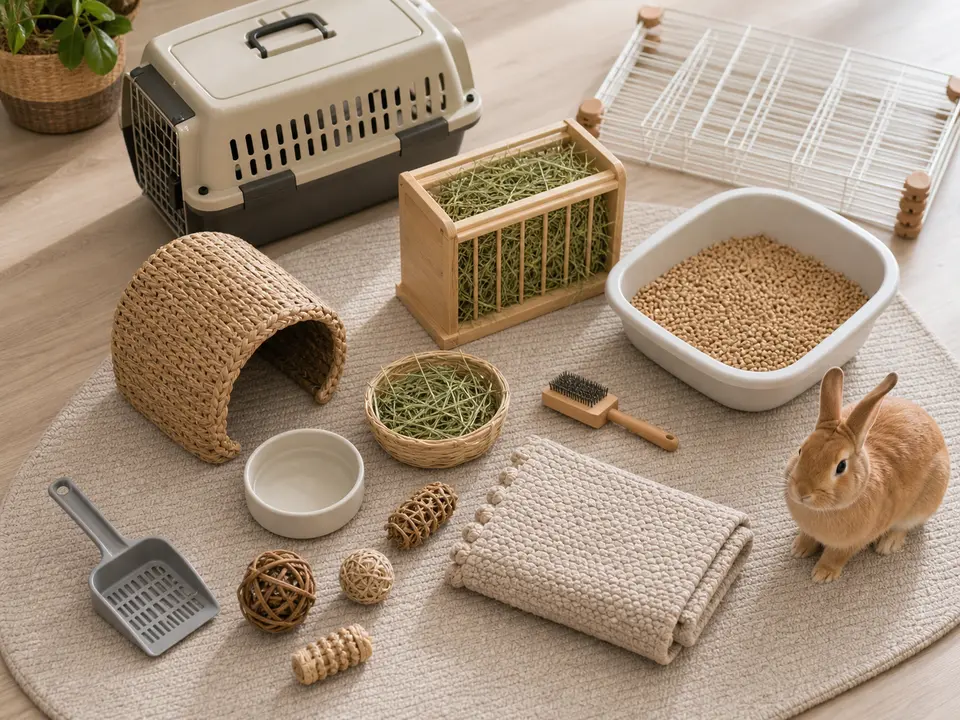
These are practical pieces for the routine, not clutter to buy all at once.
Affiliate links: Furball Cove may earn from qualifying purchases at no extra cost to you.
A rabbit carrier is easier to clean when it is hard-sided, smooth inside, lined with a removable towel or washable pad, and simple enough to wipe and dry after hay, fur, urine, or car dust.
What should I change first?
Choose one small setup change that makes the daily routine easier: closer hay, better traction, a calmer hideout, a larger box, or a shorter handling session.
When should I get extra help?
If your rabbit stops eating or pooping, seems painful, breathes strangely, or changes suddenly, call a rabbit-savvy vet. For bonding or handling problems, an experienced rabbit rescue can also help.