My rabbit has tiny mats behind the ears: how do I handle them
Check your rabbit's ears during a calm, low handling moment by looking for unusual redness, odor, debris, swelling, crusting, head shaking, scratching, or pain. Do not dig into the ear canal; if the ear looks sore, dirty deep inside, tilted, or painful, ask a rabbit-savvy vet.
Keep handling tiny mats behind the ears short, steady, and easy to repeat. Set up the surface, tool, light, and exit plan before you start so care feels like a calm routine instead of a chase.
Treat handling tiny mats behind the ears as coat maintenance
Check your rabbit's ears during a calm, low handling moment by looking for unusual redness, odor, debris, swelling, crusting, head shaking, scratching, or pain. Do not dig into the ear canal; if the ear looks sore, dirty deep inside, tilted, or painful, ask a rabbit-savvy vet. Long, woolly, or mat-prone coats need a routine before the coat looks dramatic. Check behind the ears, under the chin, around the tail, and anywhere a collar, hideout edge, or resting position rubs. Keep the brush, comb, and coat check close to normal daily grooming so handling tiny mats behind the ears feels familiar instead of like a surprise appointment. Use the same quiet spot when you can, because repetition helps you notice what changed.
For handling tiny mats behind the ears: separate tiny tangles early
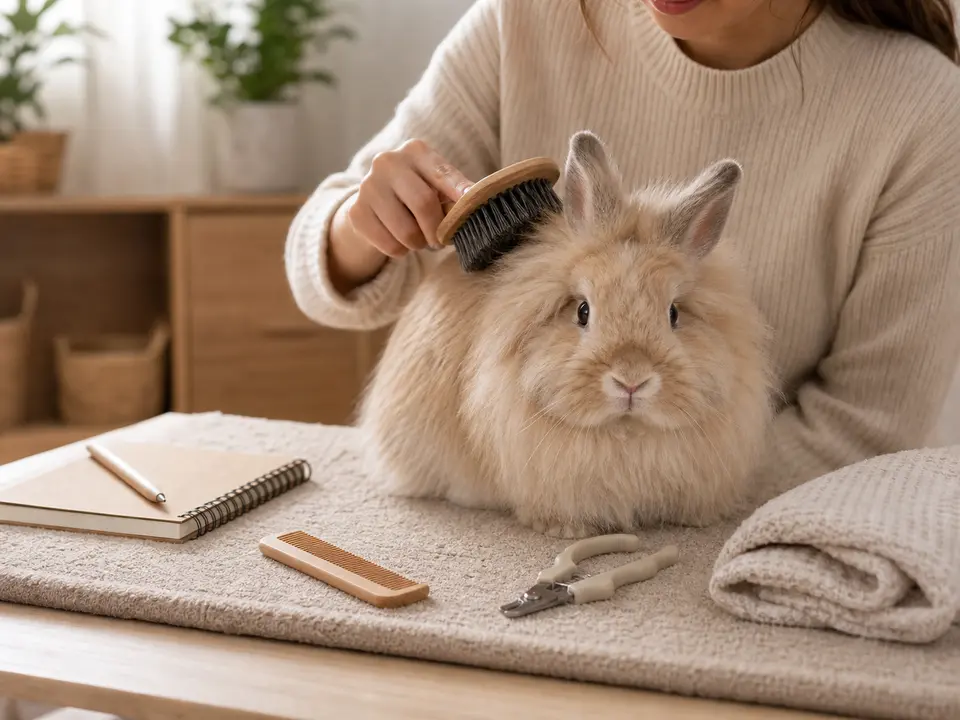
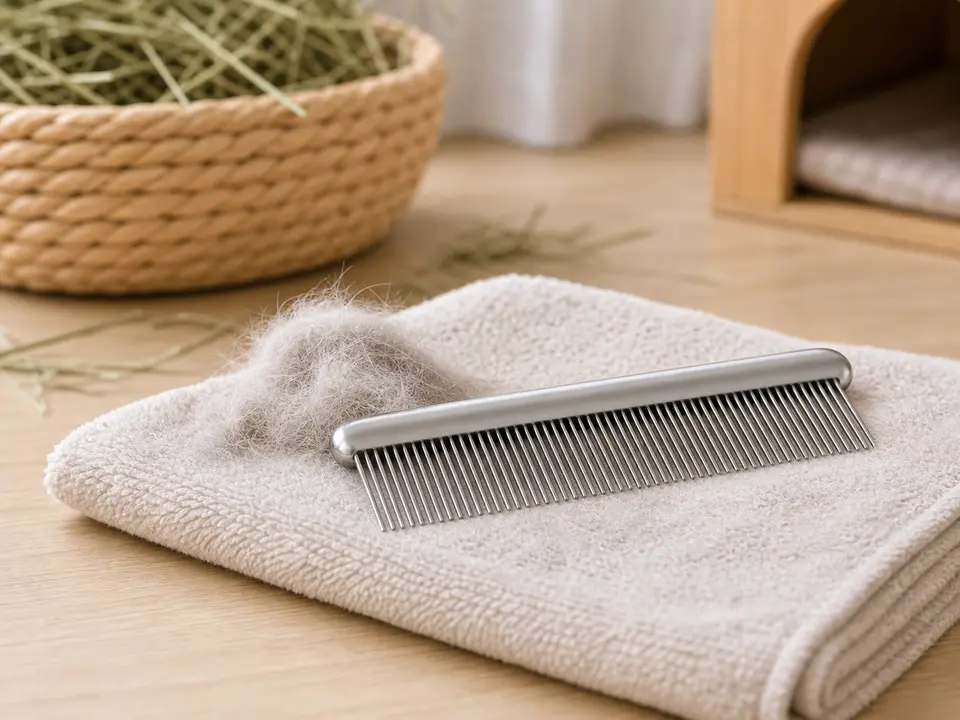
Small tangles are easier to loosen when the rabbit is calm and the skin is protected. Hold the fur near the base, use a gentle comb, and stop if the mat is tight or close to delicate skin. Treat handling tiny mats behind the ears as both grooming and health observation: coat, fur, skin, nails, teeth, movement, and comfort can all give you useful clues.
For handling tiny mats behind the ears: keep sessions short enough to repeat
A long-coated rabbit may need frequent small checks instead of rare marathon grooming. A few calm minutes today can prevent the packed coat that needs expert help later. Put the plan back into the daily routine: hay, water, litter, rest spots, and normal movement should still look steady after grooming.
For handling tiny mats behind the ears: use the floor, not a wrestling hold
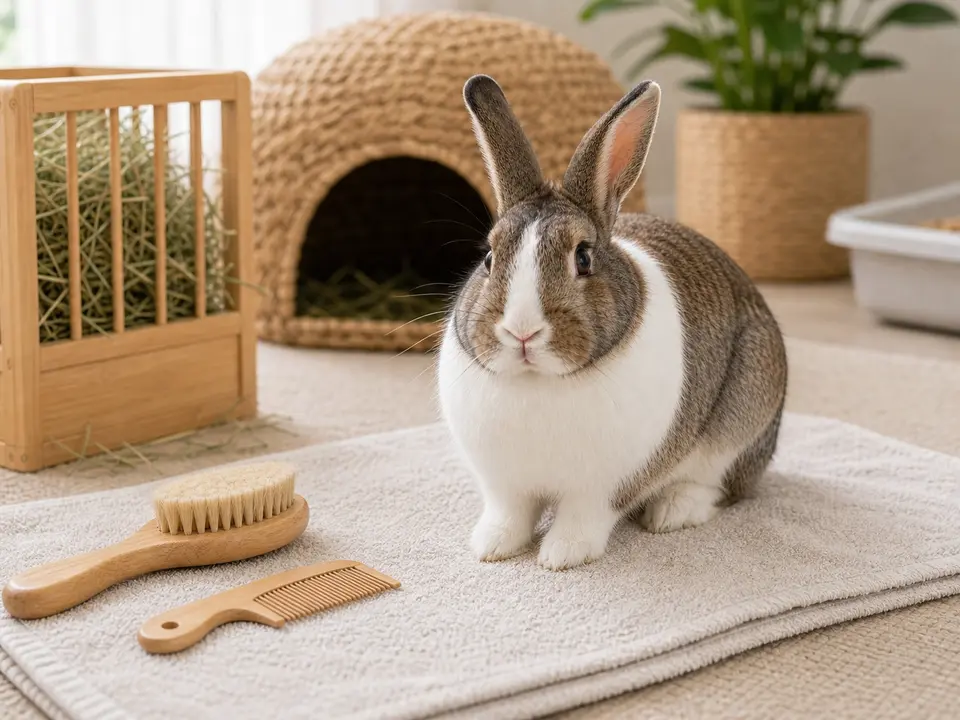
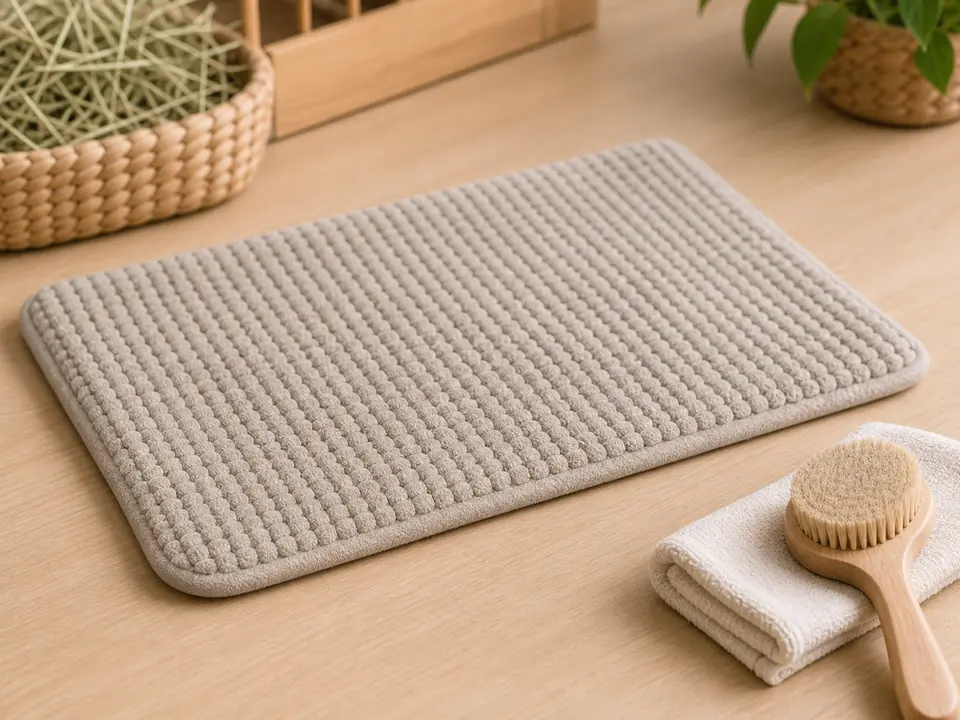
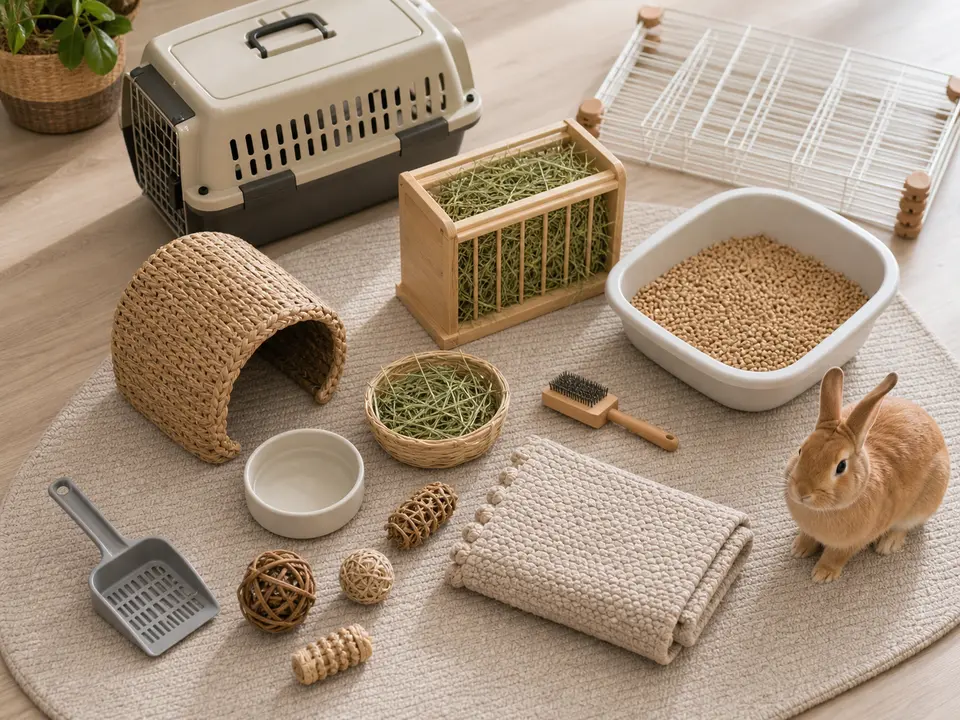
Work on steady non-slip flooring with the rabbit supported. If the rabbit has to fight to stay balanced, they will learn that coat care is something to escape. Use real floor traction, not a slippery counter or table; a washable mat or rug gives your rabbit steadier paws and a calmer escape plan.
For handling tiny mats behind the ears: get help for tight mats
Tight mats, skin irritation, packed wool, or mats near the tail and belly should go to a rabbit-savvy groomer or vet. Cutting close to rabbit skin at home is easy to get wrong. Use a rabbit-savvy vet when pain, appetite, poop, skin, teeth, or movement changes join the grooming problem; those clues matter more than a perfect-looking coat.
Before you decide
What changed recently?
Can your rabbit choose a quiet retreat?
Are hay, water, litter, and footing easy?
Is this normal for your individual rabbit?
Next best moves
Make one small change.
Watch what your rabbit chooses next.
Keep the setup calm enough to repeat tomorrow.
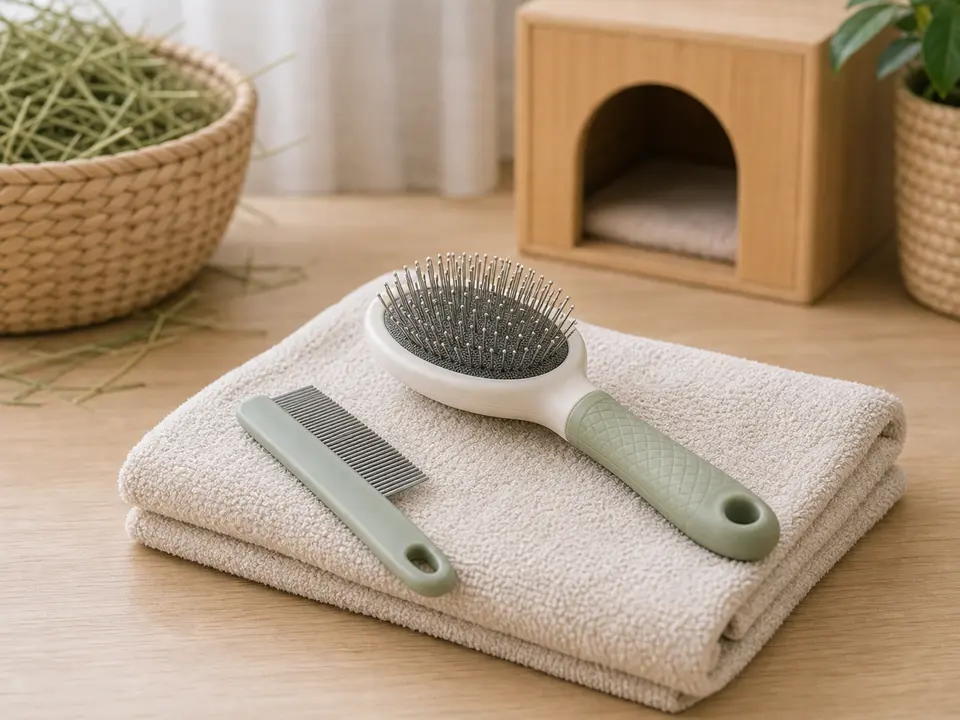
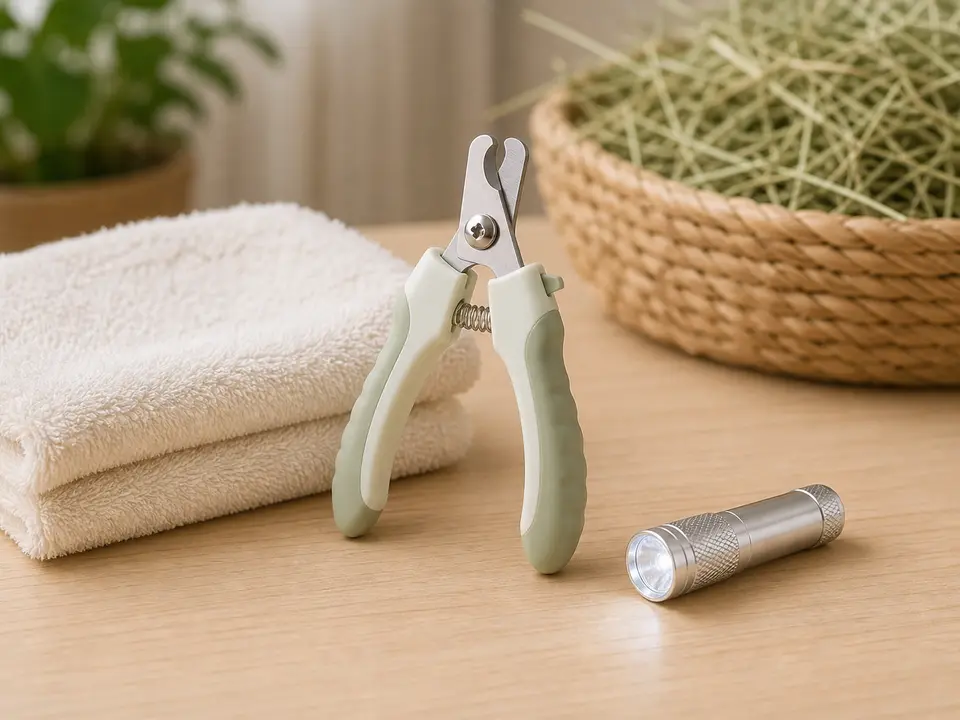
Grooming tools that stay useful
These are practical pieces for the routine, not clutter to buy all at once.
Affiliate links: Furball Cove may earn from qualifying purchases at no extra cost to you.
My rabbit has tiny mats behind the ears: how do I handle them?
Check your rabbit's ears during a calm, low handling moment by looking for unusual redness, odor, debris, swelling, crusting, head shaking, scratching, or pain. Do not dig into the ear canal; if the ear looks sore, dirty deep inside, tilted, or painful, ask a rabbit-savvy vet.
What should I change first?
Choose one small setup change that makes the daily routine easier: closer hay, better traction, a calmer hideout, a larger box, or a shorter handling session.
When should I get extra help?
If your rabbit stops eating or pooping, seems painful, breathes strangely, or changes suddenly, call a rabbit-savvy vet. For bonding or handling problems, an experienced rabbit rescue can also help.